


They sit close to the ceiling, preserve clearance, and, when chosen well, replace the flat, forgettable builder-grade dome light with something that actually contributes to the room's character. Rowabi lighting styles appear in this guide as a design example for adding warmth and texture at ceiling level without lowering the visual ceiling line.
Quick cheat sheet for flush mount lights
This guide will help you understand how flush-mount and semi-flush-mount lights differ, how to choose the right size, how to place them correctly in each room, and what to check before and during installation to ensure the process goes smoothly and safely.
Use this table as a quick reference before reading further:
| Situation | Best Choice | Standard US Guideline |
| 8-foot ceiling | Flush mount light | Best for preserving headroom |
| 8-foot ceiling with semi-flush | Very short semi-flush only | Keep at least 7 feet of clearance |
| 9-foot ceiling | Flush or semi-flush | Semi-flush can add more dimension |
| 10-foot ceiling | Semi-flush or short pendant | Choose based on the room scale |
| Hallway | Flush mount / low-profile semi-flush | Keep the fixture close to the ceiling |
| Small bedroom | Flush mount | Good for low ceilings and general lighting |
| Kids room | Flush mount | Safer than low-hanging fixtures |
| Bathroom | Rated flush mount | Check damp/wet rating |
| Entryway with an 8-foot ceiling | Flush or compact semi-flush | Avoid a long pendant if clearance is limited |
| Laundry room | Flush mount | Bright, practical, low-profile |
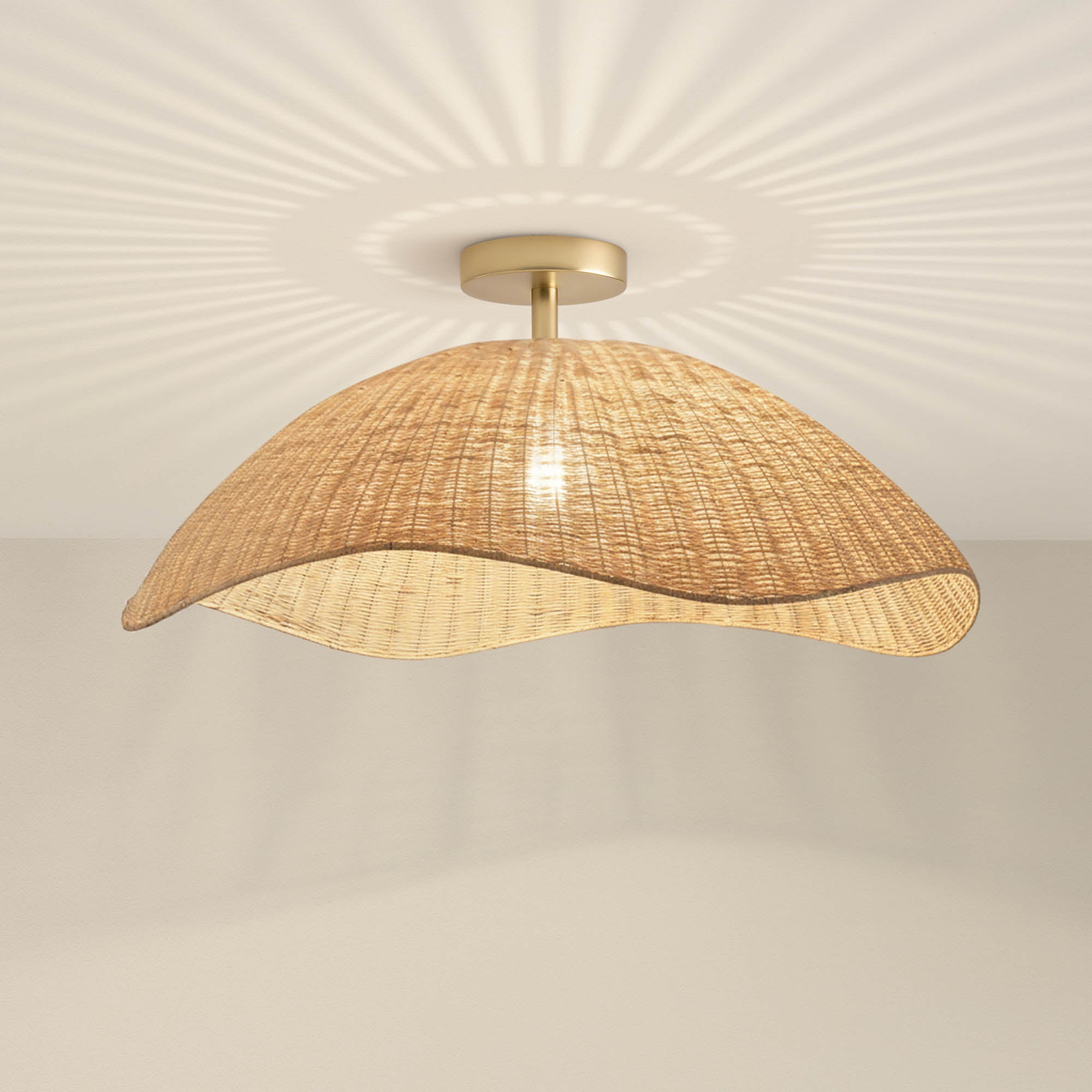
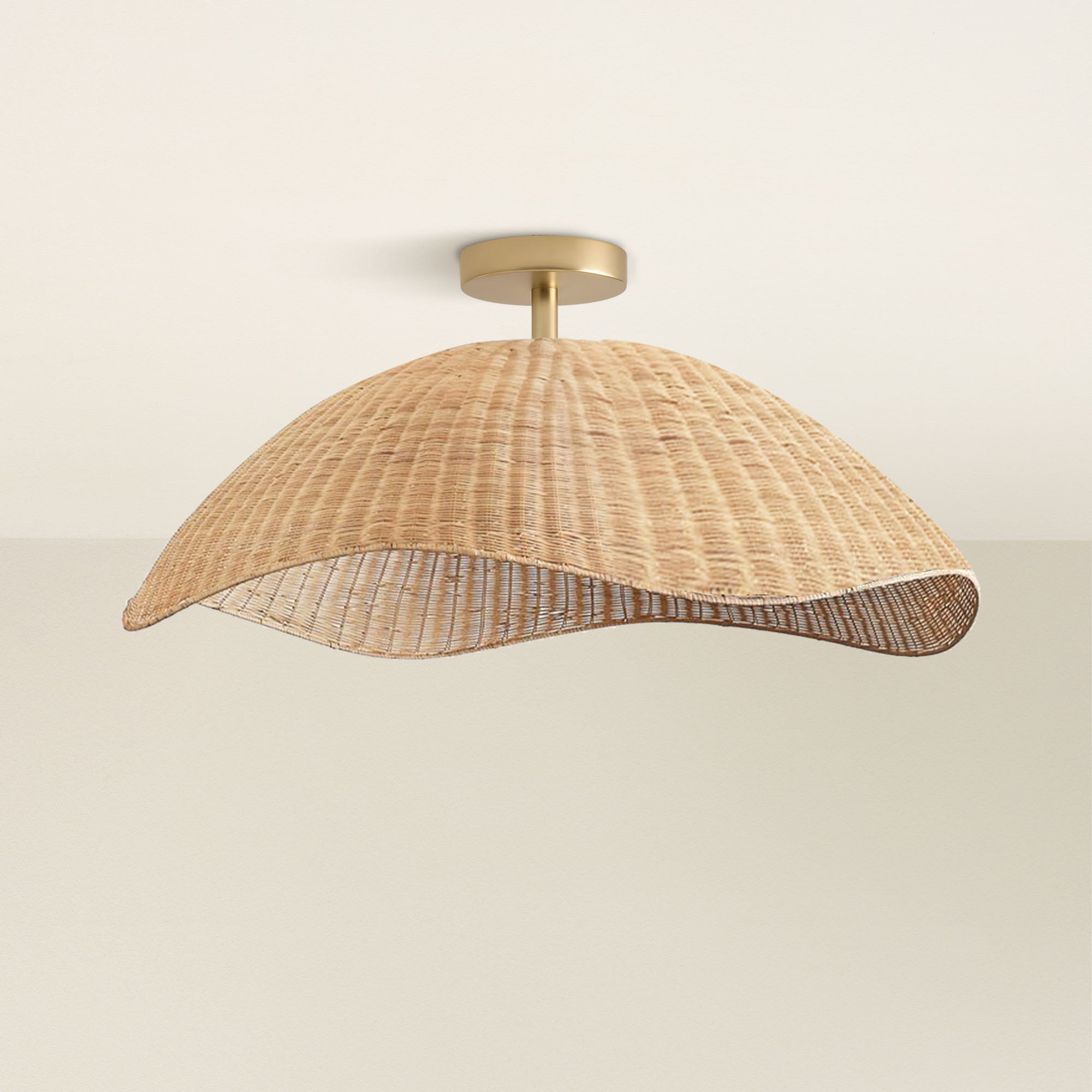
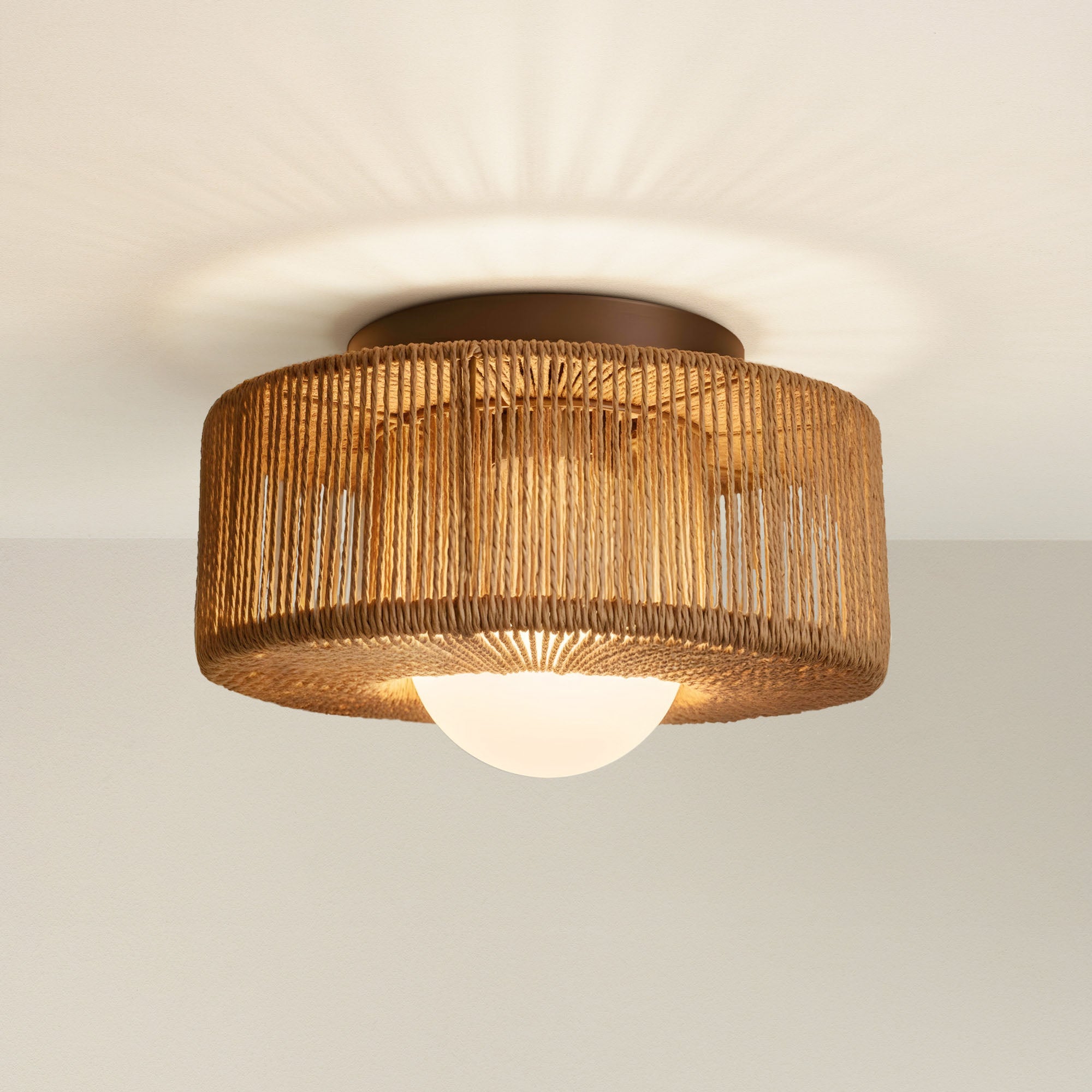
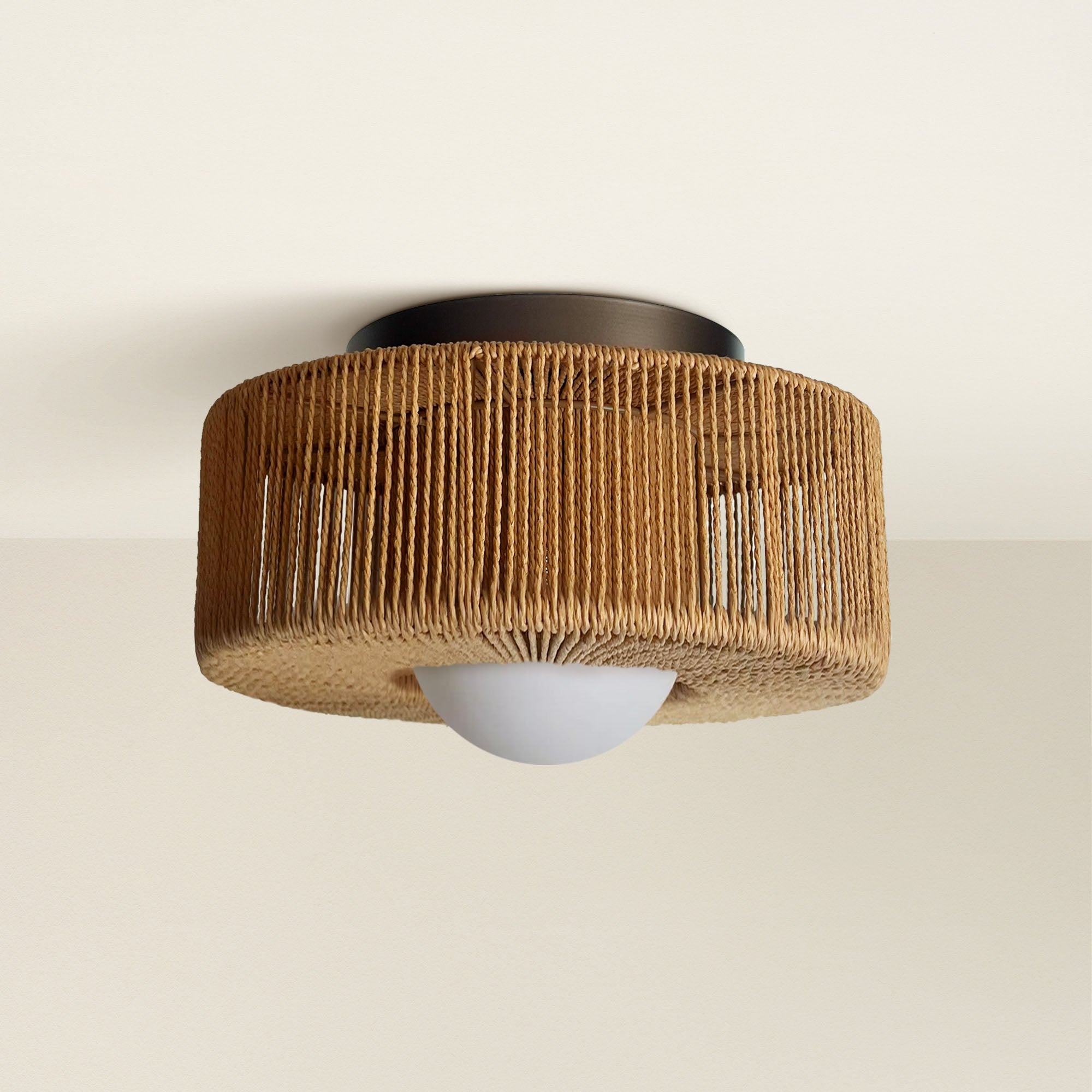
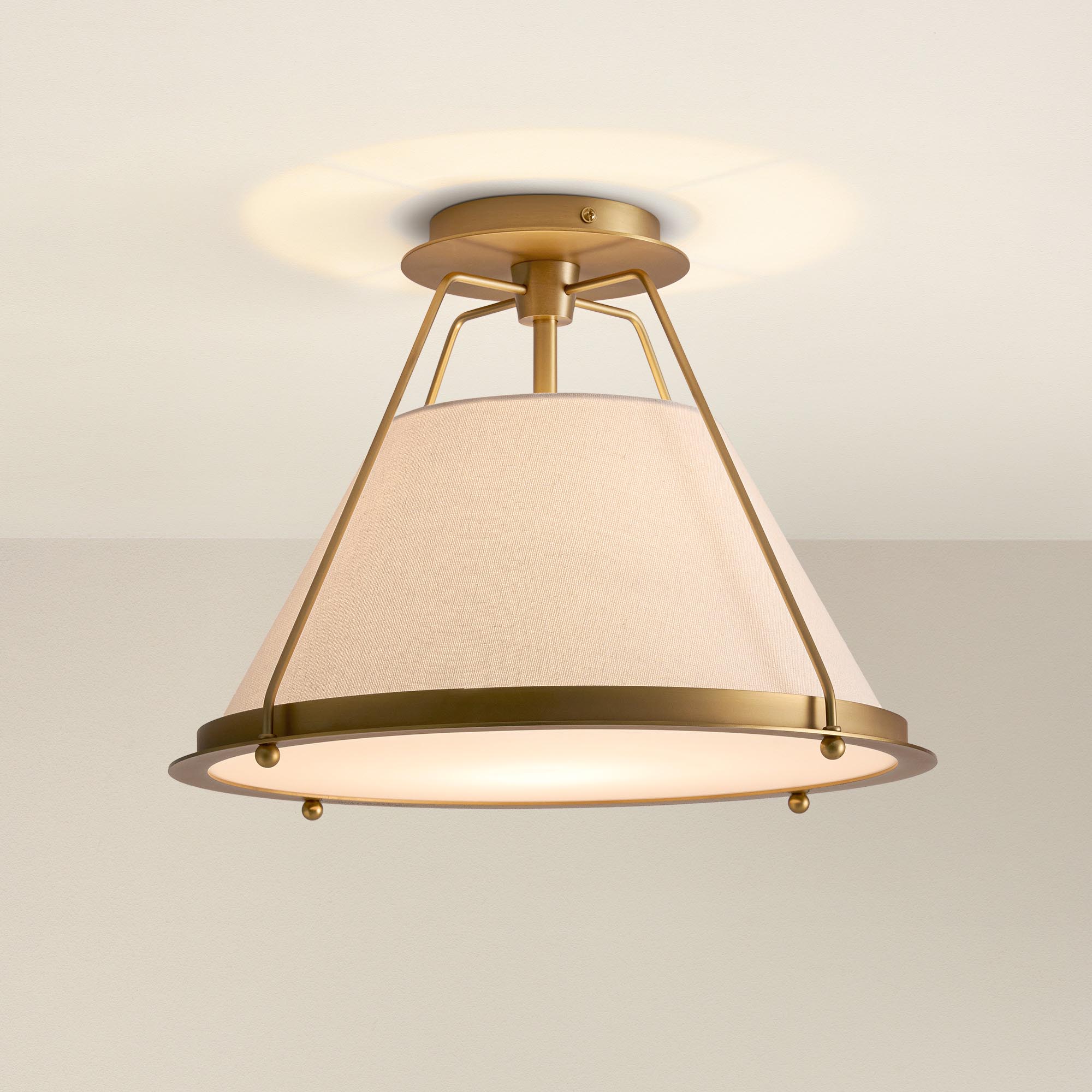
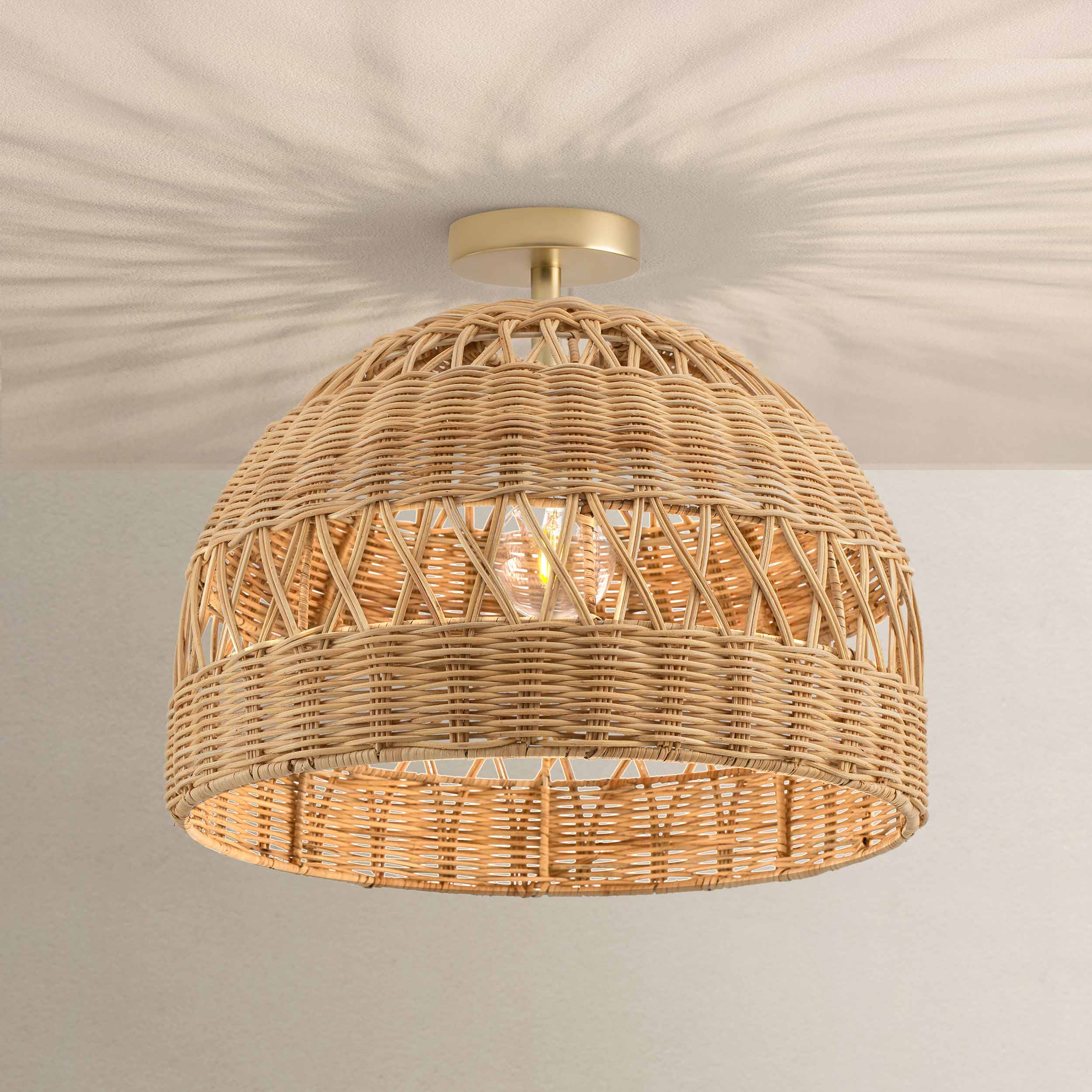
| Coastal / warm-neutral home | Rattan flush mount | Adds texture without lowering the ceiling visually |
| DIY replacement | Existing electrical box only | Turn off the breaker and verify that the power is off |
| New fixture location | Call electrician | New wiring should be professional |
Flush-mount vs. semi-flush-mount: what is the difference?
The two fixture types look similar from a distance, but their behavior at ceiling level, especially in low-ceiling rooms, differs meaningfully. Understanding the distinction before choosing a fixture saves a common and expensive mistake.
What is a flush mount light?
A flush-mount light sits directly against or very close to the ceiling, with no visible gap between the canopy and the ceiling surface. This close-to-ceiling position makes it the go-to choice for 8-foot ceilings, narrow hallways, bathrooms, laundry rooms, and kids' rooms where headroom needs to be fully preserved.
Most flush-mount fixtures replace the standard builder-grade dome light that comes with new construction: the electrical box is already in place, the footprint is the same, and the upgrade from a plain white dome to a considered flush-mount fixture changes the room's character without any structural work.
What is a semi-flush mount light?
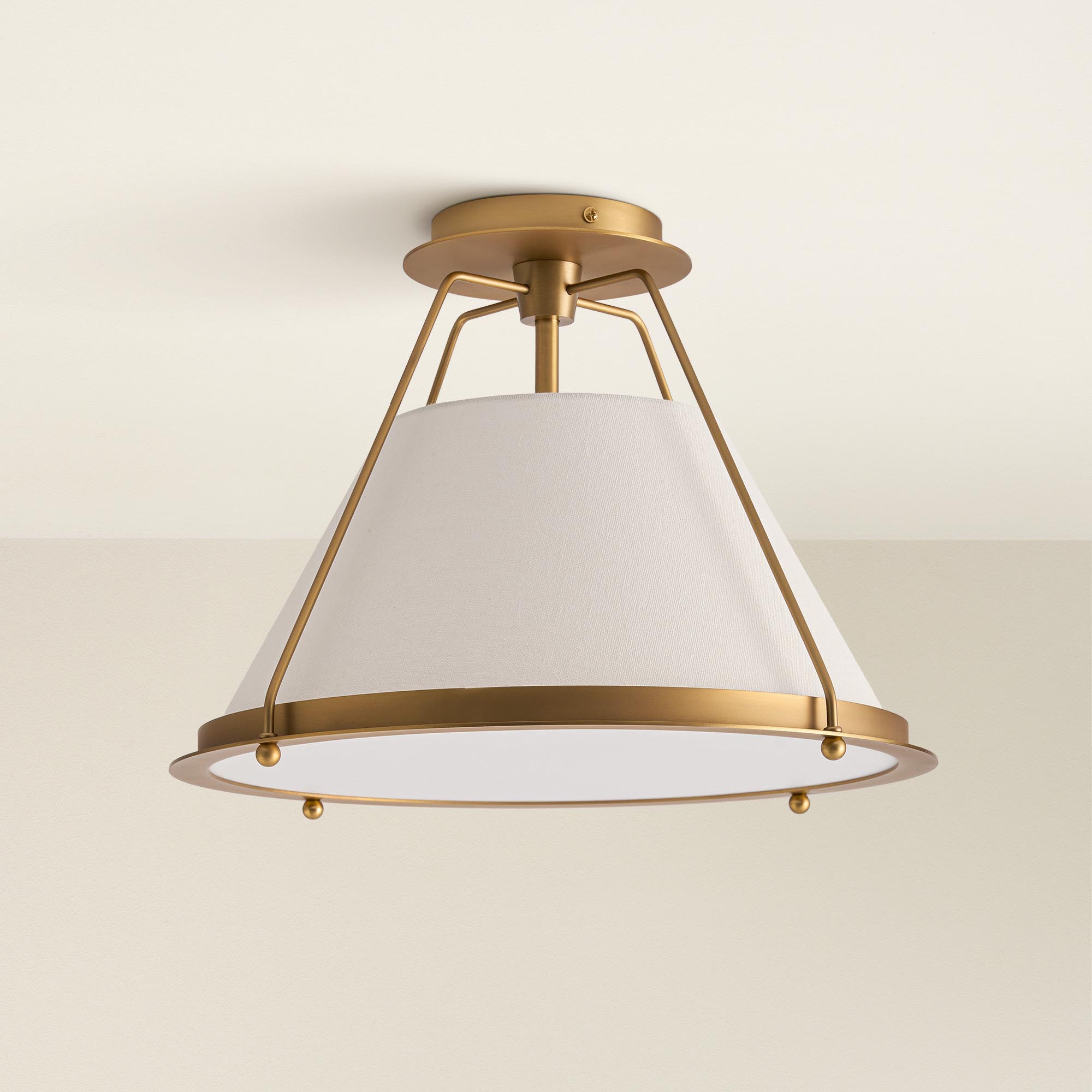
A semi-flush mount hangs slightly below the ceiling, typically 4–12 inches, creating a visible gap between the canopy and the ceiling surface. That small amount of distance allows light to bounce upward as well as downward, which creates a more dimensional, layered ambient effect than a flat flush mount produces.

While flush-mount is set against the ceiling, semi-flush-mount has a slight drop from the ceiling.
Semi-flush mounts work well in rooms with 9-foot ceilings where there is enough vertical space to accommodate the drop without consuming meaningful headroom. In rooms with 8-foot ceilings, a semi-flush mount can still work if the fixture's total drop is very short, but the clearance calculation matters.
Which one is better for low ceilings?
For 8-foot ceilings, a flush mount is almost always the safer and more proportionally correct choice. The standard safety guideline for any fixture in a space where people walk under it is 7 feet of clearance from the floor to the fixture's lowest point.
In fact, an 8-foot room leaves only 12 inches for the fixture, which is enough for many flush mounts but rules out most semi-flush mounts with any meaningful drop. If a semi-flush is preferred for its dimensional quality, confirm the total drop measurement before purchasing and verify that 7 feet of clearance remains beneath it.
For low-ceiling rooms, a flush mount preserves the ceiling's full visual height; a semi-flush that drops too far makes the room feel lower than it is.
| Feature | Flush-mount ceiling light | Semi-flush mount ceiling light |
| Design | Sits directly flush against the ceiling | Drops slightly below the ceiling |
| Best ceiling height | 8-foot ceilings | 9–10-foot ceilings |
| Lighting effect | Direct downward light | Upward reflection plus downward light |
| Clearance | Excellent maximizes headroom | Requires confirming 7-foot minimum clearance |
How to choose the right size flush mount light
Size errors are among the most common flush mount mistakes. A fixture that is too small for a room lacks the presence to serve as a focal point, while one that is too large can make a low ceiling feel oppressively close.
45-Day Return
45-Day Return
45-Day Return
45-Day Return
45-Day Return
45-Day Return
45-Day Return
45-Day Return
45-Day Return
45-Day Return
45-Day Return
45-Day Return
Match fixture diameter to room size
A common starting guideline is to add the room's length and width in feet, then use that number in inches as a suggested fixture diameter.
For example, a 10 ft × 12 ft bedroom suggests a fixture of approximately 22 inches in diameter. However, this is a starting point, not a fixed rule.
Ceiling height, room function, and fixture material all affect the final proportional read. Hallways call for compact fixtures that do not project into the walking path; large bedrooms and living rooms can support more substantial fixtures that read as genuine design decisions rather than functional afterthoughts.
Consider fixture depth and ceiling height
Beyond diameter, the fixture's depth or drop matters significantly in low-ceiling rooms. A flush mount with a 3-inch profile against an 8-foot ceiling leaves the ceiling feeling clean and unobstructed; a semi-flush that drops 10 inches in the same room reduces the effective height below it to 7 feet 2 inches. Functional, but noticeably lower.
In any walkway, entryway, or hallway, verify the fixture's total installed depth before purchasing. In a bedroom where the fixture is not directly in a walking path, slightly more depth is less critical.
Consider visual weight, not just measurements
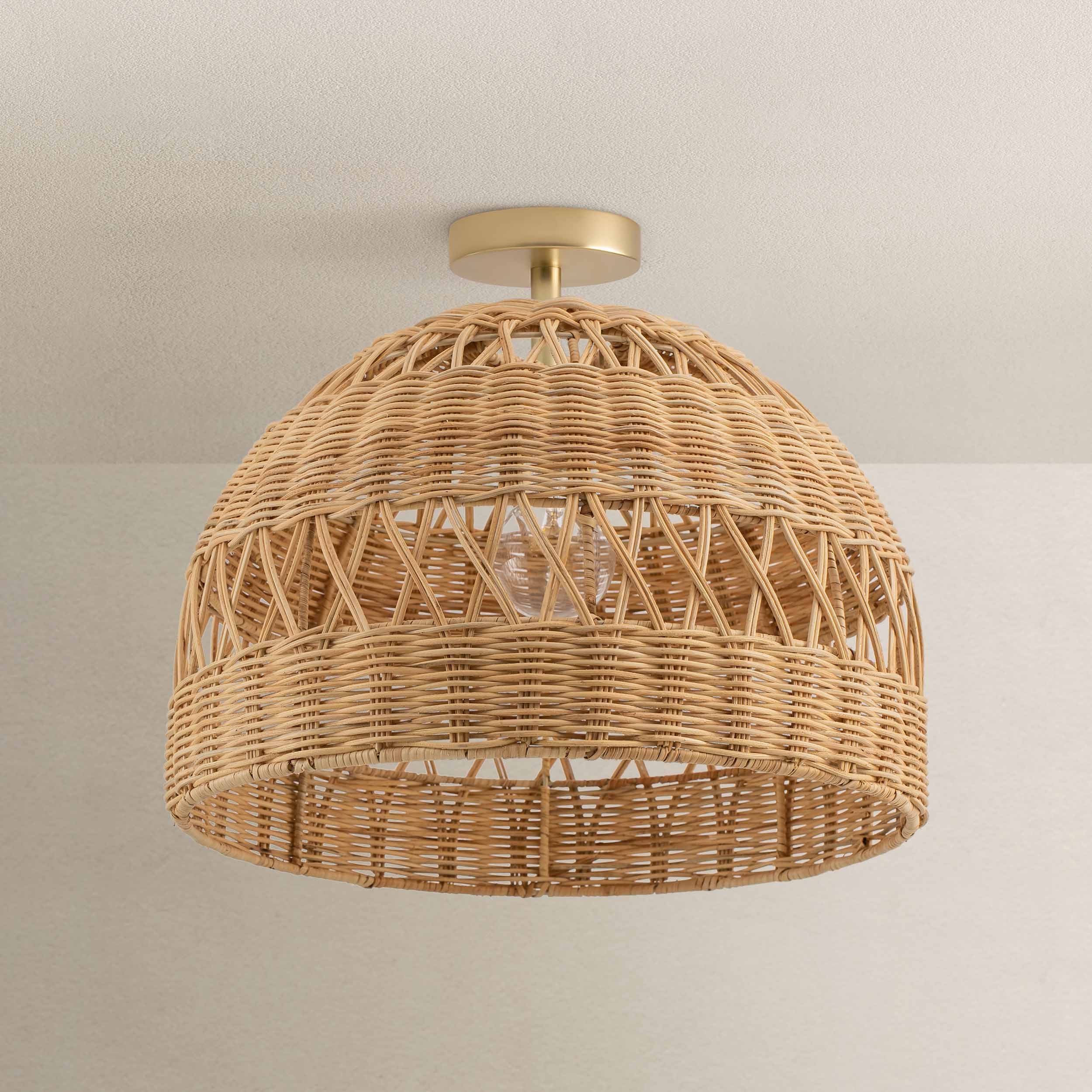
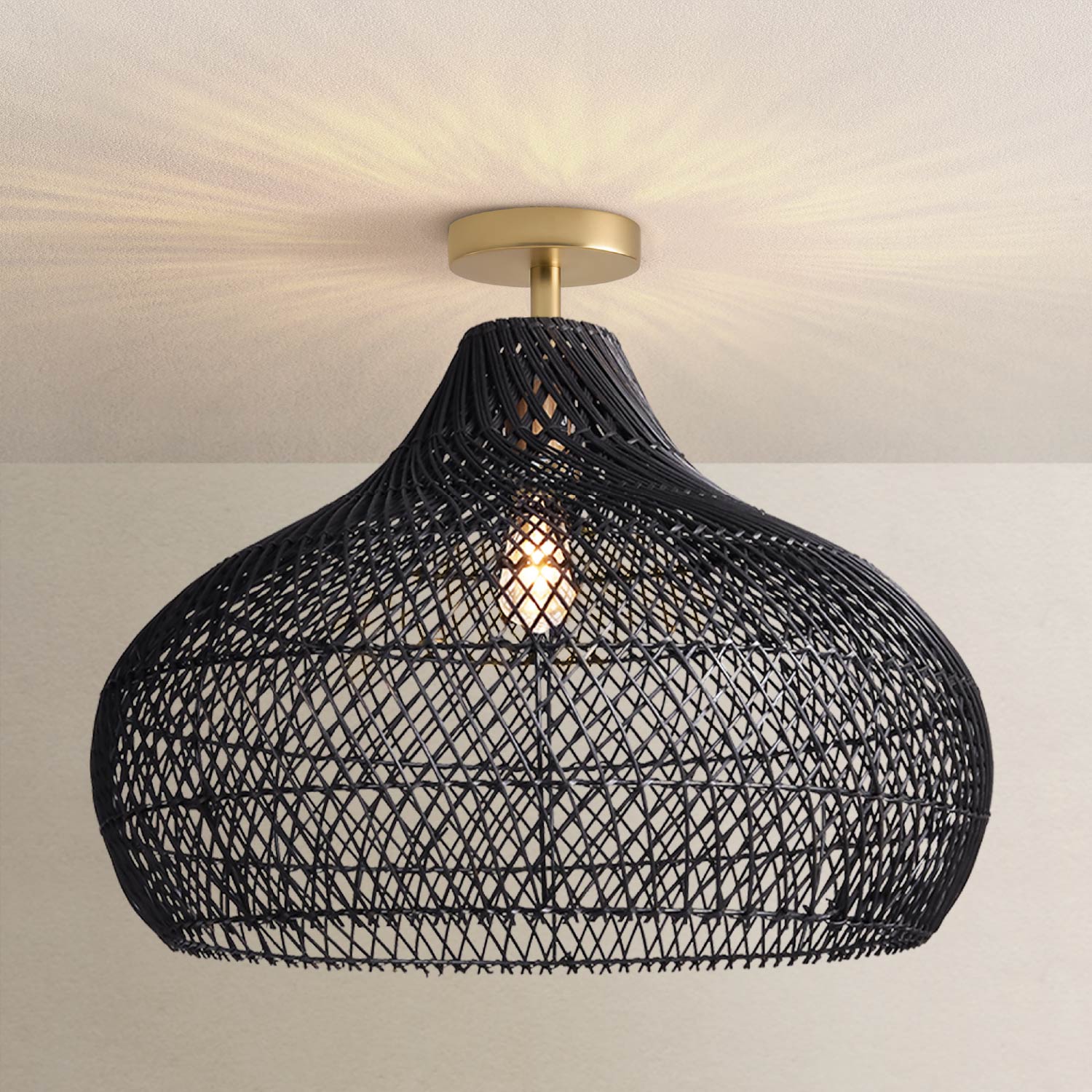
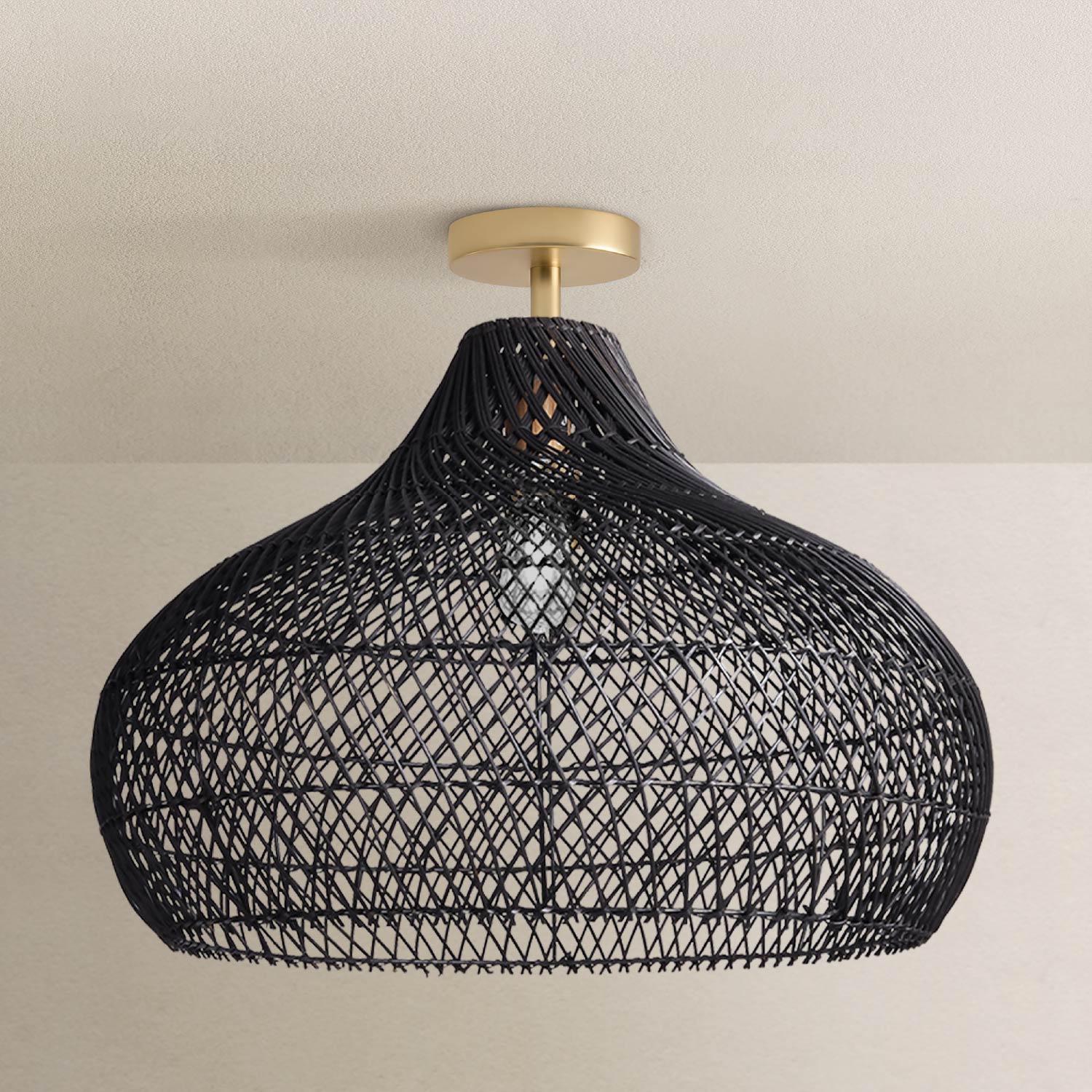
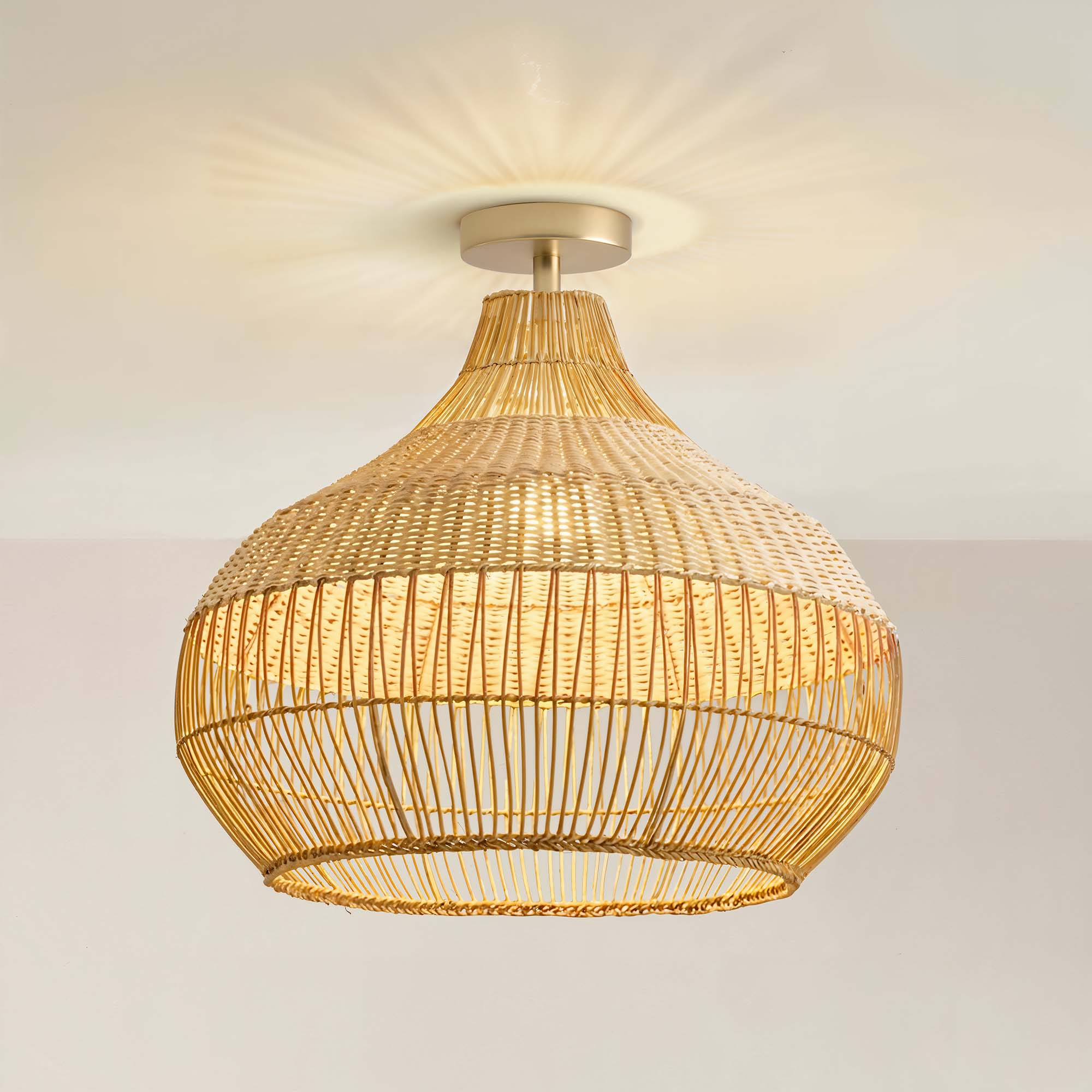
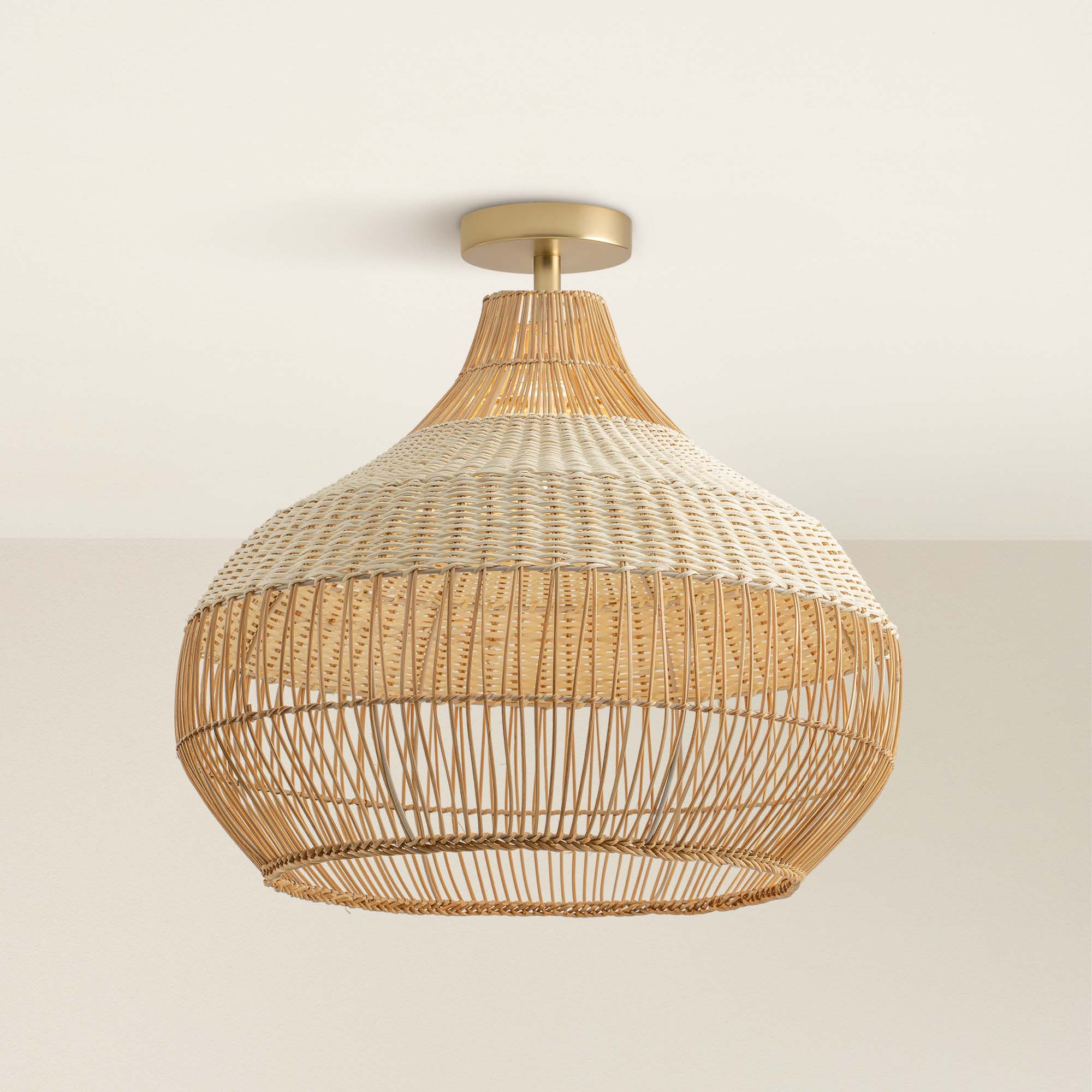
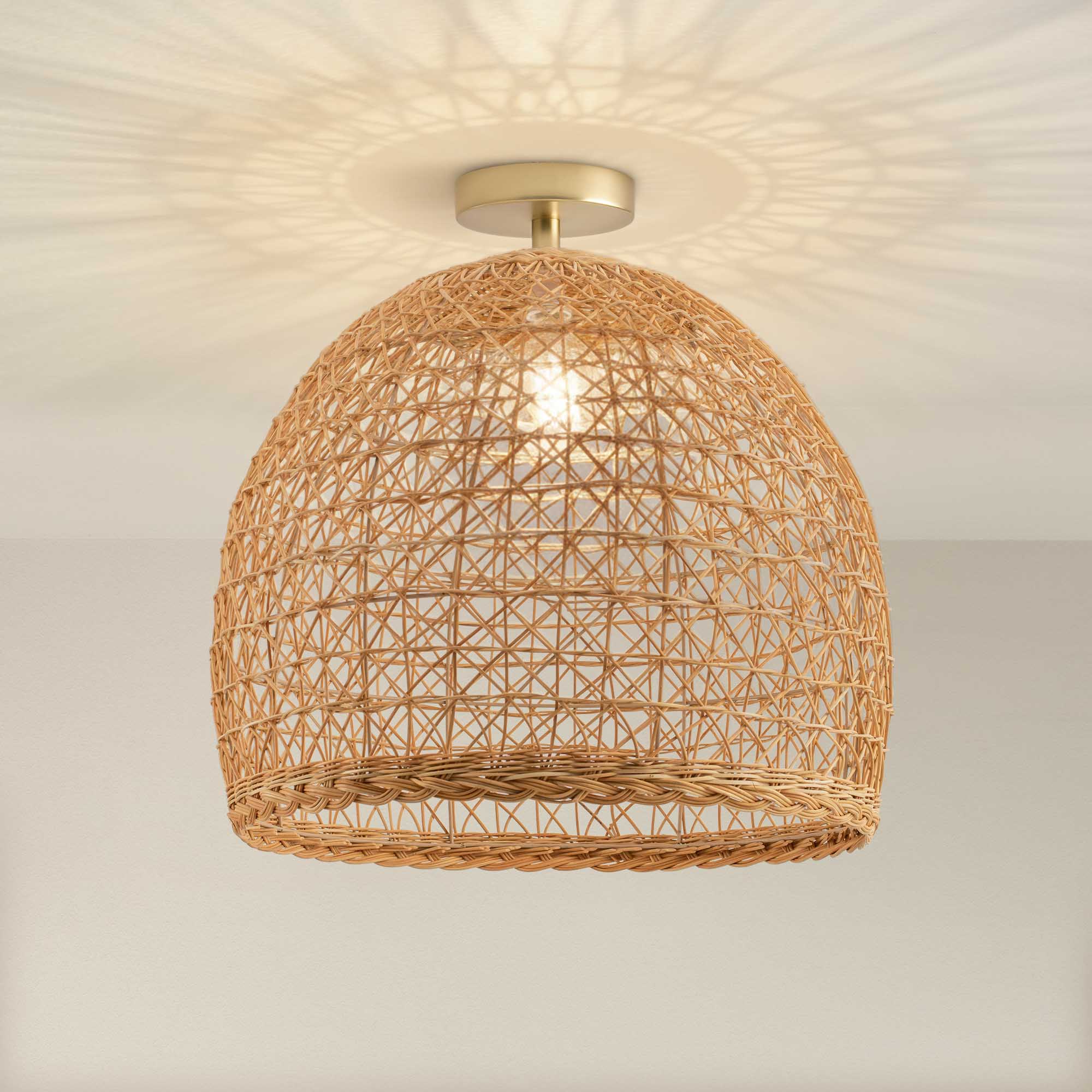
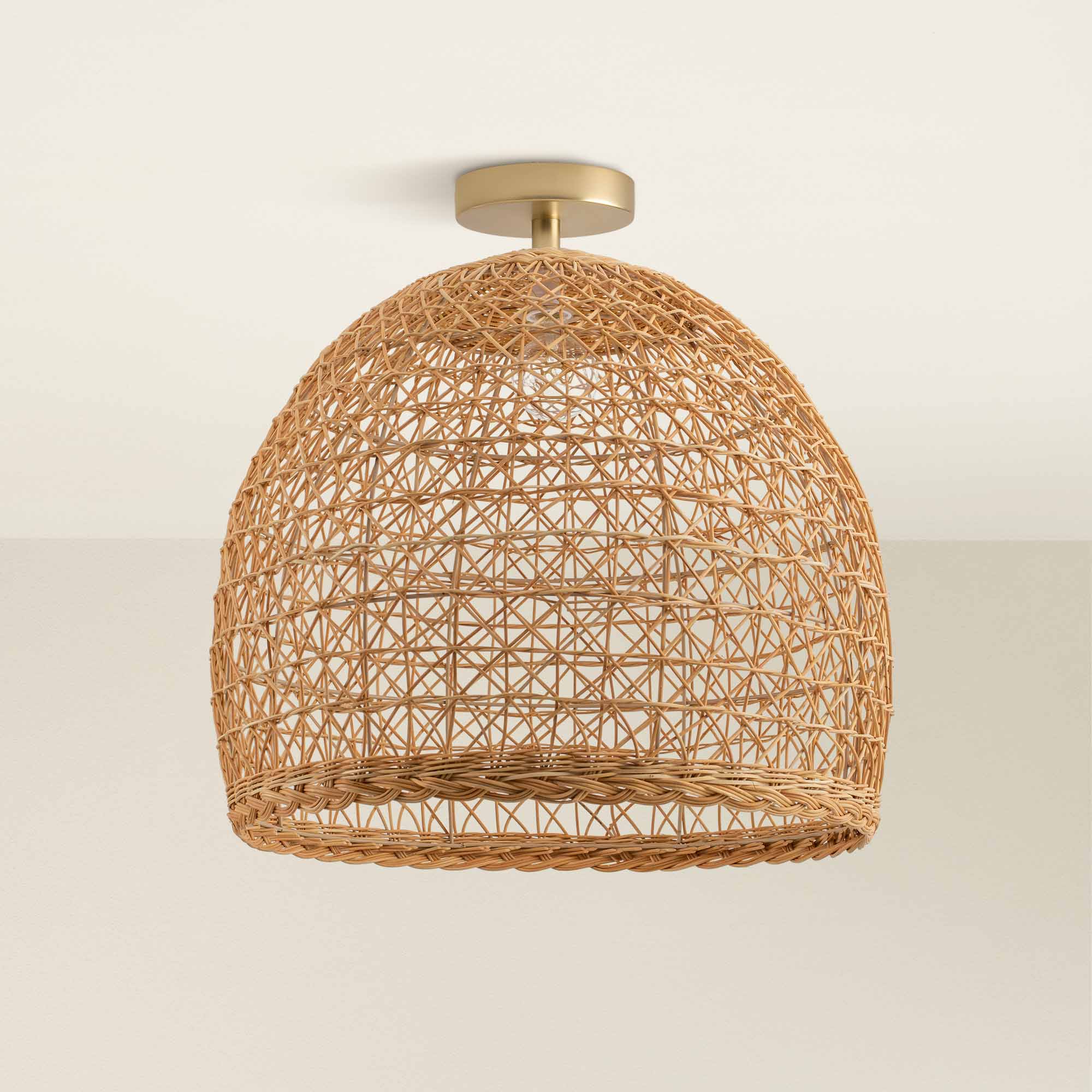
Two fixtures with identical diameters can feel completely different in a room depending on their material. A solid, opaque metal dome reads as visually heavy; a frosted glass flush-mount of the same size almost disappears against the ceiling. A rattan flush mount with an open or partially open weave sits between those two extremes because it has presence and texture, but the weave's permeability keeps it from reading as a dense, heavy object at ceiling level.

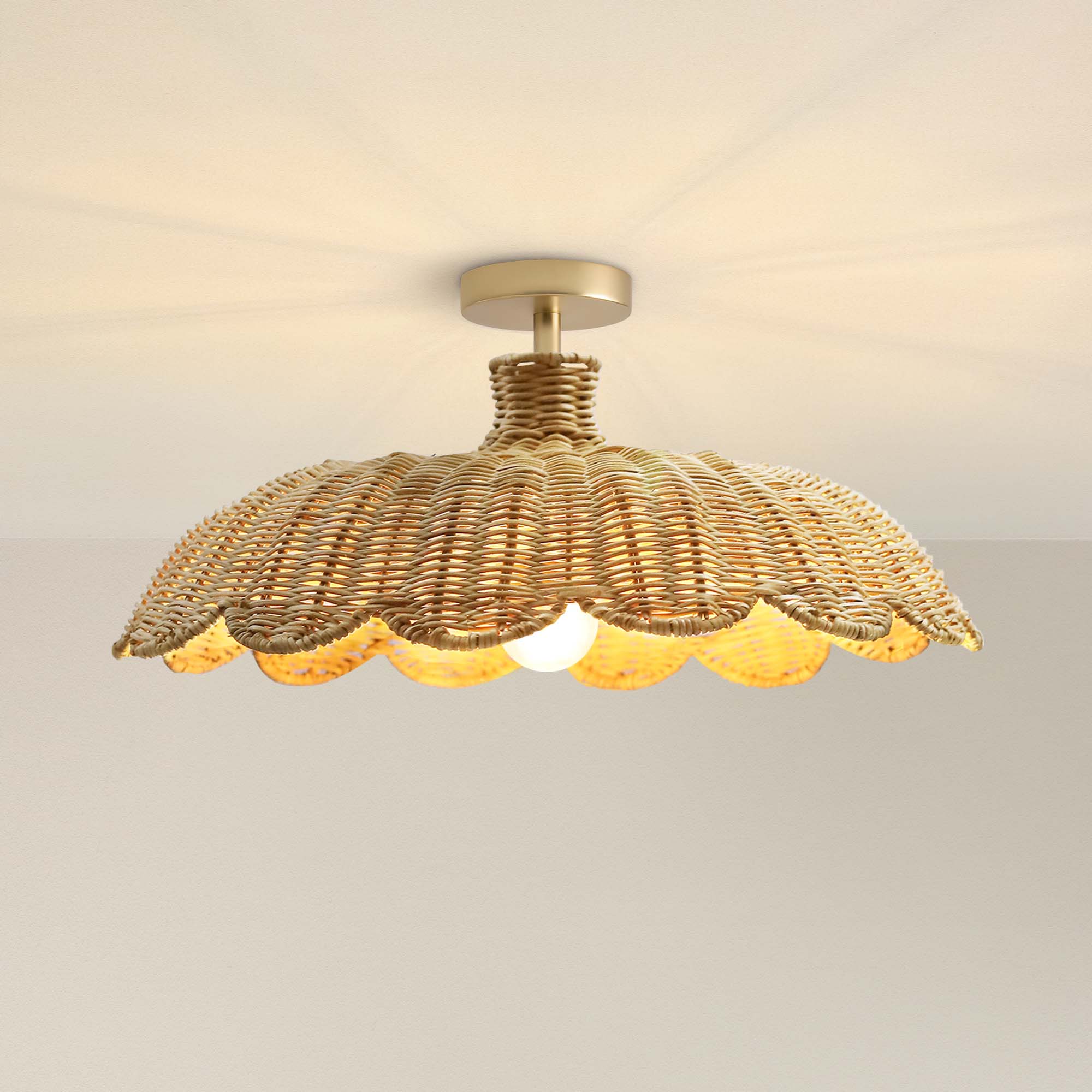
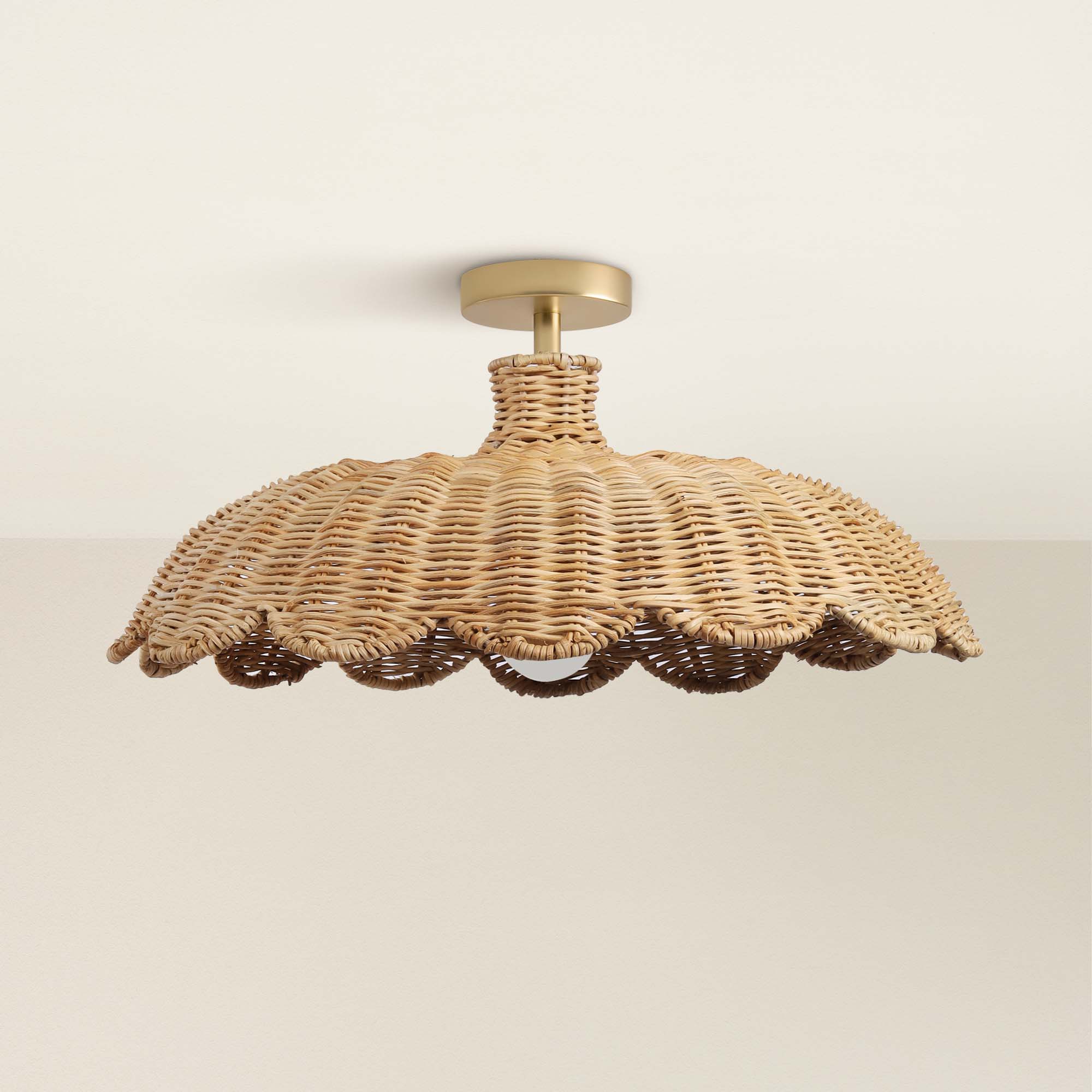
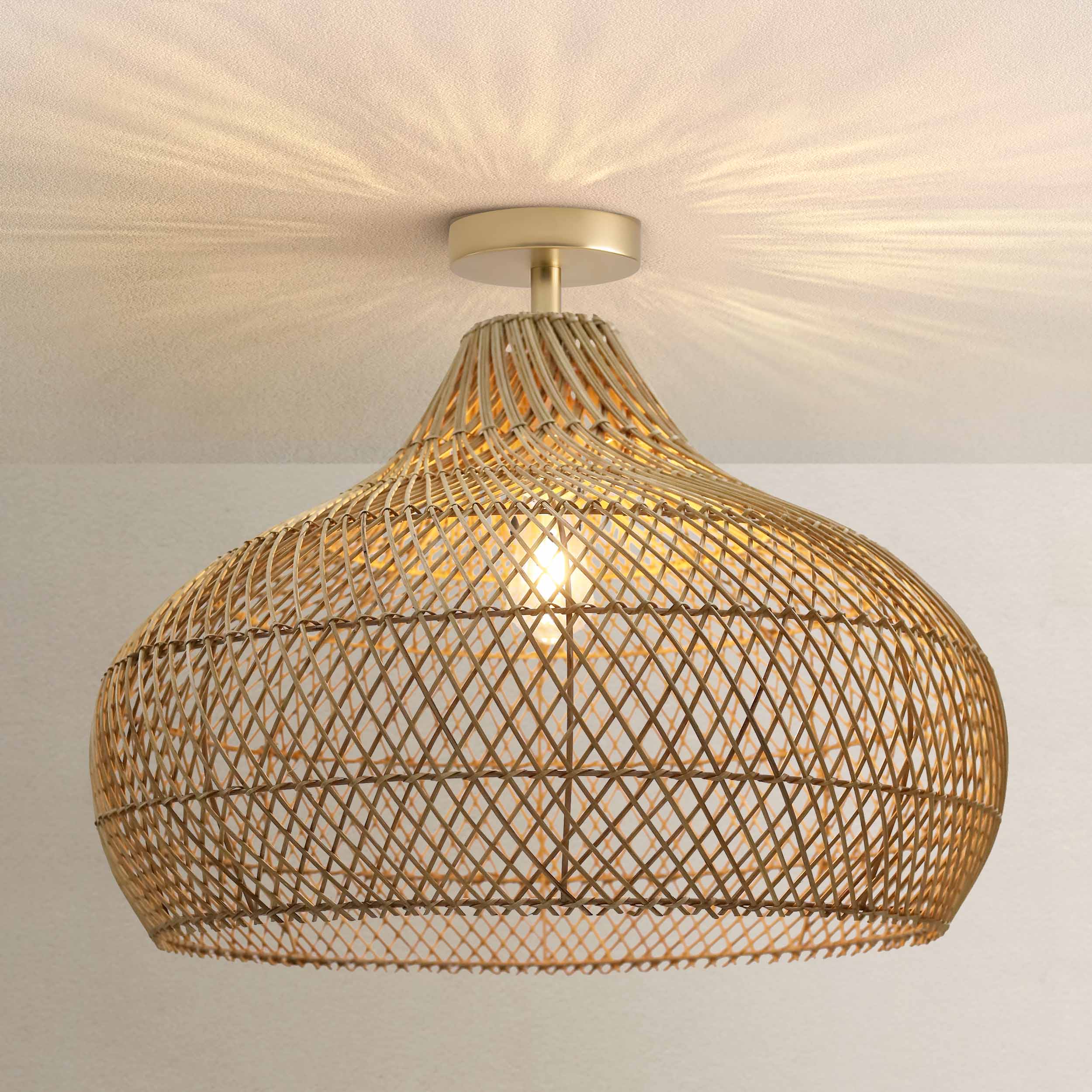
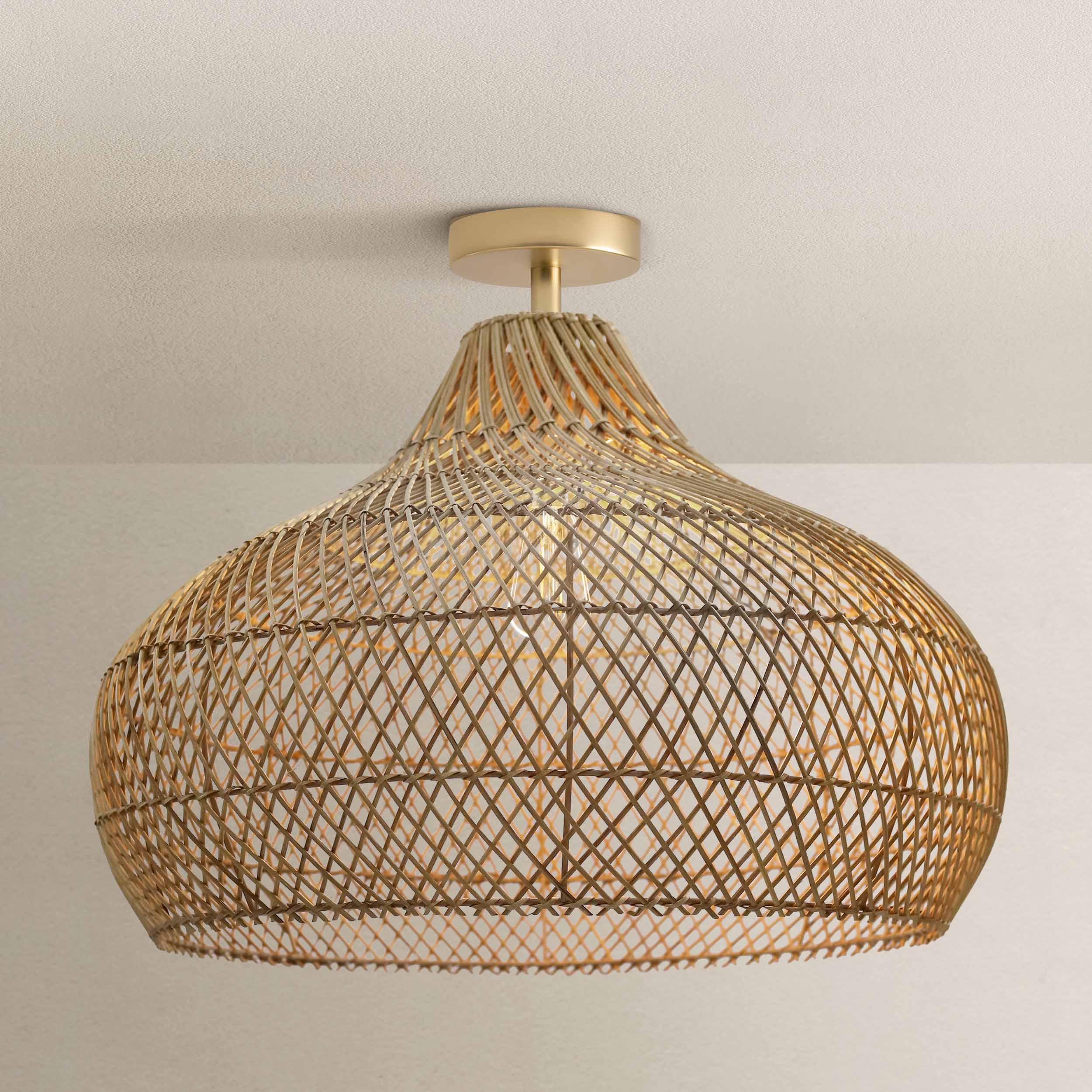
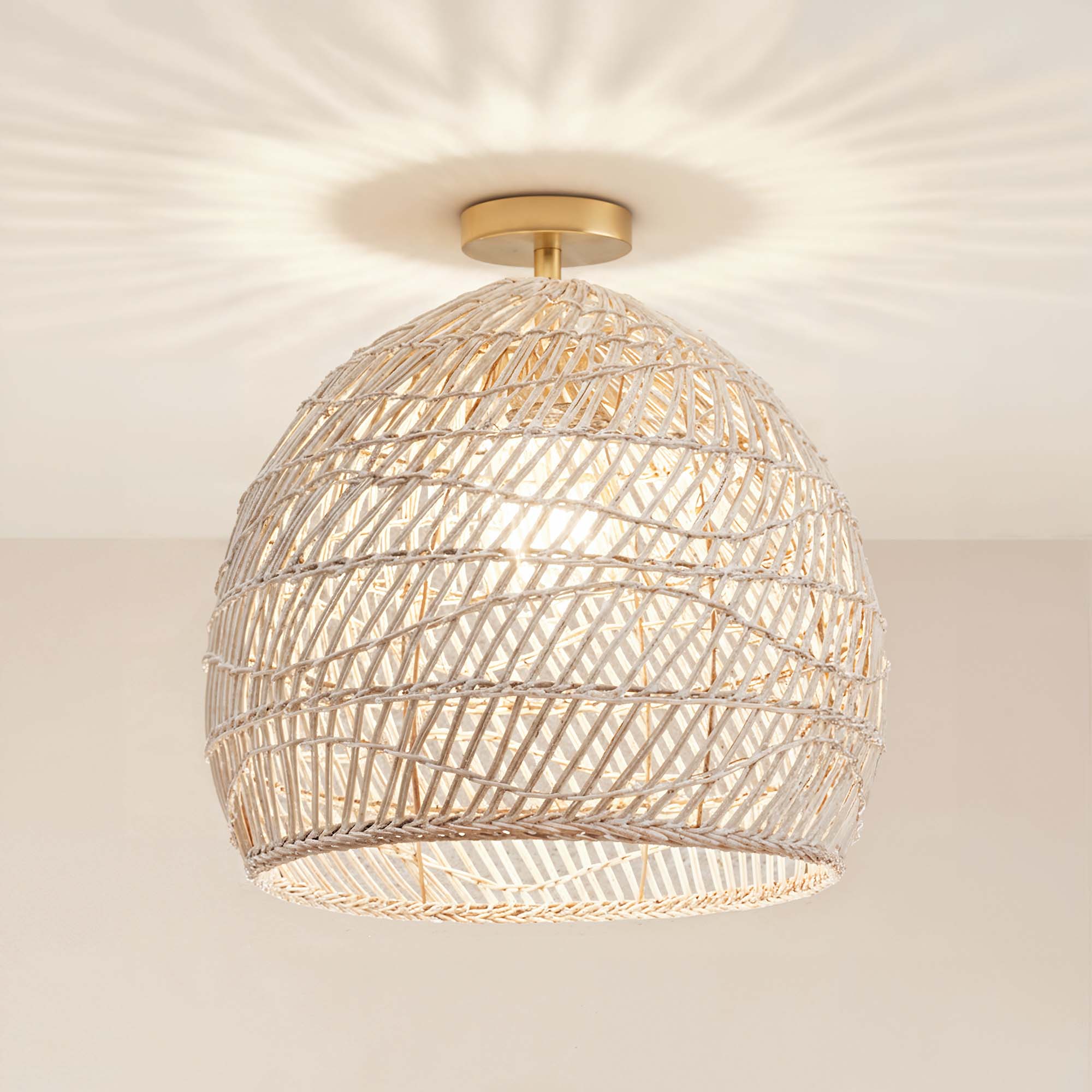
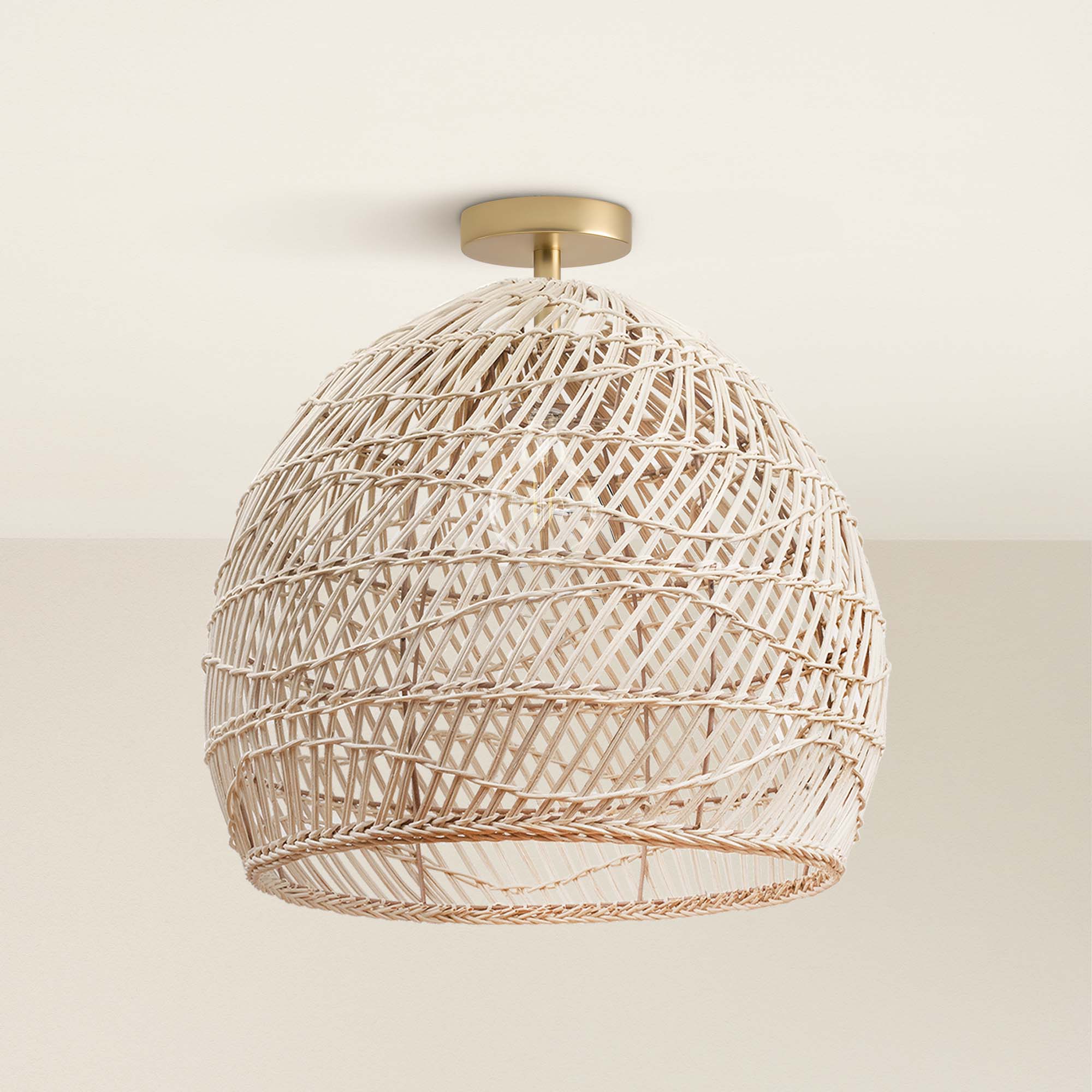
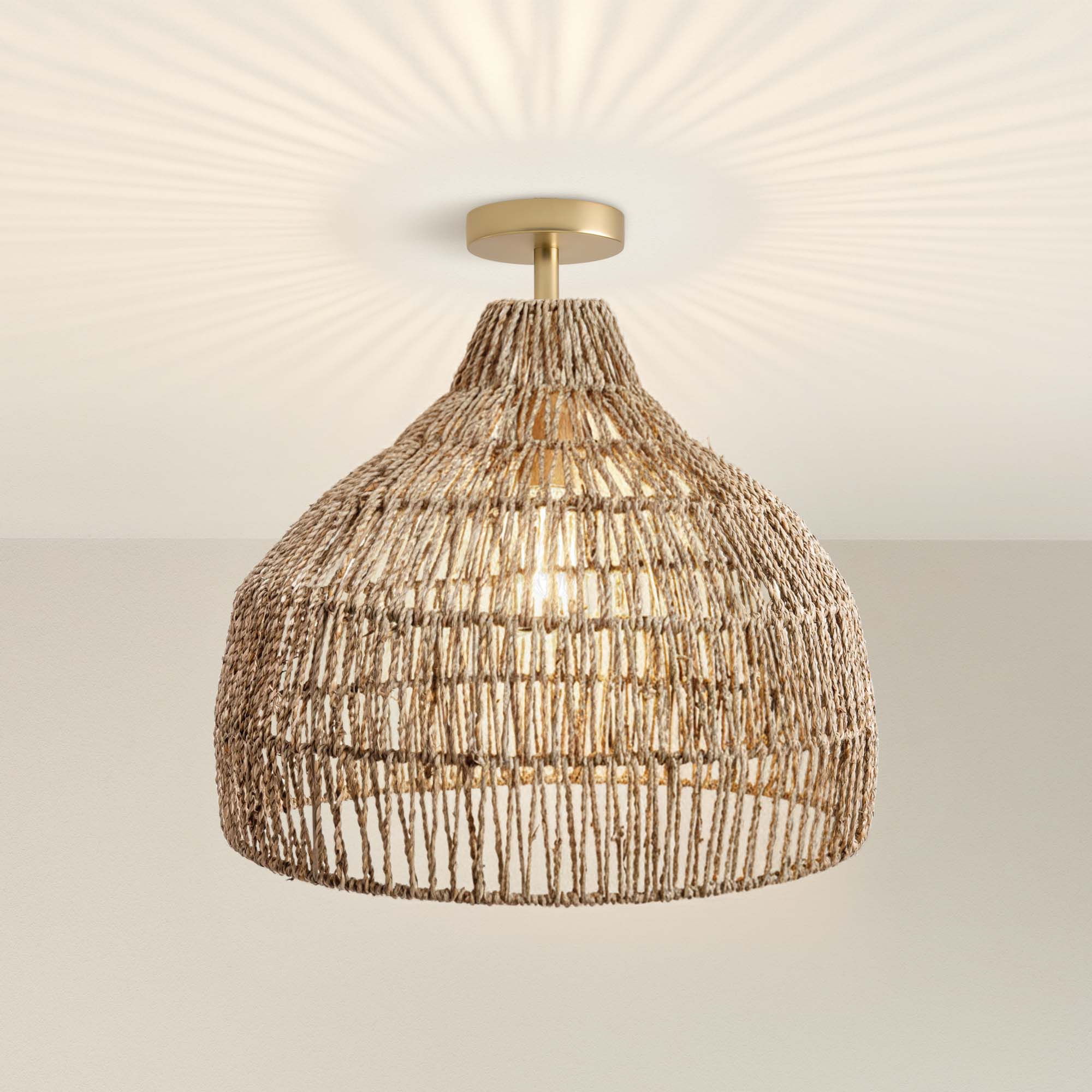
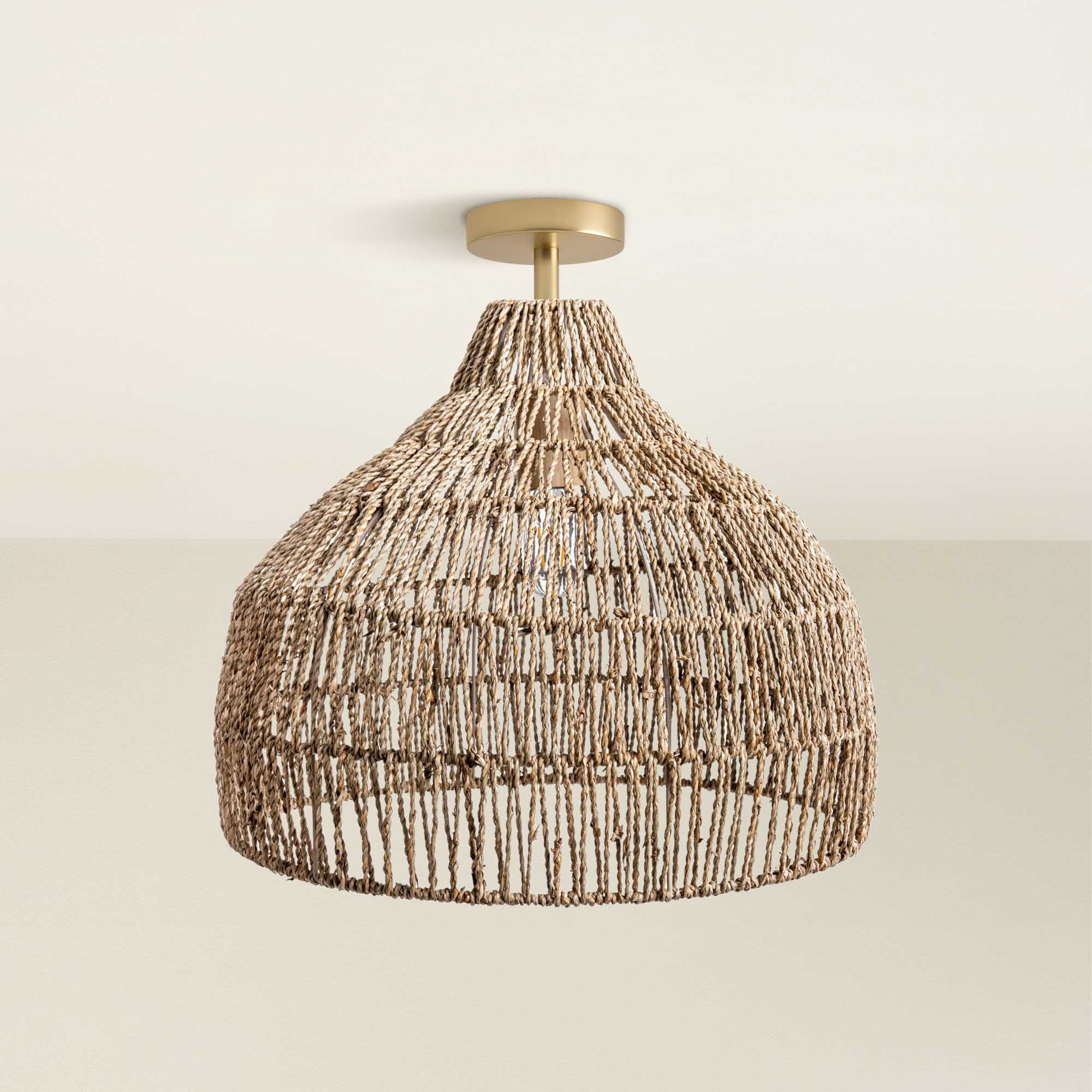
For coastal, organic modern, Japandi, and warm-neutral rooms, Rowabi's rattan flush-mount styles can serve as a texture-layering example: they add handcrafted warmth and material depth to the ceiling without visually lowering it.
How to hang a flush-mount light safely
A flush-mount replacement at an existing electrical box is among the more manageable DIY projects in a home. The safety principles, however, apply regardless of the project's apparent simplicity.
Turn off the power at the circuit breaker
Always ensure the power is switched off at the circuit breaker panel before handling any wiring, canopies, or electrical boxes, and do not rely solely on the wall switch. The wall switch may cut off the circuit load, but it does not eliminate current in the wiring in the ceiling box. Before proceeding, use a voltage tester on the exposed wires; if it shows any current, head back to the breaker panel and verify that the correct circuit is off.
The Electrical Safety Foundation International (ESFI) recommends that homeowners refrain from working on electrical circuits that exceed their expertise and always turn off the power at the service panel prior to any electrical tasks
Check the existing electrical box and mounting bracket
The ceiling's electrical box serves not only as a junction box but also as the fixture's main support. A typical outlet box can support fixtures weighing up to about 35 lbs; for heavier fixtures, a ceiling box that is rated for fans or specific fixtures is necessary.
Before installing a new flush mount, it's essential to ensure that the current box is stable, adequately rated for the fixture's weight, and positioned correctly for the fixture's placement. Any box that is loose, damaged, misaligned, or not rated for the weight of the fixture needs to be fixed, either by reinforcing or replacing it, prior to the fixture installation
Know when to call a licensed electrician
The following scenarios necessitate hiring a licensed electrician rather than attempting it yourself:
- Installing new wiring where there isn’t an existing ceiling box.
- Relocating an electrical box to a new position.
- Putting in a fixture in a bathroom, a covered outdoor space, or any area exposed to moisture.
- Working in hard-to-reach areas, such as stairwells or vaulted ceilings, where the risk of falling is significant.
- Dealing with old or ambiguous wiring that might not comply with current electrical codes.
- Any instance in which a breaker keeps tripping, a fixture emits a buzzing sound, or there are indications of burning or arcing after installation.
Check the damp or wet rating for bathrooms and outdoor spaces
When installing a flush-mount light in a bathroom or outdoor area, it is essential to select a fixture with the correct moisture rating for that specific location.
Underwriters Laboratories (UL) classifies lighting fixtures based on their suitability for different environments: those rated for dry locations are meant for standard indoor use, damp-rated fixtures are suitable for high-humidity areas that won’t have direct water contact, and wet-rated fixtures can withstand direct exposure to rain, water spray, or splashing.

Whether you install by yourself or call an electrician, safety is always the first priority.
Generally, bathrooms fall into the damp location category, although wet location standards apply close to the shower or bathtub. Additionally, covered porches and patios may require at least damp-rated fixtures based on their level of exposure. Using an indoor-only flush mount outside is not advisable, and a damp-rated fixture cannot replace a wet-rated one in areas designated as wet locations
Where to use flush-mount and semi-flush-mount lights by room
With the selection and safety principles established, the room-by-room applications follow a consistent logic: flush-mount for low-ceiling spaces, semi-flush for sufficient ceiling height, and always with attention to the specific room's functional demands.
Hallway flush-mount lights
A flush-mount light is an ideal option for hallways, as it maintains an unobstructed ceiling and keeps the walking area clear. Position the fixture along the hallway's central line, or use several smaller fixtures at regular intervals in long corridors to eliminate dark areas between the light sources.
In narrower hallways, the depth of the fixture's projection is just as important as its width; a fixture that protrudes 6 inches from the ceiling will feel more intrusive in a 36-inch-wide corridor compared to one that is nearly flush.

Incorporating a rattan flush mount can elevate a basic builder-grade hallway to a more thoughtfully designed space, especially in homes featuring white walls and wood floors, where a single textured ceiling fixture can significantly alter the room's overall ambiance
Entryway flush-mount lights
An entryway flush-mount or compact semi-flush-mount is often the most practical choice for a standard-height entry with an 8-foot ceiling, where a pendant long enough to make a visual statement would consume clearance the space cannot spare.
The fixture should be substantial enough to create the welcoming first impression an entryway needs. This is not the place for the smallest available fixture, yet it still sits close enough to the ceiling to feel intentional rather than constrained.

A rattan flush mount in a coastal or organic modern home creates the warm, handcrafted entry quality that defines those aesthetics; a modern flush mount in a clean-lined contemporary entry communicates precision and restraint.
Bedroom flush mount lights
For an 8-foot bedroom ceiling, a flush-mount fixture centered over the room provides warm, even ambient light that sets the bedroom's daytime brightness and can be dimmed for evening use.
A semi-flush mount works in the same bedroom if the fixture's drop is short and the room does not require full walkable clearance beneath the light at any point. A rattan flush mount in a coastal, warm-neutral, or organic bedroom adds textural warmth at ceiling level.

For instance, Rowabi's rattan flush-mount styles serve this function by diffusing warm light through a woven surface, giving the room's ceiling the same natural material quality found in the textiles and furniture below it.
Living room flush mount and semi-flush mount lights
In an 8-foot living room, a flush mount or short semi-flush mount is more appropriate than a pendant because the walkway clearance requirement eliminates most hanging fixtures in the open floor area.
Center the fixture not over the room's geometric center but over the primary seating zone, the sofa and coffee table arrangement, which is where the light actually needs to land. A semi-flush mount at 9-foot ceiling height can add the visual dimension that a flat flush mount lacks, making the ceiling feel more considered.

Layer wall sconces or table lamps around the seating perimeter to complete the ambient coverage that a single ceiling fixture cannot provide on its own.
Kitchen flush mount lights
In a small kitchen or galley kitchen without an island, a flush-mount ceiling light provides the general overhead brightness that food prep and navigation require. Center the fixture over the open floor area rather than over cabinetry or the sink, where a fixture directly above creates a shadow zone at the work surface.

In a kitchen with an island, the island zone may suit a pendant at the appropriate height, while the remaining walkway areas use a flush mount for clearance. Choose a fixture that is easy to clean because kitchens accumulate grease and dust at the ceiling level, and a complex woven or fabric shade requires more maintenance than a glass or metal flush mount in this location.
Bathroom flush mount lights
Bathroom flush mounts are ideal for rooms that combine high humidity with the need for clean, functional overhead light. Center the fixture over the open floor area of the bathroom, not directly above the shower or tub unless the fixture is specifically wet-rated for that zone.

For a small bathroom with one ceiling fixture, the flush-mount fixture handles general ambient lighting, while a vanity sconce beside the mirror provides the face-level light that a ceiling-only bathroom always lacks. Confirm the moisture rating for the specific installation position before purchasing.
Kids room flush mount lights
In a kids' room, a flush-mount ceiling light is the safest primary fixture choice because it eliminates the clearance and contact risks posed by hanging fixtures in a room where children jump, throw things, and occasionally climb on furniture.

Choose a fixture with a shaded or diffused surface rather than an exposed bulb, and a warm bulb (2700K–3000K) for the room's general comfort. A rattan flush mount creates a soft, organic quality appropriate to a younger child's room and ages well through childhood without needing to be replaced as the child grows.
Covered porch or coastal indoor-outdoor spaces
A flush mount on a covered porch or covered outdoor ceiling requires the correct moisture rating for the specific exposure level of that location. A well-protected covered porch that sees minimal moisture may qualify for a damp-rated fixture; one that receives rain blown in by wind or is in a high-humidity coastal climate may require a wet-rated fixture or a product specifically designed for outdoor use.

Do not install an indoor-only flush mount, including a rattan flush mount not rated for outdoor use, in any outdoor location, regardless of how covered the space appears.
How to place flush mount lights correctly
The right fixture in the wrong position still leaves a room feeling unlit or off-balance. Ceiling light placement answers where on the ceiling the fixture goes, and the answer is rarely simply "the center."
Center the light based on the room or the functional zone
In most bedrooms and small rooms, centering the flush mount over the room itself is the right call.
Let’s go into detail. In a living room with a defined seating arrangement, the fixture should center over the seating zone rather than the room's geometric middle. In a hallway, center along the walking path. In an entryway, center over the primary architectural feature, like the front door, a console table, or the foyer's visual axis. In a kitchen, center over the open working area rather than the cabinetry.
The fixture should serve the space as it is actually used, not the space as it is measured.
Use more than one fixture in long or narrow spaces
A single flush-mount in a long hallway or an extended laundry room leaves the areas farthest from the fixture noticeably dimmer than the zone directly below it. Multiple smaller fixtures distributed evenly along the space produce more consistent, comfortable coverage.
Space them based on the room's length and the location of doorways or architectural interruptions. That makes a consistent visual rhythm matter more than a mathematically precise measurement. Two or three coordinated flush mounts in a long hallway read as intentional; one undersized fixture at the center reads as insufficient.
Avoid placing fixtures too close to doors, cabinets, or ceiling fans
Before finalizing a ceiling light position, check for conflicts with door swings, cabinet doors, and existing ceiling fans.
A flush-mounted fixture centered in a room with a ceiling fan may fall within the fan's blade radius, creating both a hazard and an aesthetic problem. Cabinet doors that swing upward, closet doors that open outward, and bedroom doors that sweep a wide arc all deserve a clearance check against the fixture position before the electrical box location is committed.
Best flush mount styles for coastal and warm-weather homes
Style selection for a flush mount is where the functional decision meets the room's design intention. The two most broadly applicable categories in the U.S. residential market are rattan and modern.
Rattan flush mount lights for coastal and organic interiors
Rattan flush mount lights work well in rooms where the design language includes natural materials: white oak, linen, natural stone, unlacquered brass, cotton textiles, or limewash plaster. The woven surface adds texture and handcrafted warmth to the ceiling in a way that a metal or glass fixture cannot, while the material's lightness keeps the fixture from reading as visually heavy despite its presence.

Brands like Rowabi offer rattan flush-mount ceiling lights that can serve as a texture-layering example for coastal, organic modern, Japandi, cottage, and warm-neutral homes where the goal is warmth without visual weight. Because the fixture sits flat against the ceiling, it adds this quality without consuming any of the headroom that a low-ceiling room needs.
Modern flush mount lights for clean contemporary rooms
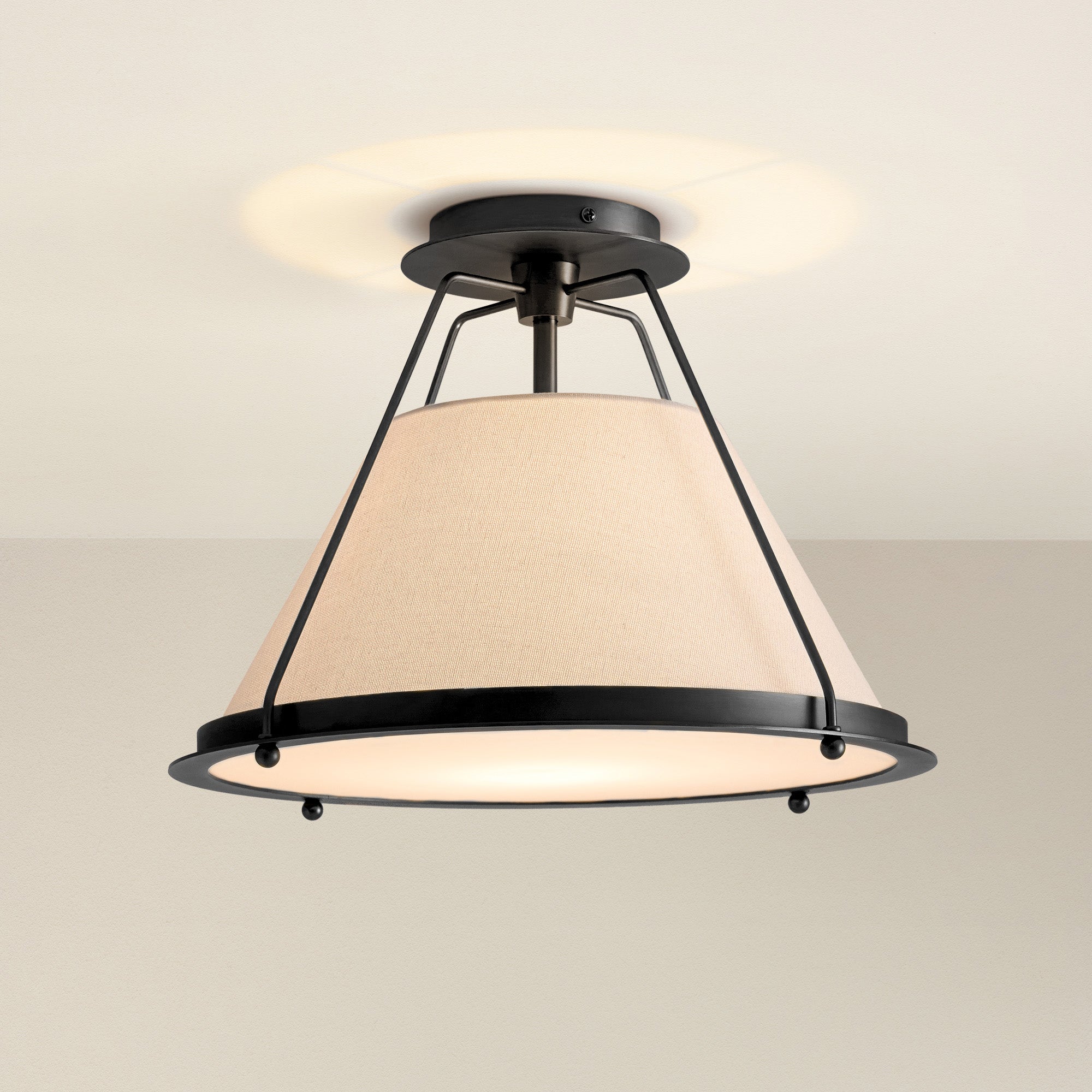
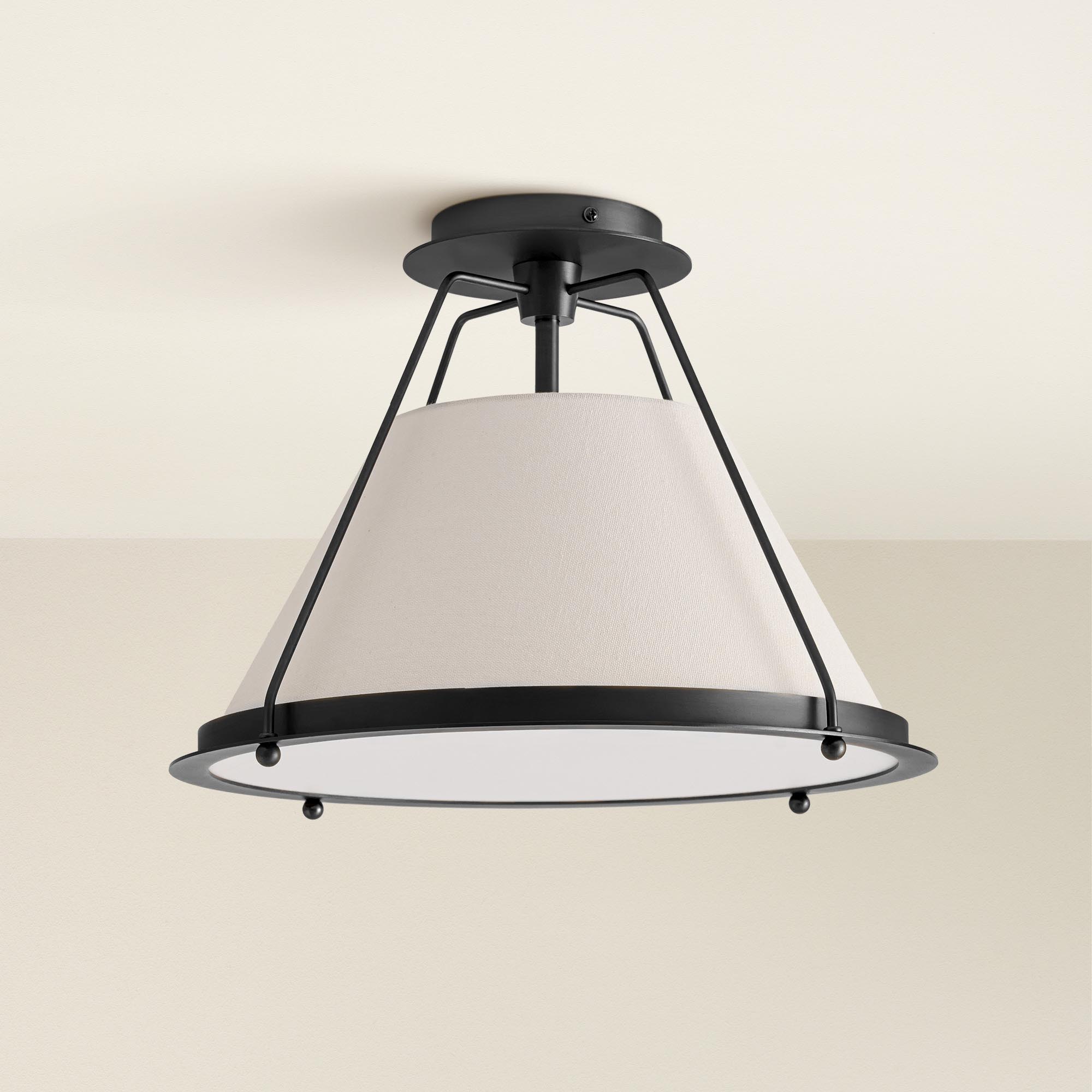
Modern flush mounts in slim metal, opal glass, or clean architectural forms suit rooms built on precision and restraint for minimal hallways, contemporary bathrooms, and bedrooms with flat-panel cabinetry or clean-line furniture where a textured natural material would introduce visual warmth the design intentionally avoids.

A slim-profile modern flush mount in an 8-foot bathroom adds a considered ceiling fixture without the visual weight of a more decorative option. Modern and rattan flush mounts can also coexist in the same home, each serving the room whose character it best suits.
When to choose rattan flush mount vs modern flush mount
| Situation | Better fit | Why |
| Coastal bedroom | Rattan flush mount | Warm, soft, natural material |
| Organic modern hallway | Rattan flush mount | Adds texture to plain walls |
| Contemporary bathroom | Modern flush mount | Clean, low-profile, practical |
| Minimal entryway | Modern or rattan flush mount | Depends on warmth vs sharpness |
| Kids room | Flush-mount/ rattan flush-mount | Keeps headroom and softens space |
| Low 8-foot ceiling | Flush mount | Best choice for clearance |
| 9-foot ceiling needing dimension | Semi-flush mount | Adds visual depth |
Common mistakes when hanging flush mount lights
Choosing a fixture that hangs too low.
A semi-flush mount with a 12-inch drop in an 8-foot ceiling leaves only 7 feet of clearance, technically at the minimum, but uncomfortably close in a room where people move freely. A fixture that drops further than this in a walkway is both a safety concern and a visual problem that makes the ceiling feel lower than it is.
When the ceiling height is constrained, default to a flush mount and reserve semi-flush options for rooms where the ceiling genuinely has room for them.
Choosing a fixture that is too small.
The builder-grade dome light that flush-mounts is commonly undersized for the room it serves, which is part of why the rooms feel generic. Upgrading to a flush-mount of appropriate scale immediately changes the room's feel.
A textured flush mount, like a rattan version, has more visual presence per inch of diameter than a plain glass dome, which means a rattan fixture can serve a room well at a slightly smaller diameter than a plain alternative would require.
Ignoring bulb brightness and glare.
A flush mount with an exposed bulb or a thin, highly transparent shade will produce glare from any angle where the bulb is visible. A diffused shade of frosted glass, fabric, or woven rattan distributes light over a wider area at a lower intensity, producing more comfortable ambient light and eliminating the hot-spot effect at the fixture's center.
Confirm "dimmable" on the LED bulb packaging before pairing with a dimmer switch; not all LEDs are compatible with all dimmers.
Using indoor-only lights in damp or outdoor areas.
An indoor-only flush-mount installed in a bathroom's shower zone or on a covered porch is a safety and code issue, regardless of how attractive the fixture is. Moisture rating must match the installation zone; damp-rated does not substitute for wet-rated in zones with direct water contact.
Bulb choice, brightness, and color temperature
Best color temperature for flush mount lights
2700K–3000K warm white is the right choice for bedroom, living room, and hallway flush mounts. It creates the calm, settled atmosphere that these rooms need. 3000K works well for entryways and kitchens where a slightly crisper light suits the function without feeling clinical. 3500K–4000K is appropriate for laundry rooms, utility spaces, and task-heavy areas where visual clarity is more important than warmth.
Keeping color temperatures consistent across all fixtures in a room prevents the mismatched look that can make a room feel visually unsettled.

Lumens and room brightness
Lumens measure actual light output; watts measure energy consumption. For a flush mount in a bedroom or living room, 800–1,200 lumens from a warm LED is typically sufficient for comfortable ambient light. Laundry rooms, bathrooms, and kitchens may benefit from 1,200–1,600 lumens for clearer functional visibility.
According to the DOE, LED bulbs use at least 75% less energy than incandescent equivalents and emit very little heat, making them the standard choice for any ceiling fixture. If a dimmer is part of the plan, confirm that the LED bulb is specifically labeled "dimmable" before installing it.
Flush mount installation planning checklist
Before purchasing or installing any flush mount or semi-flush mount, work through this list:
- Measure ceiling height: 8 ft., 9 ft., 10 ft., or vaulted
- Decide between flush mount and semi-flush mount based on ceiling height
- Check fixture diameter against the room size formula (length + width in feet = suggested diameter in inches)
- Confirm total fixture drop and verify 7 feet of floor clearance in walkways
- Choose fixture style: rattan, modern, glass, metal, or fabric
- Confirm the fixture is rated for bathroom or outdoor use if needed
- Check the existing electrical box and confirm it is secure and rated for the fixture's weight
- Confirm mounting bracket compatibility with the fixture
- Choose bulb type, brightness (lumens), and color temperature (Kelvin)
- Confirm LED/dimmer compatibility if using a dimmer switch
- Turn off the power at the circuit breaker before starting
- Use a voltage tester before touching any wires
- Call a licensed electrician for new wiring, moved boxes, heavy fixtures, uncertain wiring, or bathroom/outdoor installation
Room-by-room flush mount placement guide
| Room / Area | Placement rule | Best fixture choice |
| Hallway | Space multiple fixtures to avoid dark pockets | Rattan flush mount, low-profile light |
| Bedroom | Center over the room or specific bed zone | Rattan flush-mount ceiling light |
| Living Room | Center over seating area; maintain 7-ft clearance | Flush-mount ceiling light, semi-flush |
| Kitchen | Center in open area; avoid cabinet door swings | Modern flush mount, glass fixture |
| Bathroom | Center in open floor space; check damp/wet rating | Damp/wet-rated bathroom flush mount |
| Entryway | Align with the front door or the console | Decorative entryway flush mount light |
| Kids Room | Keep close to the ceiling, away from bunk beds | Soft material flush mount light |
FAQs
How do you hang a flush-mount light?
- A flush-mount light is installed by attaching the fixture's mounting bracket to the existing electrical box in the ceiling, connecting the fixture's wires to the house wiring, and securing the canopy to the ceiling surface. Always turn off the power at the circuit breaker first, verify that the power is off with a voltage tester, and follow the manufacturer's instructions for the specific fixture.
Can I install a flush-mount ceiling light myself?
- Replacing an existing fixture at an established electrical box may be manageable for experienced DIYers. New wiring, moved junction boxes, old wiring, heavy fixtures, bathroom or outdoor installations, and uncertain electrical conditions should be handled by a licensed electrician.
What is the difference between flush-mount and semi-flush-mount lights?
- A flush mount sits directly against the ceiling with no visible gap; a semi-flush mount hangs slightly below the ceiling, typically 4–12 inches. The semi-flush mount adds visual dimension and bounce light, while the flush mount maximizes headroom.
Are flush-mount lights good for 8-foot ceilings?
- Yes, flush-mount lights are one of the best choices for 8-foot ceilings because they preserve full headroom and keep the room feeling open rather than crowded at ceiling level.
How low can a semi-flush mount light hang?
- A semi-flush mount can hang below the ceiling, but in any walkway or living area, it should leave at least 7 feet of clearance from the floor to the lowest point of the fixture. In an 8-foot ceiling room, this limits semi-flush options to very short drops.
What size flush-mount light do I need?
- Start with the room length plus room width in feet, and use that number in inches as a suggested fixture diameter. Adjust based on ceiling height, room function, and fixture visual weight. A rattan or textured fixture may read as proportionally larger than a plain glass fixture of the same diameter.
Can I use a flush-mount light in a bathroom?
- Yes, but the fixture must carry the appropriate moisture rating for the specific bathroom zone. General bathroom areas typically require damp-rated fixtures; zones near the shower or tub may require wet-rated fixtures.
Are rattan flush-mount lights good for coastal homes?
- Rattan flush mounts work particularly well in coastal, warm-neutral, organic modern, Japandi, and cottage-style homes because the woven natural material adds texture and warmth at ceiling level without consuming the limited headroom that low-ceiling rooms need to preserve.
Conclusion
For 8-foot ceilings, flush mount is almost always the right call. It preserves headroom, keeps clearance, and removes the awkward visual compression that even a short pendant can create in a low-ceiling room. Semi-flush mounts, same same but different, earn their place at 9 feet and above, where the additional drop adds dimension without creating a problem. Bathroom and outdoor installations add a mandatory layer to the decision: rating before style.
Browse Rowabi flush mounts for a range of woven styles suited to low-ceilinged rooms, or reach out to the team for guidance on sizing and placement before you install.




Leave a comment
This site is protected by hCaptcha and the hCaptcha Privacy Policy and Terms of Service apply.