

Pendants
When hanging island pendants, leave about 30–32" from the island countertop to the bottom of your fixture, and space each pendant about 30" apart.

Linear
For linear island lights, go with a fixture with a length that does not exceed 2/3 of the island. For a very long island, consider two linear lights if your electrical situation allows it.

Pendants
When hanging island pendants, leave about 30–32" from the island countertop to the bottom of your fixture, and space each pendant about 30" apart.
Linear
For linear island lights, go with a fixture with a length that does not exceed 2/3 of the island. For a very long island, consider two linear lights if your electrical situation allows it.
Best Selling Lighting
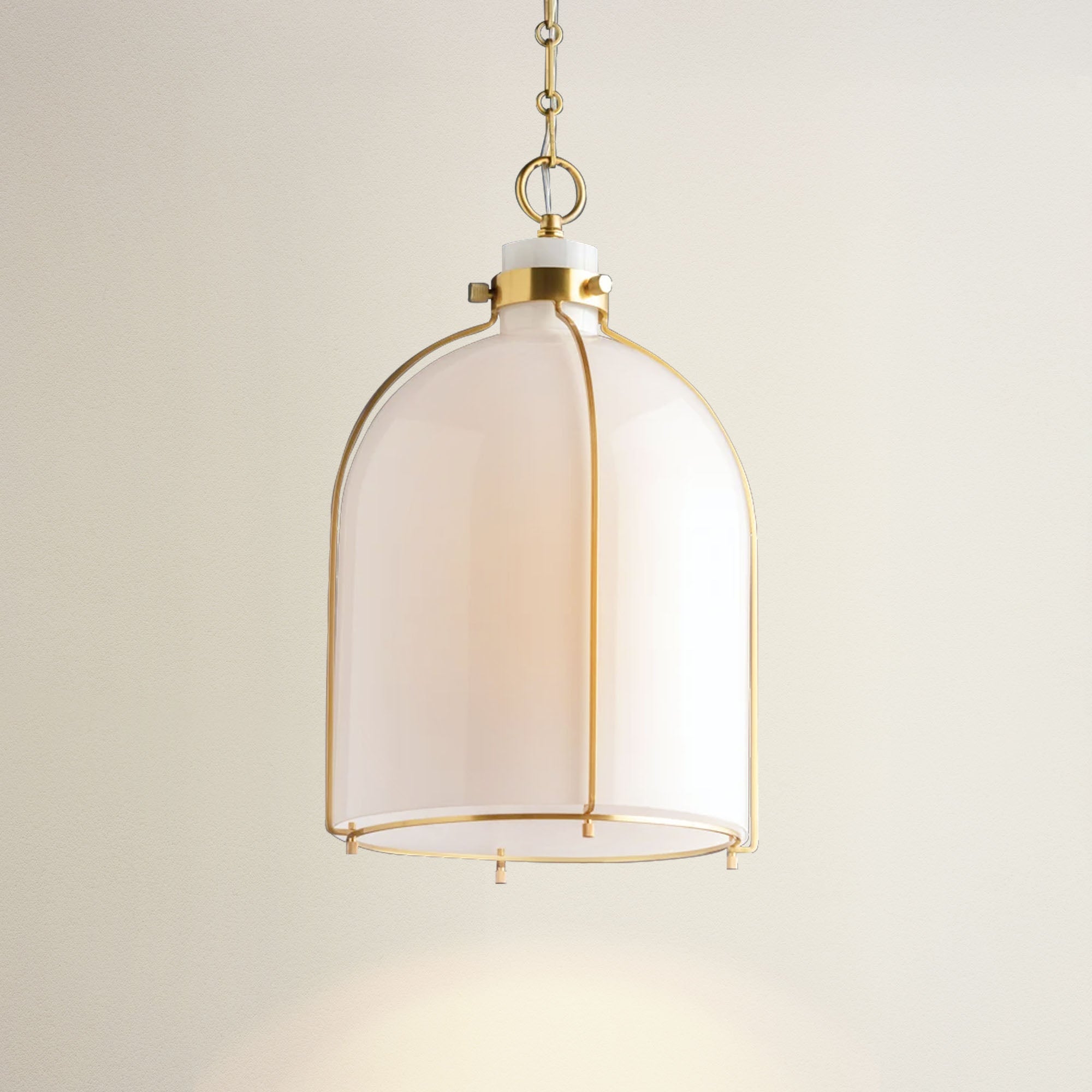
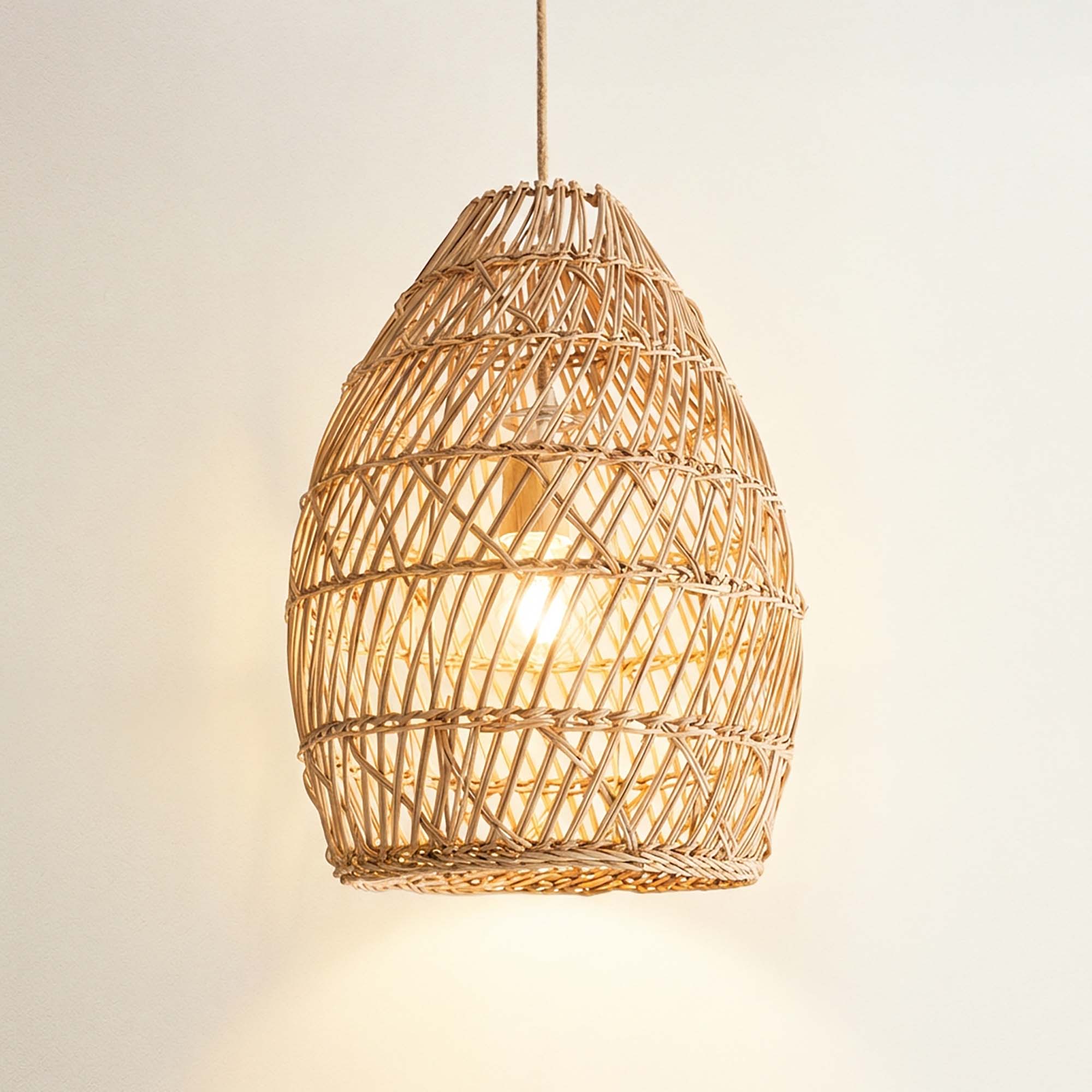
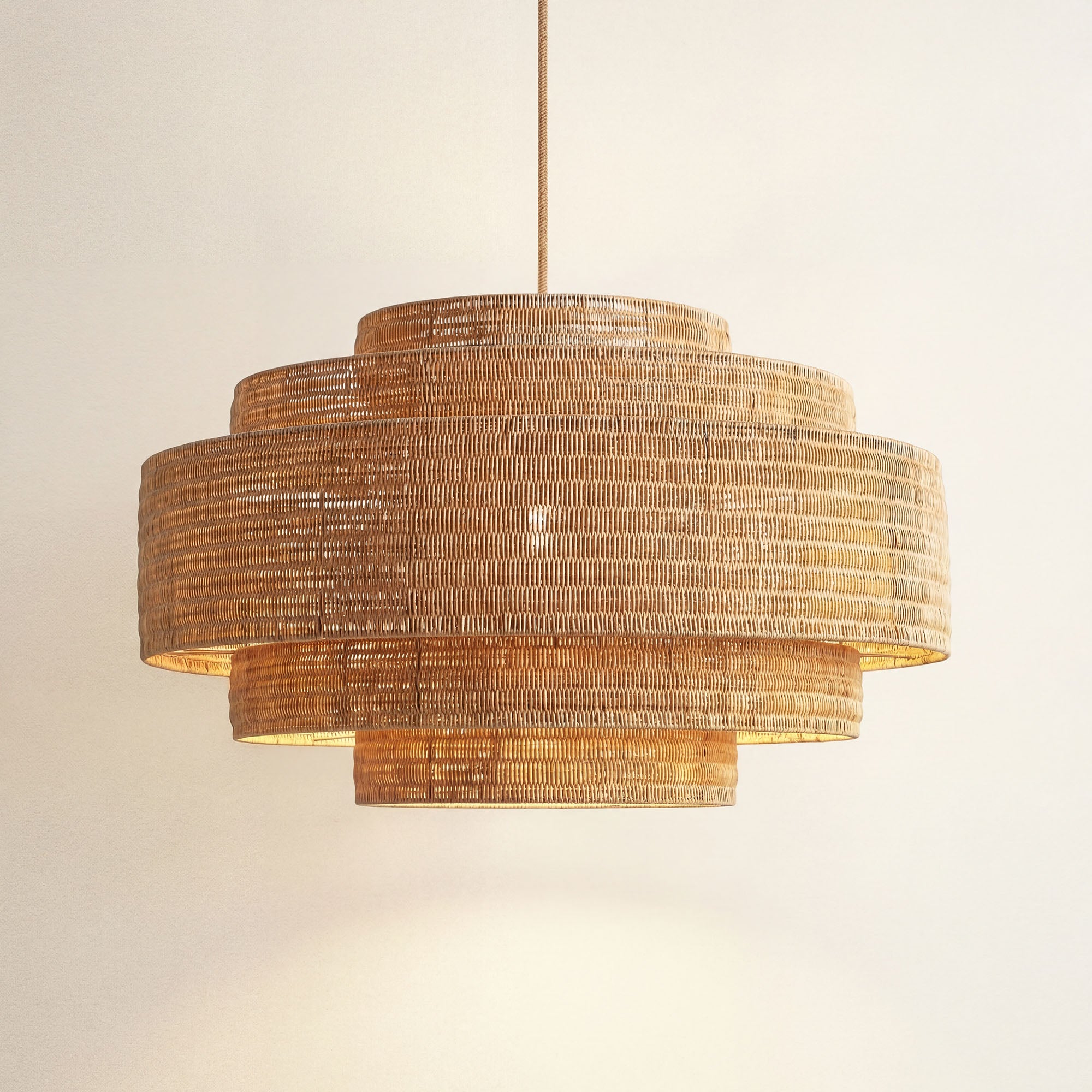

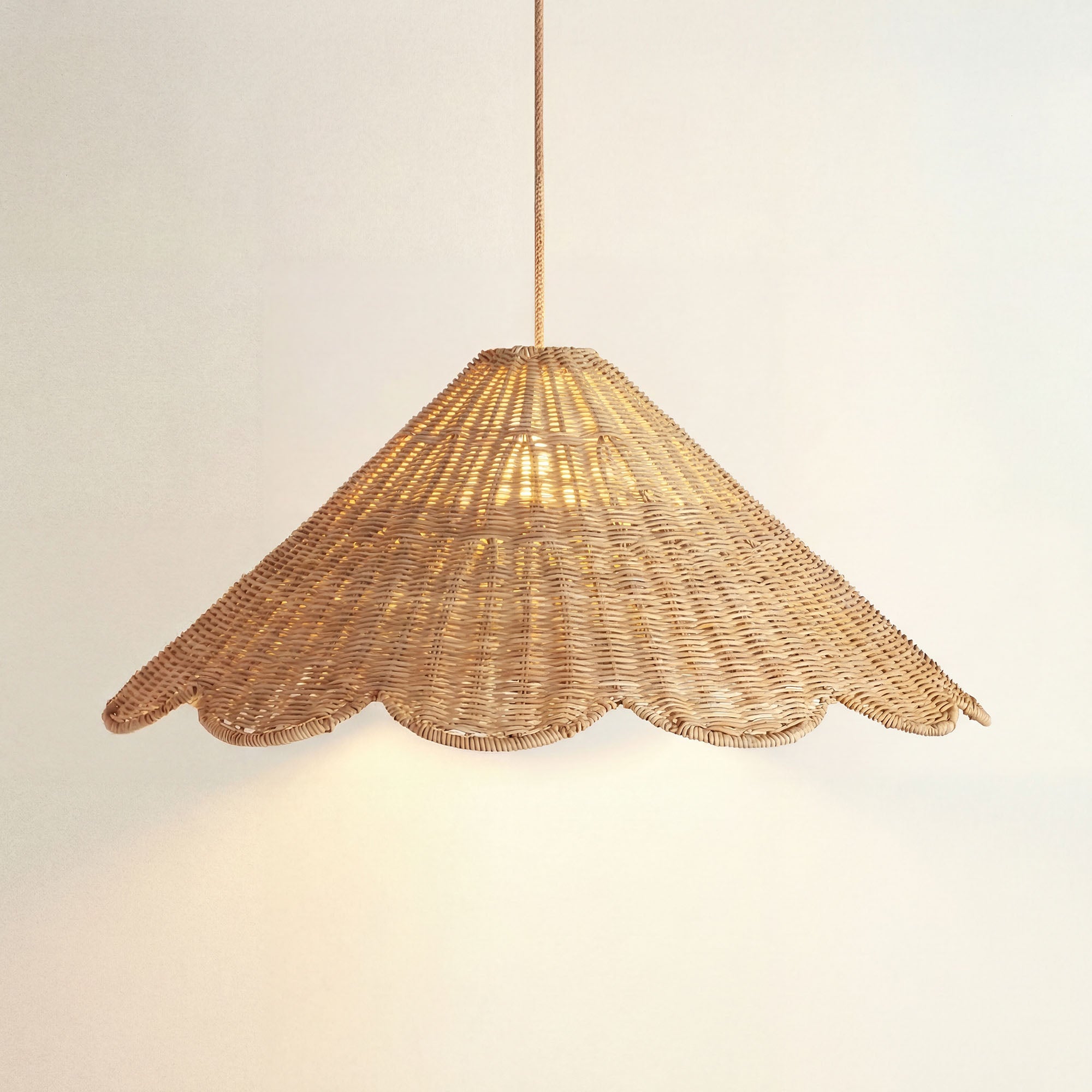
Chandeliers
Keep 36" between the table and the chandelier's lowest-hanging point. For a rectangular table, the ideal width is 6" less than all edges of the table.

Pendants
For round tables, compare the diameters of the table and the fixture to ensure the fixture is positioned 12–18" in from the table’s edge.

Chandeliers
Keep 36" between the table and the chandelier's lowest-hanging point. For a rectangular table, the ideal width is 6" less than all edges of the table.
Pendants
For round tables, compare the diameters of the table and the fixture to ensure the fixture is positioned 12–18" in from the table’s edge.
Best Selling Lighting
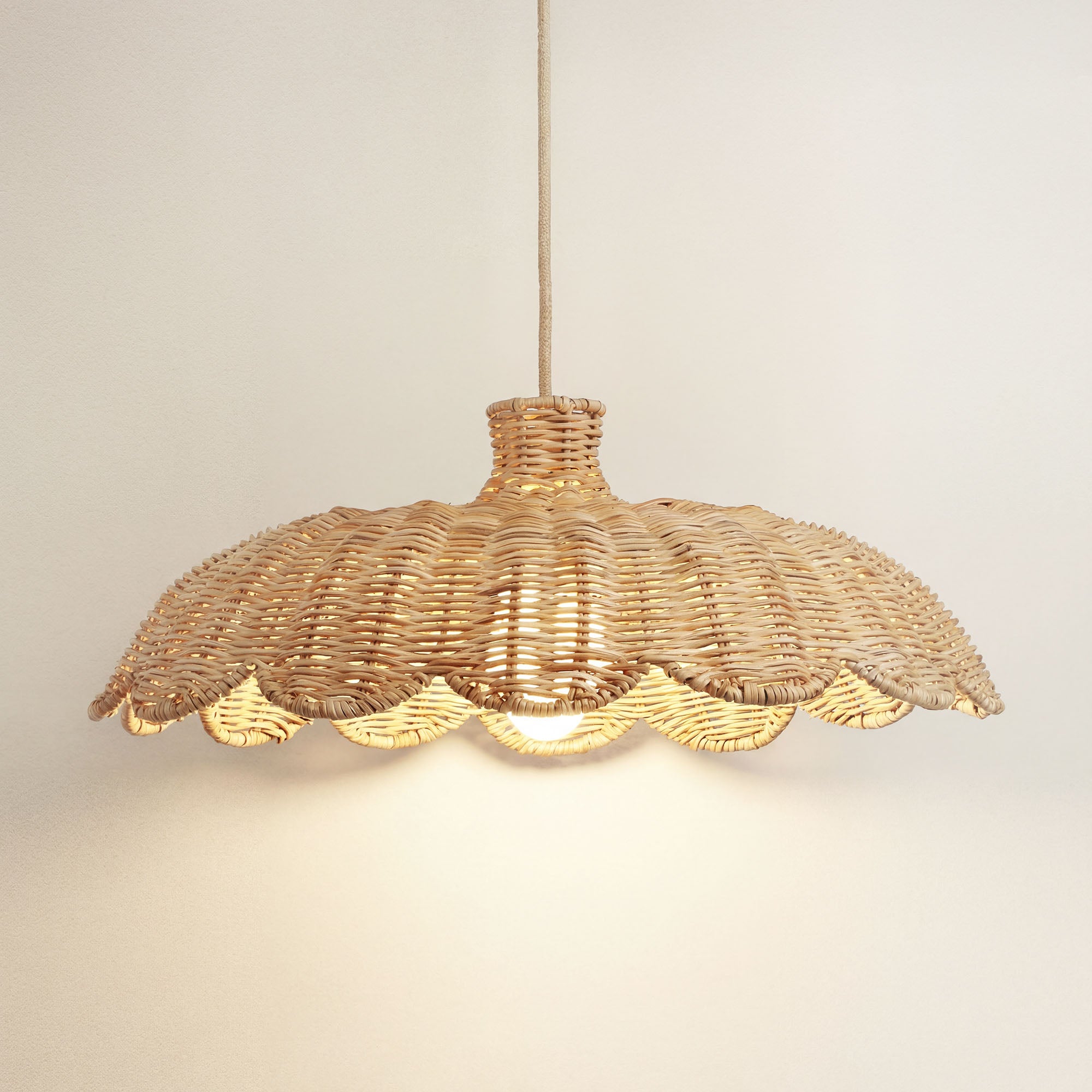
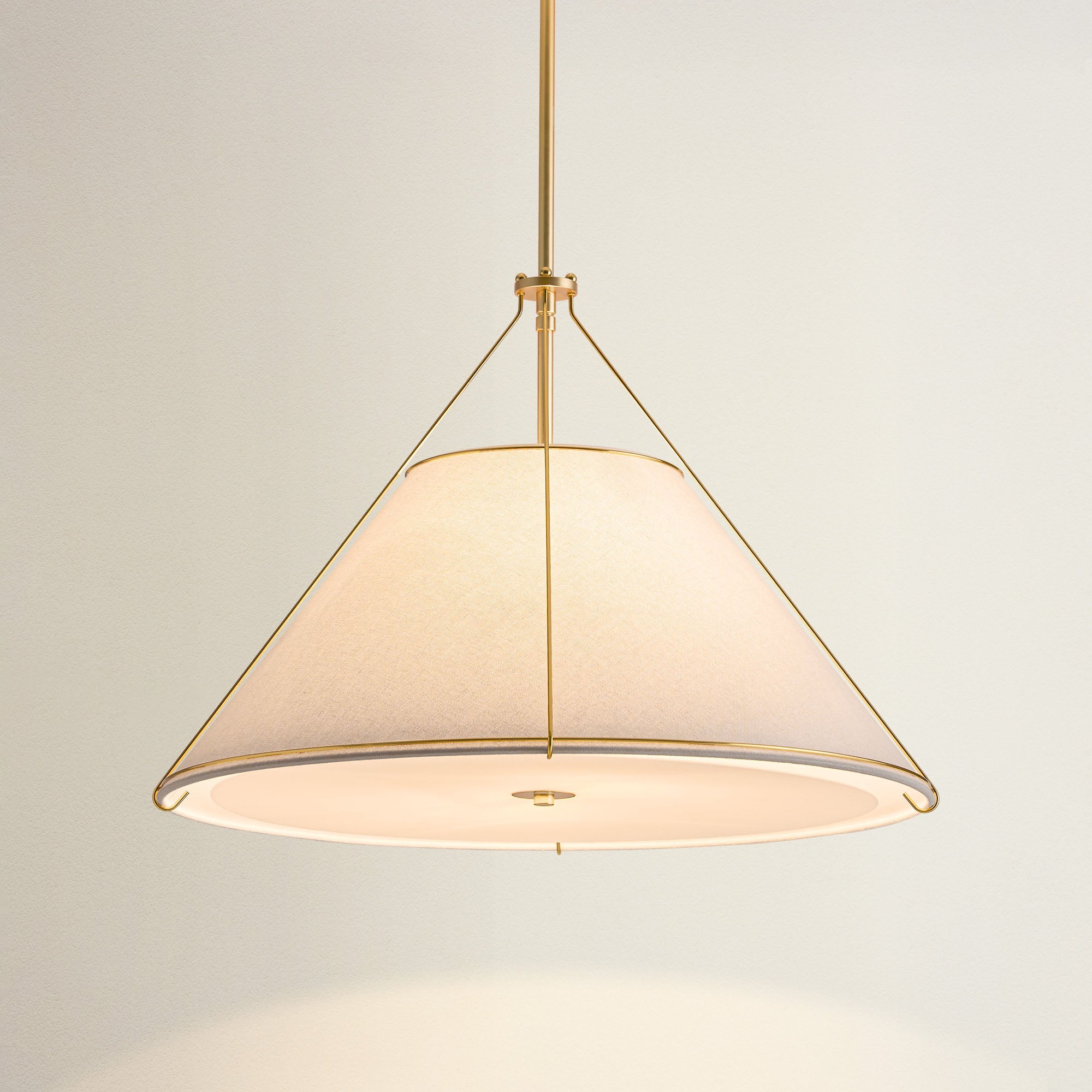
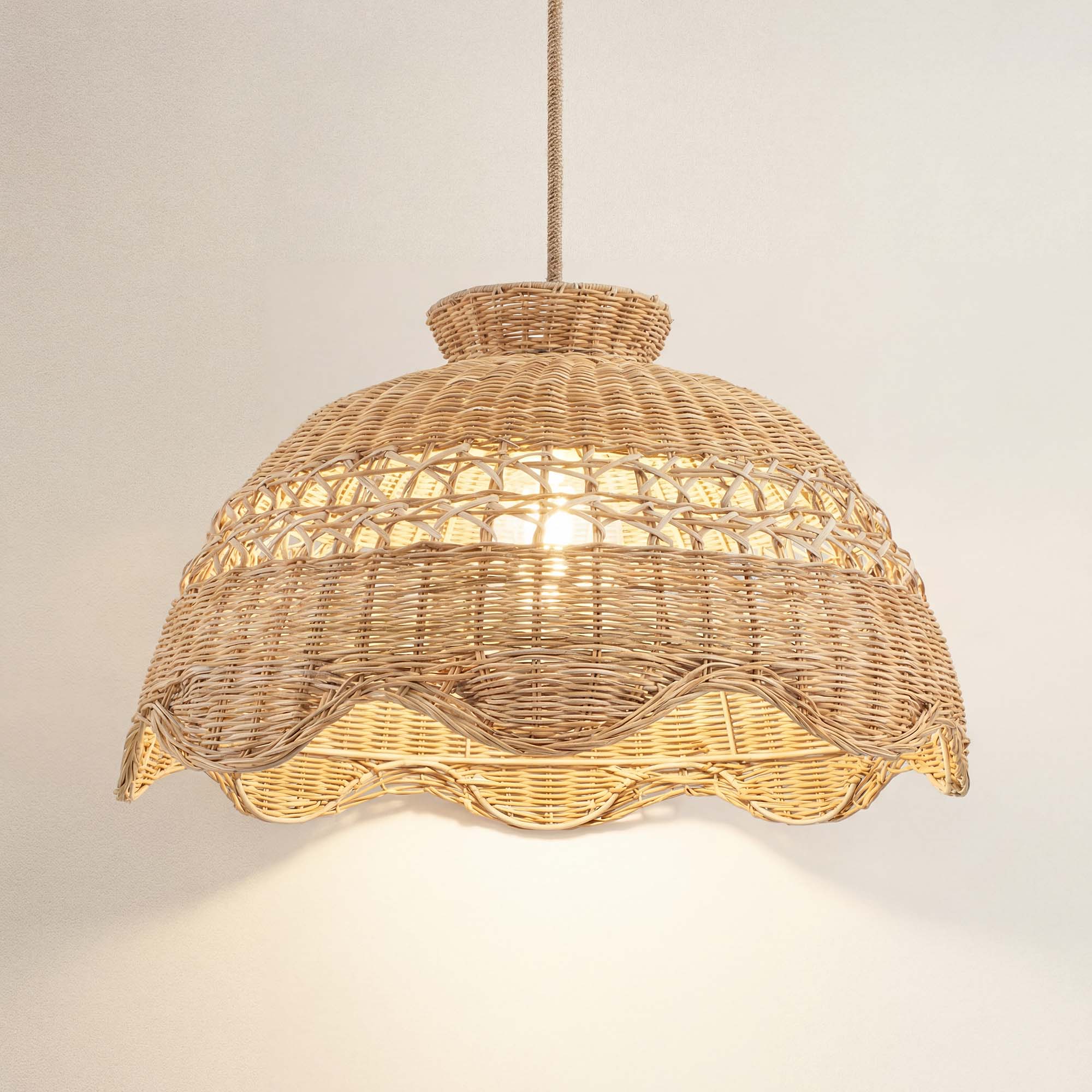
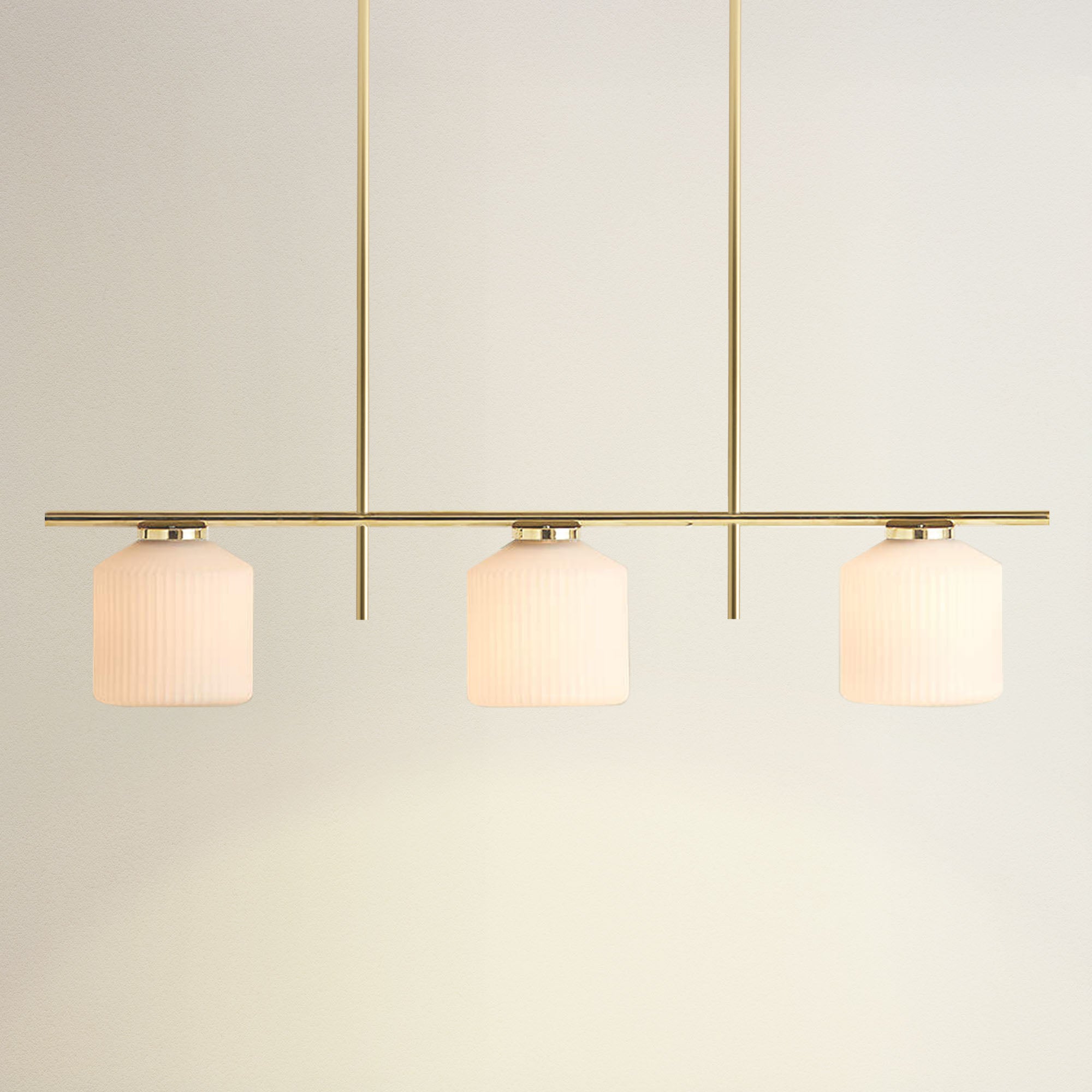
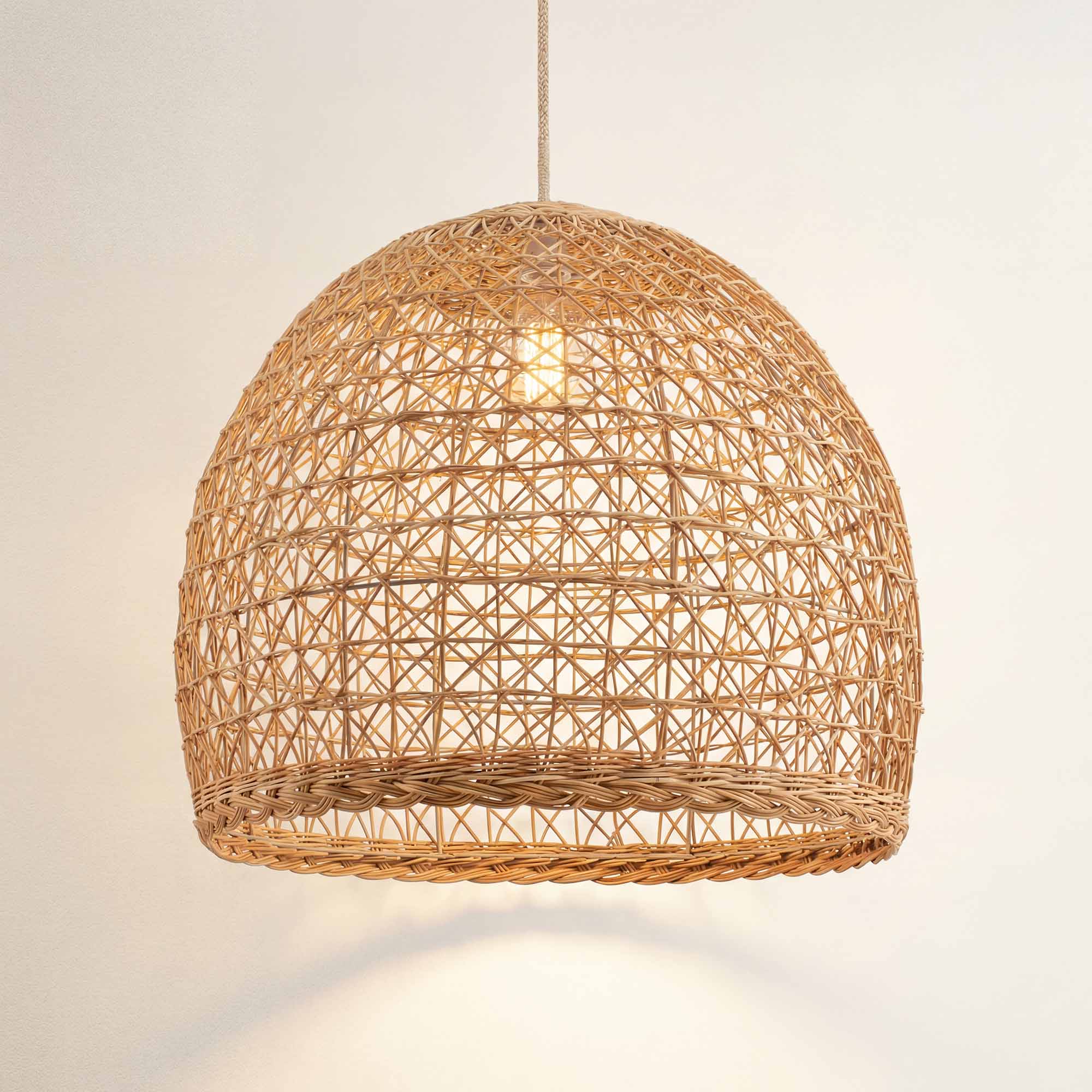
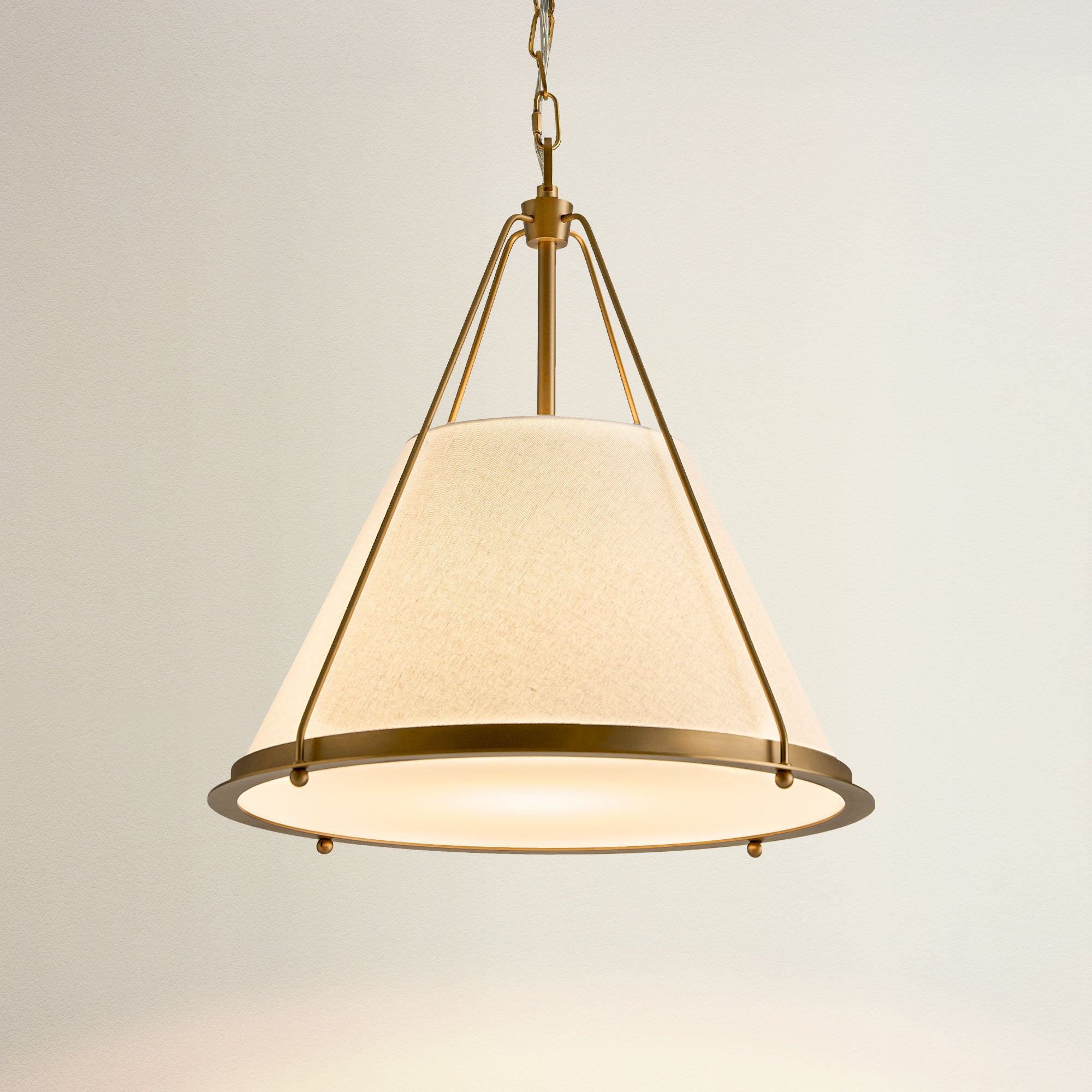
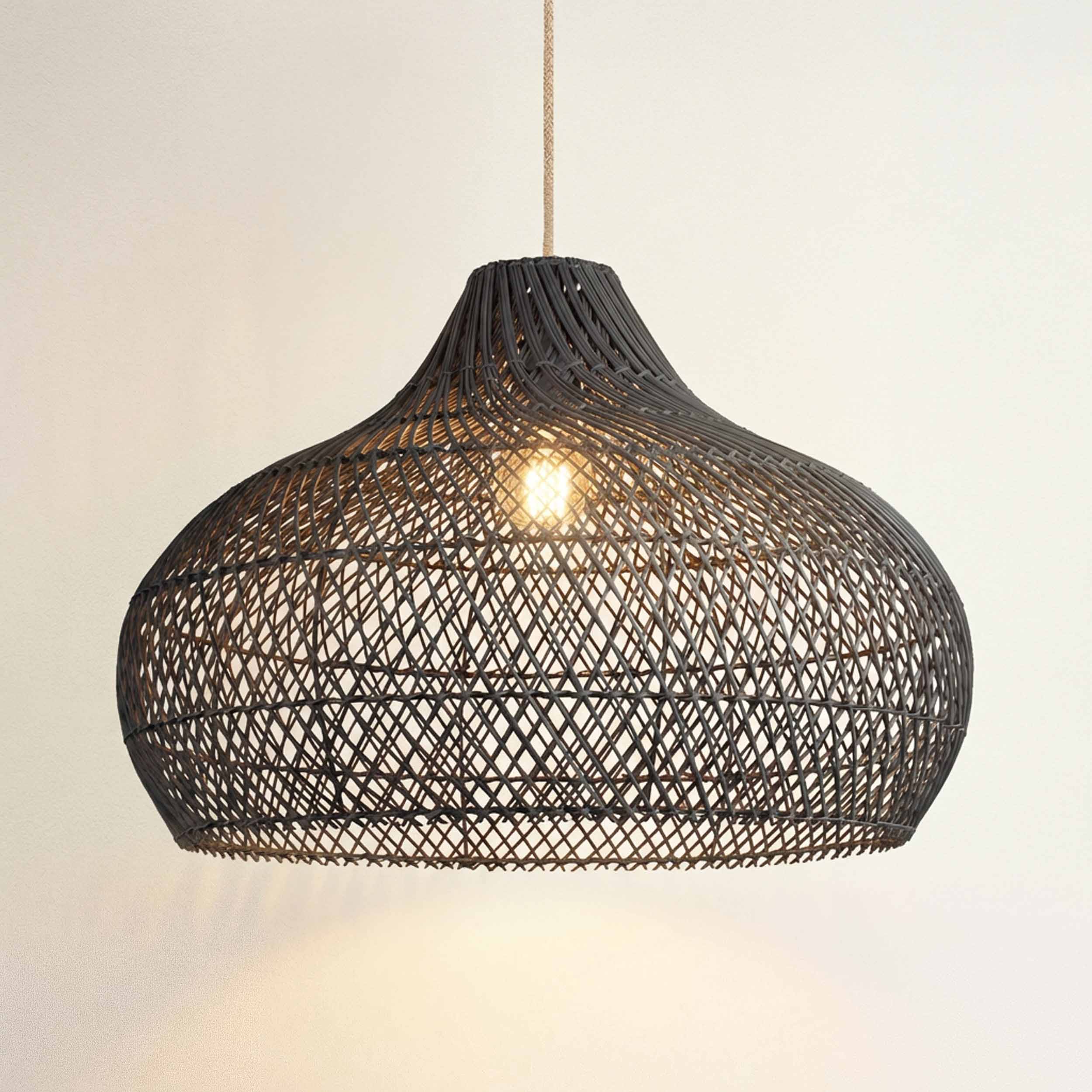
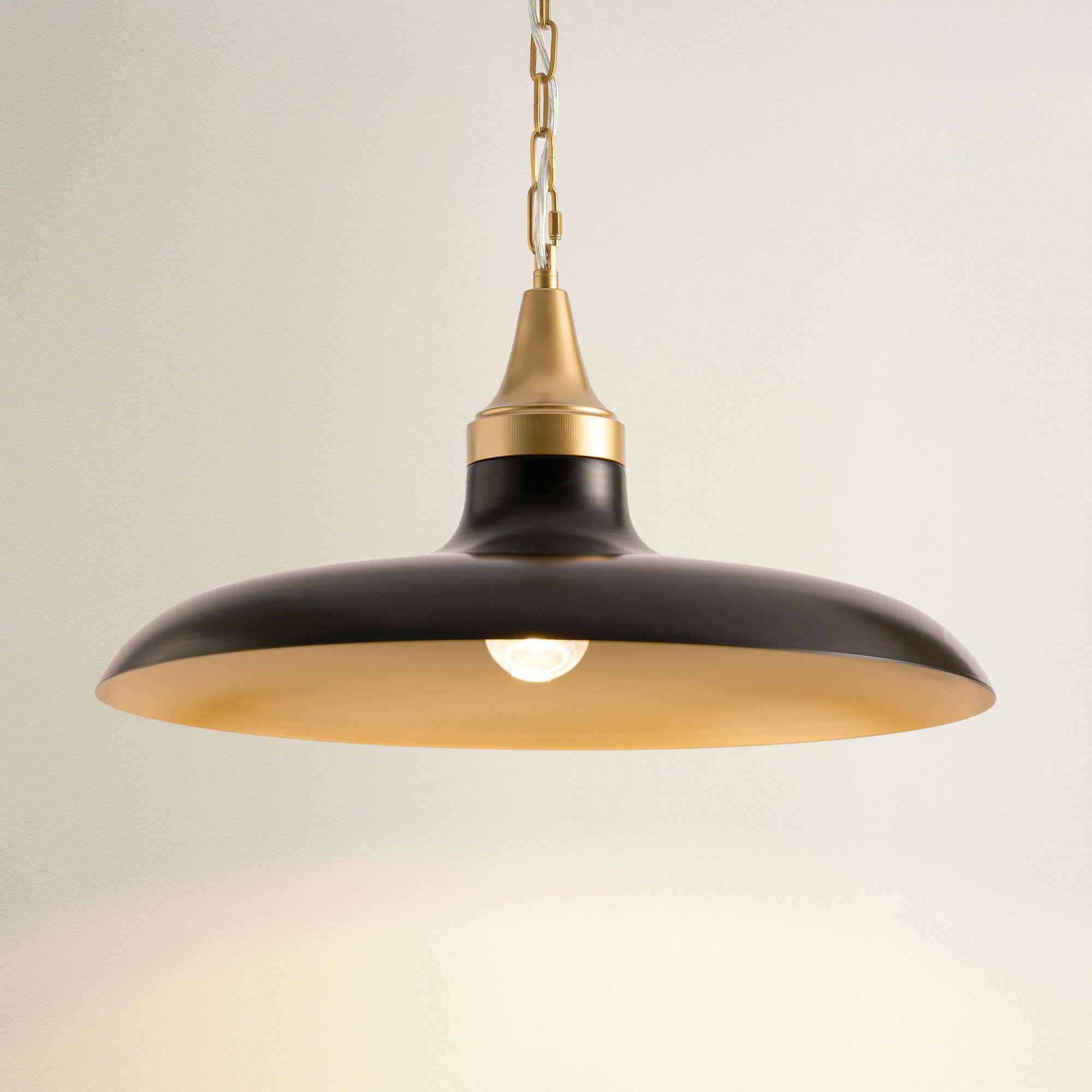
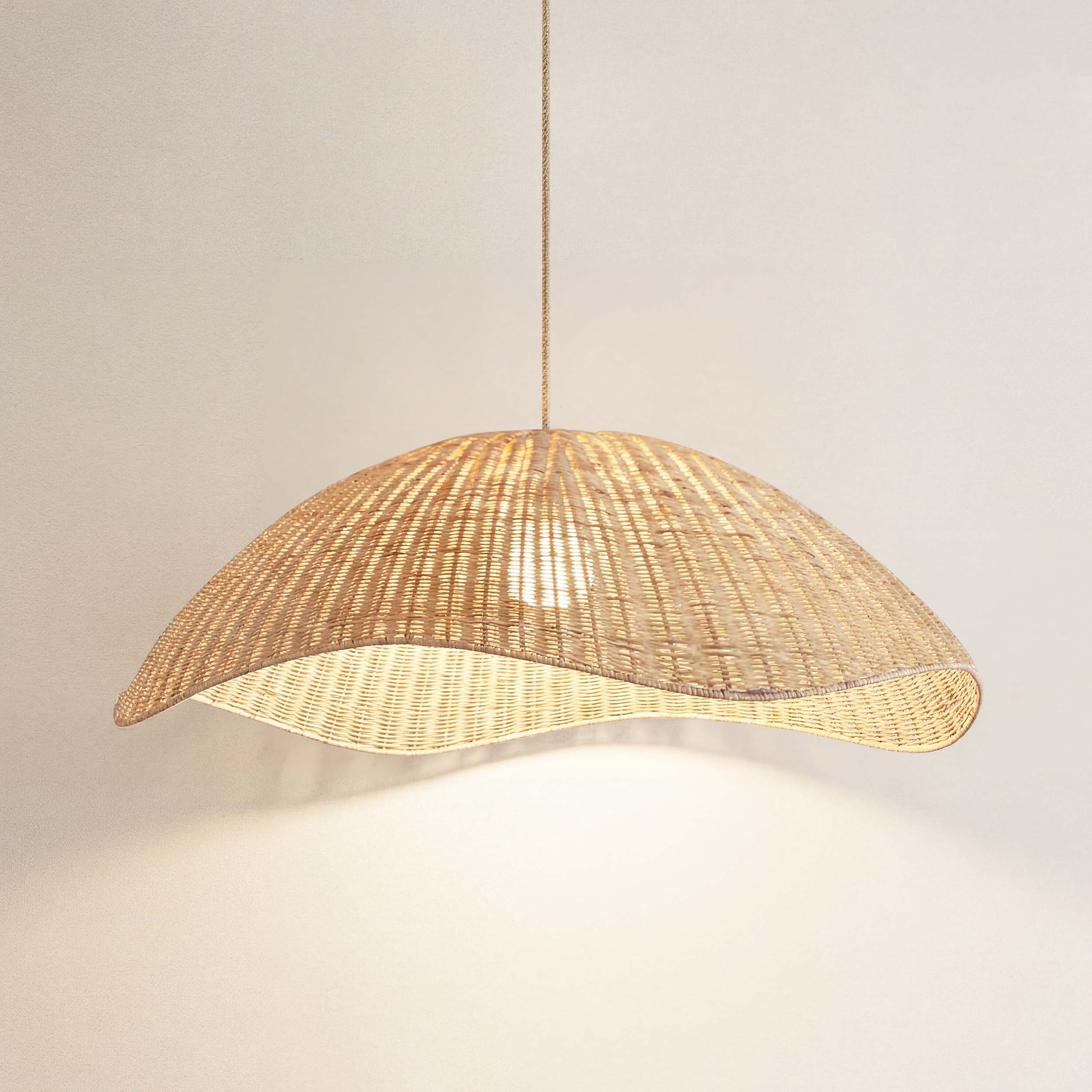
Ceiling Under 10 ft
Hang your light fixture with a seven-foot to 7.5-foot clearance below for comfortable headroom and a balanced look.

Ceiling Over 10 ft
Add the room’s length + width (in feet) to estimate fixture diameter (in inches). Hang the fixture about one-third down from the ceiling.

Ceiling Under 10 ft
Hang your light fixture with a seven-foot to 7.5-foot clearance below for comfortable headroom and a balanced look.
Ceiling Over 10 ft
Add the room’s length + width (in feet) to estimate fixture diameter (in inches). Hang the fixture about one-third down from the ceiling.
Best Selling Lighting

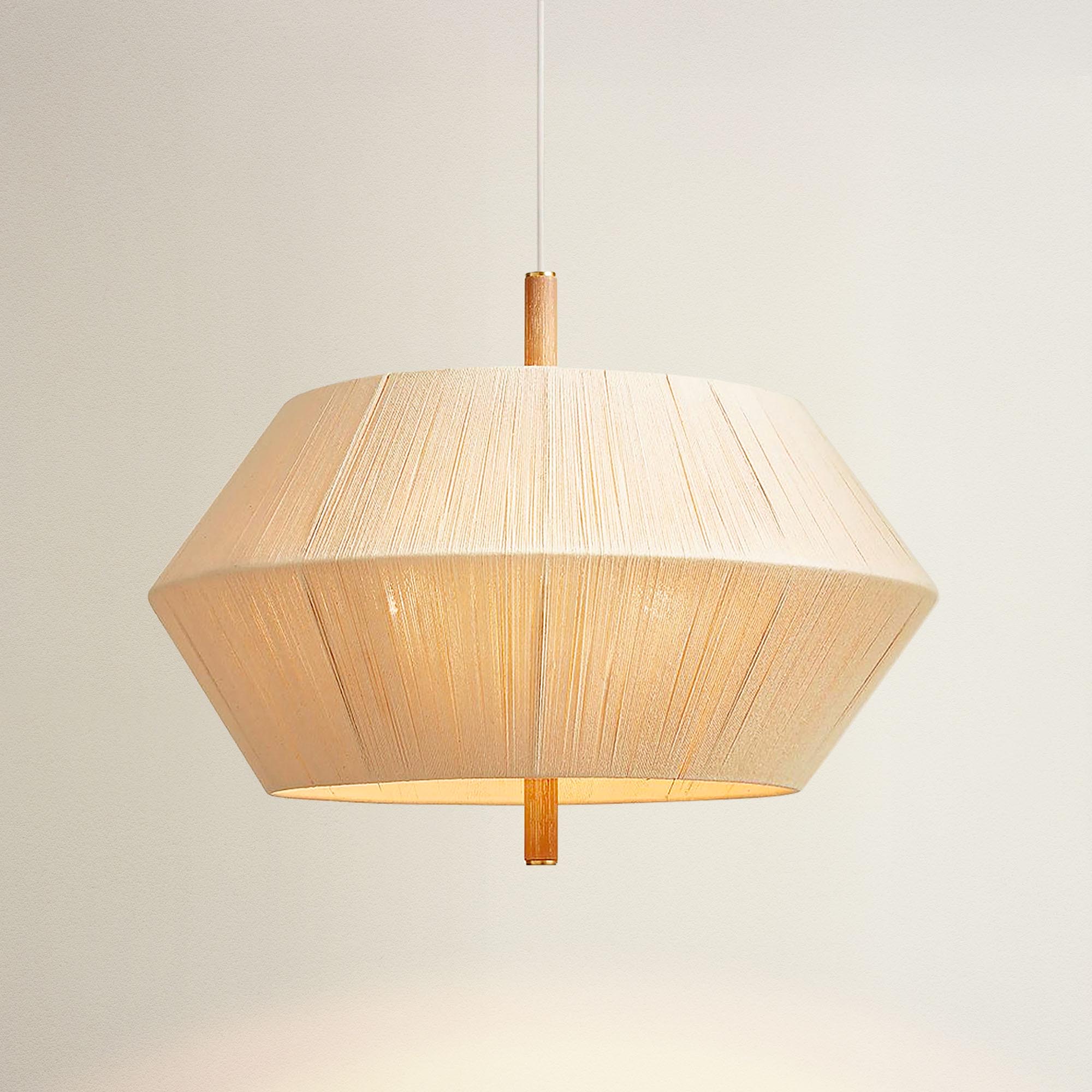
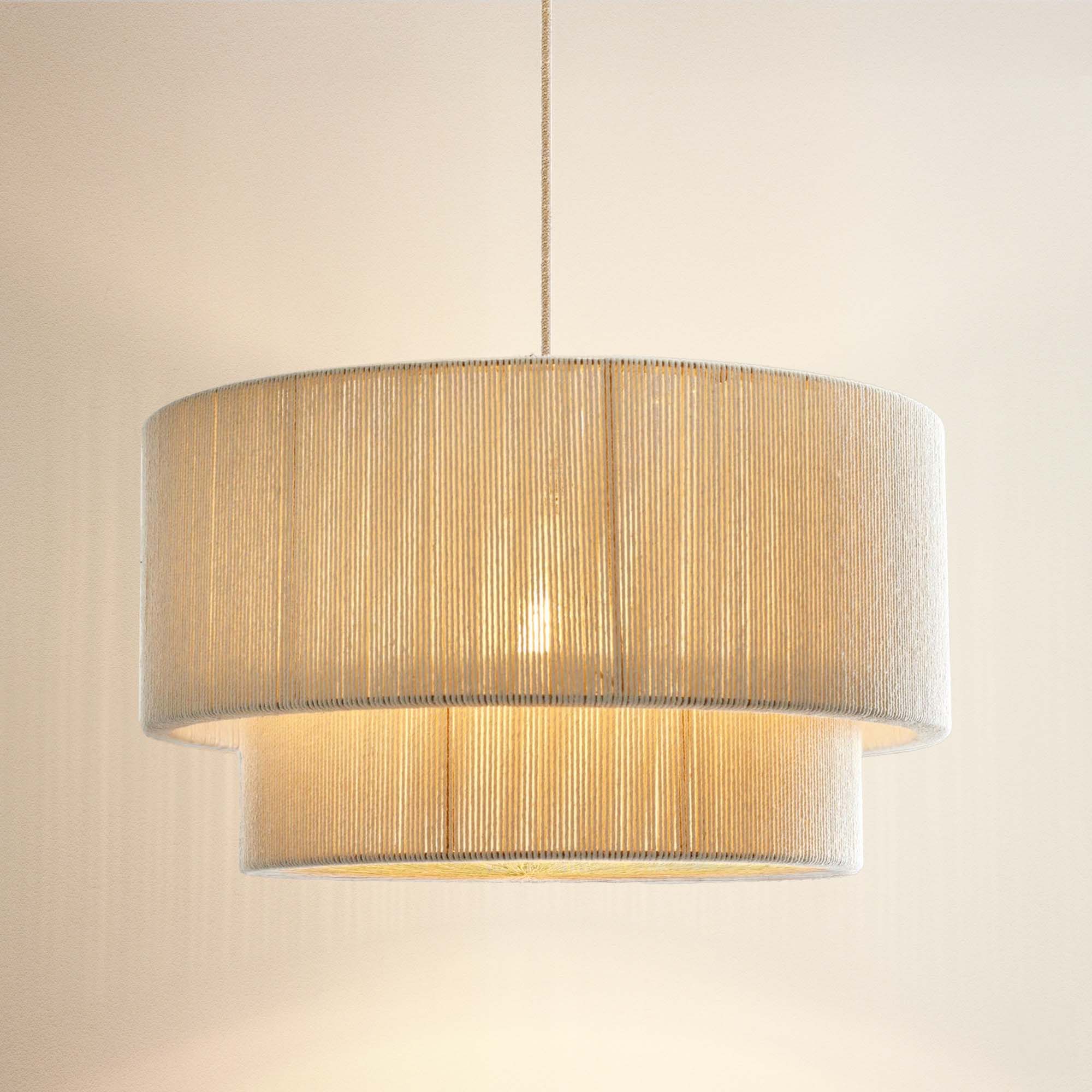
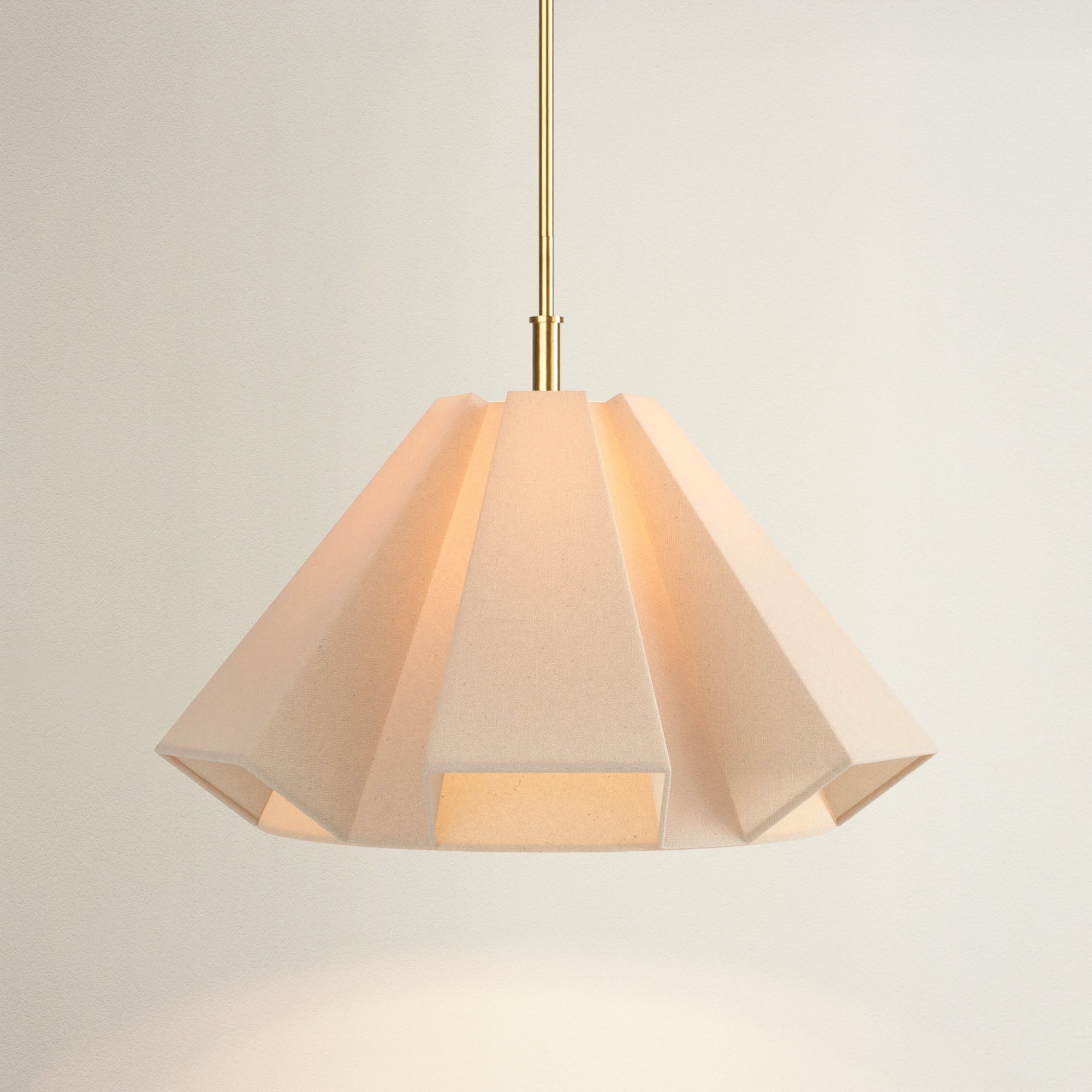
Wall Sconces
Hang plug-in sconces 55–60" from the floor and place one on each side of the bed for balanced lighting.

Beside Pendant
Hang at seated head height. Shade at or just above eye level.
Bottom of shade: 42” from floor.

Wall Sconces
Hang plug-in sconces 55–60" from the floor and place one on each side of the bed for balanced lighting.
Beside Pendant
Hang at seated head height. Shade at or just above eye level.
Bottom of shade: 42” from floor.
Best Selling Lighting





Wall Sconces
Mount sconces about 28” apart. Place them just left and right of the mirror. Sconce midpoint: 60–65” from floor.


Best Selling Lighting
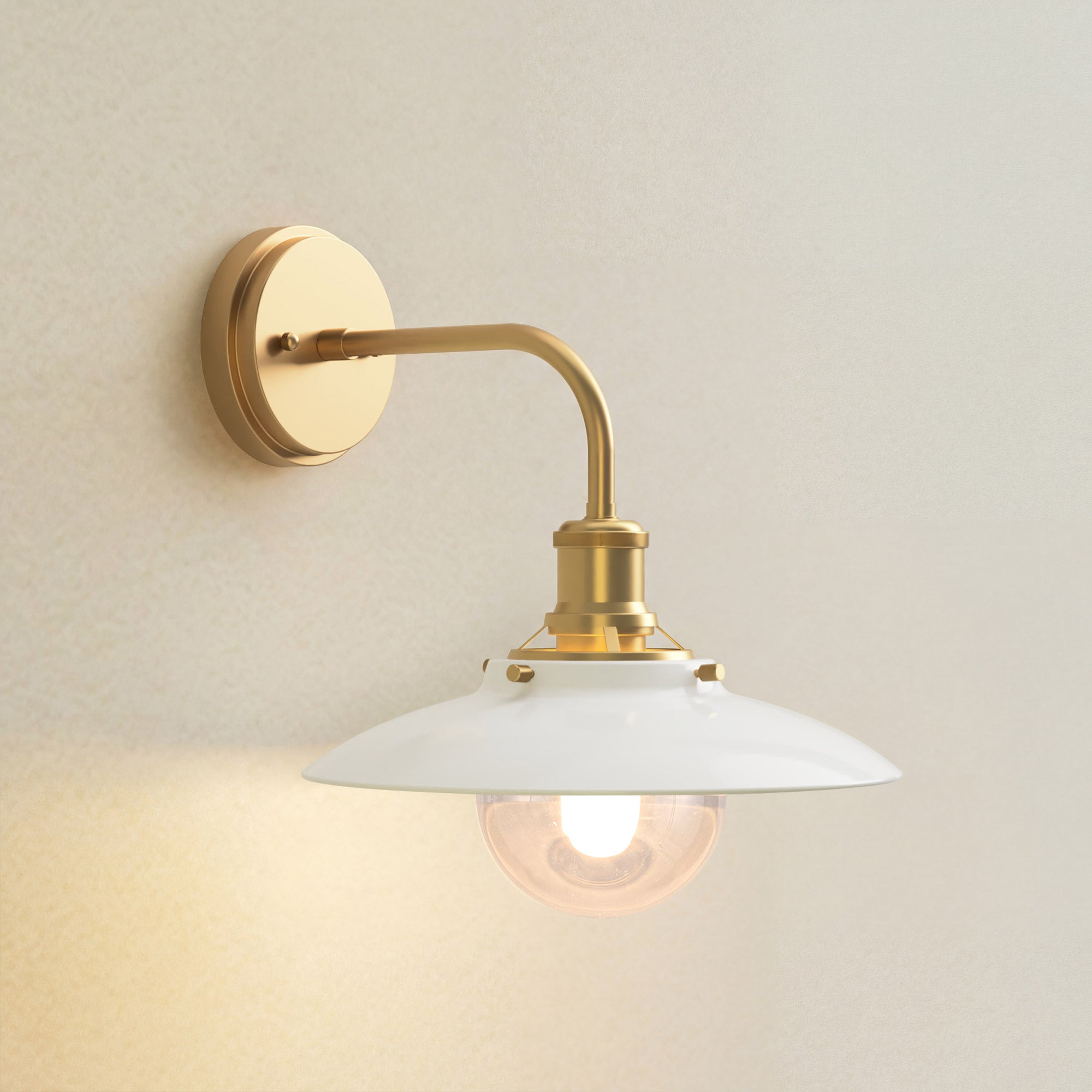

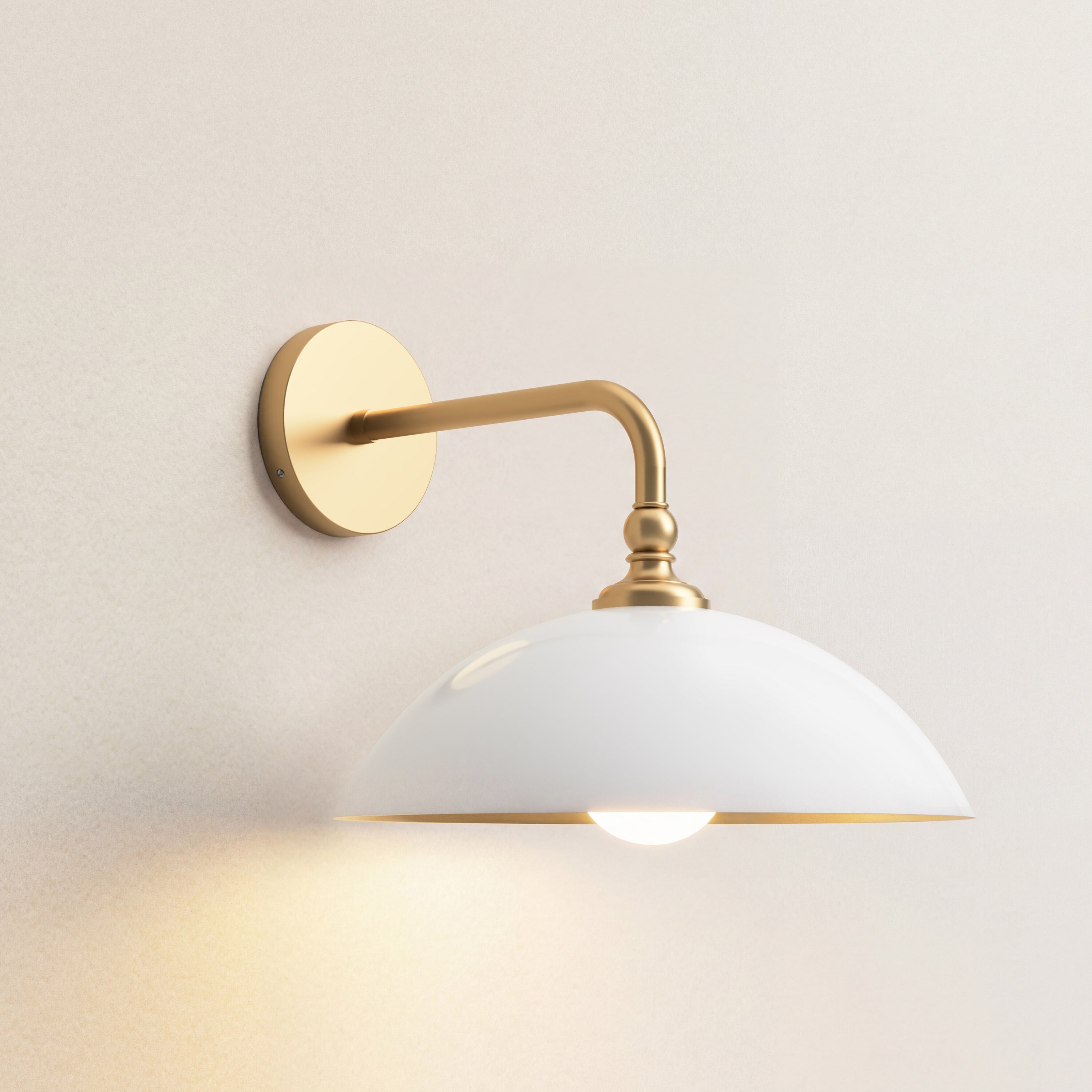


Wall Sconces
For entryways, mount wall sconces 60–65" from the floor. For very tall ceilings, hang them slightly higher.

Pendants
Hang pendants with 84" of floor clearance.
Fixture size = room length + width (in), for visual balance.

Wall Sconces
For entryways, mount wall sconces 60–65" from the floor. For very tall ceilings, hang them slightly higher.
Pendants
Hang pendants with 84" of floor clearance.
Fixture size = room length + width (in), for visual balance.
Best Selling Lighting
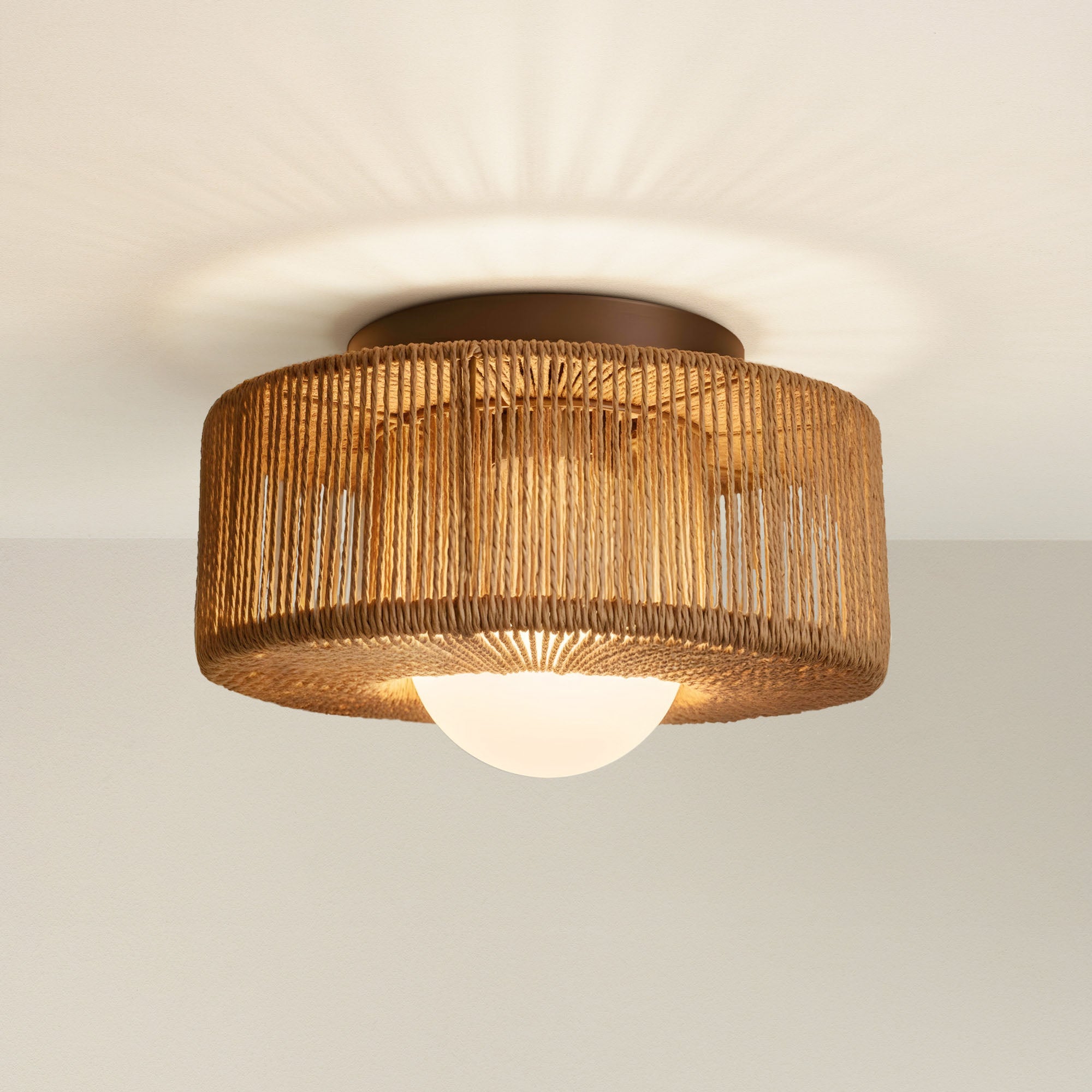

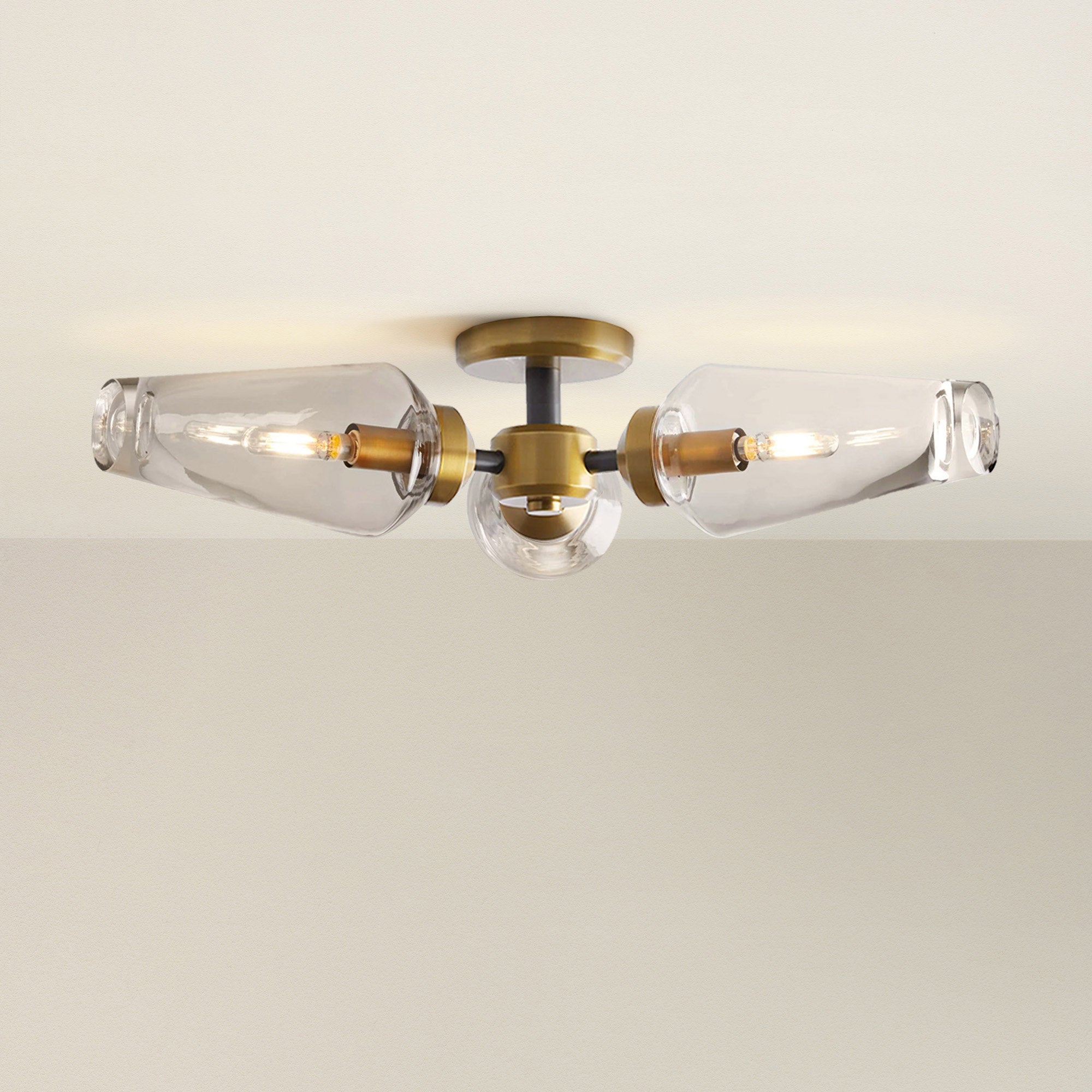
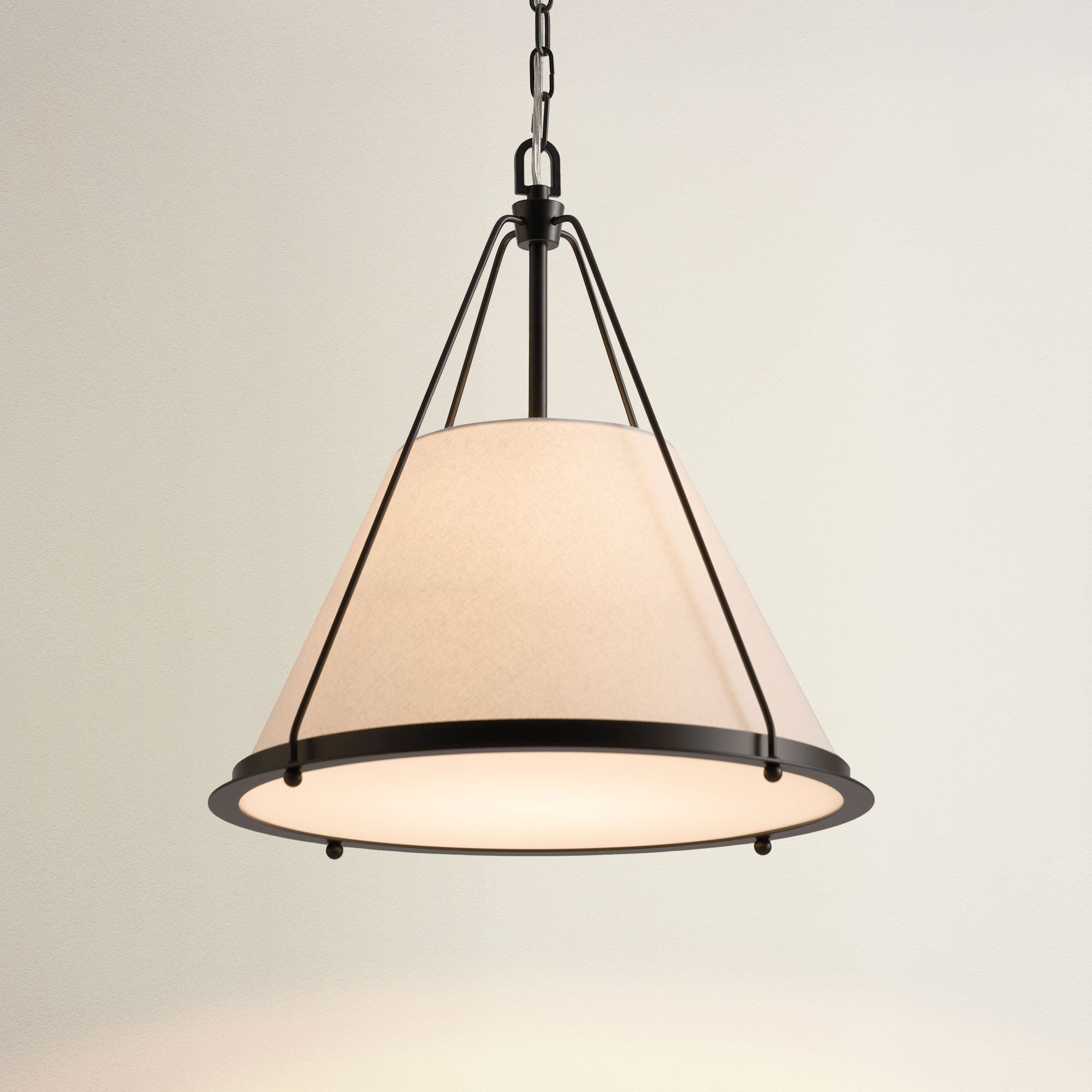


The right way to hang lights depends on the room, ceiling height, fixture type, and how people use the space. As a general rule, pendants over kitchen islands sit about 30–36 inches above the counter, dining lights hang about 30–36 inches above the table, wall sconces are often mounted around 60–66 inches from the floor, and entryway pendants should leave at least 7 feet of clearance from the floor.
Most lighting mistakes are not about the fixture itself. They happen because the light is hung too high, too low, or in the wrong place for the room. Lighting directly impacts mood, comfort, visibility, and the sense of proportion in a room. A beautiful pendant hung too low will block your sightline; a ceiling light that is too small will leave the space feeling flat regardless of how attractive the fixture is.
Whether you are upgrading kitchen island pendants, centering a dining room chandelier, or installing vanity sconces for the first time, this guide covers the exact placement rules for every room using standard U.S. measurements and safety guidelines. Rowabi's pendant lights, wall sconces, flush mounts, and outdoor rattan fixtures appear throughout as design examples, each placed in the context where they naturally fit.
Quick cheat sheet: standard light hanging heights
These are the baseline numbers for the most common lighting placements in a U.S. home. You can use them as a starting point before adjusting for fixture size, ceiling height, and furniture layout.
| Area / Room | Standard U.S. Measurement |
| Kitchen island pendant | Bottom of shade 30–36 inches above countertop |
| Kitchen island spacing | Space pendants 24–30 inches apart |
| Kitchen island edge clearance | Keep outer pendants 6–12 inches from island ends |
| Dining room | Bottom of fixture 30–36 inches above tabletop |
| Living room walkway | Keep at least 7 feet of clearance from the floor |
| Bedroom bedside pendant | Bottom of shade 24–30 inches above nightstand |
| General wall sconces | Center of fixture 60–66 inches from floor |
| Bathroom vanity sconces | Mount around 60–66 inches from the floor, near eye level |
| Hallway sconces | Mount 60–66 inches high, space 6–8 feet apart |
| Entryway | Keep at least 7 feet of clearance from the floor |
| 8-foot ceilings | Choose low-profile fixtures to preserve headroom |
| Covered porch/patio | Keep about 7 feet of clearance in walkways |
These measurements are standard design guidelines for U.S. homes. Always check fixture instructions, ceiling height, room layout, and local electrical requirements before installation.
Safety first: what U.S. DIYers should know before hanging lights
Before getting into room-by-room placement, there are a few safety principles that apply universally and are worth understanding before touching any fixture, regardless of experience level.
Turn off the power at the circuit breaker before starting
Always turn off the power at the circuit breaker before working on any ceiling or wall fixture, not just at the wall switch. A wall switch controls the circuit, but it does not always de-energize the wiring inside the box.

The Electrical Safety Foundation International (ESFI) recommends turning off the relevant breaker and using a voltage tester to confirm the circuit is truly dead before touching any wiring. If you are not certain the power is off, do not proceed. No fixture is worth the risk of working on a live circuit.
Know when to call a licensed electrician
Some lighting projects are appropriate for experienced DIYers, and some are not.
Replacing a fixture on an existing, properly supported junction box is typically manageable for a careful homeowner. Anything beyond that should involve a licensed electrician: new wiring where none exists, moving a junction box to a different location, installing a fixture heavier than the existing box is rated for, working on homes with older or knob-and-tube wiring, or installing any outdoor hardwired lighting.
The goal of this guide is placement and design, not wiring. When the project requires electrical work beyond a simple fixture swap, the right call is always a professional.
Use damp-rated or wet-rated fixtures in the right places
Not every light fixture is rated for every environment, and using an indoor-only fixture in the wrong location is both a code violation and a safety risk. UL (Underwriters Laboratories) classifies fixtures for dry, damp, and wet locations. A fixture marked "suitable for damp locations" is appropriate for covered outdoor areas, bathrooms away from the shower zone, and spaces with high humidity.
While a fixture marked "suitable for wet locations" is required anywhere the fixture may be exposed directly to rain, splashing water, or outdoor moisture. Always check the fixture packaging or product page for the UL location rating before installing in any bathroom, porch, patio, or outdoor space.
How to measure before you hang any light
Getting the placement right starts before the fixture arrives. A few careful measurements eliminate the most common hanging mistakes before they happen.
Start with the ceiling height
Ceiling height is the first number to establish because it determines which fixture types are even safe and proportionally appropriate for the space. The majority of U.S. homes have 8-foot ceilings - a ceiling height at which long pendants, large chandeliers, and most drop fixtures in open walkways are simply not practical.
For an 8-foot ceiling, flush-mount ceiling lights, semi-flush mounts, wall sconces, and pendants hung only above fixed surfaces such as kitchen islands or dining tables are appropriate choices. At 9–10 feet, pendant drop lengths can increase, and chandeliers become more viable. Moreover, vaulted or sloped ceilings require hardware specifically designed for angled installation, such as a sloped-ceiling canopy adapter.
For homeowners who want warmth and natural texture on a low ceiling, a rattan flush mount is a practical middle ground. It brings the organic quality of a woven fixture to the ceiling without consuming any vertical space.

Define the ceiling before thinking of a lighting fixture.
Measure from the surface, not just the floor
The most common measurement mistake is measuring from the floor when the correct reference point is the surface beneath the fixture. The standard guidelines are clear on this: kitchen island pendants are measured from the countertop, dining room fixtures are measured from the tabletop, and bedside pendants are measured from the nightstand or mattress height.
The floor-clearance measurement of 7 feet applies only to fixtures hanging in open walkways where people move underneath. Mixing up these reference points results in fixtures that are technically at a "correct" height from the floor but completely wrong relative to the surface they are meant to illuminate.
Consider fixture width, shade shape, and visual weight
Two fixtures at the same height can feel very different in a room depending on their size, material, and how they interact with light.
For example, a large, dark, opaque shade reads as visually heavy even when hung at a comfortable height. While a woven or open-weave shade, like rattan, allows light to filter through the material and beneath it, giving the fixture a lighter, more airy presence at the same hanging height.
When planning spacing for multiple fixtures, the wider the shade, the more space is needed between them. And in terms of mood, material matters: metal finishes read as modern and precise, glass as clean and minimal, and rattan as warm and organic. For homeowners who want warmth without making a room feel visually heavy, woven rattan pendant lights can soften a kitchen or dining space without overwhelming it.
How to hang lights in every room
With the baseline principles established, here is how they apply room by room, from the kitchen through to the covered porch.
How to hang lights in the kitchen
The kitchen is where placement questions most frequently arise, particularly regarding island lighting. Because island pendants are hung over a fixed surface with a defined countertop height, the measurements here are among the most reliable and replicable in any room.
How high to hang pendant lights over a kitchen island
The standard height for kitchen island pendant lights is 30–36 inches from the countertop to the bottom of the shade. This range keeps the fixture low enough to create an intimate, well-lit work zone without blocking sightlines across the island.
For taller users, longer pendants, or a particularly large shade, 34–36 inches provides more breathing room. For smaller shades, open-weave fixtures, or higher ceilings, 30–32 inches can work well, creating a closer, more connected relationship between the light and the surface below.

The key is sightline: the pendant should not block the natural eye contact between someone standing on one side of the island and someone standing on the other. If the bottom of the shade is at or below the eye level of a seated person at the island, it is hanging too low.
For kitchens that lean toward a warm, natural, or coastal aesthetic with white oak cabinetry, warm neutrals, and unlacquered brass hardware, Rowabi's rattan pendant lights work particularly well over an island because the woven texture adds depth and warmth without the visual weight of a solid or opaque shade.
How far apart should kitchen island pendant lights be?
The standard spacing between kitchen island pendant lights is 24–30 inches apart, center to center. The outer pendants should sit approximately 6–12 inches in from each end of the island, so the lighting covers the full work surface without fixtures overhanging the edges.

As a practical rule: wider shades need more generous spacing between them. For instance, two large pendants at 24 inches apart will feel crowded, while two smaller open-weave pendants at the same spacing will feel balanced. When in doubt, err on the side of slightly more space rather than less.
Should you use one, two, or three pendant lights?
The number of pendants depends on the island length and shade diameter. A small island, typically under 4 feet, works best with a single larger pendant or two compact ones. A medium island of 4–6 feet usually suits two pendants most naturally. A longer island of 6 feet or more can carry three pendants, provided the shades are not so wide that spacing them correctly would push the outer fixtures beyond the island edges.
The goal is even coverage across the full surface with visual balance, not filling every available inch with fixtures.
How to hang lights in the dining room
Dining room lighting follows similar principles to kitchen island lighting, but the table's social function adds a layer of consideration: the light needs to be warm, inviting, and at the right height to create atmosphere without interrupting conversation.
Standard dining table light height
The standard height for a dining room pendant or chandelier is 30–36 inches from the tabletop to the bottom of the fixture. This keeps the light close enough to the table to focus illumination and create intimacy, while remaining high enough not to obstruct sightlines across the table. For rooms with ceilings higher than 8 feet, the fixture can be raised slightly, but the goal is always for the light to feel connected to the table rather than floating at ceiling level.
One important placement note: center the fixture over the dining table, not over the room's geometric center. If the table is off-center relative to the ceiling light, the fixture should move with the furniture rather than remain where the original ceiling box was installed.

How wide should a dining room light be?
A dining room fixture should generally be 6–12 inches narrower than the table width so it does not visually crowd the place settings at each end.
The shape of the table is the key factor to consider when choosing a lighting fixture. For example, A round table is most naturally paired with a round pendant, dome, drum, or basket-shaped fixture. A rectangular table suits a linear pendant or a row of smaller pendants in a line. A fixture that is too small for the table leaves the room without a focal point; one that is too large makes the dining space feel cramped.
For dining rooms with an organic modern, coastal, or Japandi aesthetic, a rattan pendant above the table adds natural texture and warmth at exactly the right visual weight.
How to hang lights in the living room
Living rooms are more variable than kitchens or dining rooms because the functions are broader and the furniture arrangements more diverse. The placement principles adjust accordingly.
Ceiling light placement in a living room
In a living room with an open walkway, the bottom of any hanging fixture must clear at least 7 feet from the floor. For rooms with 8-foot ceilings, this means a flush-mount or semi-flush-mount is the practical choice for the main ceiling fixture, like a pendant that drops even 6 inches below the ceiling, which eats into the 7-foot clearance at a height where people regularly pass underneath.

The second consideration is centering: in a living room, the ceiling light should be aligned with the primary seating area or coffee table, not necessarily the geometric center of the room. If the sofa and chairs create a defined conversation zone, that zone is what the ceiling light should serve. A rattan flush mount is an appropriate main fixture for a low-ceiling living room that wants warmth and natural texture without compromising headroom.
When to use wall sconces in a living room
Wall sconces add a layer of ambient and mood lighting to a living room that a single ceiling fixture cannot provide on its own.
Mounted at 60–66 inches from the floor to the center of the fixture, sconces beside a fireplace, flanking a sofa, or lighting a gallery wall create a warmer, more layered atmosphere than overhead lighting alone.
Position the sconce so the bulb itself is not at seated eye level. Ensure the shade is above direct eye contact when someone is sitting nearby. A rattan sconce works well in an organic modern or coastal living room to add softness and natural-material texture to the wall without introducing a heavy visual element.

How to hang lights in the bedroom
Bedroom lighting is primarily about comfort, warmth, and flexibility. The fixture can switch between full brightness for getting dressed and a very low level for winding down, which is worth your consideration.
Bedroom wall sconce height
The general rule for bedroom wall sconces is the center of fixture is at 60–66 inches from the floor. For bedside reading sconces, particularly swing-arm models, there is more flexibility, since the sconce needs to deliver light at a useful angle for someone reading in bed. Adjust from the baseline based on the mattress height plus the headboard height: the sconce should sit above the headboard without casting light straight down onto a pillow.

Bedside pendant light height
A bedside pendant hung in place of a table lamp should have its bottom shade approximately 24–30 inches above the nightstand surface. This keeps the light at the right level for reading without shining directly into the eyes when lying down. If the nightstand is at a standard height of 24–28 inches, the bottom of the pendant is roughly 48–58 inches above the floor, which works comfortably for most mattress heights.
A pendant hanging at this position should use a warm white LED bulb (2700K–3000K) and, where the fixture supports it, a dimmable bulb for bedtime transitions. Note that not all LED bulbs are compatible with all dimmer switches. Always confirm "dimmable" is marked on the bulb packaging before pairing with a dimmer. Small rattan pendants in this position create a boutique hotel quality, freeing the nightstand surface entirely.
How to hang lights in the bathroom
Bathrooms require attention to both placement and moisture rating. The two considerations that make bathroom lighting decisions different from every other room.
Bathroom vanity sconce height
Bathroom vanity sconces should be mounted with the fixture's center at approximately 60–66 inches above the floor - near eye level for most adults.
The purpose of this height is facial illumination: a sconce at eye level on each side of the mirror lights the face from both sides, eliminating the unflattering shadows under the eyes and jaw that a single overhead light creates. If only one sconce is possible, a fixture mounted directly above the mirror's center is the next-best option, though side mounting is preferred.

Bathroom ceiling light placement
For bathrooms with a separate shower or tub zone, position the ceiling light to serve the vanity and general floor area not the shower zone, which requires its own appropriate fixture.
Per the National Electrical Code, no hanging pendant or chandelier may be installed within 3 feet horizontally and 8 feet vertically of the edge of a bathtub or shower unless the fixture is specifically wet-rated and designed for that environment. A standard decorative pendant is not appropriate near the tub. Bathroom fixtures in humid areas need to carry at minimum a damp-location rating from UL; wet zones require a wet-location rating.
How to hang lights in the hallway and entryway
Hallways and entryways are transitional spaces, so their lighting needs to be functional, proportional to their narrow footprint, and welcoming as the home's first impression.
For these in-between spaces, the principle is simple: adequate clearance, an appropriate scale for the corridor width, and a fixture that does not make the space feel narrower than it is.
Entryway pendant or chandelier height
In an entryway or foyer, the bottom of any hanging fixture must clear at least 7 feet from the floor. In a standard-height entryway, this leaves room for a semi-flush or a short pendant. In a two-story foyer with soaring ceiling height, a larger chandelier or pendant can hang lower relative to the ceiling while still clearing the 7-foot minimum, but in these tall spaces, the fixture needs to be large enough to fill the vertical void rather than looking lost.
Center the entryway fixture over the main entry door and align it with the visual axis of the foyer, not necessarily the mathematical center of the ceiling. If the house has sidelights or a transom window visible from the street, the fixture placement should look balanced from both inside and outside.

Hallway wall sconce height and spacing
In a hallway, wall sconces should be mounted 60–66 inches above the floor, with the fixture centered, spaced approximately 6–8 feet apart along the wall.
In a narrow hallway, choose a low-profile sconce that does not project far from the wall so the fixture should not narrow the walking path. A slim rattan sconce can warm up a builder-grade hallway considerably, particularly in homes with white walls and wood floors, where a small addition of natural material can change the whole character of the space.
How to hang outdoor lights
Outdoor placement follows the same height principles as indoor placement, with the critical addition of moisture ratings for every fixture, regardless of how protected the space appears to be.
Outdoor pendant light height for porches and covered patios
Any outdoor pendant in a walkway, covered porch, or patio should clear at least 7 feet from the floor to the bottom of the fixture. For an outdoor dining area with a table directly beneath the fixture, apply the same 30–36 inches above tabletop rule used for an interior dining room.
Covered porches and patios in the U.S. typically require, at minimum, a damp-rated fixture; spaces with any exposure to direct rain or water splashing require a wet-rated fixture. Never install an indoor-only fixture outdoors, even in a fully covered location.
For homeowners creating a resort-inspired outdoor dining area or a relaxed covered porch, Rowabi's outdoor rattan pendant light is designed for covered outdoor use and brings the same natural warmth and woven texture to exterior spaces that indoor rattan fixtures bring to kitchens and dining rooms.
Outdoor wall sconce placement
Outdoor wall sconces beside a front door should be mounted at approximately eye level - around 66 inches from the floor to the fixture's center. The goal is for the light to reach the door handle, the front steps, and a visitor's face from a flattering angle.
Where the architecture allows, a matched pair of sconces flanking the door creates symmetry and a more considered entry. For garage-facing or side-entry wall lights, center the fixture between the door and any nearby windows to avoid an off-balance appearance.

Outdoor lighting placement follows the same height principles as indoor placement.
Choosing the right light type by ceiling height
Once the room-by-room rules are understood, ceiling height becomes the practical filter that narrows fixture choices to what is actually safe and proportionally correct.
Best lights for 8-foot ceilings
For rooms with 8-foot ceilings, flush mount ceiling lights, semi-flush mounts, and wall sconces are the primary options for any area with foot traffic. Pendant lights are appropriate only when hung over a fixed surface, such as a kitchen island, a dining table, a bedside nightstand, where the drop takes the fixture toward the surface rather than into a walkway.

Long-drop pendants or any fixture that hangs more than a few inches below the ceiling in an open walkway are not appropriate for 8-foot ceilings.
Best lights for 9–10-foot ceilings
At 9–10 feet, pendants and chandeliers become genuinely versatile options throughout the home. Longer pendant drops are possible in living rooms and bedrooms without the clearance concerns that arise at 8 feet. That said, the 30–36 inch rule for island and dining table height still applies. Those measurements are based on the distance from the fixture to the surface below, regardless of ceiling height. And walkway clearance remains at 7 feet as an absolute minimum.

Best lights for vaulted or sloped ceilings
Vaulted and sloped ceilings require hardware specifically designed for angled installation. A standard pendant or ceiling light mounted on a flat canopy against a sloped surface will hang at an angle rather than plumb, which is both visually wrong and potentially a safety concern for heavier fixtures.
Sloped-ceiling canopy adapters allow the pendant to hang straight while the canopy sits flush against the angled surface. Adjustable-length cord, chain, or rod pendants offer additional flexibility for precisely setting the final hanging height. If the project requires moving or adding a junction box to the correct location on a vaulted ceiling, this is a task for a licensed electrician.
How to choose bulb color and brightness
The right placement height means nothing if the bulb color and brightness are wrong for the room. Here is how to match bulb temperature to function.
2700K for warm and cozy rooms
Warm white light at 2700K is ideal for bedrooms, living rooms, and dining rooms - any space where comfort, mood, and relaxation are the primary goals. It produces the soft, amber-toned glow that makes a room feel genuinely welcoming rather than functional. For nurseries and kids bedrooms, 2700K is also the most sleep-supportive color temperature, minimizing blue light in the hours before bedtime.
3000K for everyday home lighting
3000K sits at the border between warm and neutral, making it a practical all-purpose choice for kitchens, hallways, and general home lighting. It provides enough clarity for task work without the clinical edge of cooler temperatures, and it complements both warm material palettes and more modern, minimal spaces.
3500K–4000K for task-heavy areas
For spaces that demand visual clarity, like laundry rooms, craft rooms, homework areas, and garages, 3500K–4000K produces a brighter, more energizing light that supports focused work. This range is too cool for bedrooms, dining rooms, or any space where warmth and atmosphere matter. Use it as a secondary, task-specific option where needed, not as the default temperature for living spaces.

Lumens vs. watts
Lumens measure actual light output; watts measure energy consumption. A 60-watt equivalent LED bulb might use only 8–10 watts while producing 800 lumens. When shopping for bulbs, look at lumens to determine brightness and Kelvin to determine color temperature. The wattage number is relevant only for energy cost calculations.
For most rooms, 400–800 lumens from a task light and 800–1,500 lumens from a main ceiling fixture covers the range of everyday needs.
Common light hanging mistakes to avoid
Even with the right fixture and the right height measurements, a few recurring mistakes make lighting feel off. Here is what to watch for.
Hanging pendant lights too high
A pendant hung too high loses its connection to the surface it is meant to serve. A kitchen island pendant at 48 inches above the counter casts diffuse light across the room rather than focused warmth onto the work surface. A dining room chandelier at 60 inches above the table feels disconnected from the meal below. If a fixture seems to be floating at ceiling height rather than relating to what is beneath it, it is almost certainly too high.
Hanging fixtures too low in walkways
A fixture that hangs below 7 feet in a walkway poses a clearance hazard and a daily source of frustration for anyone who passes under it. In an 8-foot ceiling room, a pendant that drops 18 inches already pushes the bottom to 6.5 feet. The 7-foot rule is not just a design guideline; in many jurisdictions, it reflects code requirements for minimum headroom in occupied spaces.
Choosing fixtures that are too small
An undersized fixture leaves a room without a visual anchor. The quick sizing formula is to add the room length and width in feet, then use that total in inches as a suggested fixture diameter, which prevents the most common sizing mistakes. A 12-inch pendant in a 14 ft × 16 ft dining room will disappear; a 24–28-inch fixture in the same room commands the space appropriately.
Ignoring bulb brightness and dimming
Hanging at the right height with the wrong bulb is a category of its own. An overpowered bulb in a dining room pendant creates glare at eye level. An underpowered bulb in a kitchen island pendant leaves the counter too dim for food preparation. And a non-dimmable LED in a fixture wired to a dimmer switch will flicker, buzz, or fail prematurely. According to DOE guidance, lighting controls, including dimmers, help manage light levels, but the fixture and bulb must be confirmed compatible before installation.
Forgetting fixture weight and electrical box support
Every ceiling fixture, regardless of material, must be secured to an electrical box rated for its weight. A standard outlet box is rated for 35 lbs; a ceiling fan box or fixture fan-rated box is required for heavier fixtures. An unsupported fixture is a safety risk that no amount of careful height measurement will fix. When replacing a fixture that is notably heavier than the existing one, confirm the junction box rating before proceeding or call a licensed electrician to assess.
Room-by-room light hanging height: complete reference table
This table consolidates the key placement numbers for quick reference. Use it alongside the room-specific sections above, not as a replacement for reading about the specific conditions that affect each measurement.
| Room | Fixture Type | Recommended Height | Spacing Rule | Best Fixture Option |
| Kitchen | Pendant light | 30–36 in. above countertop | Space 24–30 in. apart; 6–12 in. from island ends | Rattan pendant lights, glass pendants |
| Dining room | Pendant/chandelier | 30–36 in. above the tabletop | Center visually over the dining table, not the room | Pendant light, chandelier |
| Living room | Ceiling light | 7 ft. clearance in walkways | Center over the primary seating zone | Flush mount ceiling light |
| Bedroom | Bedside pendant | 24–30 in. above nightstand | One fixture is centered on each side of the bed | Small pendant light, wall sconce |
| Bathroom | Vanity sconce | 60–66 in. from floor to center | One on each side of the mirror at eye level | Wall sconce (damp-rated) |
| Hallway | Wall sconce | 60–66 in. from floor to center | Space 6–8 ft. apart along the wall | Wall sconce, rattan sconce |
| Entryway | Pendant / chandelier | 7 ft. clearance from the floor | Center visually; align with front door | Statement pendant light |
| Covered patio | Outdoor pendant | 7 ft. clearance or 30–36 in. above table | Center based on layout; must be damp or wet-rated | Outdoor rattan pendant light |
Adding warmth: how to style woven and rattan lights
There is a practical design logic behind choosing woven and rattan fixtures beyond their appearance, and it connects directly to placement. Because rattan and woven shades diffuse light through the material as well as from the bottom opening, they produce a softer, more even light quality than opaque or solid shades at the same hanging height.

This makes them forgiving in rooms where the ideal placement is not always achievable. For instance, a rattan shade at 32 inches above a kitchen island looks and feels more comfortable than an opaque metal shade at the same height, simply because the light it produces is gentler.
Here is how different Rowabi fixture types fit naturally into a room-by-room lighting plan:
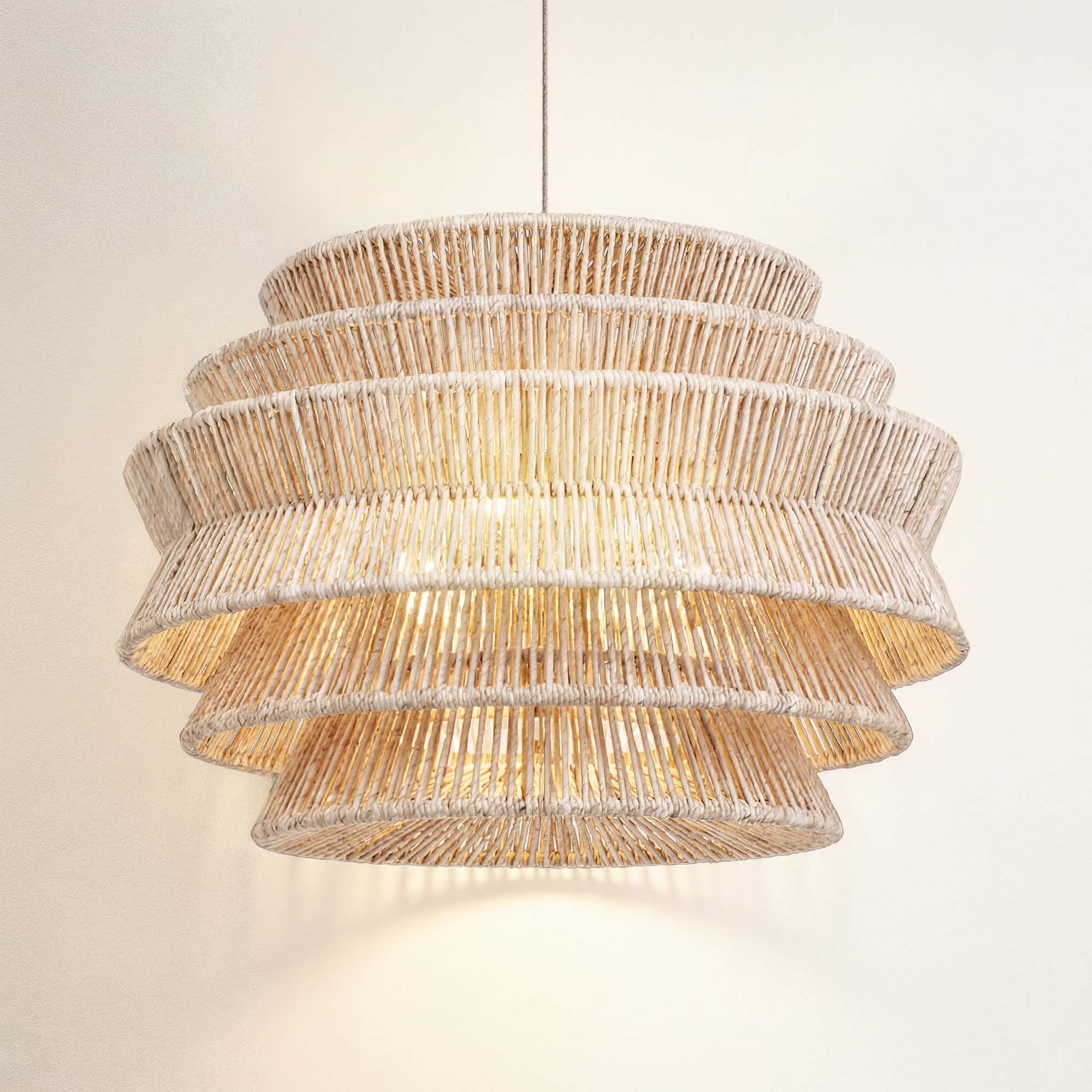
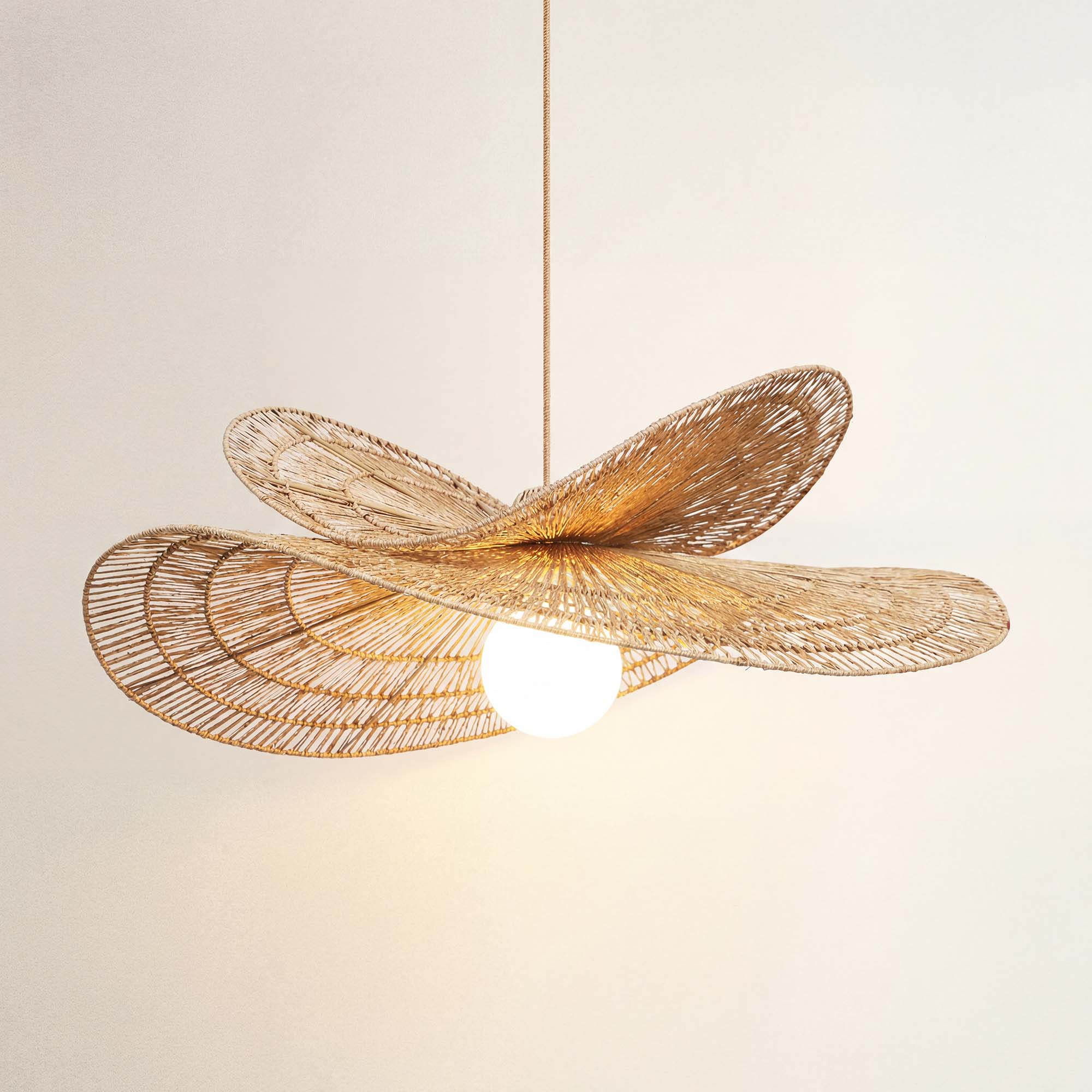
- Rattan pendant lights over a kitchen island or dining table add warmth and organic texture to spaces that benefit from natural materials, particularly in white oak kitchens, warm-neutral dining rooms, and coastal or Japandi-inspired spaces where the fixture is meant to contribute to the room's material story, not just light it.
- Rattan wall sconces in a hallway, bedroom, or living room add soft accent lighting and natural texture at wall level, where a fixture needs to complement the room's design without reading as heavy or demanding. The woven surface gives the light a layered quality that metal or glass sconces at the same height cannot replicate.
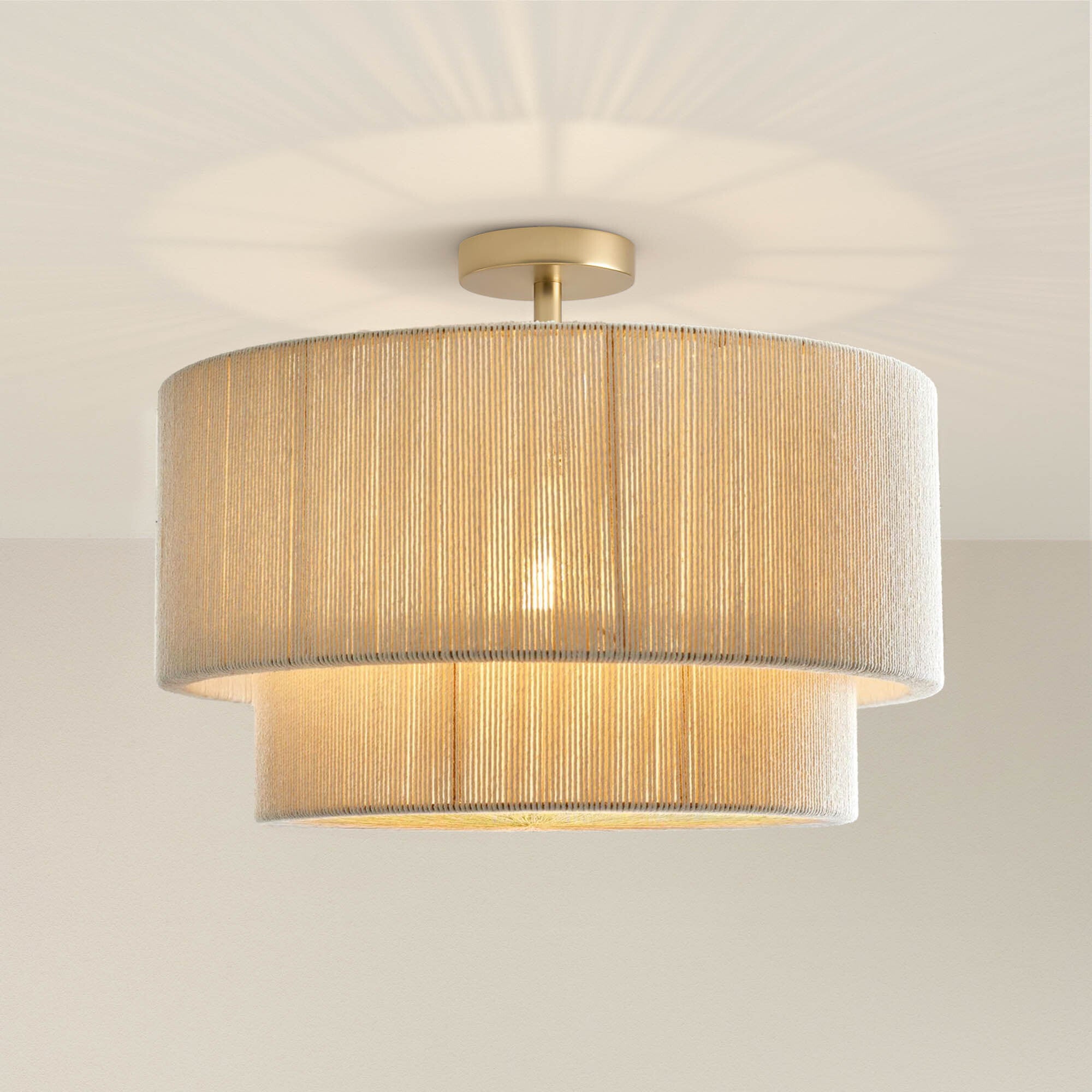
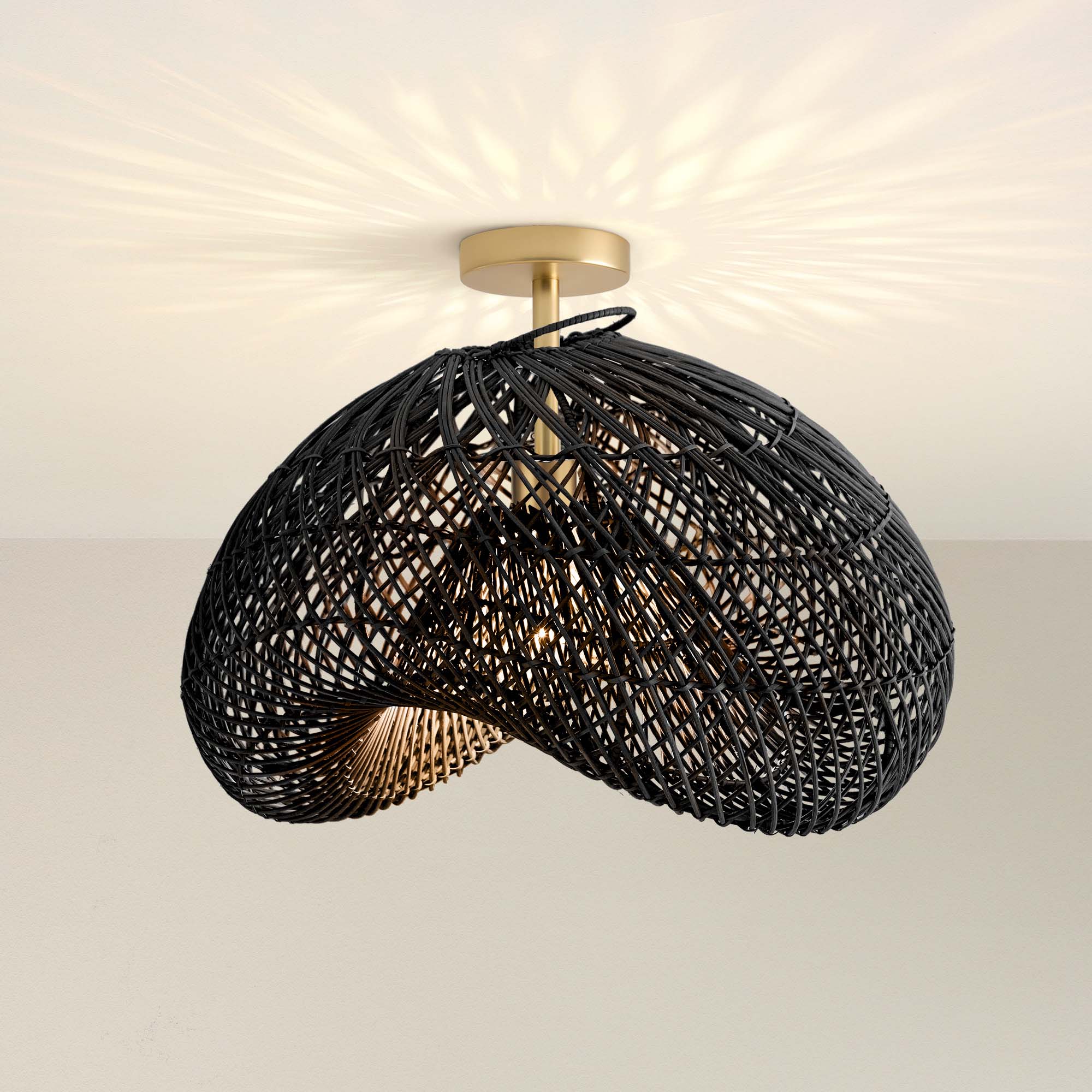
- Rattan flush mounts for 8-foot ceilings or low-ceiling rooms solve the practical problem of wanting texture and warmth at ceiling level without consuming vertical space. They bring the organic quality of a pendant fixture to a ceiling that cannot accommodate one.
- Outdoor rattan pendant lights for covered porches and patios bring the resort-inspired, natural feel of indoor-outdoor design to exterior dining and lounging areas, a fixture that works at the same 30–36-inch above-tabletop height outdoors as it does in a dining room.
For homeowners who want a softer, more organic look throughout the home, Rowabi's rattan pendant lights, rattan sconces, and rattan flush-mount styles serve as texture-layering pieces within the placement framework this guide describes, each fixture in the position where it naturally does its best work.
FAQs
How high should pendant lights hang over a kitchen island?
- The standard is 30–36 inches from the countertop to the bottom of the shade. For larger shades or taller users, 34–36 inches provides more comfortable clearance. The key test is sightline: the pendant should not block eye contact between people on opposite sides of the island.
How far apart should pendant lights be?
- Most pendant lights should be spaced 24–30 inches apart, center to center, with the outer pendants sitting 6–12 inches from each end of the island. Wider shades need more generous spacing; when in doubt, err on the side of more space rather than less.
How high should a dining room light hang above the table?
- A dining room pendant or chandelier should hang 30–36 inches above the tabletop. Center the fixture over the dining table itself, not the room's geometric center, and choose a fixture 6–12 inches narrower than the table width.
How high should wall sconces be from the floor?
- Most wall sconces should be mounted with the fixture's center at 60–66 inches above the floor. Bedside reading sconces may be adjusted slightly lower depending on mattress and headboard heights; bathroom vanity sconces follow the same 60–66-inch rule to keep light near eye level.
What light fixture is best for an 8-foot ceiling?
- For open walkways and living spaces with 8-foot ceilings, a flush mount ceiling light or semi-flush mount is the most appropriate choice. Pendants are suitable for 8-foot ceilings only when hung over a fixed surface, such as a kitchen island or dining table, where the drop directs the fixture toward the surface rather than into a walkway.
Can I hang a ceiling light myself?
- A simple fixture swap on an existing, properly rated junction box may be manageable for an experienced DIYer, with power turned off at the circuit breaker and confirmed off with a voltage tester. However, new wiring, moving a junction box, installing a heavy fixture, working on older wiring, or installing outdoor hardwired lighting should always be done by a licensed electrician. The ESFI advises homeowners not to attempt electrical work beyond their skill level.
Do outdoor lights need to be wet-rated?
- It depends on exposure. Covered outdoor areas that may experience humidity or moisture in the air typically require a damp-rated fixture. Any area where the fixture may be exposed directly to rain, water spray, or standing water requires a wet-rated fixture.
Conclusion
Getting lighting placement right comes down to a handful of decisions made in the right order: start with ceiling height, then confirm fixture type, then measure from the correct reference surface, then check proportions, and finally verify safety. For hardwired installations, such as ceiling fixtures, outdoor lights, or any project requiring new wiring, safety always takes priority over speed. The right call when the project exceeds your confidence is a licensed electrician, every time.


