


But standard height is just the beginning. The correct hanging height is the exact point where the fixture lights the surface effectively and its shadow no longer blocks faces, windows, or the room's most important views. In Rowabi interior design thinking, this means testing from real eye positions before making any installation permanent.
Read this guide to learn how to determine the right height for your specific kitchen, dining room, or covered outdoor space, with practical methods for testing before you commit.
How high should lights hang without blocking sightlines?
A pendant that reads beautifully in a product photo can become an obstacle in the actual room, like cutting across a sightline to the living room, blocking an ocean view through the sliding door, or hanging directly in front of the person sitting on the opposite side of the dining table. Before coming up with the details, check the table below to easily grab your perfect hanging proportion.
| Location | Starting point | Sightline adjustment |
| Kitchen island | 30–36 in. from countertop to lowest point | Start closer to 36 in. if the island faces a living room, patio, or large window |
| Dining table, 8-ft ceiling | 30–36 in. above tabletop | Raise slightly if the fixture is large, opaque, or cuts across faces |
| Dining table, 9-ft ceiling | Around 33–39 in. | Use as a test point, not a fixed formula |
| Dining table, 10-ft ceiling | Around 36–42 in. | Check proportion against fixture body and table width |
| Open walkway or foyer | At least 7 ft. from floor to lowest point | For 8-ft ceilings, usually choose flush or semi-flush instead |
| Multiple pendants | Around 24–30 in. between fixtures | Measure from the widest part of the shade, not just the cord |
| Pendant to island end | Around 6–12 in. from island edge | Keep both ends balanced; avoid crowding seated positions |
| Chandelier over dining table | Around 1/2–2/3 of table width | Large visual-weight fixtures should be smaller or hung slightly higher |
*Friendly note:
- Always measure to the lowest visible point of the shade, frame, or bulb, not from the ceiling canopy or cord alone.
- These numbers are starting points. Always test from actual seated and standing eye levels.
45-Day Return
45-Day Return


45-Day Return

45-Day Return
45-Day Return
45-Day Return
45-Day Return

45-Day Return
45-Day Return
45-Day Return
45-Day Return
45-Day Return
Why pendant light sightlines matter
A fixture can be hung at the "correct" height by every standard chart and still be wrong for the specific room it is in. The reason is that sightlines, the uninterrupted lines of sight between a person and something they want to see, depend on the viewer's exact position, not on ceiling height alone.
The pain points are specific and familiar:
- A pendant hung at the standard height of 34 inches above an island can still block eye contact with someone standing on the prep side when you are seated at the stool.
- A row of three opaque dome pendants at the correct spacing can create a visual fence, turning an open-concept kitchen into two disconnected rooms.
- A chandelier that is technically the right height for the table can still put its solid frame directly across the sightline to a fireplace, a television, or the garden beyond.
- A bulb that sits at seated eye level produces glare that makes the dining table uncomfortable regardless of the shade's color or material.
Use the three-viewpoint sightline test before installation
Standard measurements are calculated from a generic room with generic people. If your room has specific windows, focal points, and people using it, testing from actual positions before installation is more reliable than any table test.
Viewpoint 1 - Standing work position
Test from wherever you actually stand during daily use of the space: the sink, the range, the prep side of the island, or the main kitchen walkway. The fixture body should not be within your horizontal line of sight of something you regularly look at, such as the person on the other side of the island, the television in the adjacent room, or the garden through the window.

Stand in your actual position, at your actual height, and trace the sightline to each important focal point.
Viewpoint 2 - Seated eye level
Sit at the island stool, the dining chair, or the breakfast nook bench and look directly across the table or island. The fixture's opaque body should not block the face of the person sitting across from you. It should not sit directly in front of a window or exterior view you would normally see from that position.

This is the viewpoint most commonly overlooked in standard hanging height calculations, and it is often the one that reveals a problem the standing position missed.
Viewpoint 3 - Main room entrance
Walk into the room from the hallway, foyer, adjacent living room, or patio door and notice whether the fixture creates the impression of a visual barrier across the room. A row of pendants hung too low in an open-concept kitchen often reads from the entrance as a wall of shade material dividing the kitchen from the living space.

This impression disappears when the fixtures are raised 2–4 inches, a small adjustment that the elevation view from the entrance reveals and the close-range cooking position does not.
Make a full-size mockup
Before hardwiring any fixture, create a physical mockup at the proposed height using cardboard cut to the fixture's diameter, hung with painter's tape or string. Mark both the lowest point of the shade and the widest horizontal extent. Then, photograph from all three viewpoints.
Adjust the hanging height in 2–3 inch increments until the mockup sits comfortably outside every sightline while still feeling visually connected to the surface below it. Only after testing under both daytime and evening lighting conditions should the installation be made permanent.
How to calculate the correct pendant drop
Once the three-viewpoint test has established where the shade should sit, the math confirms whether the fixture's suspension system can deliver that height.
Measure these four dimensions
Before purchasing or installing, gather four measurements in inches:
- Finished ceiling height
- Countertop or tabletop height
- Total fixture body height from the top of the canopy to the lowest point of the shade
- Desired clearance between the surface and the bottom of the shade.
All measurements should be taken in inches and feet for U.S. installations.
Use this simple formula
Total drop from ceiling = ceiling height − surface height − desired clearance.
For example: a 9-foot ceiling over a standard 36-inch kitchen island with a desired 36-inch clearance:
108 in. (ceiling) − 36 in. (island) − 36 in. (clearance) = 36 in. total drop
That 36-inch drop covers the full distance from the ceiling to the bottom of the shade, so the adjustable cord or downrod must deliver that exact length after the canopy and fixture body are accounted for. Check the fixture's adjustment range against this number before ordering.
Why is ceiling height alone not enough
Two rooms with identical 9-foot ceilings may require different pendant heights because their sightlines differ: one room has a low window on the wall behind the island; the other looks directly into a living room. One island is used primarily for food preparation; the other doubles as a breakfast bar. One household has members who are 5'4"; another has members who are 6'2".
So, the formula gives you a number to work with; the viewpoint test gives you the number that actually works in the specific room.
Room-by-room sightline adjustments
With the measurement framework and viewpoint test established, the room-specific adjustments follow the same logic: test the range, identify the sightlines, and position the fixture at the upper boundary where the light still works, rather than at the lower boundary where the sightline starts to break.
Kitchen island pendant sightlines
The kitchen island is where sightline problems are felt most acutely, because it is used simultaneously for cooking, conversation, and often as the room's primary view toward the living space or exterior.
Start at 30–36 inches above the countertop
30 inches creates a closer, more intimate connection between the fixture and the work surface; while 36 inches creates more visual openness through the room.
In a kitchen where the island is used primarily for prep and the fixture is relatively compact, 30–32 inches may feel right. In a kitchen where the island faces a living room or large window and the fixture has a wide, opaque shade, starting at 36 inches is the more reliable choice.

Task lighting is less effective at greater distances, so if the shade is raised beyond 36 inches to protect a sightline, recessed lighting or under-cabinet lighting should compensate for the reduced task illumination.
Adjust for an open-concept kitchen
In an open-concept kitchen where the island faces a living room, dining area, or exterior view, test the pendant height from the seated stool position and from the living room itself. The pendant shade should not sit in the horizontal zone between the seated cook's eyes and the television, the sofa, or the view through the patio door.
For kitchen islands with large windows behind the island seating, this often means testing toward the upper end of the 30–36-inch range and verifying that the sightline clears when seated.
Protect window, pool, garden, and ocean views
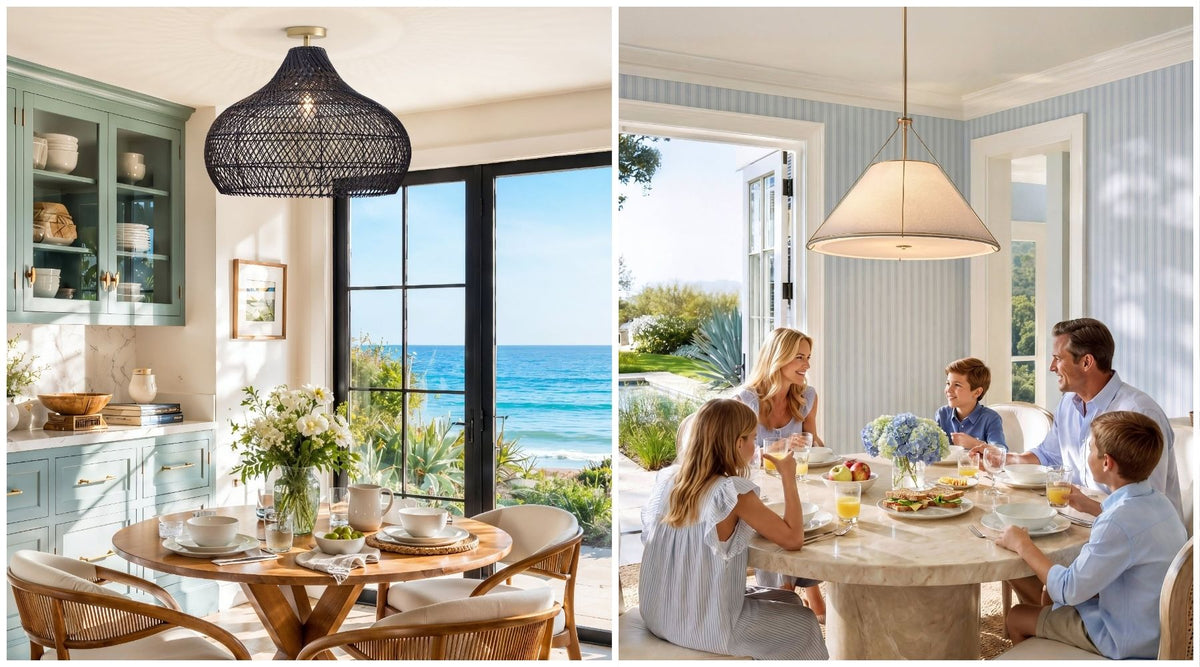
In coastal homes, homes with pool views, and any kitchen where an exterior view is part of the daily experience, the pendant should be tested specifically against that view from the positions where it is enjoyed.
A pendant at the "correct" height, sitting directly in front of the kitchen stool's horizon line, is still the wrong height for that specific kitchen. Raise it by 2–4 inches, add supplementary task lighting if needed, and confirm the view from the actual viewing position rather than from the middle of the room.
Space multiple pendants without creating a visual fence
Three pendants with large, opaque shades can create a continuous visual barrier across the island even when each fixture is hung at the correct individual height. The spacing should be measured from the widest point of each shade, not from the center of the cord, to ensure the shade-to-shade gap creates real visual breathing room.

Two large pendants with more generous spacing often preserve the sightline better than three smaller ones packed into the same span. A single large pendant centered over a shorter island, particularly if the shade is open-weave or transparent, can preserve the view more effectively than any multi-pendant arrangement.
When one large pendant works better than three
A single fixture centered over the island is worth considering when the island is 5 feet or shorter, when the adjacent sightline runs directly through the center of the island, or when the available ceiling box position places fixtures in the path of the most important view.
One large, open-weave pendant allows the background to remain partially visible through the shade; a row of solid domes at the same position creates a complete visual interruption across the full length of the island.
Dining room chandelier sightlines
Start 30–36 inches above the tabletop
The dining table is a conversation surface, which means the fixture directly above it should not sit between the faces of the people using it. Test from every chair, not just the host's position, a shade that clears the sightline from the head of the table may sit directly across the line of sight between guests on the long sides.
Bulbs that are exposed or only partially shielded cause glare at this height, even when the shade itself does not block the view; a diffused glass shade or an internal diffuser reduces this problem significantly.
Size the chandelier to the table, not only the room
A chandelier spanning 1/2 to 2/3 of the table width is a commonly used starting point. A fixture that is narrower than the table by at least 12 inches on each side allows light to spill beyond the fixture's shadow zone.

For a long rectangular table, a linear pendant or two smaller pendants in a row often better preserves the sightline than a single round chandelier of equivalent visual weight. A large fixture hung correctly is less obstructive than a small fixture hung too low, the right balance is both.
Open dining room versus enclosed dining room
An enclosed dining room with walls on all sides can accommodate a more formal, lower-hung chandelier because the sightlines terminate at the walls. An open-plan dining room that connects to a kitchen, living room, or exterior needs to be tested from all of those connected spaces.
A chandelier that is just slightly too large or too low in an open-plan room creates the impression of a room divider rather than a dining focal point when viewed from the kitchen or living room side.
Hanging lights in walkways, living rooms, and entryways
Maintain at least 7 feet of floor clearance
In any space where people walk directly under the fixture, the lowest point of the shade or frame should be at least 7 feet above the floor as a practical starting point. For an 8-foot ceiling, this leaves only 12 inches for the fixture, which is why pendants and chandeliers in open walkways with standard ceiling heights are usually replaced by flush or semi-flush mounts that preserve the full clearance.

What to do with an 8-foot ceiling
In a room with an 8-foot ceiling and an open walkway below the light, a flush-mount or semi-flush-mount fixture is almost always the more appropriate choice than a hanging fixture.
A pendant can still work over a fixed surface, a dining table or island, where the fixture hangs toward the surface rather than into the walking path. In a foyer or entryway where people move directly below the ceiling, even a compact chandelier typically cannot meet the 7-foot minimum clearance at 8 feet without sitting directly against the ceiling.
Center the fixture on the visual zone
The fixture should be centered on the surface or space it serves, not on the ceiling's geometric center.
Over a dining table, center on the table, not the room. Over a kitchen island, center on the island, not the kitchen. In a foyer, center on the architectural axis of the entry or the front door, not the center of the foyer's footprint.
This alignment often differs from where the junction box was originally installed, which is one of the most common reasons fixtures end up misaligned with the furniture or the view below them.
Outdoor patios and coastal views
For covered patios and coastal outdoor dining areas, the sightline considerations are the same as indoors, but the fixture must also be rated for the installation environment.
Any pendant installed on a covered porch or patio should carry at minimum a damp-location rating; fixtures in open or semi-exposed outdoor positions should carry a wet-location rating. Indoor fixtures, regardless of material, should not be installed in any outdoor location.

In homes with ocean, pool, or garden views, hanging pendants at the upper end of the acceptable range, and testing from the seated outdoor dining position, generally preserves more of the view while still delivering adequate ambient light over the table.
How fixture style and shape affect the view
Sightline management is not only about height, it is also about choosing a fixture whose shape and material interact well with the room's specific views.
| Fixture Material & Shape | Visual weight | Best for | Sightline considerations |
| Solid metal / opaque dome | Heavy (solid block) | Focused task lighting, enclosed rooms, industrial or modern styles | Blocks views completely if hung at eye level; may require fewer fixtures or the upper range of hanging height |
| Clear glass | Light (transparent) | Small spaces, preserving window views, clean modern aesthetics | Excellent for sightlines, but exposed bulbs cause severe glare, requires frosted bulbs or dimmers |
| Open-frame metal | Light to medium | Long islands, dining tables, minimalist or geometric designs | Reduces visual mass significantly; confirm that horizontal frame lines do not cut across faces |
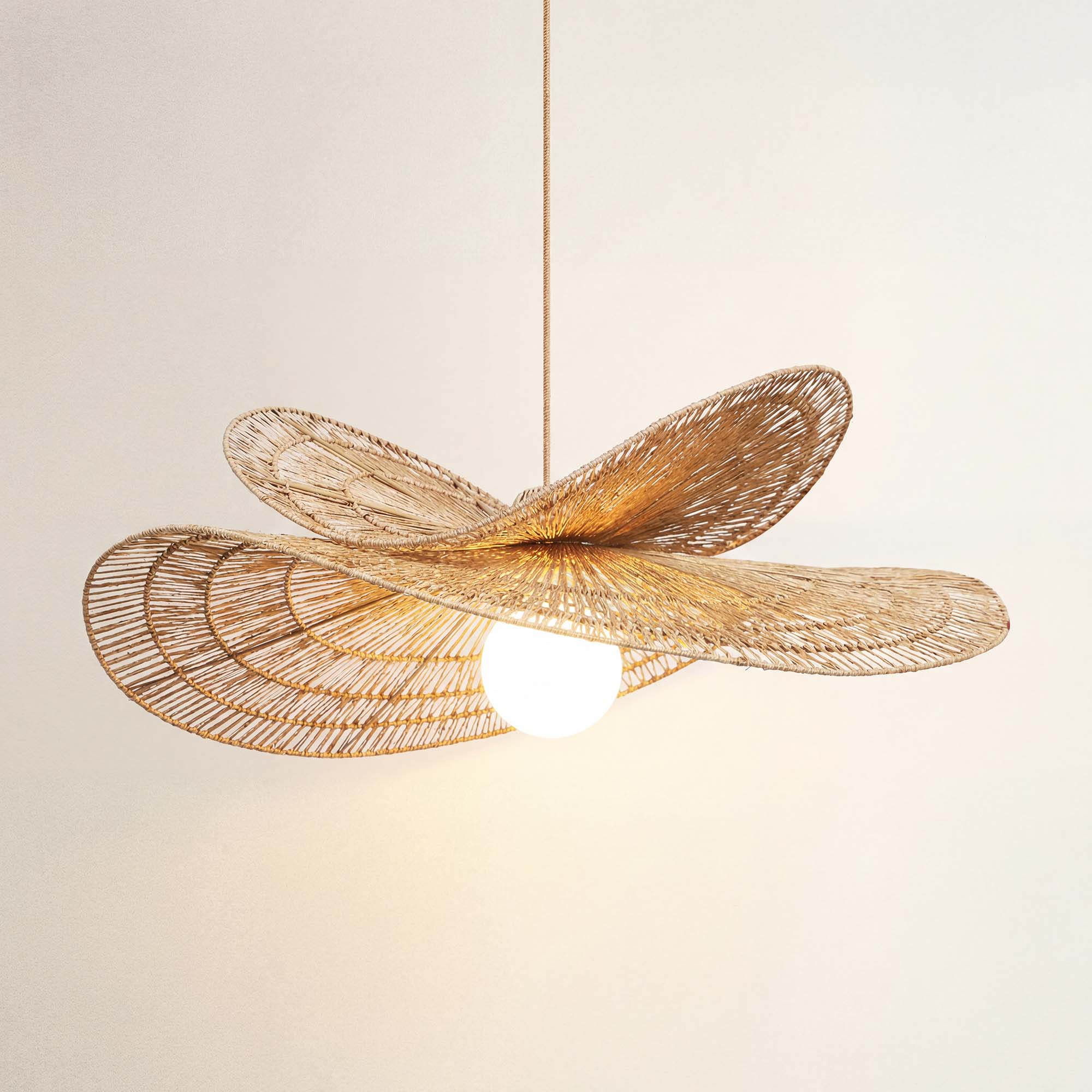
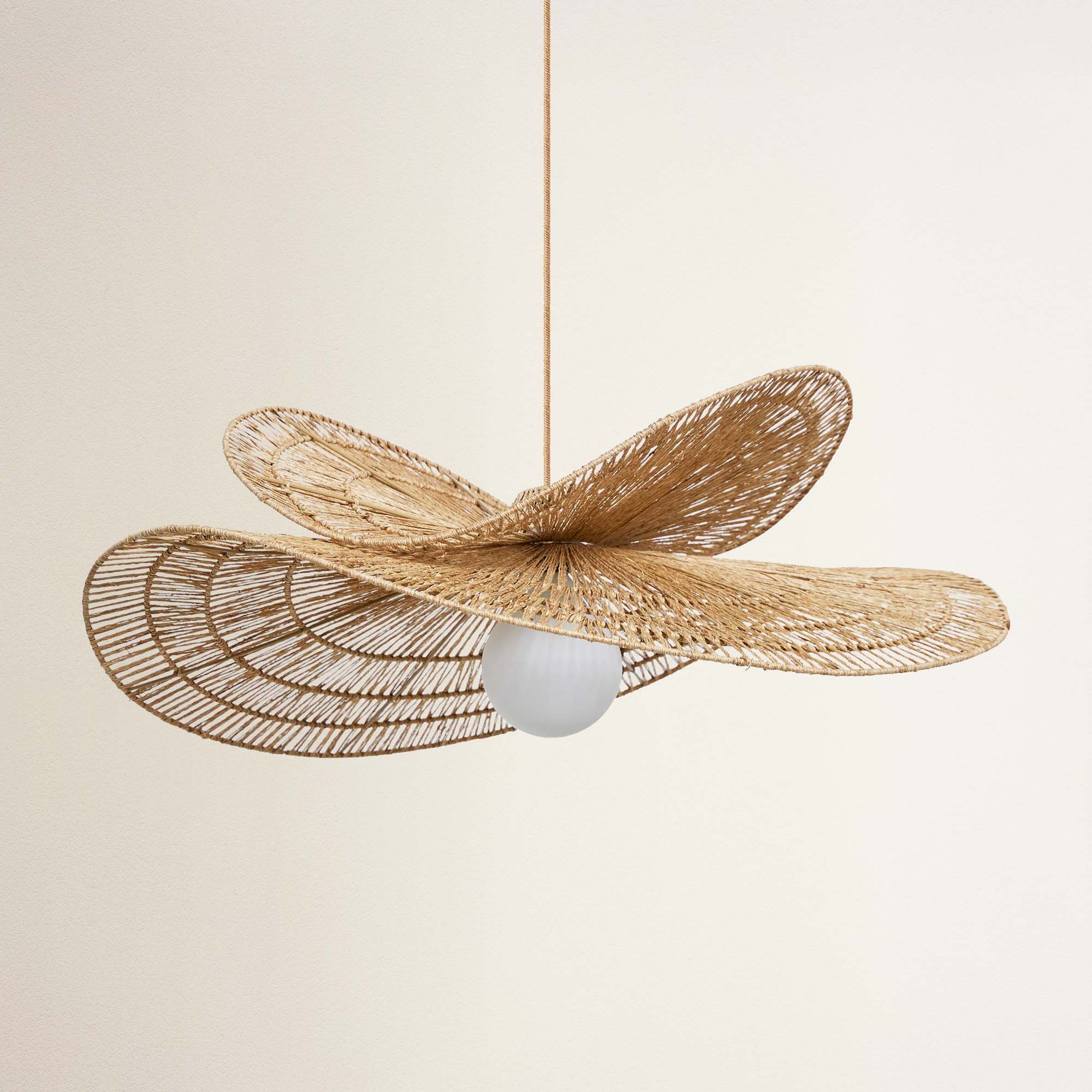
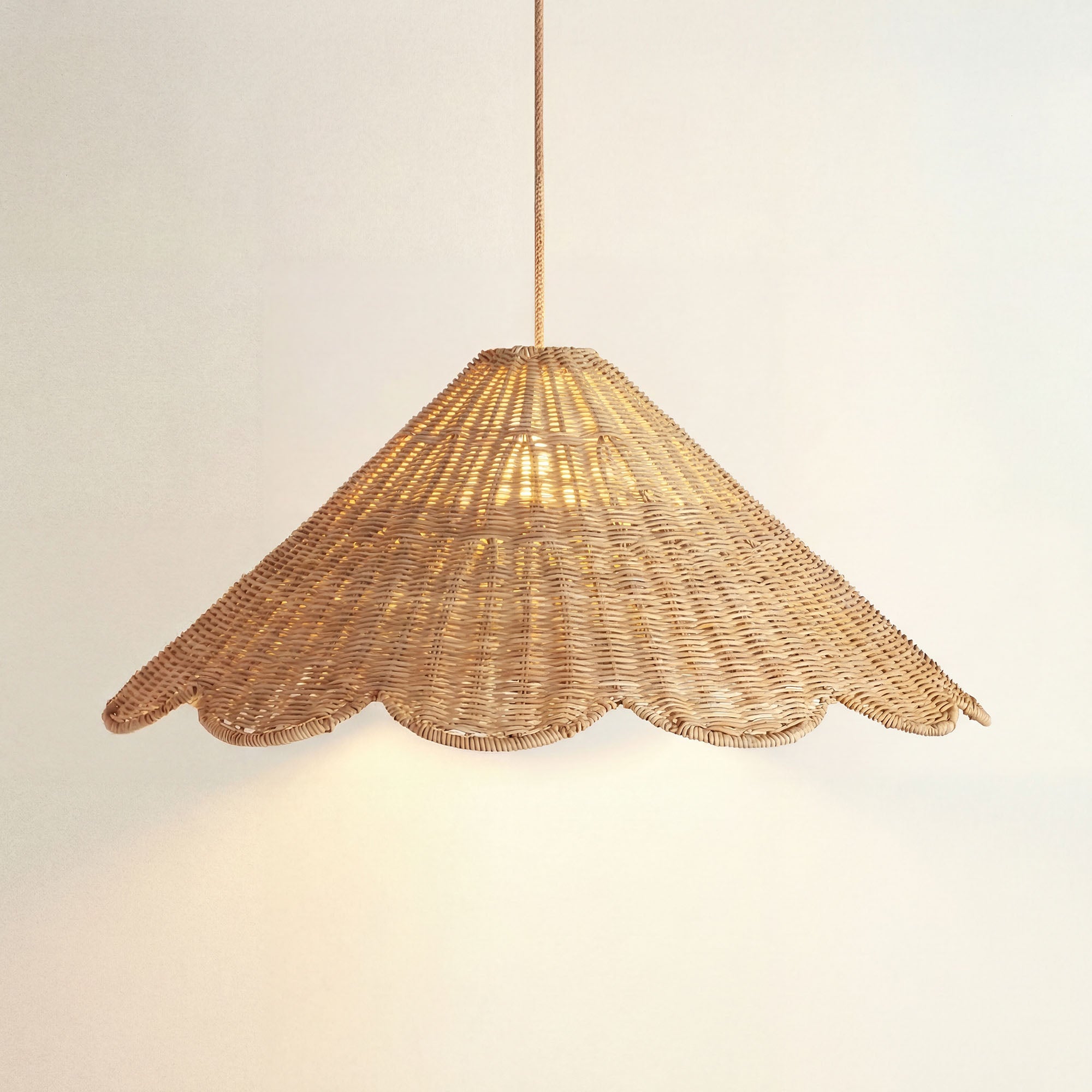
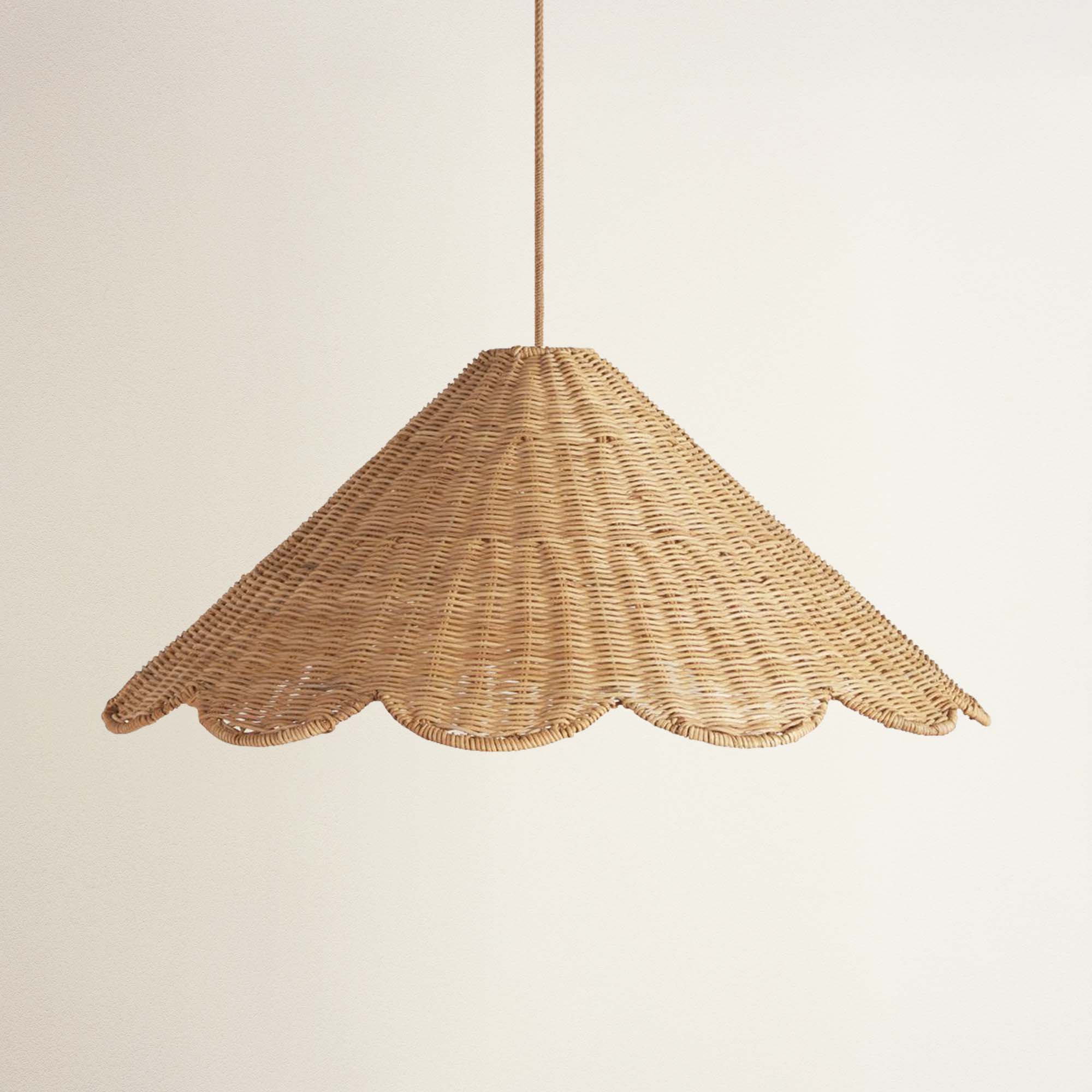
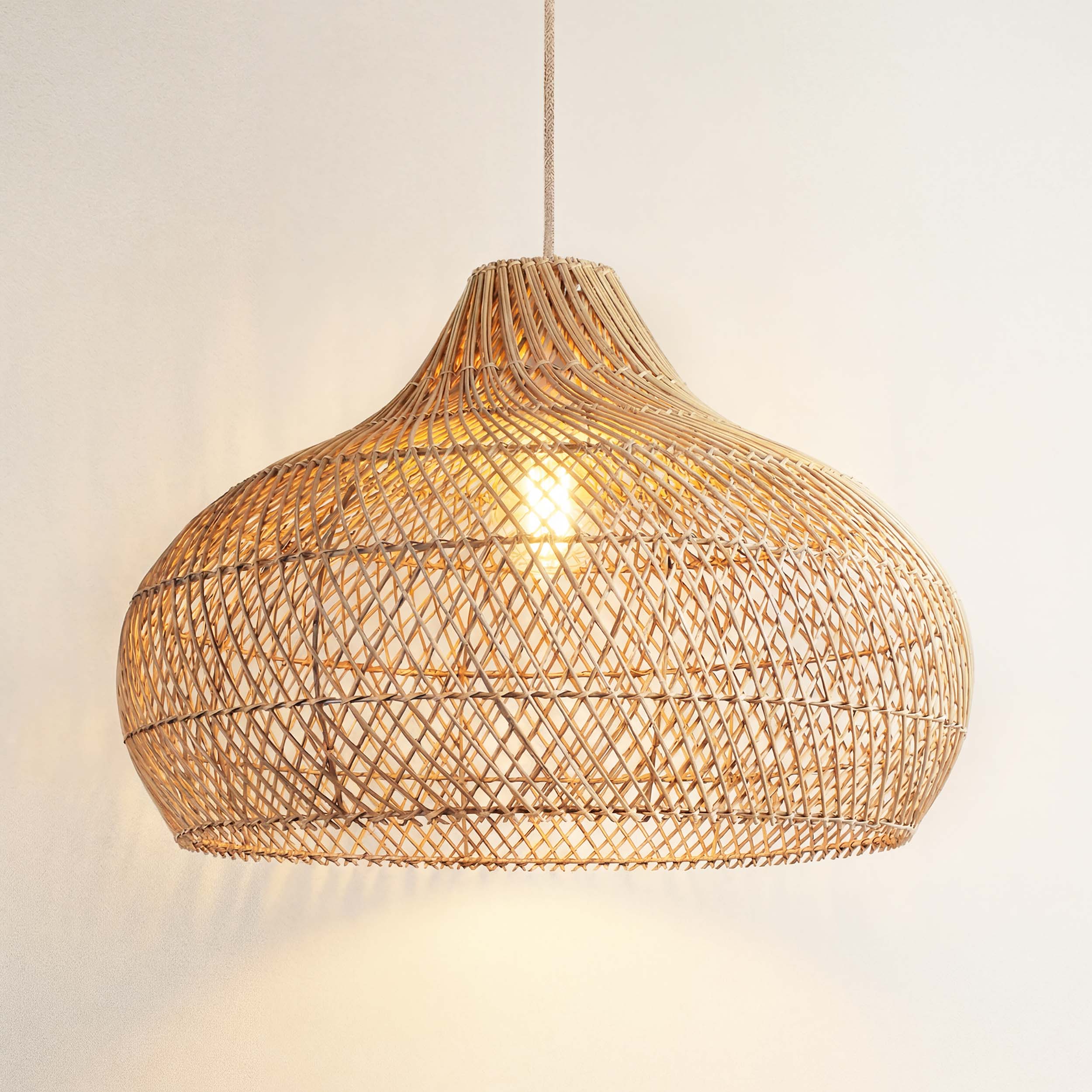
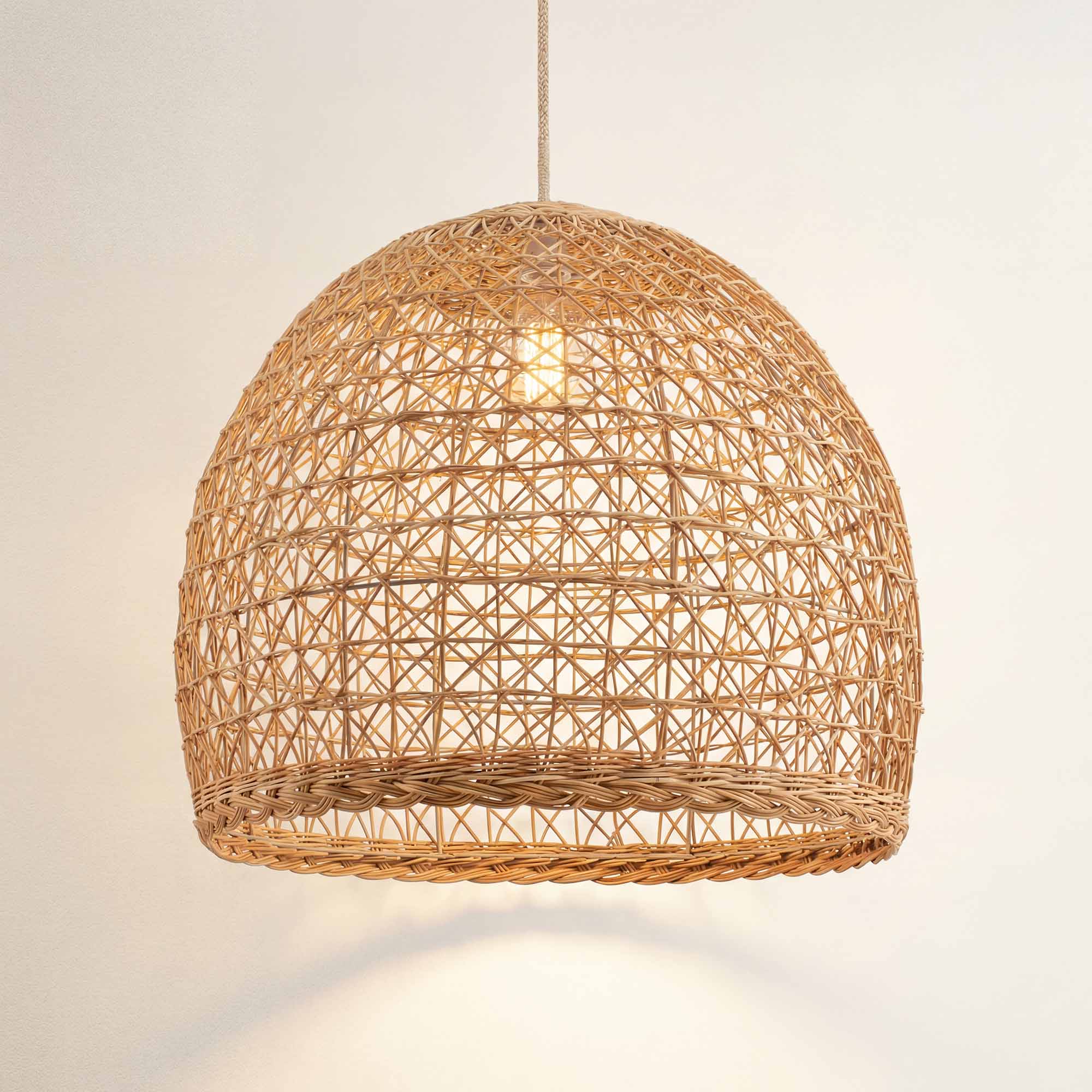
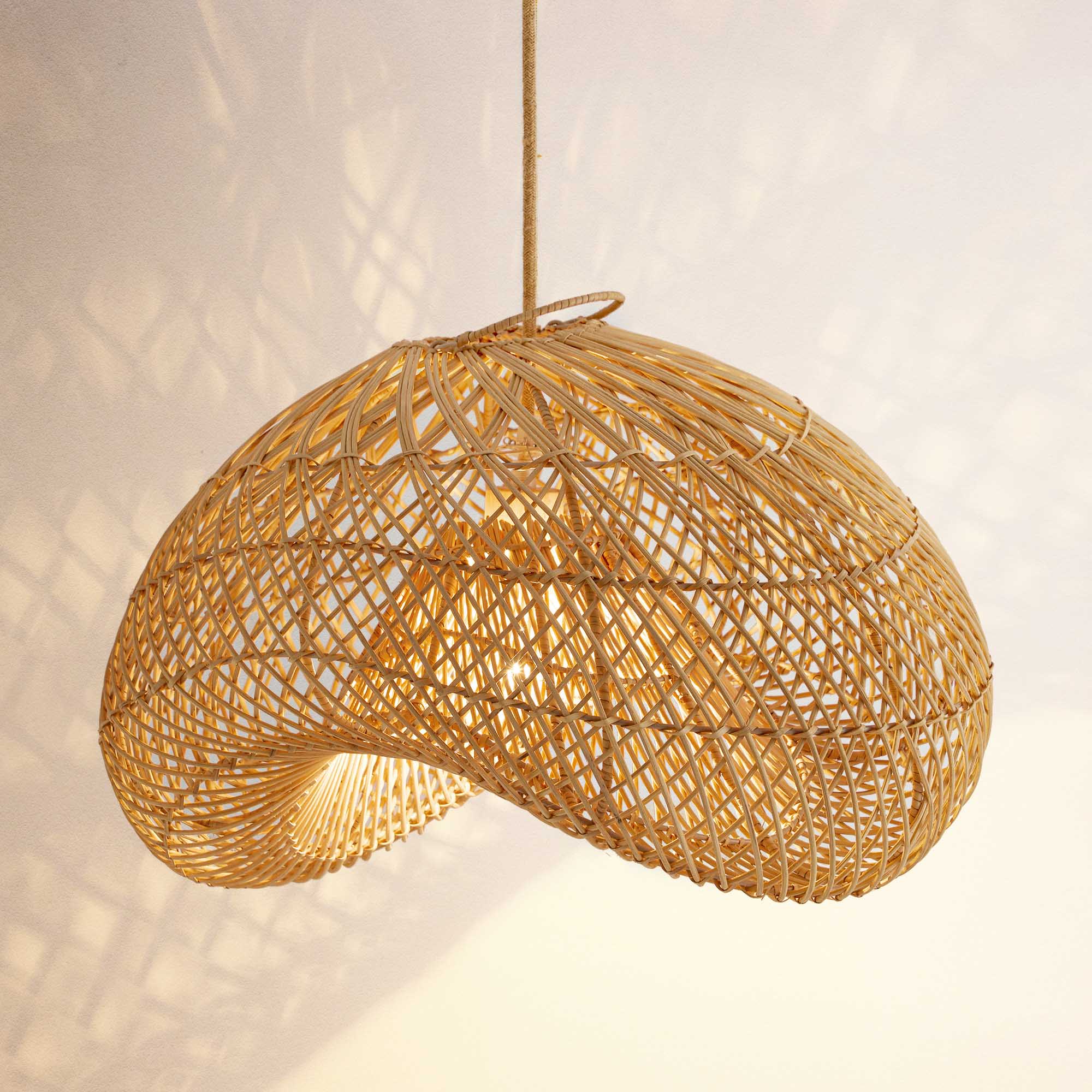
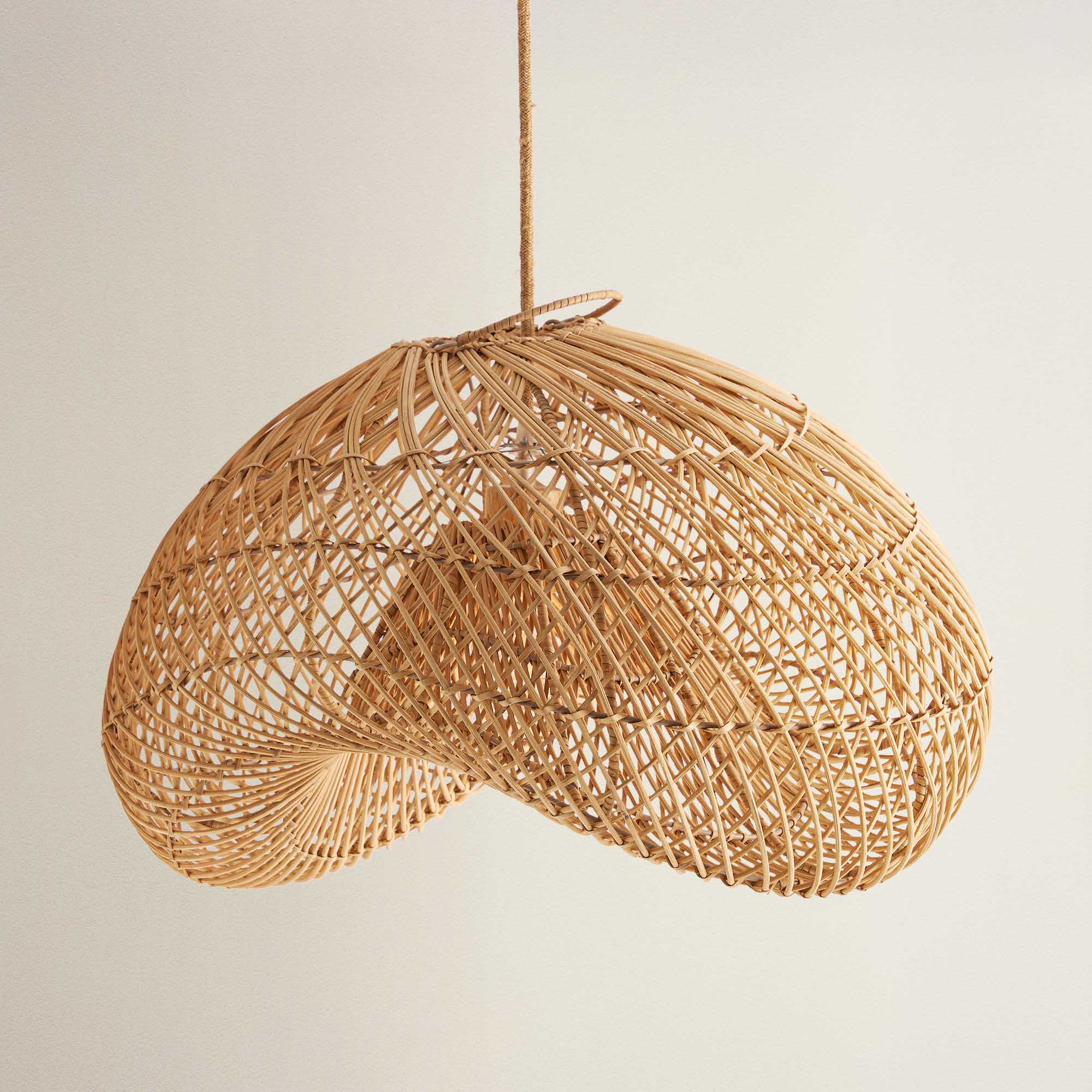
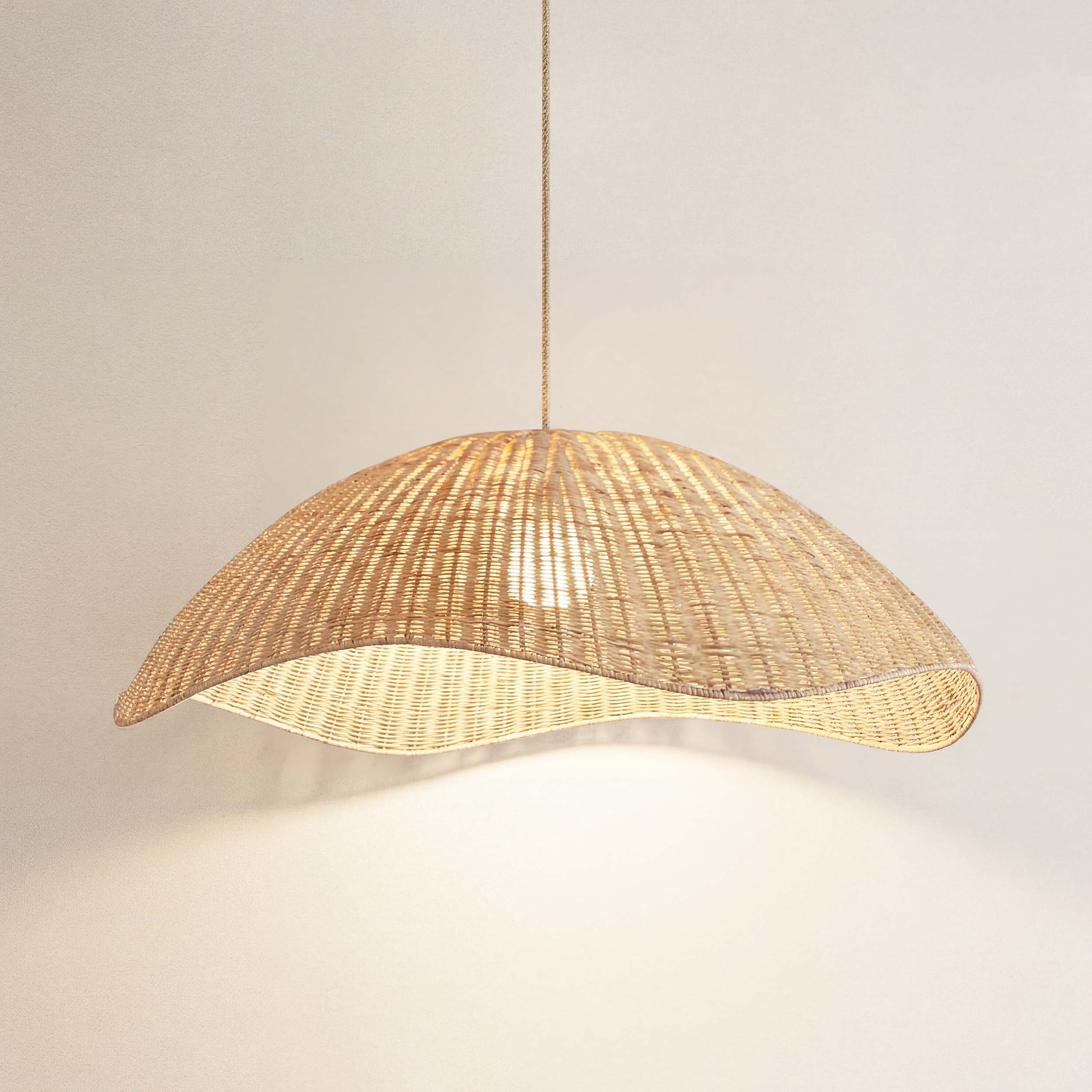
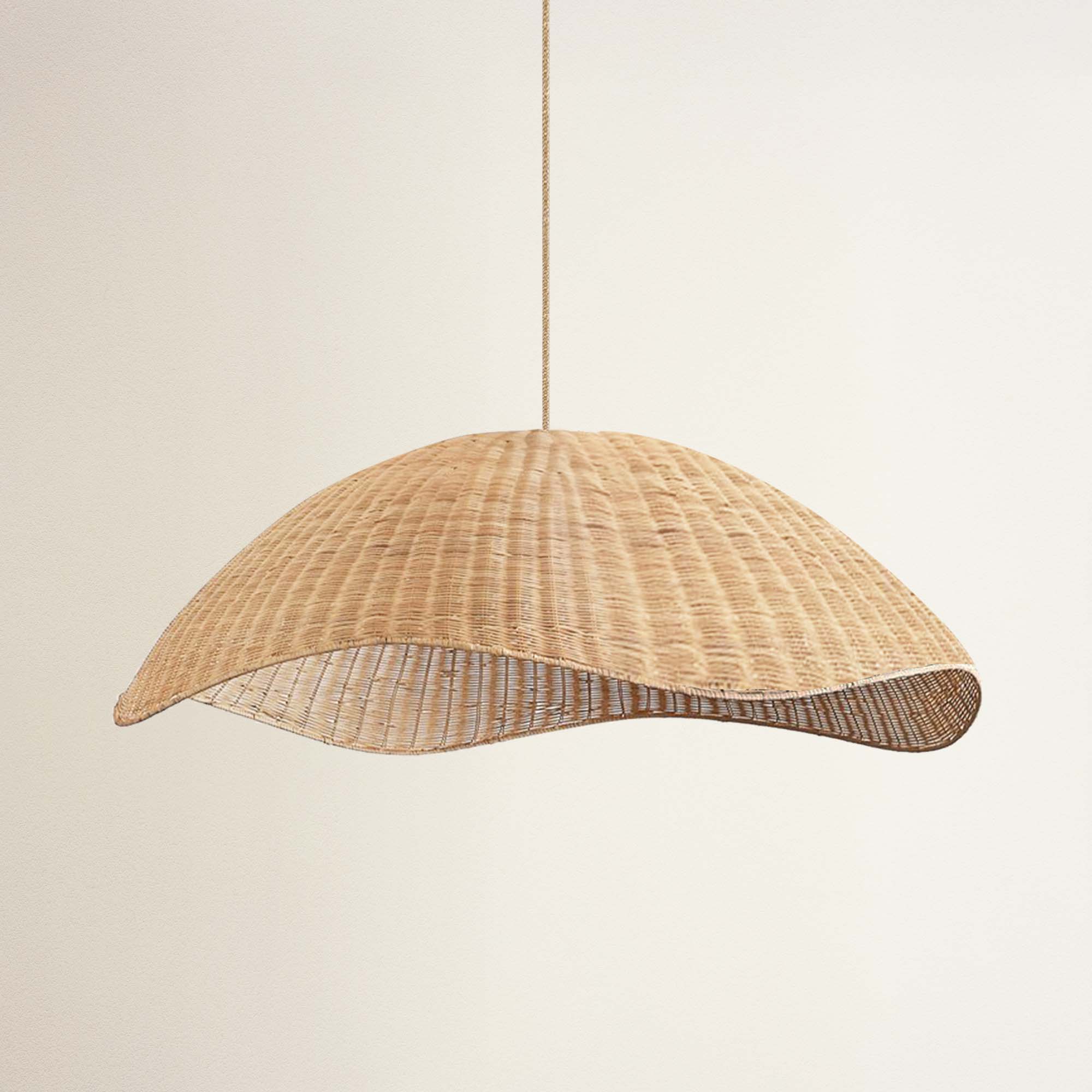
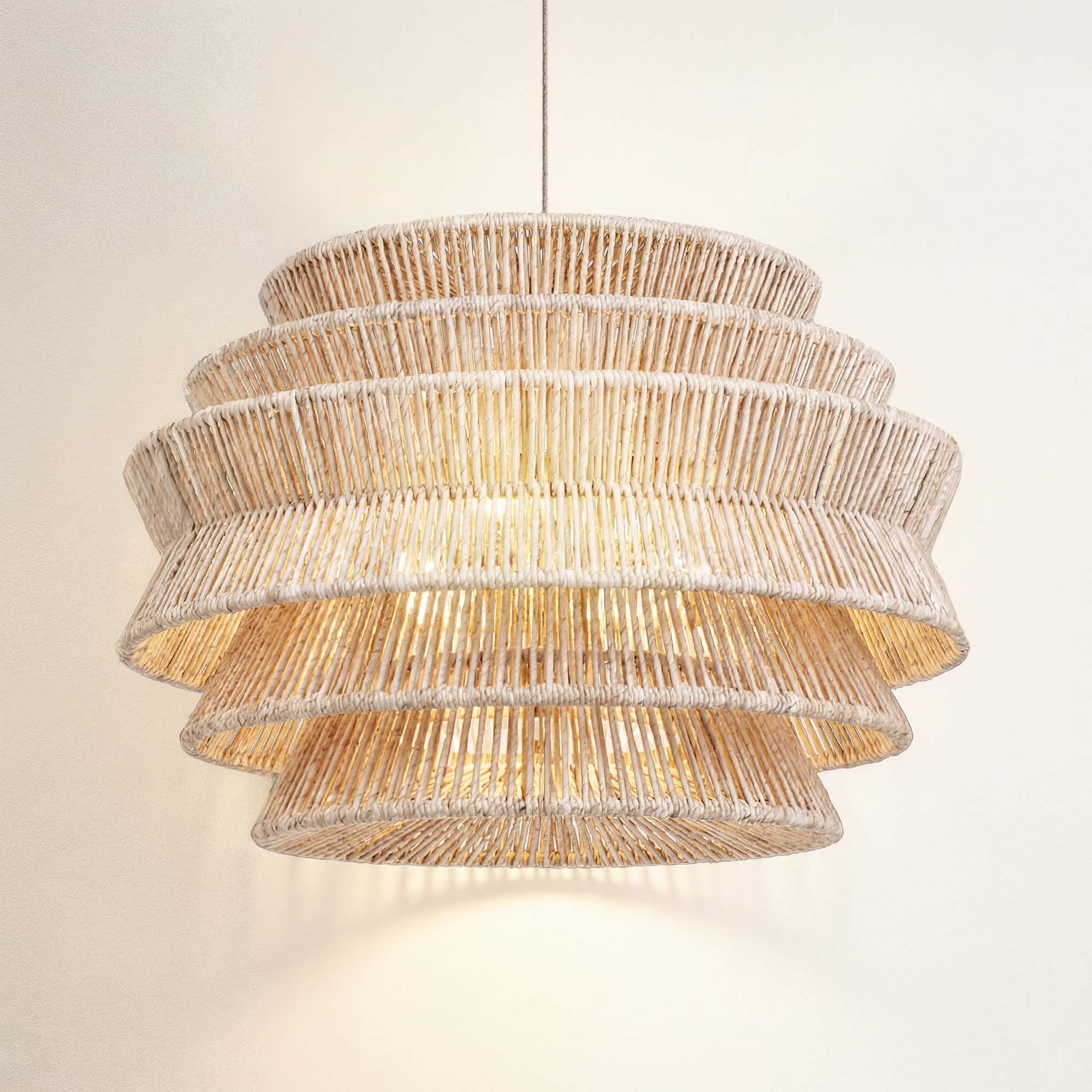
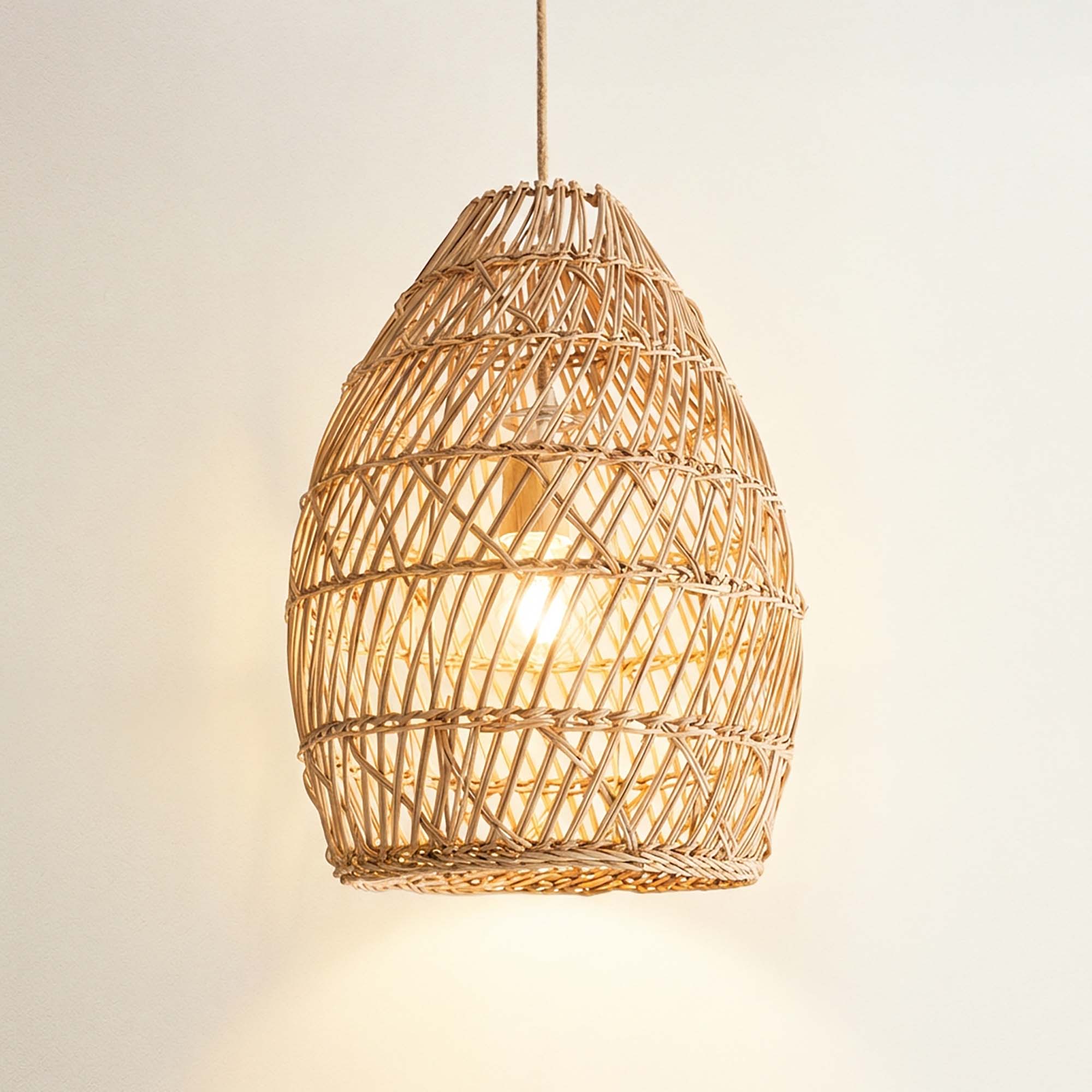
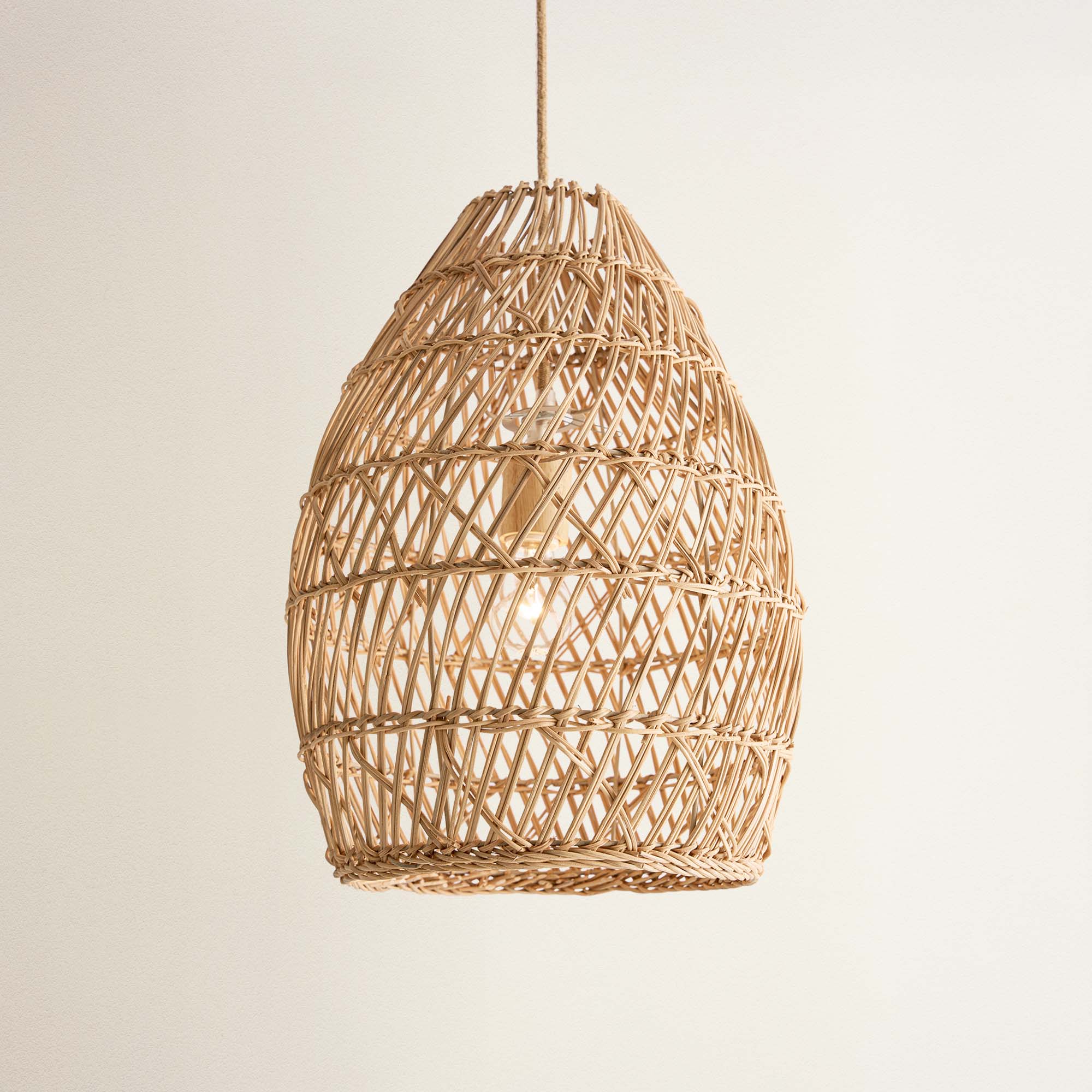
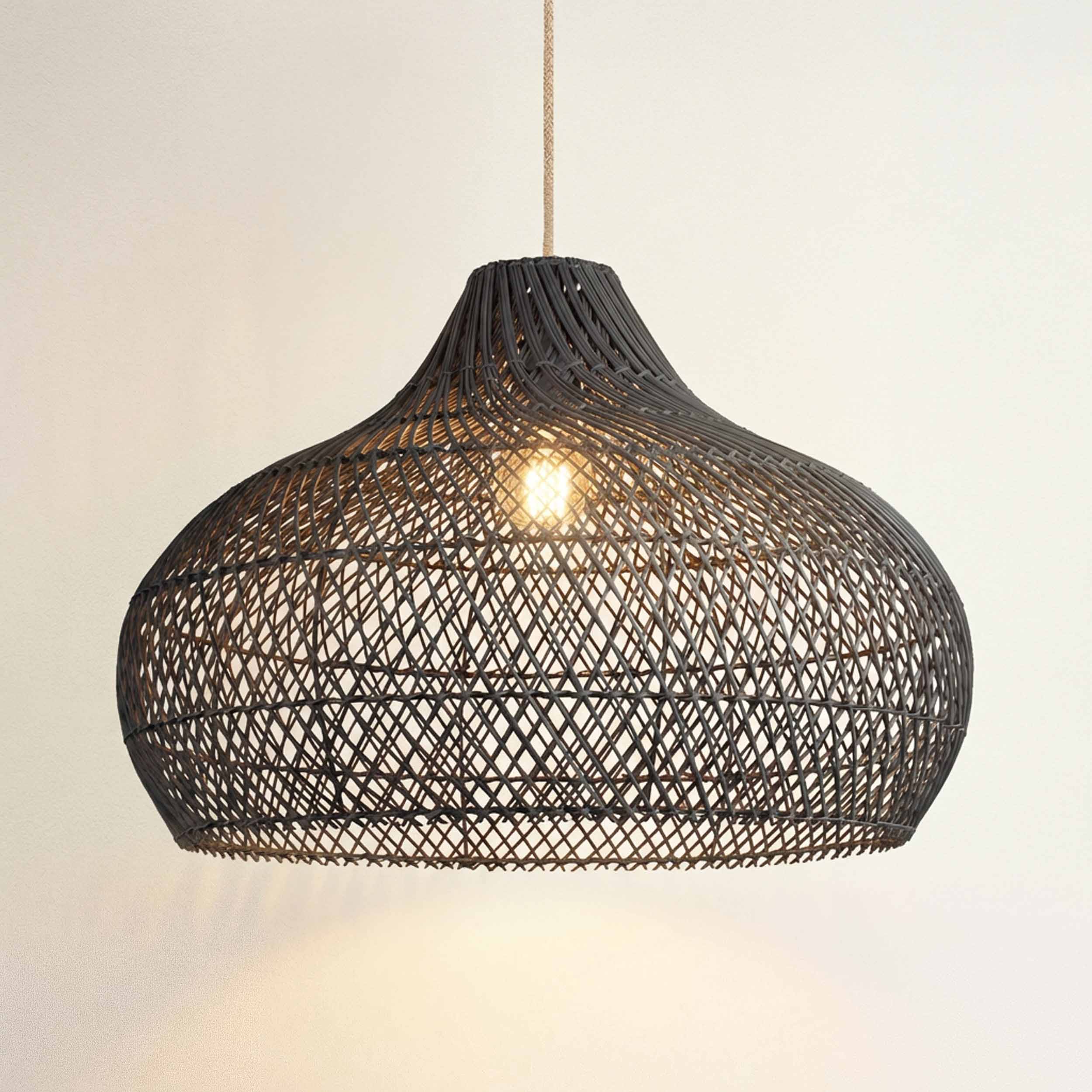
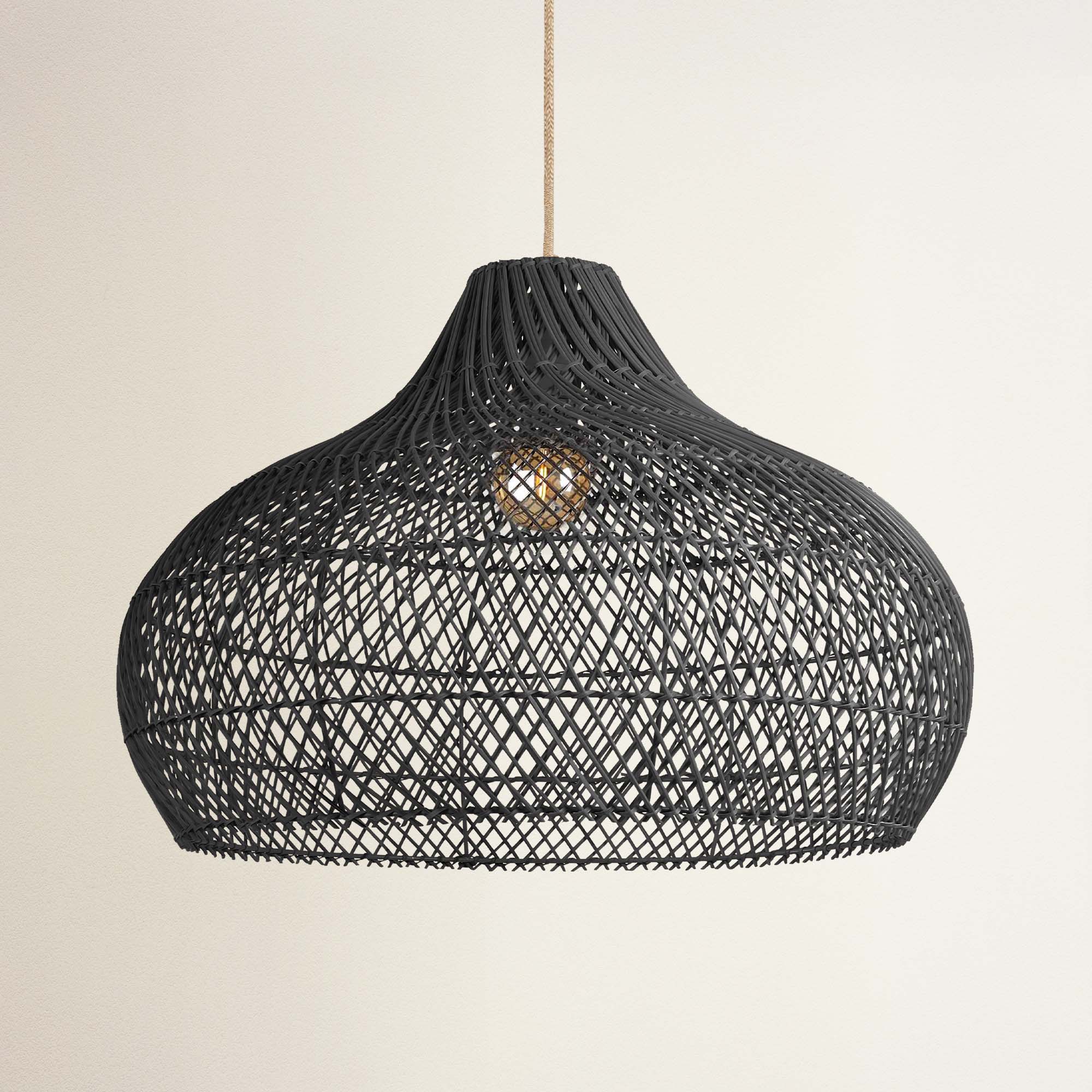
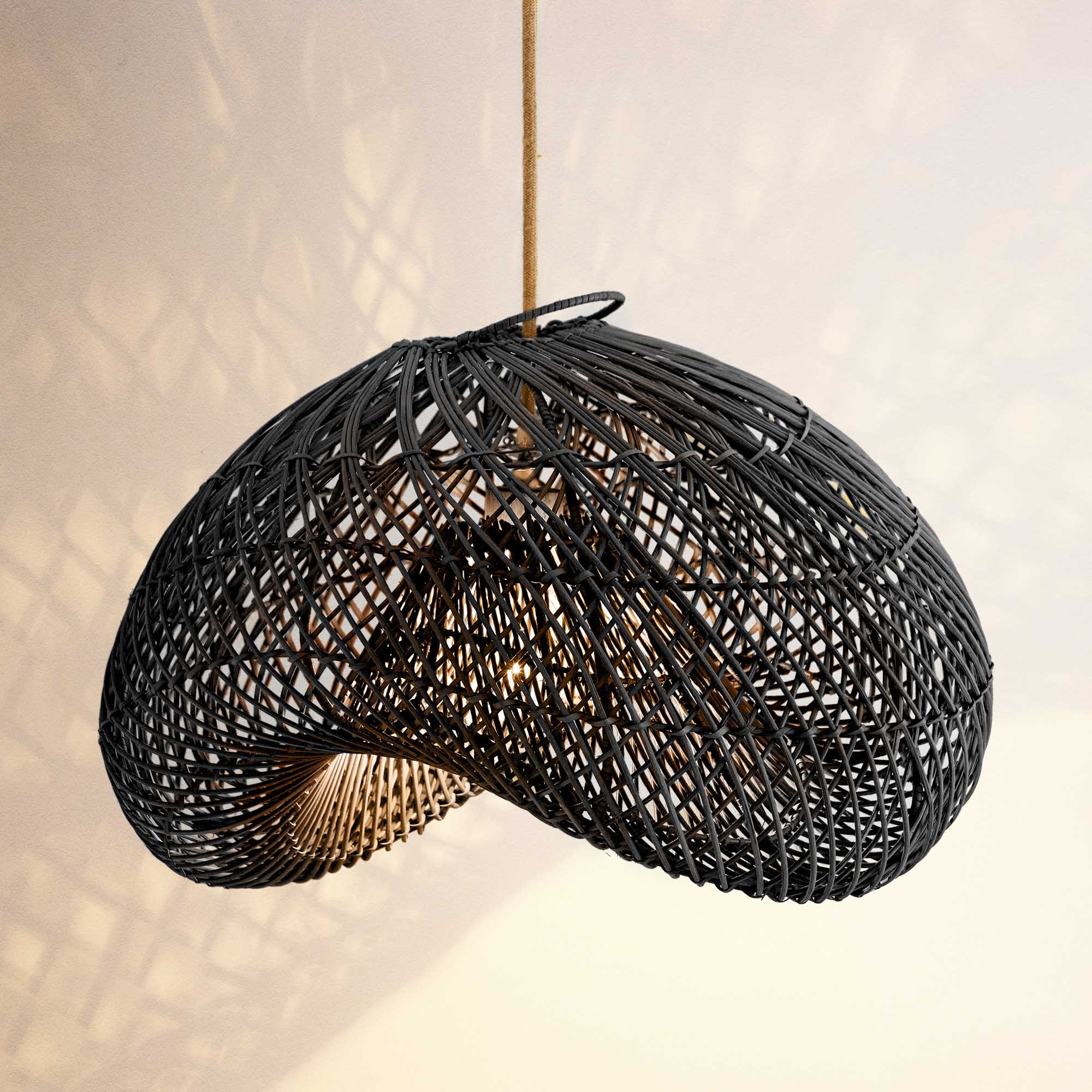
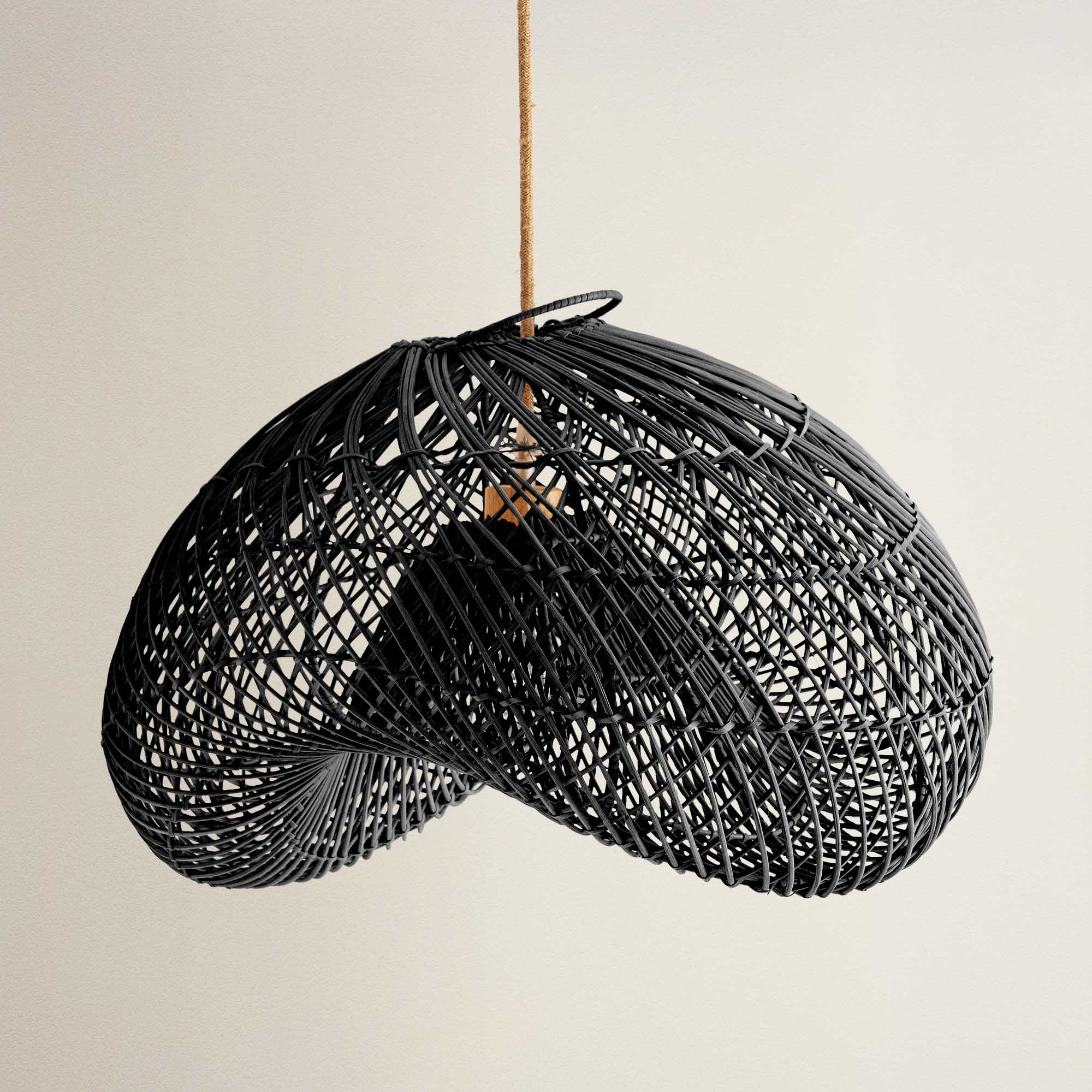
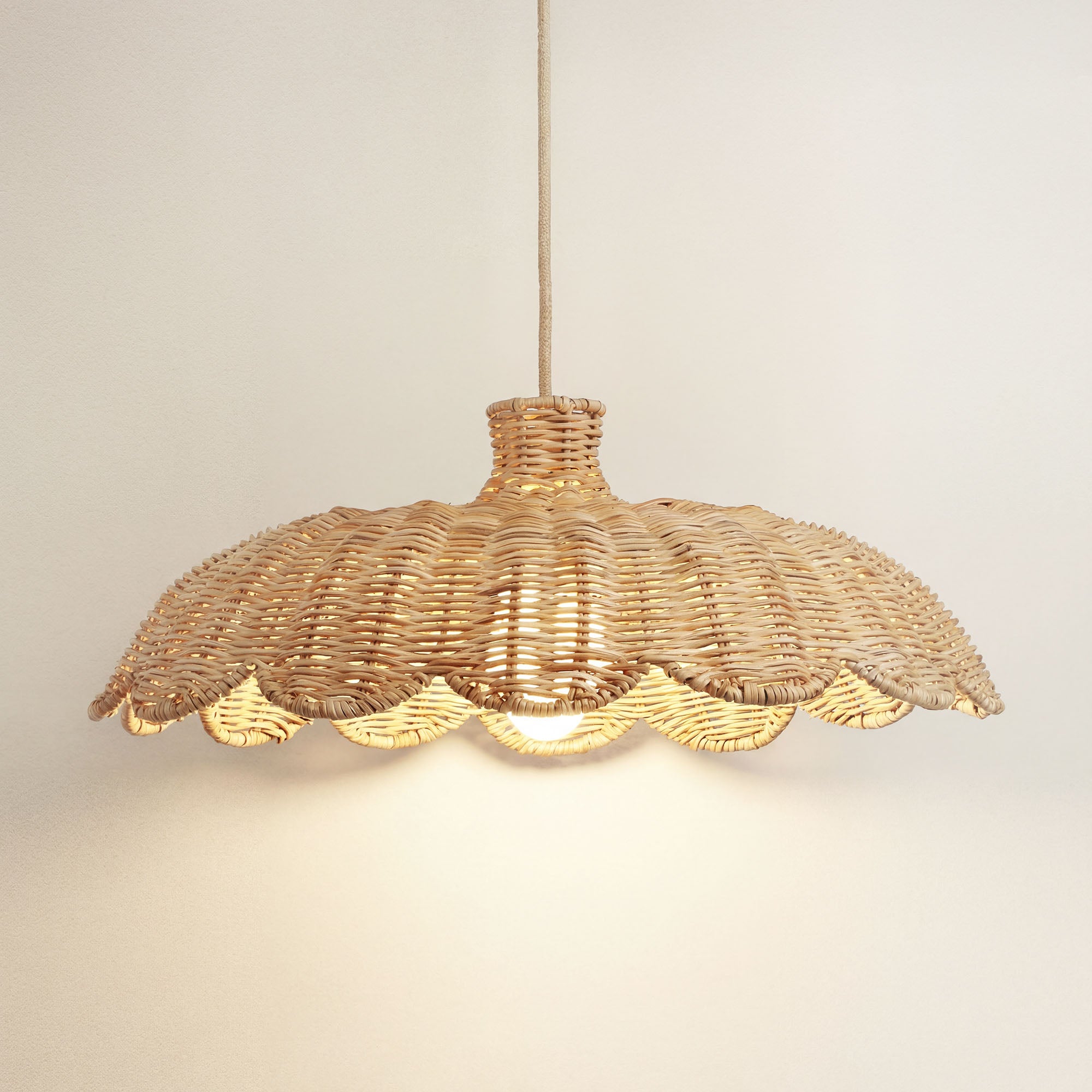
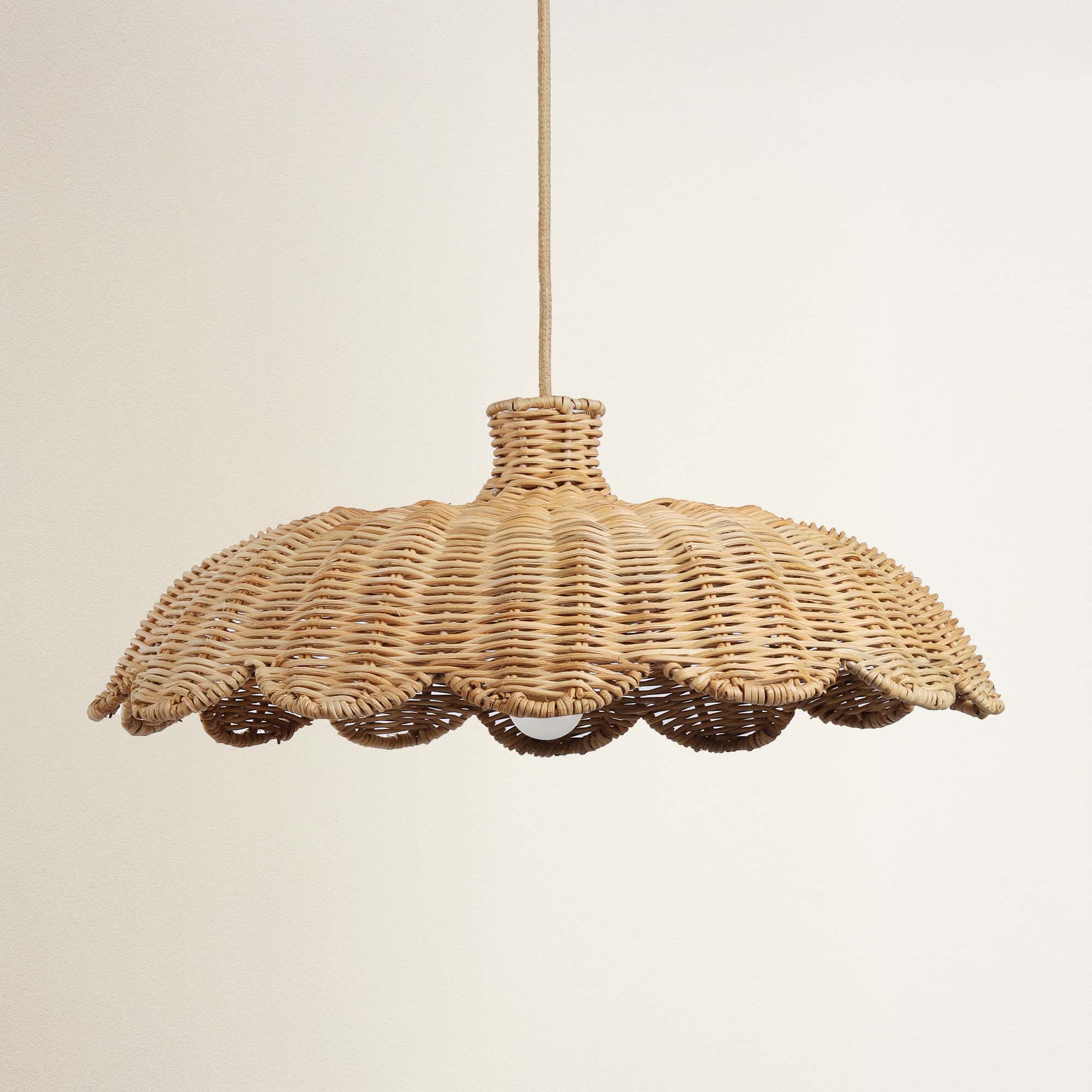
| Open-weave rattan | Medium (textured and airy) | Coastal, organic modern, warm-neutral spaces, open-concept layouts | Filters light and allows background views to pass through; softer visual footprint than solid metal domes |
Opaque metal and oversized domes
A solid opaque shade creates a complete visual block at the height where it sits because nothing passes through it, and everything behind it at that eye line disappears.
In a room with important views, opaque shades need to be hung at heights where the solid body completely clears the sightline. Reducing the number of fixtures by choosing two large pendants instead of three, for example, creates negative space between them, restoring visual access through the gaps.
Clear glass and open-frame chandeliers
Clear glass and open-frame chandeliers are among the most sightline-friendly fixture types because they allow light to pass through the fixture. The trade-off is glare: an exposed bulb at or near eye level, with a clear glass shade, produces the kind of direct brightness that is uncomfortable at any height.

Frosted or matte bulbs or shades with internal diffusers reduce this problem while maintaining the fixture's visual transparency.
Open-weave rattan pendants
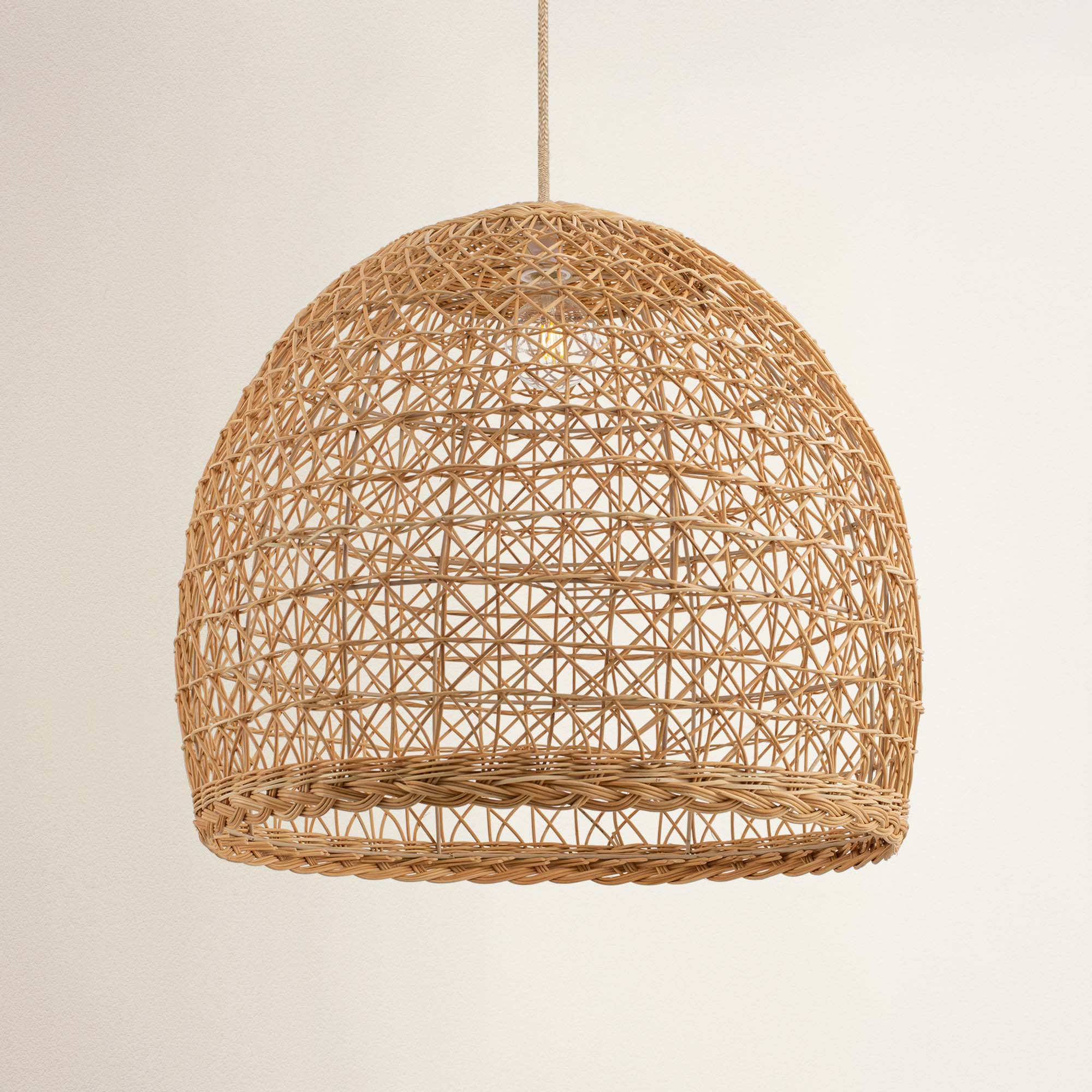
An open-weave rattan pendant allows portions of the window, garden, or surrounding room to remain partially visible through the shade, which gives it a softer visual footprint than a solid dome of the same diameter.
For coastal kitchens, open-concept dining rooms, and indoor-outdoor spaces where the view is part of the room's character, a woven natural pendant adds textural warmth without completely blocking the view behind it.

A Rowabi open-weave rattan pendant can serve this function particularly well in coastal and organic modern interiors by filtering the light, softening the view, and introducing the character of natural materials at exactly the height where the room most benefits from it.
Don’t forget to test the fixture from seated and standing positions; its visual lightness does not eliminate the need to verify the sightline from every viewpoint.
What to do if your lights are already hanging too low
If a fixture is already installed and the sightline problem is only apparent after the fact, there are several adjustment options before full reinstallation is considered.
Raise the fixture or shorten the suspension
Most pendant and chandelier fixtures with adjustable cords, chains, or downrods can be shortened at the canopy by removing links, recoiling the cord, or swapping to a shorter rigid rod.
If shortening the fixture means raising it beyond the range that delivers adequate task lighting to the surface below, add supplementary illumination, such as recessed lights, under-cabinet strips, or a secondary fixture in the space, to compensate for the reduced light intensity at the work surface.
Reduce visual mass instead of height
If the fixture cannot be raised because the cord is fixed or the junction box cannot accommodate a different configuration, you can replace the shade itself to reduce the visual obstruction without changing the hanging height.
For instance, replacing an opaque metal dome with a clear glass shade or an open-weave rattan shade of similar diameter allows the sightline to pass through or around the fixture body even at the same height.

Dealing with vaulted and sloped ceilings
Vaulted ceilings change the sightline geometry in ways that flat ceilings do not. Because the ceiling height varies across the room, the same fixture at the same cord length will hang at different heights depending on where along the slope the canopy is mounted.
A sloped-ceiling adapter allows the fixture to hang plumb rather than angling with the ceiling, which is both a functional and an aesthetic necessity. In a cluster of pendants on a vaulted ceiling, each fixture may require a different cord length to achieve a consistent bottom-of-shade height.
Move the junction box (call a licensed electrician)
If the existing junction box is positioned so that any fixture installed there will inevitably block a critical sightline, relocating the box to a position that aligns with the island, table, or focal view is the correct solution.
This is a licensed electrician's job, not a DIY adjustment. The electrical work required to move a ceiling box to a new position involves opening the ceiling and extending or rerouting the existing circuit.
Common sightline mistakes: pre-installation checklist
| Task | Actionable Steps |
| 1. Gather measurements | Measure ceiling height, countertop or tabletop height, and the full fixture body drop including canopy and rigid stems |
| 2. Create a mockup | Cut cardboard to the fixture's diameter and hang at the proposed height with string |
| 3. Test seated view | Sit at island stools, dining chairs, or sofa and verify the shade does not block faces or eye contact |
| 4. Test standing view | Stand at the sink, prep zone, and room entrance; verify window, TV, or exterior views are not blocked |
| 5. Check clearances | Confirm 30–36 in. clearance over fixed surfaces and at least 7 ft. in walking areas |
| 6. Check for glare | Verify the bulb position does not shine directly into eyes from any seated position |
| 7. Verify safety ratings | Confirm damp or wet location ratings for covered patios or coastal outdoor installations |
Safety first: before you adjust or install a hanging light
Turn off the power at the circuit breaker panel before touching any wiring, canopy, or junction box, not at the wall switch alone. Confirm the circuit is de-energized using a voltage tester before proceeding. Do not attempt electrical work that exceeds your skill level.
The Electrical Safety Foundation International (ESFI) advises shutting off the circuit at the service panel and hiring a licensed expert for new wiring, moving junction boxes, or installing heavy fixtures
Additional installation requirements include: confirming the ceiling box, brace, and mounting hardware are rated for the fixture's weight; following the manufacturer's installation instructions; and complying with local electrical code. For fixtures installed on covered patios or in coastal environments, confirm that the fixture is rated for the appropriate location (dry, damp, or wet) before installation.
Indoor-rated fixtures should not be used in any outdoor location, regardless of how protected the space appears.
FAQs
How do I keep pendant lights from blocking the view?
- Start at 30–36 inches above the countertop or tabletop, then test from seated and standing eye levels before hardwiring. Raise the fixture, reduce its diameter, or choose a more open shade if it blocks faces or room views from any of those positions.
How low is too low for a pendant light?
- A pendant is too low when it blocks eye contact across a table or island, creates glare, interferes with work at the surface, or provides less than 7 feet of clearance in a walking area.
Should pendant lights hang above eye level?
- In most open-view situations, the pendant's main body should remain above the horizontal sightlines of seated and standing users. Test against actual users from actual positions rather than relying only on standard height tables.
What height keeps island pendants from blocking sightlines?
- Most island pendants start at 30–36 inches above the countertop. Use the upper end of that range for large shades, taller household members, and open-concept kitchens where the island faces a living space or exterior view.
What should I do if my pendant is already too low?
- Shorten the adjustable cord, chain, or downrod if the fixture allows it. If the suspension is fixed, consider replacing the shade with a more open or transparent material, or add supplementary task lighting so the fixture can be raised without losing functional light coverage at the work surface.
Do glass or rattan pendants preserve views better?
- Clear glass and open-weave rattan allow views to pass through or around the fixture body more effectively than solid opaque shades. Both materials still need to be tested at the specific height in the specific room. Visual lightness reduces the problem but does not eliminate it.
How high should a dining chandelier hang without blocking faces?
- Start about 30–36 inches above the tabletop, then test from every dining chair. Adjust height or fixture size if the frame blocks eye contact between people on opposite sides of the table.
Can I raise a chandelier myself?
- A simple suspension adjustment on a fixture with an adjustable chain or cord may be manageable for an experienced DIYer with power turned off at the breaker. Heavy fixtures, ceiling-height changes, wiring modifications, and junction box relocation should be handled by a licensed electrician.
Conclusion
Standard height measurements serve as a guideline. The actual installation height should be tested at eye level from three key perspectives: standing at the work surface, sitting at the table or stool, and entering the room. The height recommended on the chart may not suit your kitchen.
The type of fixture is another factor. Rattan pendants, clear glass shades, and open-frame chandeliers provide less obstruction than solid domes, making Rowabi's rattan pendant collection ideal for coastal and open-concept kitchens and dining areas. Explore the complete pendant collection for styles that enhance visibility, or contact the team for advice on fixture size and drop length based on your ceiling height.



Leave a comment
This site is protected by hCaptcha and the hCaptcha Privacy Policy and Terms of Service apply.