


This guide goes further than the standard number. Alongside the 30–36-inch rule, you will find guidance on spacing between pendants, how many fixtures suit your island length, how to adjust for 8-foot, 9-foot, and 10-foot ceilings, what pendant size works best, and how to choose between rattan and modern styles for your kitchen's character.
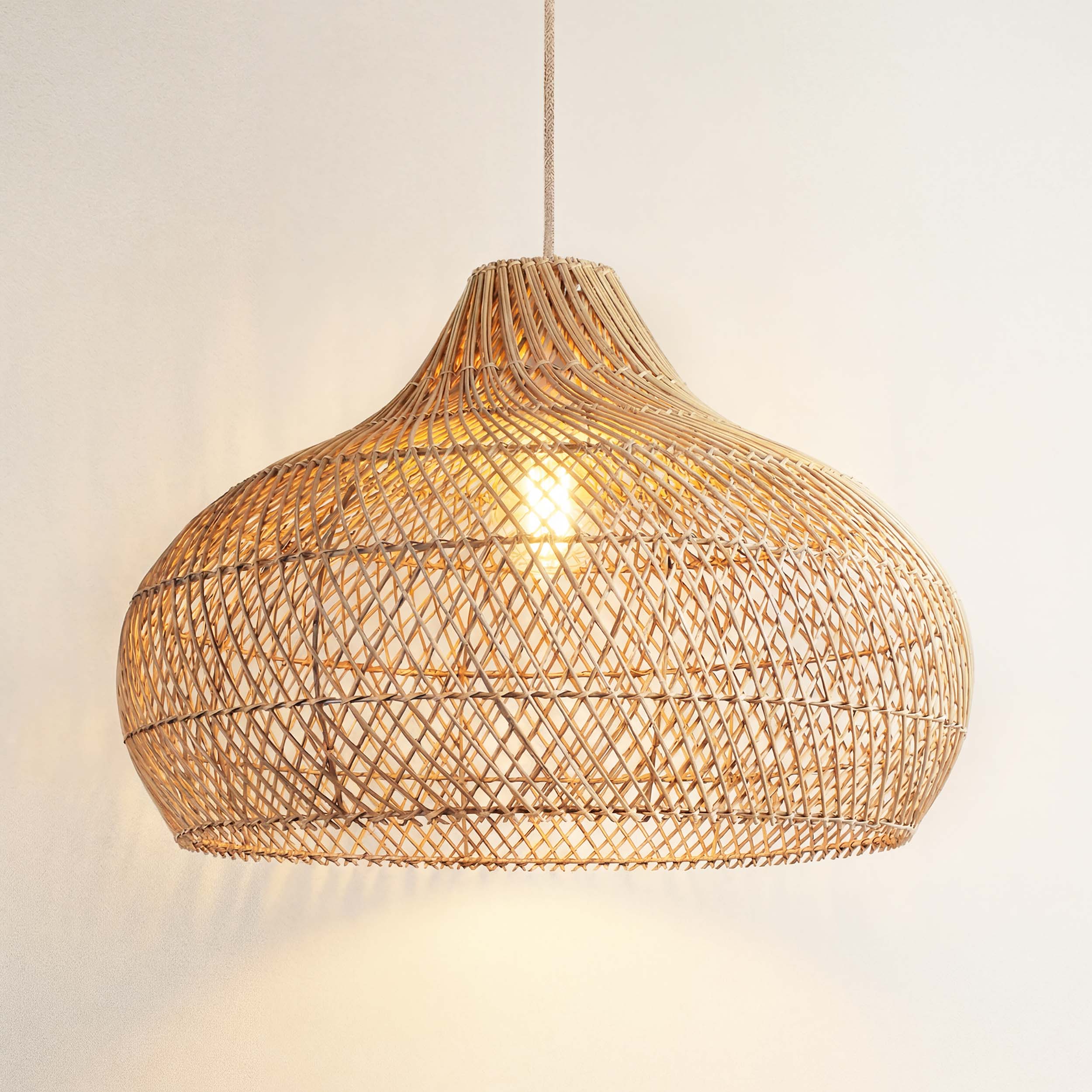
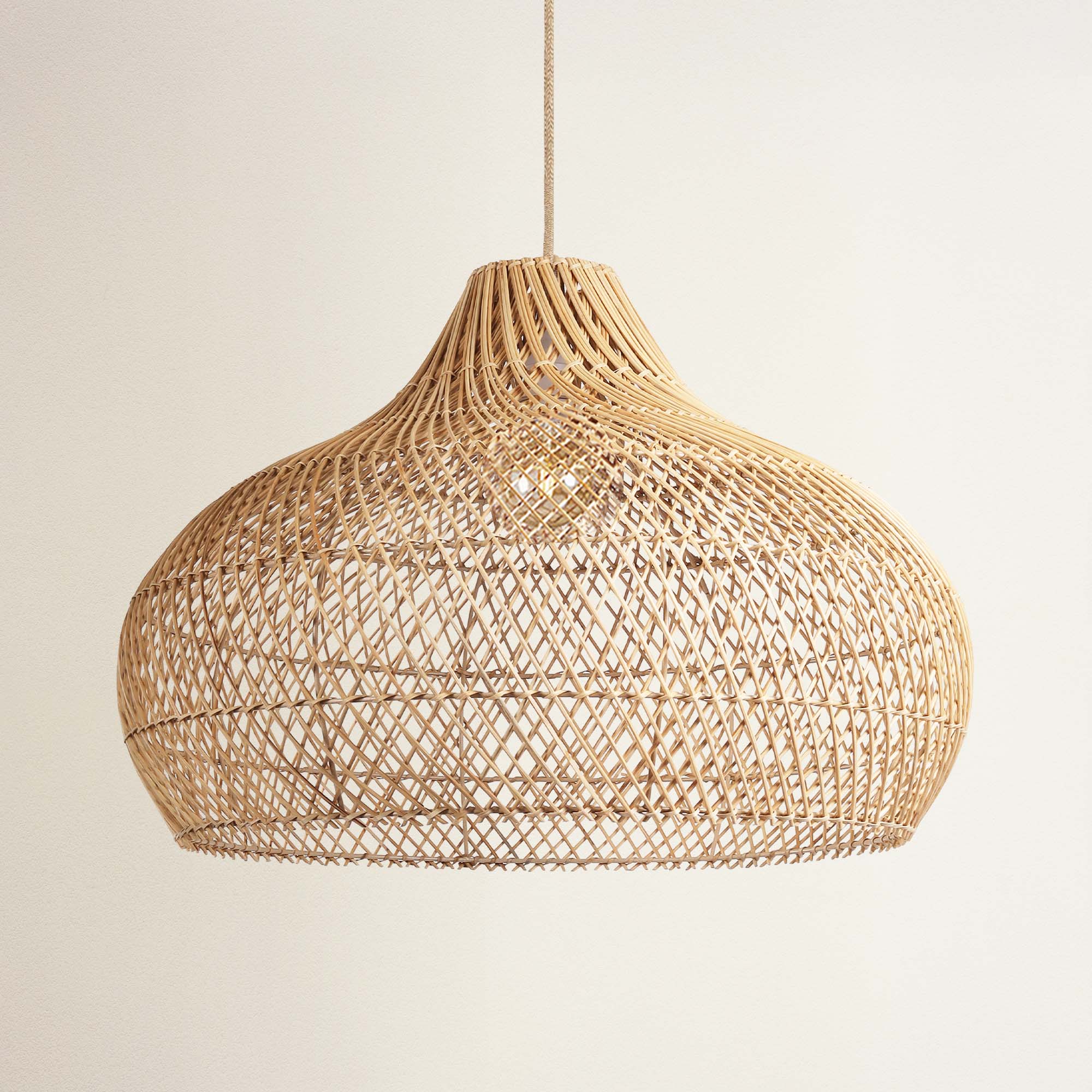
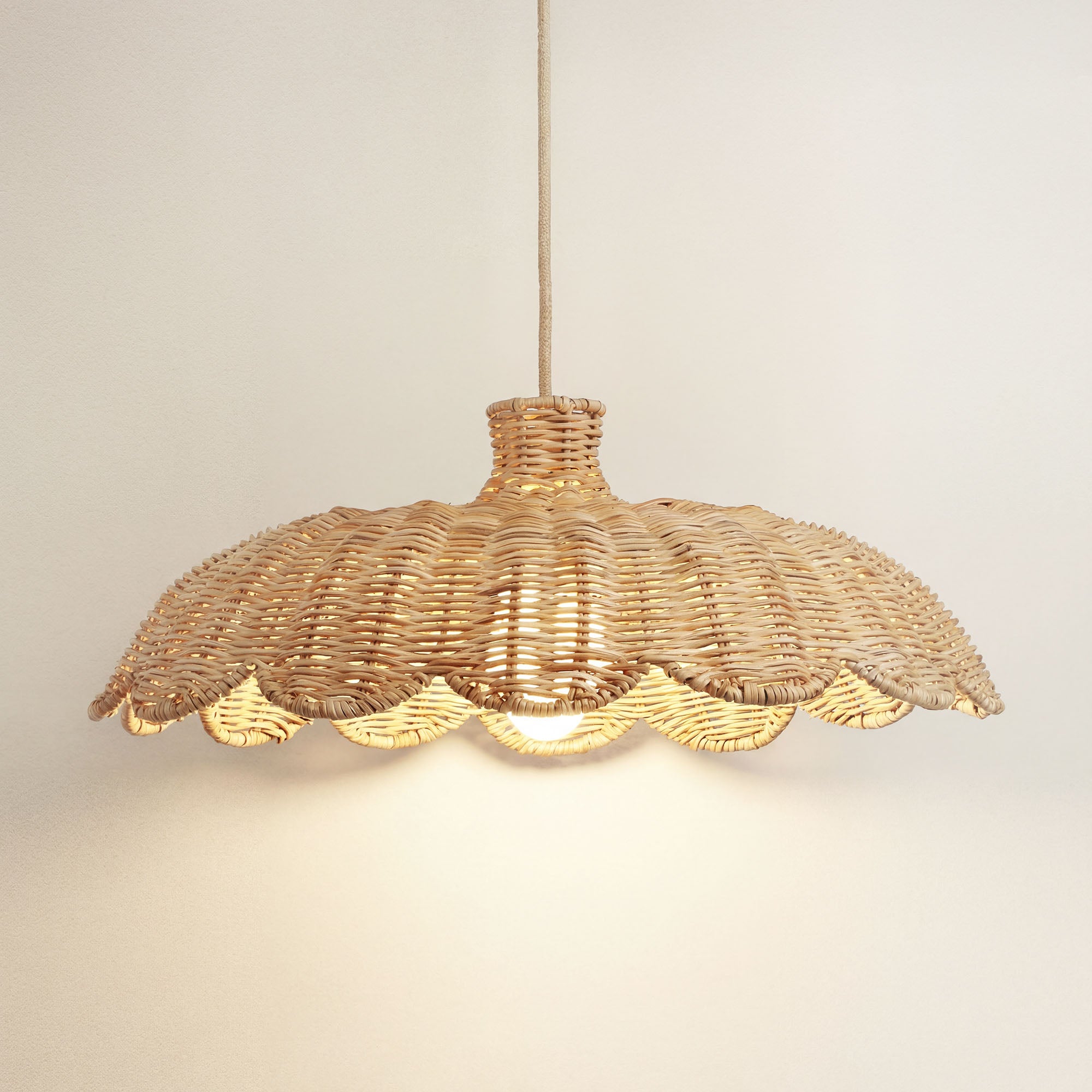
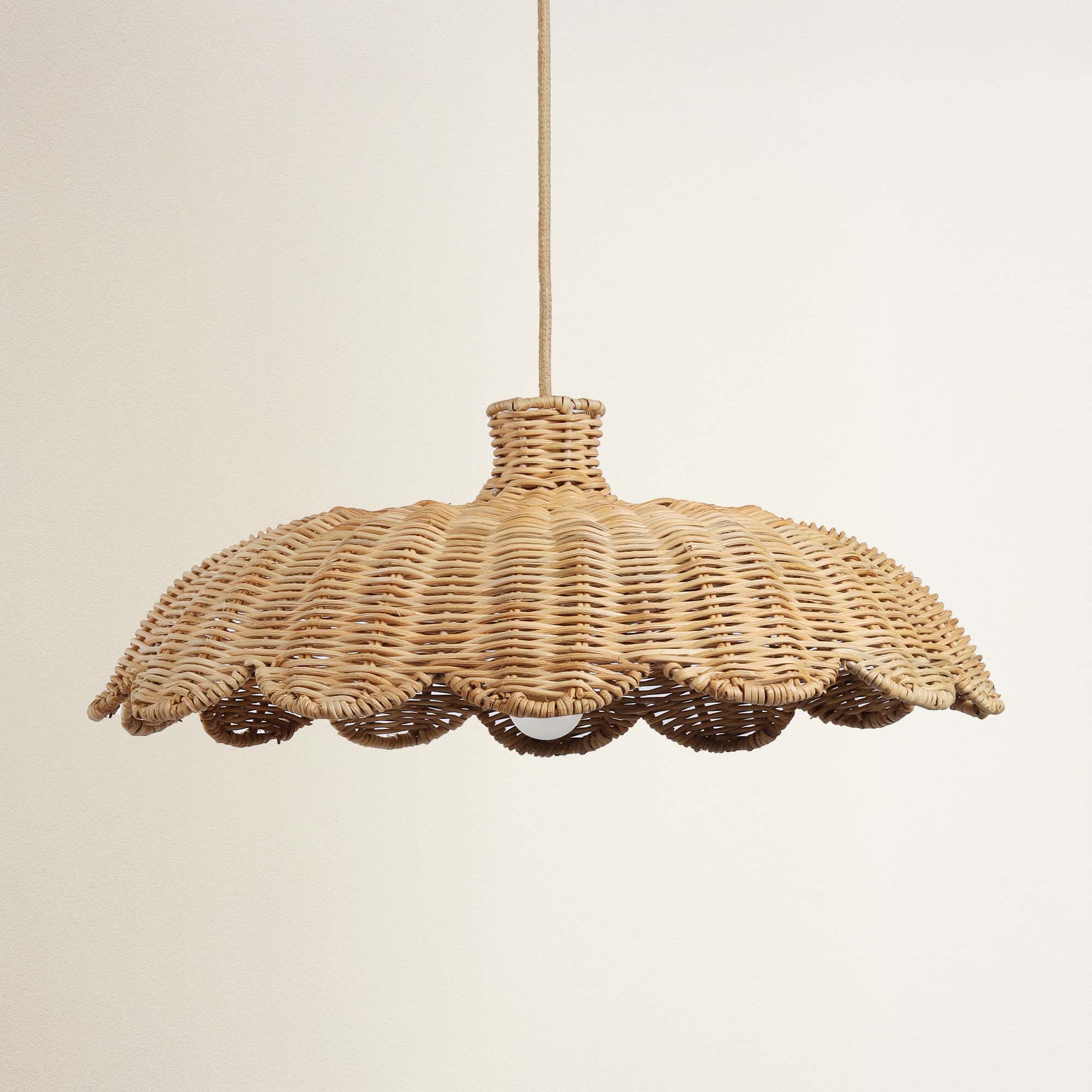
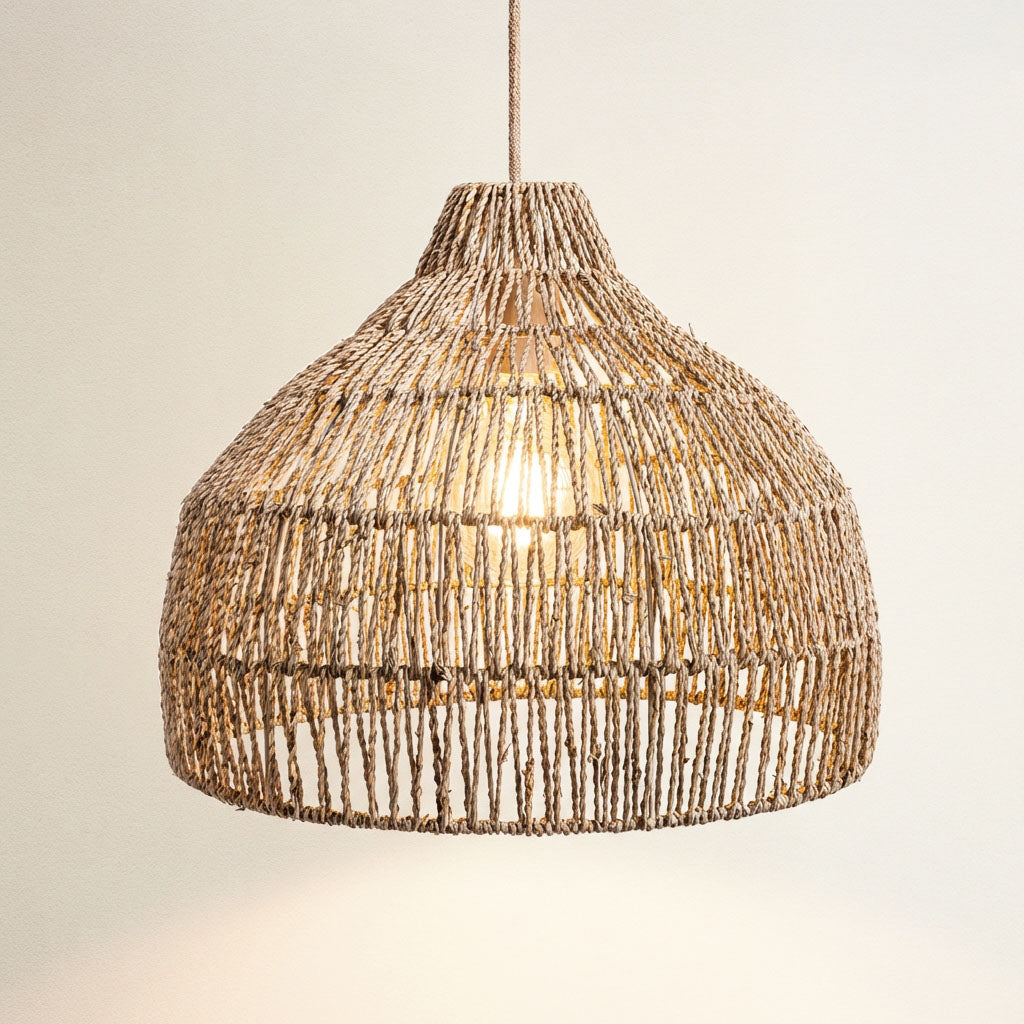
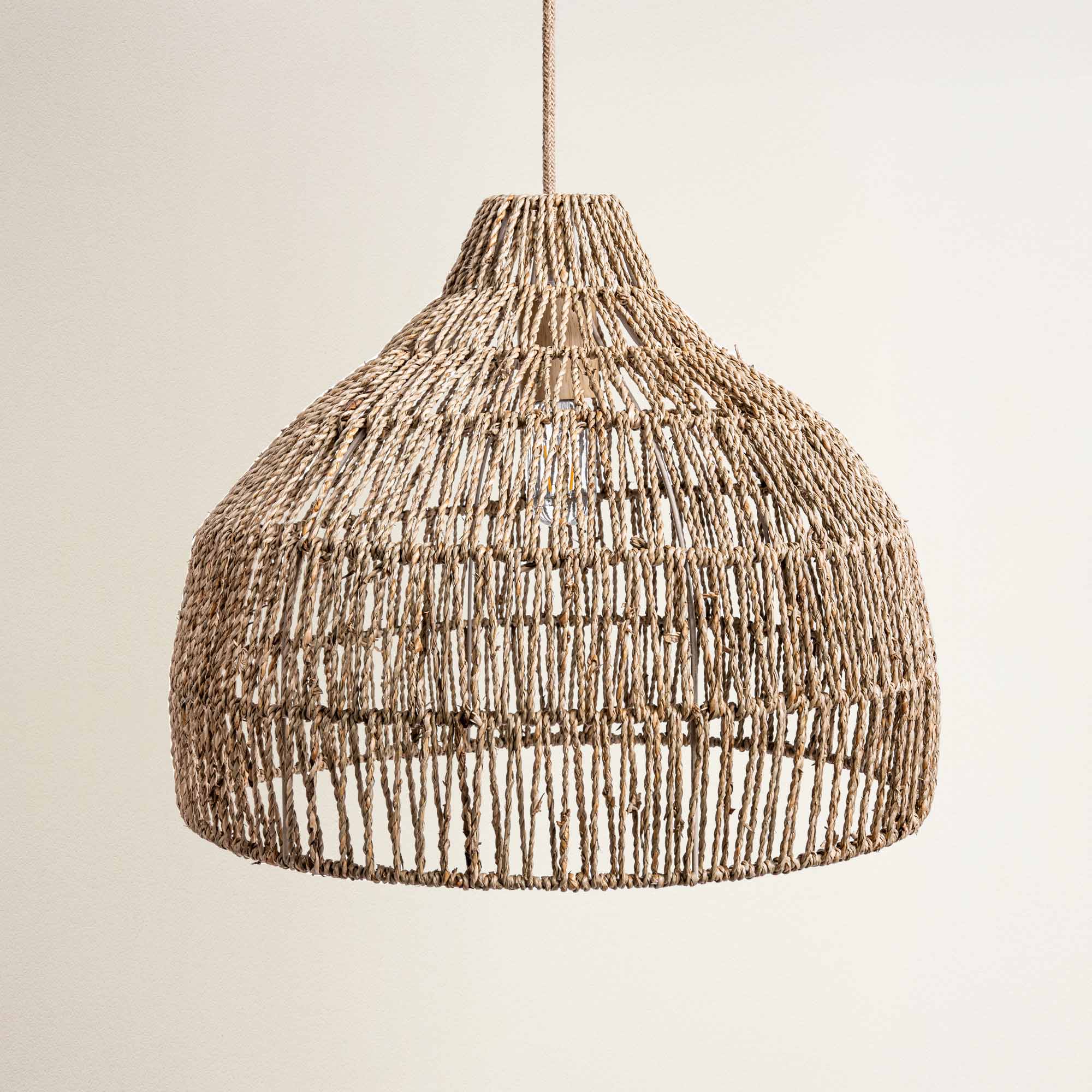
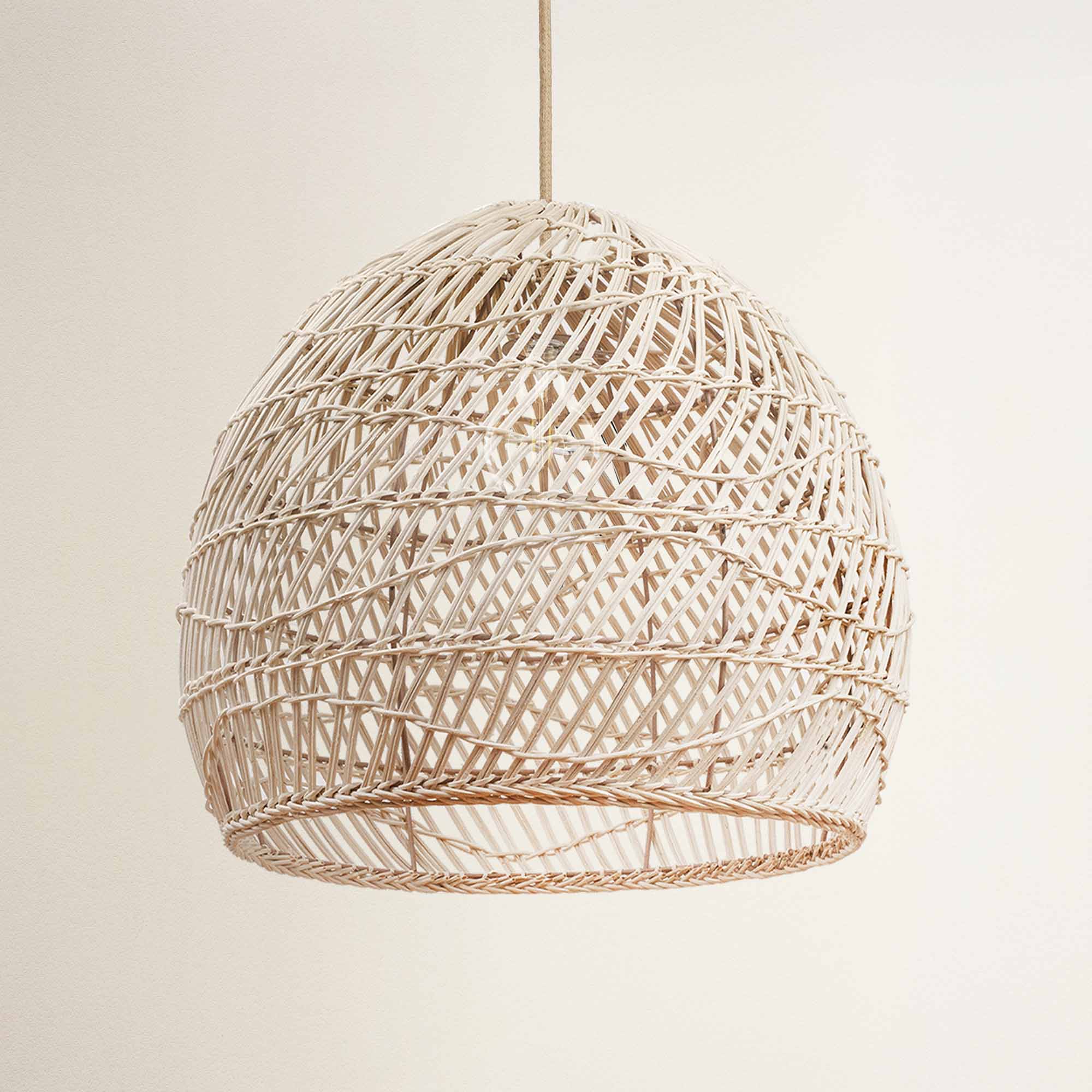
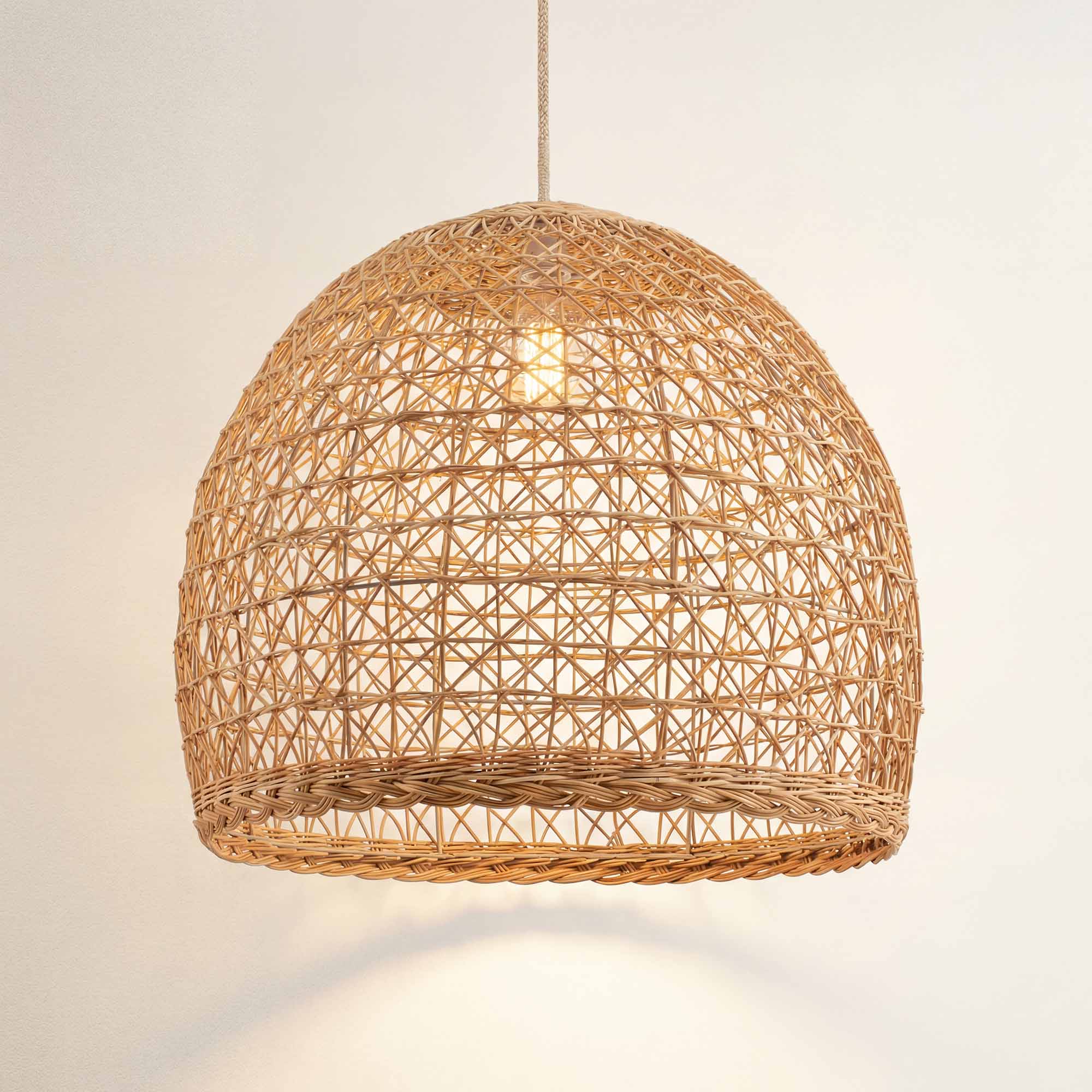
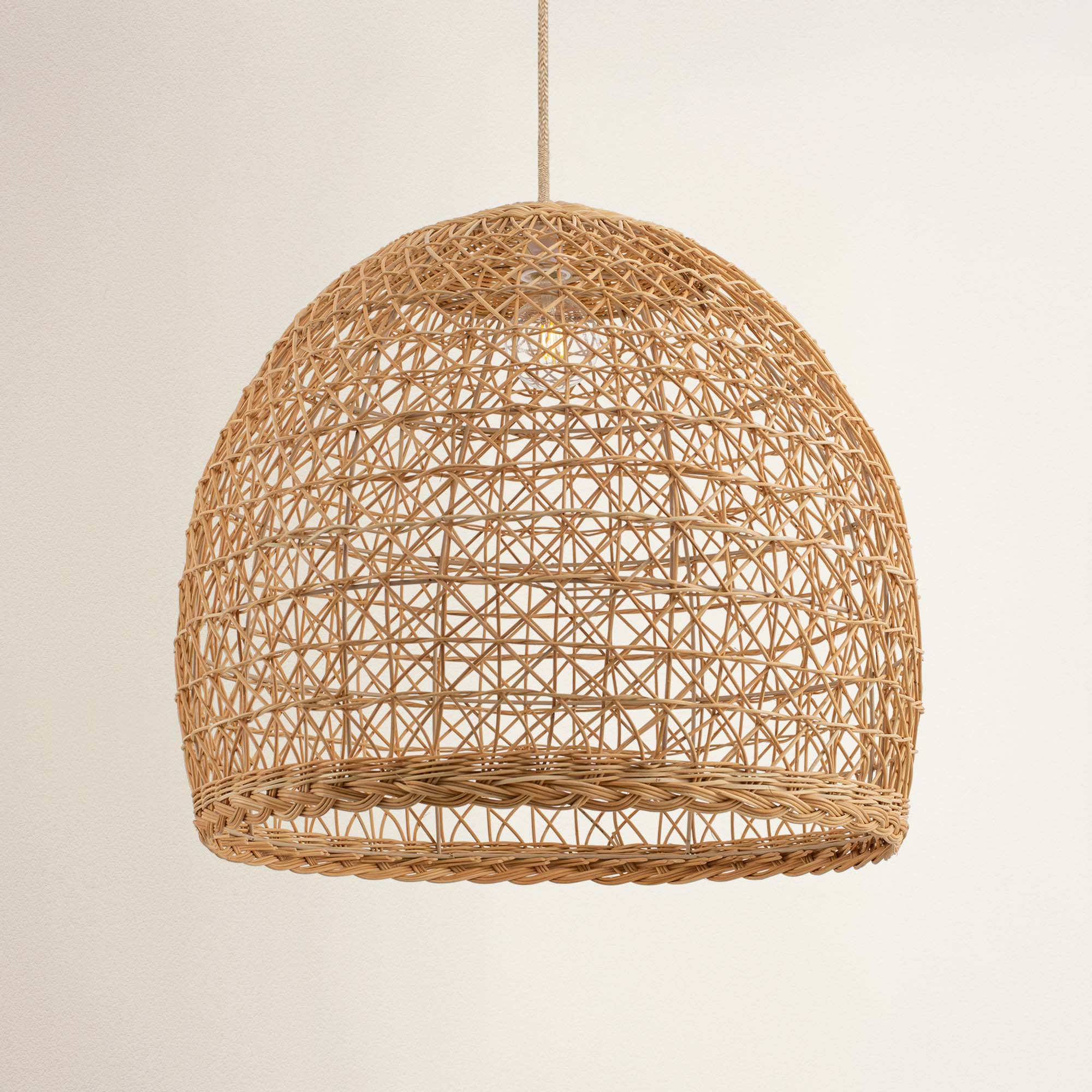
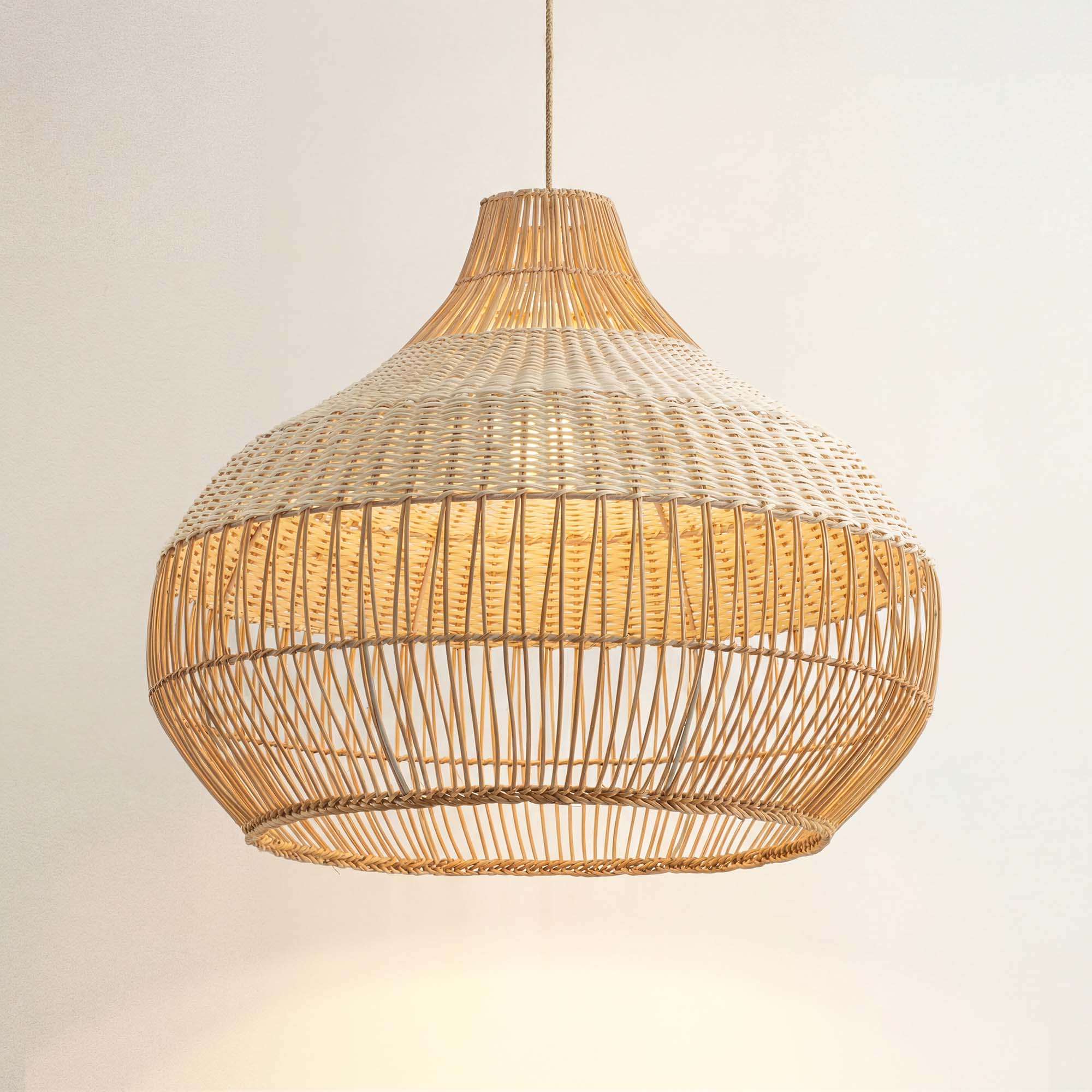
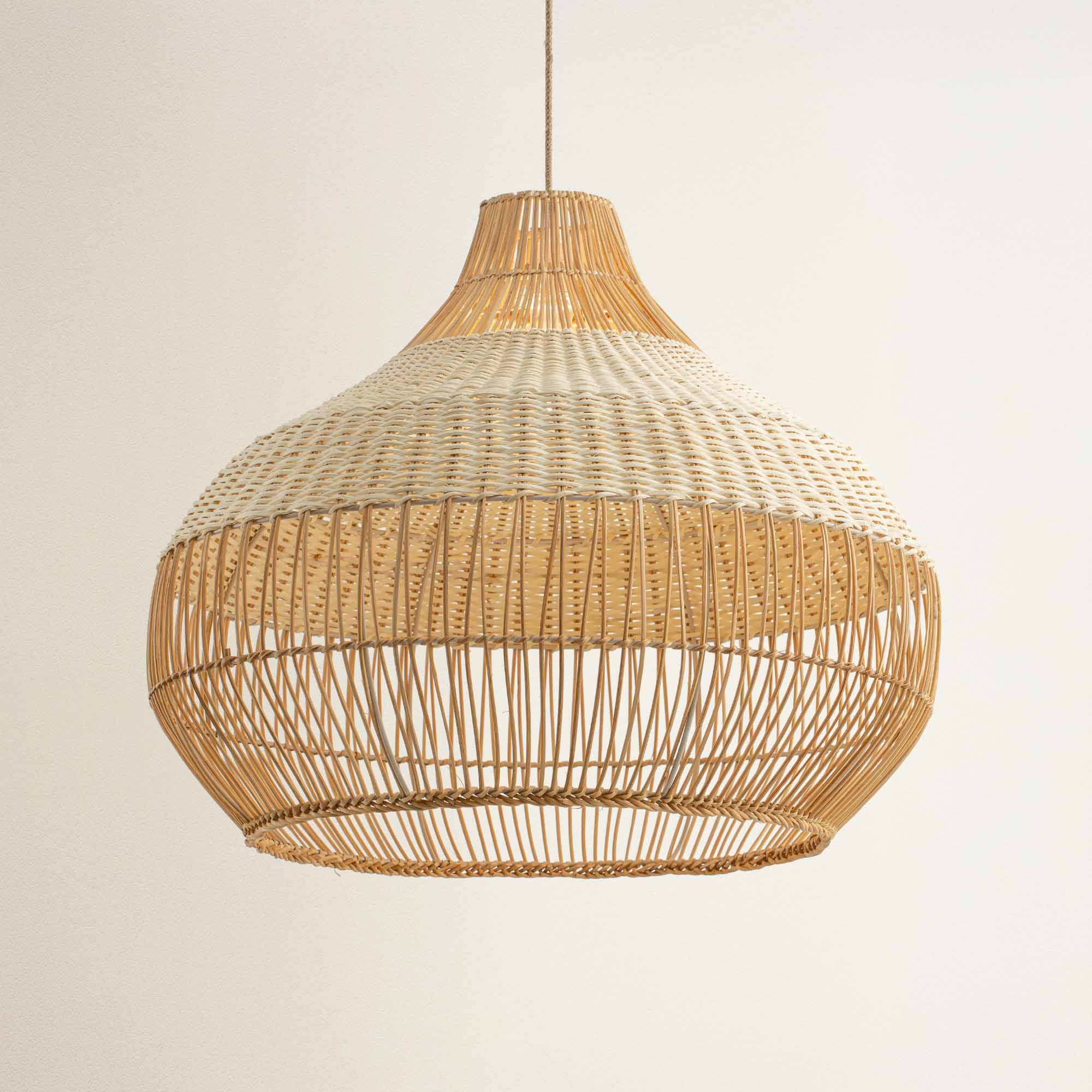
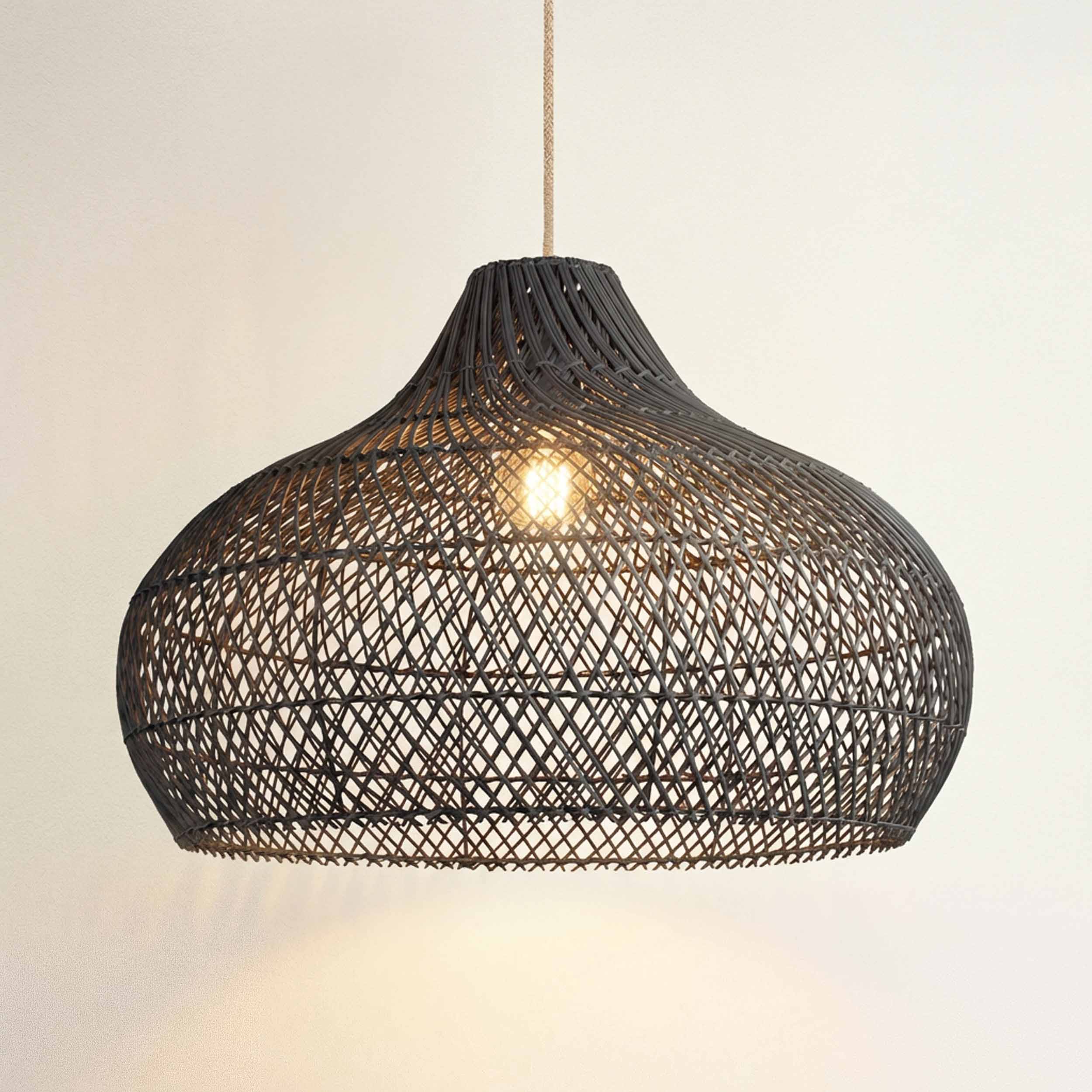
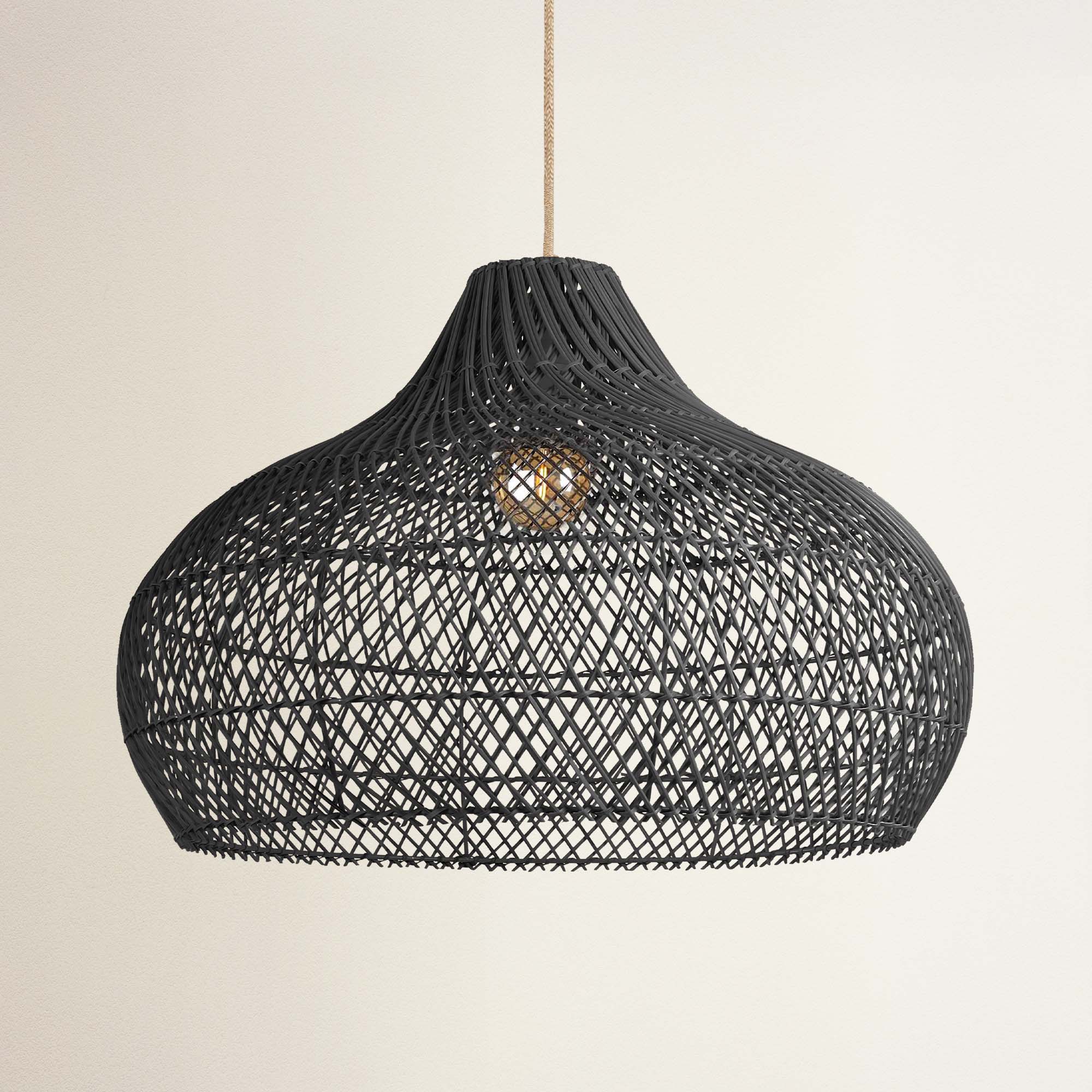
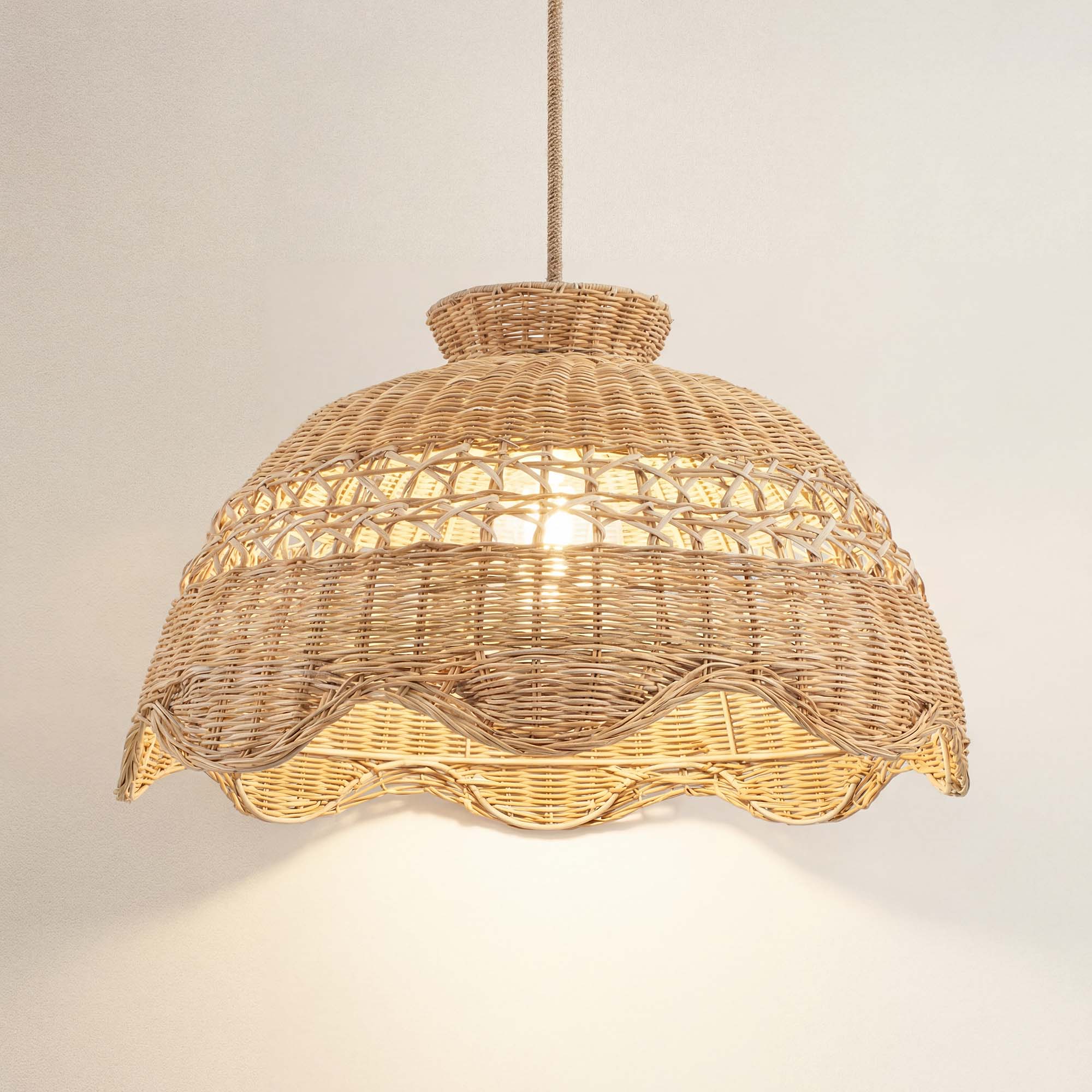
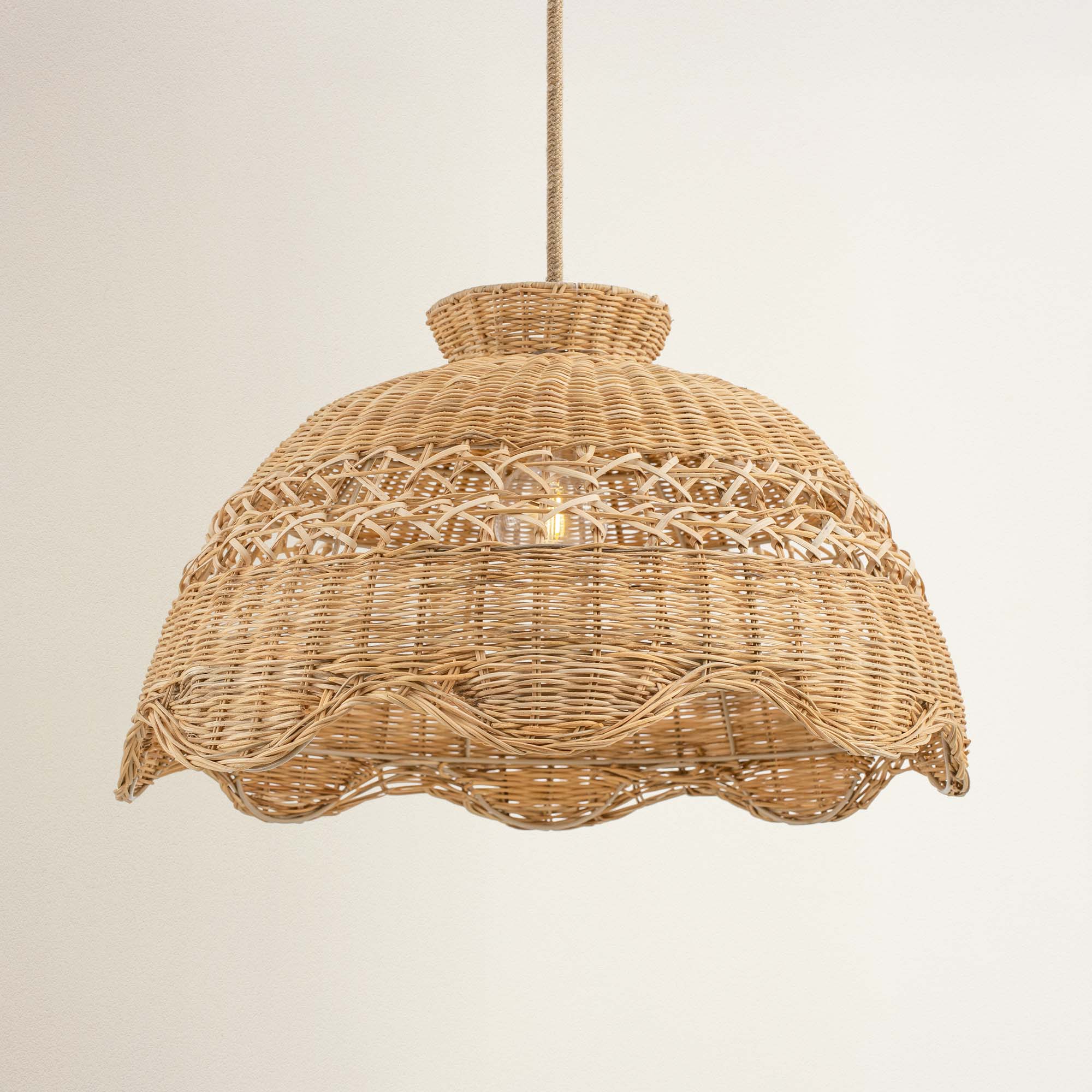
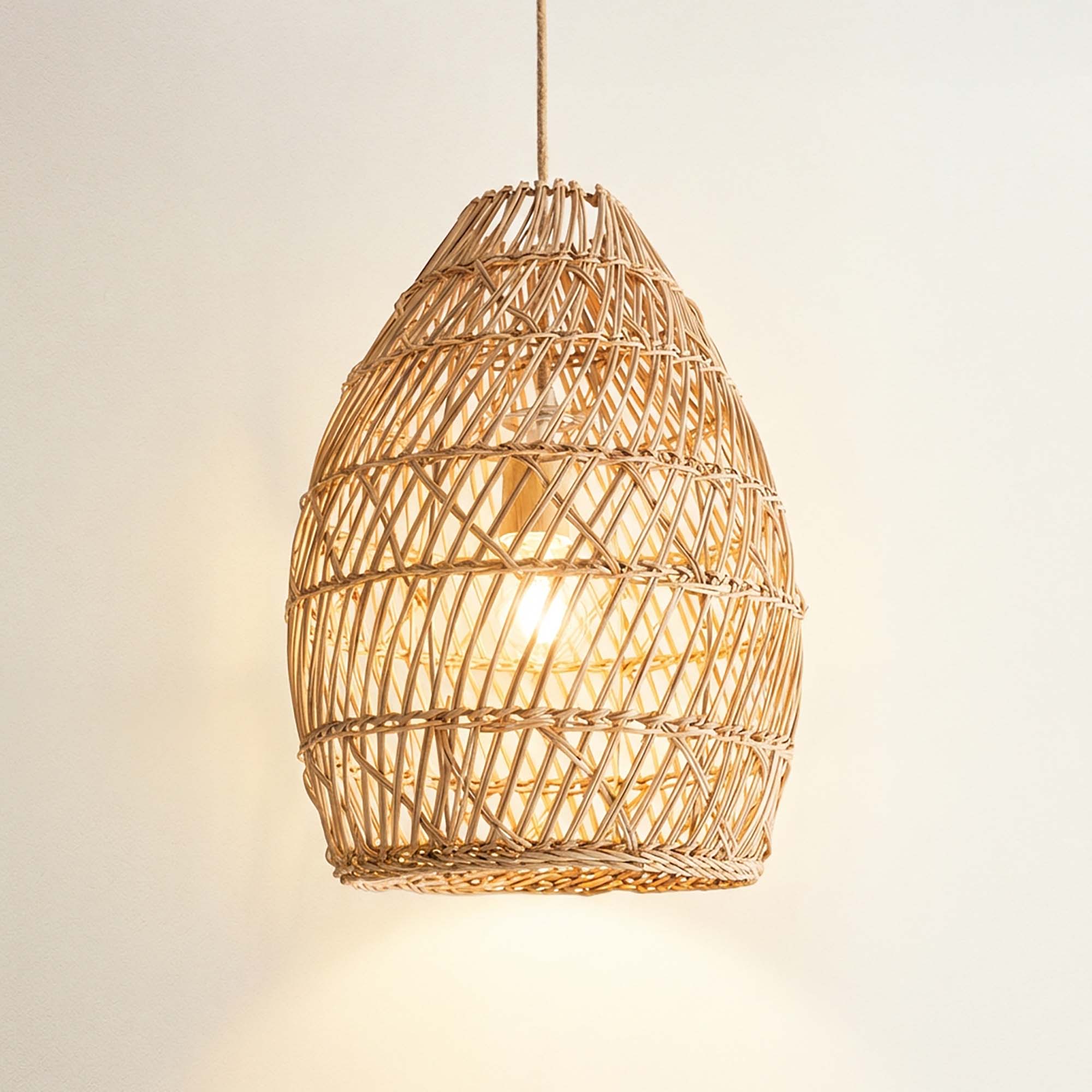
Rowabi's rattan pendant lights appear throughout as a design example for kitchens where natural texture and warmth are part of the design intention.
Quick cheat sheet for kitchen island pendant lights
These numbers cover the most common questions before installation. Use them as your starting baseline, then adjust based on ceiling height, shade size, and sightline.
| Question | Quick Answer |
| Standard pendant height over island | 30–36 inches above the countertop, measured from countertop to bottom of shade |
| Best height for 8-foot ceiling | Usually 30–32 inches above countertop |
| Best height for 9-foot ceiling | Usually 32–34 inches above countertop |
| Best height for 10-foot ceiling | Usually 34–36 inches above countertop |
| Spacing between pendants | About 24–30 inches apart, center to center |
| Distance from island ends | Keep outer pendants about 6–12 inches from each island end |
| Two pendants over island | Best for most 6–7 ft. islands |
| Three pendants over island | Best for most 8–10 ft. islands, depending on shade width |
| Best height for tall homeowners | Start closer to 34–36 inches to preserve sightlines |
| Best pendant type for airy coastal kitchens | Rattan, woven, glass, or slim modern pendants |
*Please note: These guidelines reflect standard U.S. lighting design practice.
The standard rule: hang pendant lights 30–36 inches above the island
The range exists for a reason. Different kitchens, ceiling heights, pendant sizes, and households all call for slightly different answers within those six inches. But the rule itself is reliable, and understanding exactly how to apply it prevents the most common hanging mistakes.
45-Day Return
45-Day Return
45-Day Return

45-Day Return
45-Day Return
45-Day Return
45-Day Return
45-Day Return
45-Day Return

45-Day Return

45-Day Return

45-Day Return
Measure from the countertop to the bottom of the shade
The measurement is always taken from the top of the countertop surface to the lowest point of the pendant shade, not from the ceiling down to the canopy, and not to the bulb socket buried inside a deep shade. With a dome, bowl, drum, or rattan basket pendant, the reference point is the lowest edge of the shade itself.
This distinction matters more than it seems. A pendant with a deep drum shade may have the canopy at the right height from the ceiling, while the bottom of the shade sits uncomfortably close to the countertop. Or, if the cord is cut too short, uncomfortably far above it.
Measuring from the countertop up, rather than from the ceiling down, keeps the focus where it belongs: on the relationship between the light and the surface it serves.
When 30 inches works best
Thirty inches above the countertop is the right choice when the room has a lower ceiling, the pendant shade is compact or visually open, and the island is primarily used for food preparation rather than seated dining.
At this height, the light is close enough to the counter to feel purposeful and warm without interrupting the sightline between someone standing at the island and someone sitting at a barstool on the opposite side.
Kitchens with 8-foot ceilings benefit most from this end of the range because the lower ceiling height makes the overall proportions feel tighter. For details, a pendant hanging 36 inches above the counter in an 8-foot room will have only about 60 inches of clearance between it and the ceiling, which can feel tight.

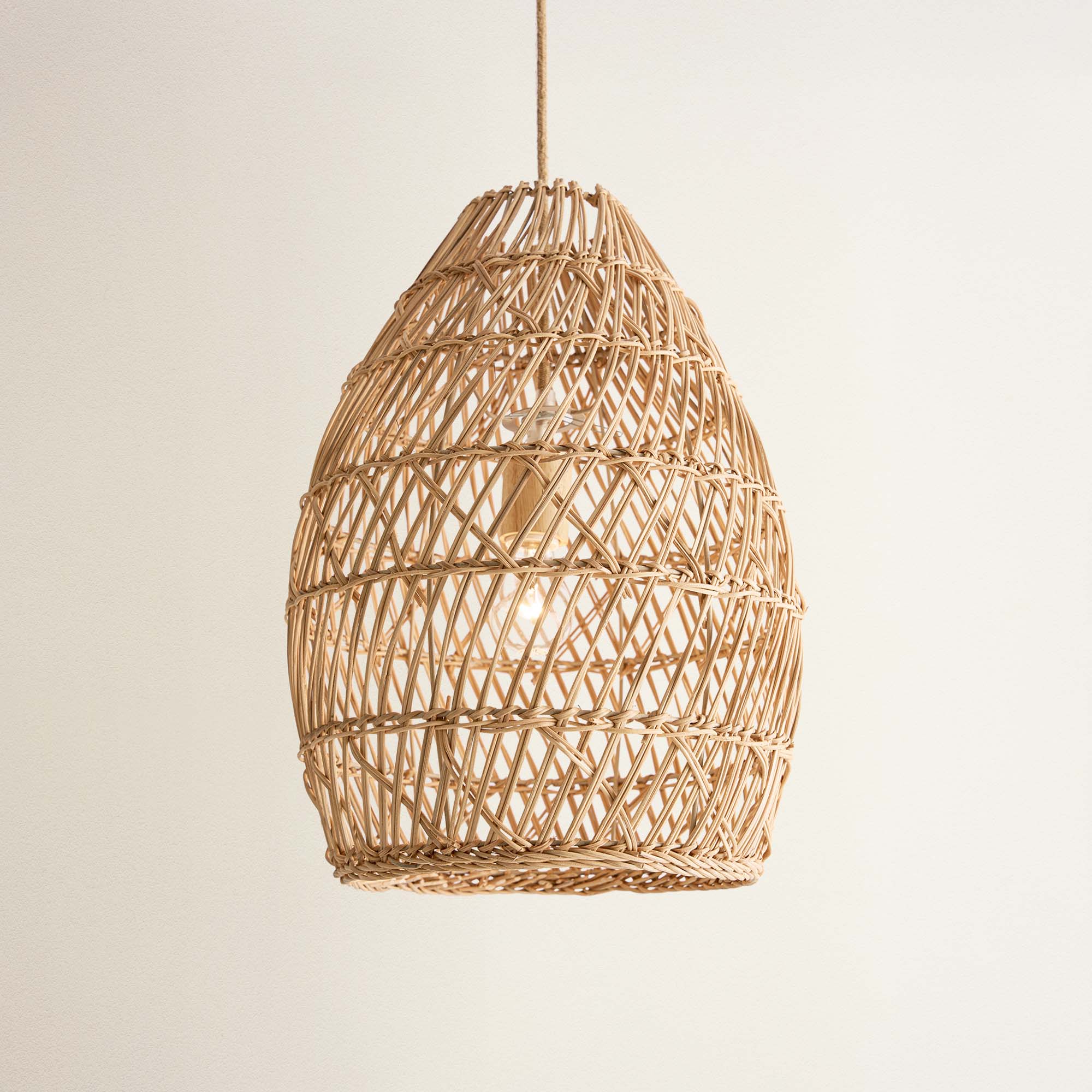
Rattan pendant lights with an open-weave shade work particularly well at 30–32 inches because the weave stays light and airy even at a closer distance, avoiding the blocked, heavy feeling that a solid or opaque shade might create.
When 36 inches works best
At the higher end of the range, pendants have more breathing room both visually and practically. A ceiling of 9 or 10 feet, a shade with a wide diameter or significant visual weight, a household with notably tall members, or an island that doubles as a breakfast bar or gathering spot all favor 34–36 inches.
In open-concept homes where the kitchen looks directly into a dining or living area, keeping the pendants higher helps maintain a clear sightline across the whole connected space, an especially important consideration in the airy, unobstructed layouts common in coastal and warm-weather homes.

What to avoid is the instinct to always push toward the maximum when the ceiling is high. A pendant over an island should still feel connected to the counter beneath it, not floating disconnected at mid-room height. The ceiling height changes where in the 30–36 inch range you land; it does not move the goalposts entirely.
How ceiling height changes pendant light height
Ceiling height is the most consistent variable across kitchens, and it is worth understanding how each standard height affects the placement decision.
Pendant height for an 8-foot ceiling
Install the fixture 30–32 inches above the countertop if the kitchen ceiling is 8 feet high. Due to the limited vertical space, opting for a more compact, visually lighter fixture is advisable; a pendant with a large, heavy shade positioned at 30 inches in an 8-foot room may feel oppressive rather than brightening the area.
Fixtures such as open-weave rattan shades, clear or frosted glass pendants, and slim modern designs are suitable choices, as they create less visual bulk at eye level. If the fixture is at 30 inches but obstructs your view while standing at the island, consider raising it by 1–2 inches to eliminate the obstruction
Pendant height for a 9-foot ceiling
At a 9-foot ceiling, 32–34 inches is the natural range. The extra foot of vertical space opens up fixture options, like slightly larger shades, more substantial proportions, and medium-length drops, all of which work without crowding the room.
This ceiling height covers the majority of newer construction in U.S. suburban homes and represents the sweet spot where most design rules align most naturally: there is enough height for visual variety without the proportion challenges of a very high ceiling.
Pendant height for a 10-foot ceiling or higher
For kitchens with 10-foot ceilings, start at 34–36 inches above the countertop, and if the pendant shade is particularly large or the island is used mostly for seated dining rather than standing prep, consider testing slightly higher before committing. A cord or rod that is too short will make the fixture look stranded between the ceiling and the counter, as if it belongs to neither.
Before drilling, use a strip of painter's tape suspended from the ceiling to simulate the pendant's bottom position. Standing at the island and evaluating the sightline from both seated and standing positions reveals more than any measurement chart can predict.
How far apart should pendant lights be over a kitchen island?
Height answers the first placement question. Spacing answers the second and getting it wrong creates a kitchen that feels either cluttered with light fixtures or strangely unbalanced across the island's surface.
Standard spacing between pendant lights
Space pendants 24–30 inches apart, measured from the center of one fixture to the center of the next. This range accommodates both the practical need for even light distribution across the countertop and the visual need for breathing room between shades.
A narrower shade, such as a slim glass pendant or a small rattan lantern, can sit closer to the 24-inch end. A wider, more substantial shade needs more distance, and forcing two large rattan basket pendants into 24 inches of space will make the island feel congested regardless of how correct the height measurement is.
Distance from the ends of the island
Keep the outermost pendants approximately 6–12 inches in from each end of the island. Pendants placed too close to the island's edge create a visual imbalance, making the fixture appear to be about to fall off the side of the counter rather than anchoring the center of the workspace.

For islands that incorporate a sink or cooktop, consider how those task zones affect where a pendant can sit without hanging directly above a heat source or drain.
Center-to-center spacing vs shade-to-shade spacing
Designers consistently work with center-to-center measurements because they are easier to calculate and transfer to ceiling marks. But homeowners making the final visual call should also think shade-to-shade, the actual gap between the edges of adjacent shades.
Two pendants, technically 24 inches apart center-to-center, will feel very different if the shades are 6 inches in diameter versus 18 inches. A rattan basket pendant with a 16-inch diameter, for instance, leaves only 8 inches of shade-to-shade breathing room at 24-inch center-to-center spacing, enough to look intentional, but tight.
Increasing to 28–30 inches gives the same pendants room to read as a composed pair rather than two fixtures fighting for the same space.
How many pendant lights do you need over a kitchen island?
The number of pendants is determined by the island's length, not by personal preference alone. One well-scaled pendant can anchor a small island more effectively than two undersized ones; three pendants on a 10-foot island can create a beautifully rhythmic lighting arrangement if the shade size allows appropriate spacing.
Pendant count by island length
| Island Length | Recommended Pendant Layout | Notes |
| 4–5 ft. island | 1 large pendant or 2 small pendants | Good for compact kitchens |
| 6–7 ft. island | 2 pendants | Most balanced choice |
| 8–10 ft. island | 3 pendants | Works if shades are not too wide |
| 10+ ft. island | 3 large pendants or linear suspension | Avoid overcrowding |
*Please note: These are starting recommendations, not fixed rules. Island function (how much of the surface is used for seating versus prep) affects the ideal count as much as length does.
When two pendants look better than three
Two pendants suit kitchens where the design intention is simplicity and openness: a mid-length island, a shade with significant diameter, or a coastal or organic modern kitchen where visual restraint is part of the aesthetic. A pair of rattan pendants on a 7-foot island, spaced evenly with 12 inches of clearance on each side, often reads as more considered than three pendants would in the same space.
The rule of odds, which holds that odd-numbered groupings are inherently more dynamic, does not always prevail over the practical reality of a shade that is wide enough to make three fixtures feel crowded.
When three pendants make more sense
Three pendants earn their place on a longer island, particularly when the shades are slim and the kitchen is large enough to support more visual rhythm across the space. A prep-heavy kitchen that benefits from even light coverage across the full counter length, or a large open-plan kitchen where three fixtures create a visual anchor proportional to the surrounding space, are both cases where three pendants serve the room better than two larger ones would.
What size pendant lights work best over a kitchen island?
Height and spacing answer where the fixtures go. Size answers what it is, and an incorrect pendant scale undermines every other well-made decision.
Match pendant width to island width
A pendant shade should not exceed roughly one-third to one-half the island's width when a single pendant is used, and when multiple pendants are used, the combined visual mass of the shades should leave clear breathing room on either side of the island.
For example, a 36-inch-wide island can seem cramped when paired with a 20-inch pendant shade; however, an 18-inch pendant on the same surface appears deliberately small. Broader islands offer greater flexibility and can accommodate larger shades that transform into true focal points when arranged appropriately
Consider visual weight, not just actual size
Two pendants with identical diameters can feel completely different in a room depending on their material. You can see that a dark, solid metal dome reads as visually heavy, while a clear glass globe of the same size almost disappears against the ceiling.
Similarly, a rattan pendant with an open weave occupies physical space but filters light in a way that keeps the fixture feeling airy rather than dense, which is why rattan is particularly effective in kitchens that tend toward bright, light-filled interiors.

Balance in proportions is an important part of creating a harmonious overall space.
Best pendant light styles for coastal and warm-weather homes
Placement rules apply equally to every style of kitchen. But the character of the fixture, its material, finish, and visual presence, determines whether the correctly hung light feels right for the specific kitchen it is in.
Rattan pendant lights for coastal and organic kitchens
Rattan pendant lights work particularly well in kitchens that draw from a coastal, organic modern, Japandi, warm neutral, or cottage aesthetic. They introduce natural texture at a height where the eye naturally rests, softening the harder surfaces that make up most kitchens, stone countertops, tile backsplashes, and painted cabinetry, with something that has an organic, handcrafted quality.
Over an island with white oak cabinets, unlacquered brass hardware, and quartz or marble countertops, a rattan pendant at the right height reads as both considered and completely at home. The open weave diffuses light gently, which adds to the relaxed, resort-like atmosphere that defines well-designed coastal interiors.
Brands like Rowabi offer rattan pendant lights that serve as texture-layering pieces in this kind of kitchen, a way to bring the room's natural material language up to ceiling level without introducing anything that feels decorative for its own sake.
Modern pendant lights for clean and contemporary kitchens
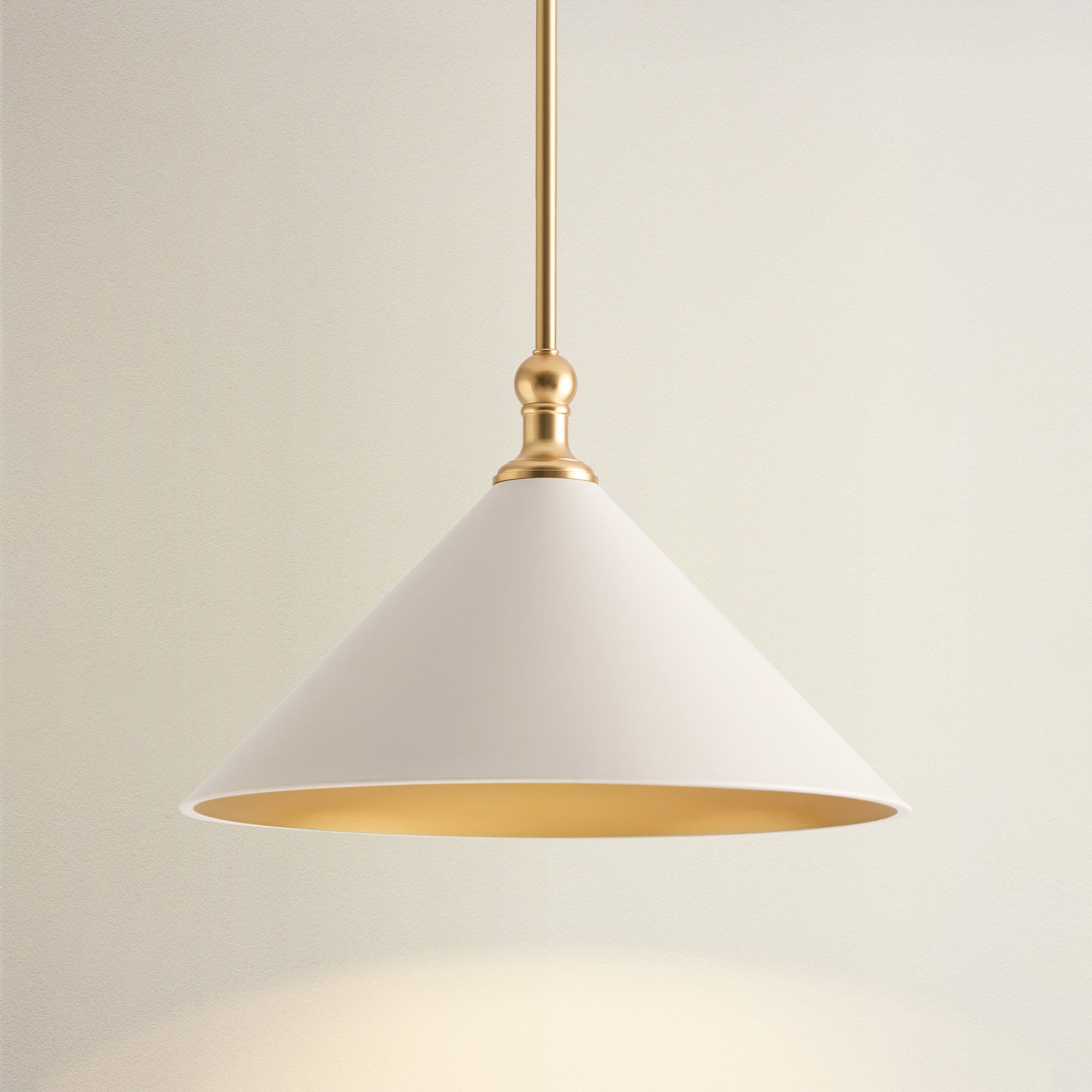
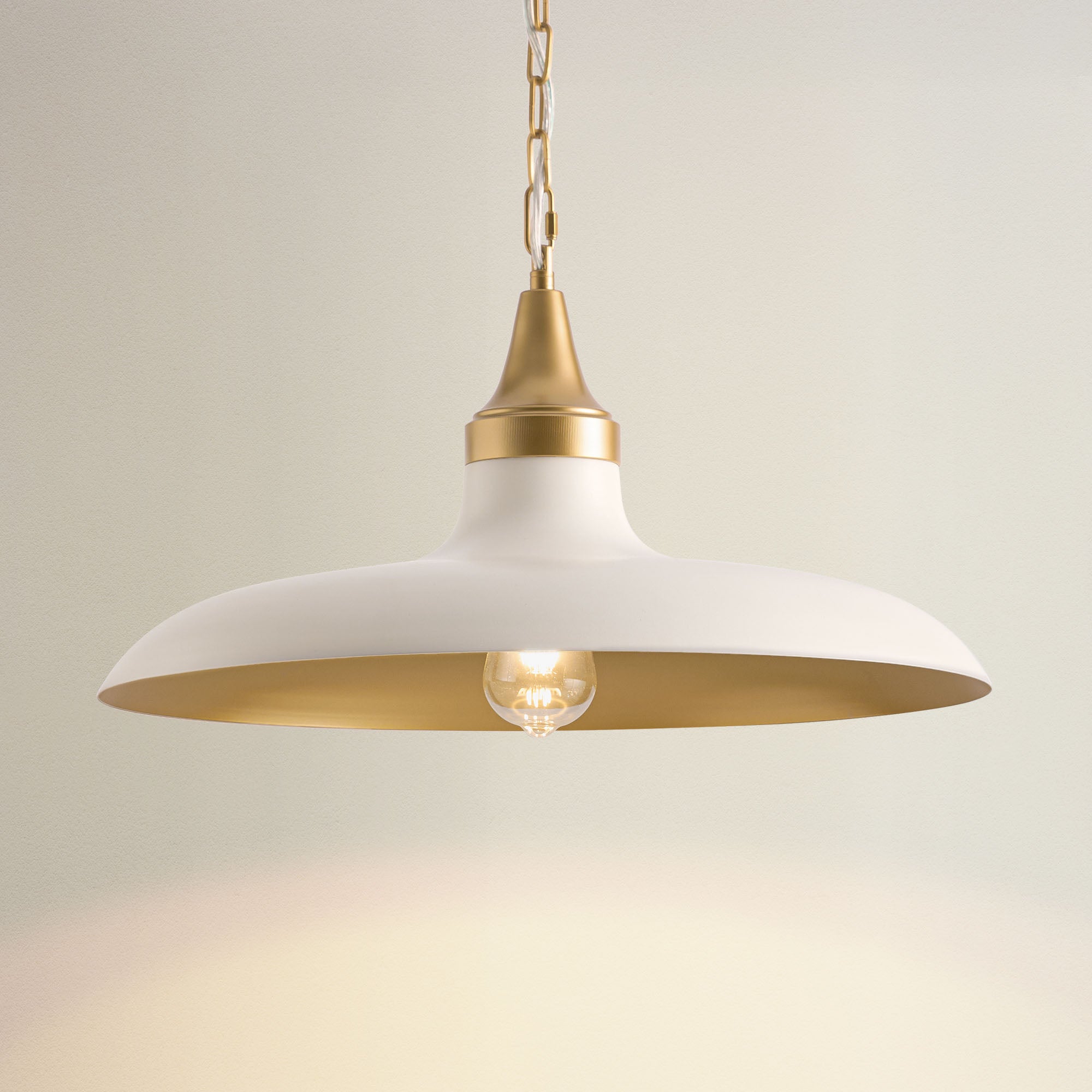
Slim metal pendants, opal glass globes, and linear suspension fixtures suit kitchens with flat-panel cabinetry, waterfall islands, polished stone, and black-and-white or cool-neutral palettes. The minimal form amplifies the kitchen's clean geometry rather than softening it.
Height and spacing rules apply exactly as they do for rattan: 30–36 inches above the counter, 24–30 inches apart, but the fixture's restrained visual weight tends to make these decisions feel more forgiving than they do with a large-diameter shade.
Mixing rattan pendants with modern kitchen finishes
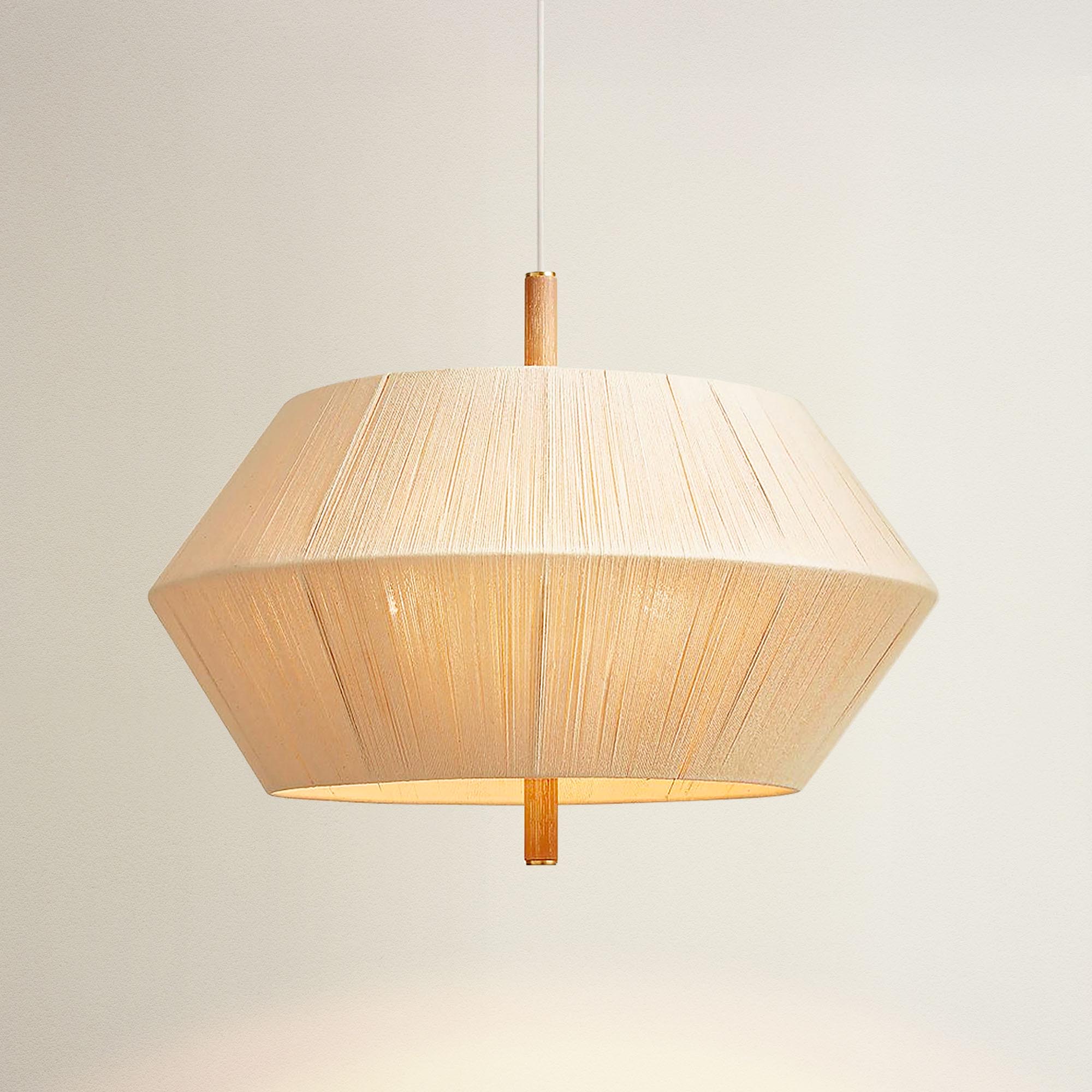
Rattan doesn't have to define a completely natural or rustic kitchen. Some of the most attractive kitchen island designs combine the cozy feel of a rattan pendant light with a bolder or more modern finish.

Pairing rattan with brass fixtures gives off a warm coastal vibe. When rattan is combined with matte black details, it creates a contemporary organic look. Mixing rattan with Scandinavian white oak results in a clean, calming Nordic coastal aesthetic. Using rattan alongside zellige tile or limewash plaster walls leans toward a Mediterranean style.
In all these scenarios, the rattan pendant adds warmth where the kitchen needs it most. The contrast with harder materials prevents the overall design from appearing too soft or flat.
Safety first before installing kitchen island pendant lights
Installing pendant lights over a kitchen island typically involves hardwired ceiling fixtures, which means electrical safety considerations that should not be skipped.
Turn off the power at the breaker before electrical work
Always turn off the power at the circuit breaker before handling any wiring or junction boxes, as simply using the wall switch won't cut power to the ceiling box. Check for current with a voltage tester before you start. The Electrical Safety Foundation International (ESFI) recommends that homeowners disable the circuit at the main panel and avoid electrical work beyond their skill level.
Know when to call a licensed electrician
Replacing a single pendant light in an existing ceiling box is doable for seasoned DIYers. However, any additional work, such as new wiring, relocating junction boxes, installing multiple fixtures, dealing with sloped ceilings, or uncertain wiring conditions, should be handled by a licensed electrician.
Check fixture weight, canopy, and junction box placement
Before committing to a layout, confirm that the ceiling junction box is rated for the fixture's weight and that its position aligns with the island below. A box positioned at the center of the kitchen ceiling but 14 inches off center from the island will produce a pendant installation that looks obviously wrong from the start.
If the existing box is in the wrong position for the island layout, relocating it before installation rather than hanging the fixture at an angle to compensate produces a far cleaner result.
Bulb color and brightness for kitchen island pendant lights
A fixture hung at exactly the right height with the wrong bulb still produces a kitchen that feels uncomfortable to work in or unpleasant to gather around.
Best color temperature for kitchen island pendants
3000K is the most versatile color temperature for a kitchen island pendant. It is bright enough for food preparation, warm enough to create the inviting quality that makes a kitchen feel like the center of the home rather than a functional workspace.
For kitchens that lean more coastal, warm, or organic in character, 2700K produces a slightly more amber, relaxed light that pairs better with natural wood, rattan, and warm stone. For kitchens focused on high-contrast contemporary finishes, 3500K–4000K delivers clarity and sharpness, though it can feel clinical against warm or organic materials.

Whatever temperature you choose, consistency matters. Mismatching the pendant color temperature with recessed lighting or under-cabinet strips creates a disorienting visual effect, one part of the kitchen glowing amber while another reads cool white. Choose a single temperature and use it throughout.
Lumens, glare, and dimmable bulbs
A rattan or open-weave shade filters light as it passes through the material, distributing it softly in multiple directions rather than projecting it as a hard downward beam. This diffusion tends to reduce glare and produce a more ambient, pleasant light at the countertop level.
A solid metal shade directs light much more deliberately downward, making it useful for focused task lighting but potentially harsh at close range. For islands that serve multiple functions, such as prep, casual dining, entertaining, or homework, a dimmable pendant paired with a compatible dimmable LED bulb offers the flexibility that a fixed-brightness fixture cannot.
The U.S. Department of Energy notes that LED bulbs intended for dimming must be specifically designed and labeled for that purpose; confirm "dimmable" on the bulb packaging before pairing with a dimmer switch.
Common mistakes when hanging pendant lights over an island
Understanding the right measurements is easier when you also understand what goes wrong without them:
- Hanging pendants too low. Below 30 inches, a pendant begins to interrupt the natural sightline across the island; a problem that is immediately felt but not always traced back to its cause. In open-concept coastal kitchens, where the design intention is an unobstructed, flowing interior, a pendant that blocks the visual connection between kitchen and living space undermines the entire spatial logic of the home.
- Hanging pendants too high. Above 36 inches, the fixture no longer feels connected to the counter beneath it. The light becomes general rather than focused, the island loses its visual anchor, and the kitchen as a whole loses the sense of warmth and intimacy that well-placed pendant lights create.
- Placing pendants too close together. Two rattan basket pendants at 20-inch center-to-center spacing over a 7-foot island will look crowded regardless of how correct the height measurement is. The 24–30-inch spacing guideline exists precisely because shade sizes vary. A rule built around centers rather than edges ensures that the pendants relate proportionally to each other rather than visually compete.
- Choosing pendants that are too small. A kitchen island with a substantial countertop and high-end finishes deserves a fixture with enough scale to read as the focal point it is meant to be. Two large rattan pendants that fill the visual space above a 6-foot island often create a more compelling composition than three small ones that lack presence.
- Centering pendants in the room instead of over the island. The pendants should align with the island, not with the room's geometric center. If the existing junction box sits off-center relative to the island, the solution is to reposition the box, not to hang the pendant at a compromise angle that satisfies neither the island layout nor the ceiling grid.
Quick design examples by kitchen style
Coastal kitchen with rattan pendant lights
In a kitchen with white oak cabinets, quartz countertops, brass hardware, and linen Roman shades, a pair of rattan pendants at 30–34 inches, adjusted lower if the shade is especially open and airy, higher if the ceiling is closer to 9 feet, creates the warm, relaxed focal point that defines this kind of interior.
The rattan surface catches and diffuses light at exactly the height where the kitchen needs warmth most, softening the reflective surfaces of stone and tile without competing with the natural material story already present in the woodwork and textiles. For kitchens like this, Rowabi's rattan pendant lights can be used as a texture-layering element, softening stone countertops and white cabinetry with a natural, handcrafted feel.

Modern kitchen with slim pendant lights
For a kitchen with flat-panel cabinetry, a waterfall quartz island, and a cool black-and-white palette, slim metal or opal glass pendants at 32–36 inches, raised higher for cleaner proportions against the kitchen's sharp geometry, maintain the crisp, minimal character established by the rest of the design. The pendant height rule does not change; only the fixture responds to the room's different aesthetic ambitions.

Warm neutral kitchen with woven texture
In a kitchen that uses beige, cream, oak, travertine, and muted green as its material language, rattan pendants at 2700K bring cohesion to a palette that risks looking flat without warmth at the ceiling level. The choice between rattan and modern here is essentially between soft-and-warm or clean-and-precise.

When the kitchen already uses natural materials throughout, rattan at the island height completes the story; when the palette is intentionally restrained and minimal, a more modern fixture respects that discipline.
Kitchen island pendant height checklist before installation
Before calling an electrician or committing to a position, work through this list:
- Measure the island length and width
- Confirm ceiling height: 8 ft., 9 ft., 10 ft., or vaulted
- Choose pendant count: 1, 2, 3, or linear fixture
- Mark pendant center points with painter's tape on the ceiling
- Confirm 30–36 inches from the countertop to the bottom of the shade
- Keep outer pendants 6–12 inches from each island end
- Keep pendants 24–30 inches apart, center to center, when using multiple fixtures
- Check sightlines from both seated and standing positions
- Confirm fixture weight, junction box rating, and position
- Turn off the power at the breaker before any electrical work
- Call a licensed electrician when wiring, box placement, or fixture weight is uncertain
- Choose dimmable LED bulbs if using a dimmer switch, and confirm compatibility before purchasing
FAQs
How high should pendant lights hang over a kitchen island?
- 30–36 inches above the countertop, measured from the countertop to the bottom of the shade. The lower end of that range suits smaller pendants and 8-foot ceilings; the higher end suits larger shades, taller ceilings, and kitchens with seating at the island.
Is 30 inches too low for pendant lights over an island?
- Not necessarily. At 30 inches, a compact or open-weave pendant over an 8-foot ceiling kitchen works well without blocking sightlines. For a large shade, taller homeowners, or an island used for seated dining, 34–36 inches usually feels more comfortable.
Should pendant lights be 30 or 36 inches above an island?
- Use 30–32 inches for lower ceilings or smaller pendants, and 34–36 inches for taller ceilings, larger shades, or open-concept layouts where maintaining a clear sightline matters. The range exists precisely because one number does not fit every kitchen.
How far apart should pendant lights be over a kitchen island?
- Most pendant lights should be spaced 24–30 inches apart, center to center. Wider shades need more spacing; slimmer profiles can sit closer while still leaving visual breathing room between fixtures.
How far should pendant lights be from the end of an island?
- Keep the outer pendants about 6–12 inches from each end of the island so the layout looks balanced and visually grounded rather than tilting toward the edges.
How many pendant lights do I need over a 7-foot island?
- Most 7-foot islands work well with two pendants, especially if the shades are medium to large. Three narrower pendants can also work on a 7-foot island, but only if the shade diameter allows for adequate spacing without crowding.
Are rattan pendant lights good over a kitchen island?
- Yes, particularly in coastal, organic modern, warm-neutral, Japandi, and cottage kitchens. The open weave adds texture and warmth without the visual weight of a solid shade, and the natural material complements stone, wood, and warm metal finishes naturally.
Can I install kitchen island pendant lights myself?
- An experienced DIYer may be able to replace an existing fixture at an established junction box. Anything beyond that, new wiring, relocated boxes, multiple fixtures requiring aligned ceiling boxes, or uncertain electrical conditions, should be handled by a licensed electrician. Always turn off the power at the circuit breaker before starting.
Conclusion
The 30–36 inch rule is a reliable foundation, but the right number for your kitchen lives somewhere within that range based on your ceiling height, your pendant size, your island's purpose, and who is standing at the counter. Start from the countertop, test the height before you commit, and adjust for sightline rather than for the measurement alone.
Once the height is right, the fixture does the rest. For coastal, warm-neutral, and organic modern kitchens, rattan pendant lights bring warmth and handcrafted texture to the island at exactly the height where the kitchen needs it most, complementing natural materials without overwhelming them.



Leave a comment
This site is protected by hCaptcha and the hCaptcha Privacy Policy and Terms of Service apply.