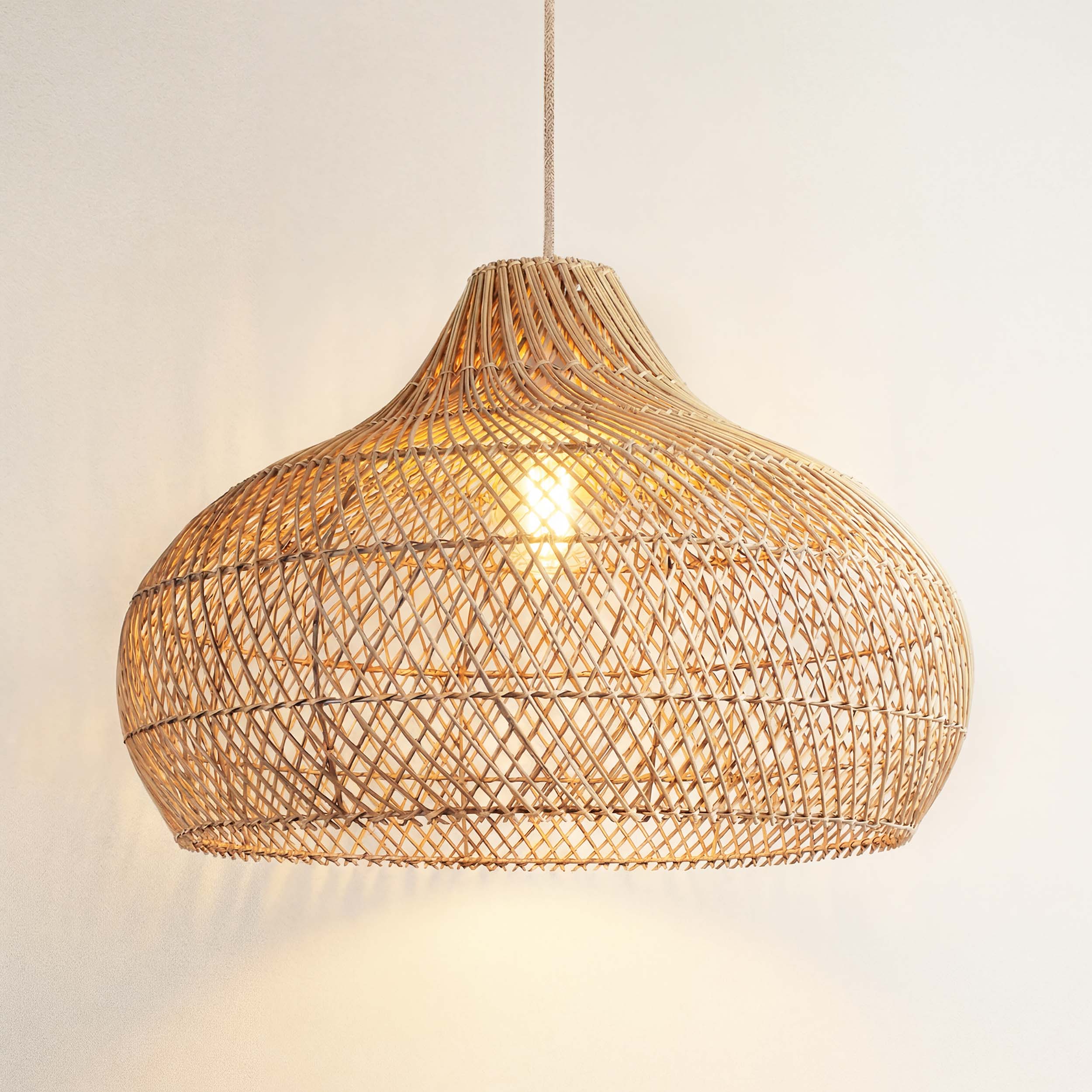
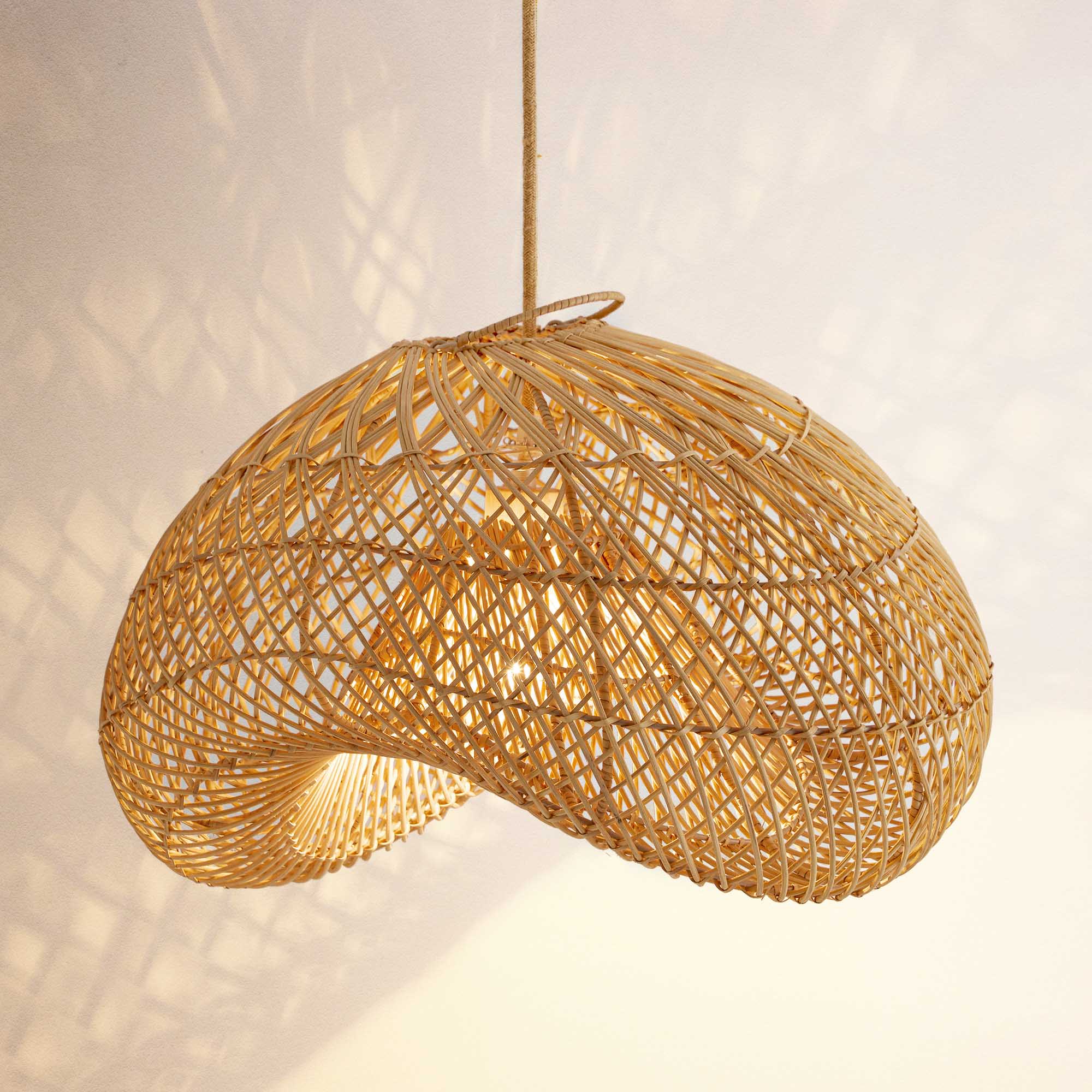
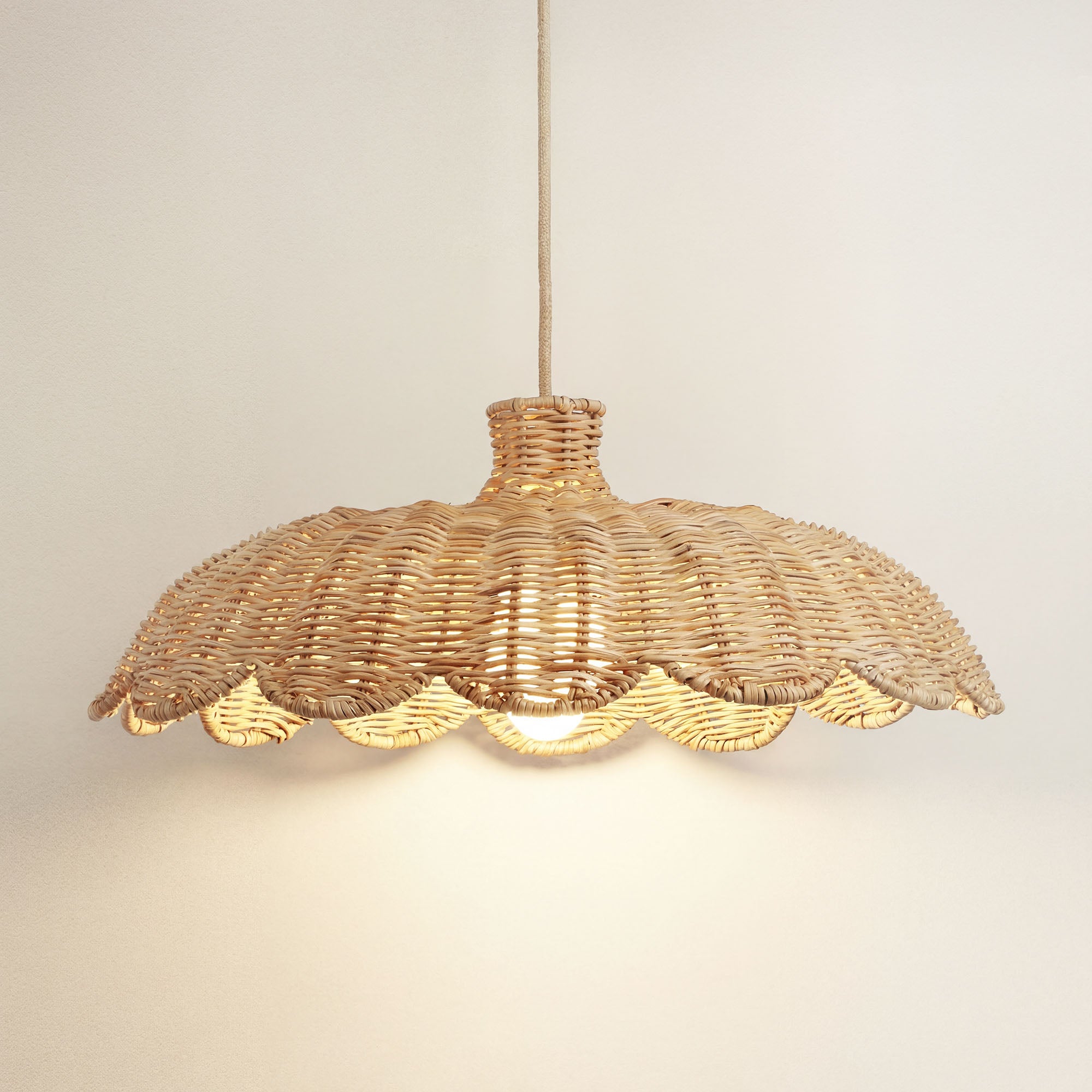
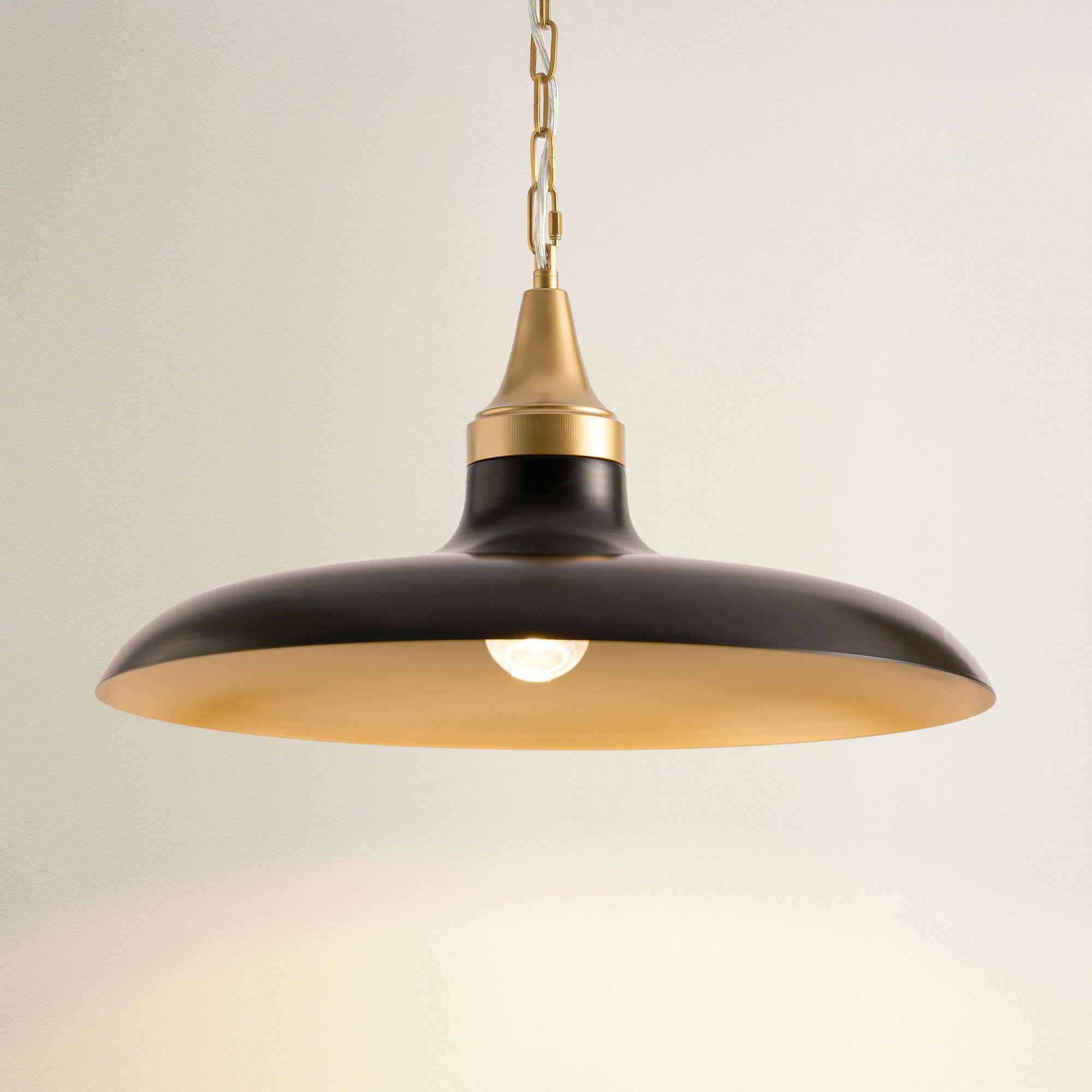
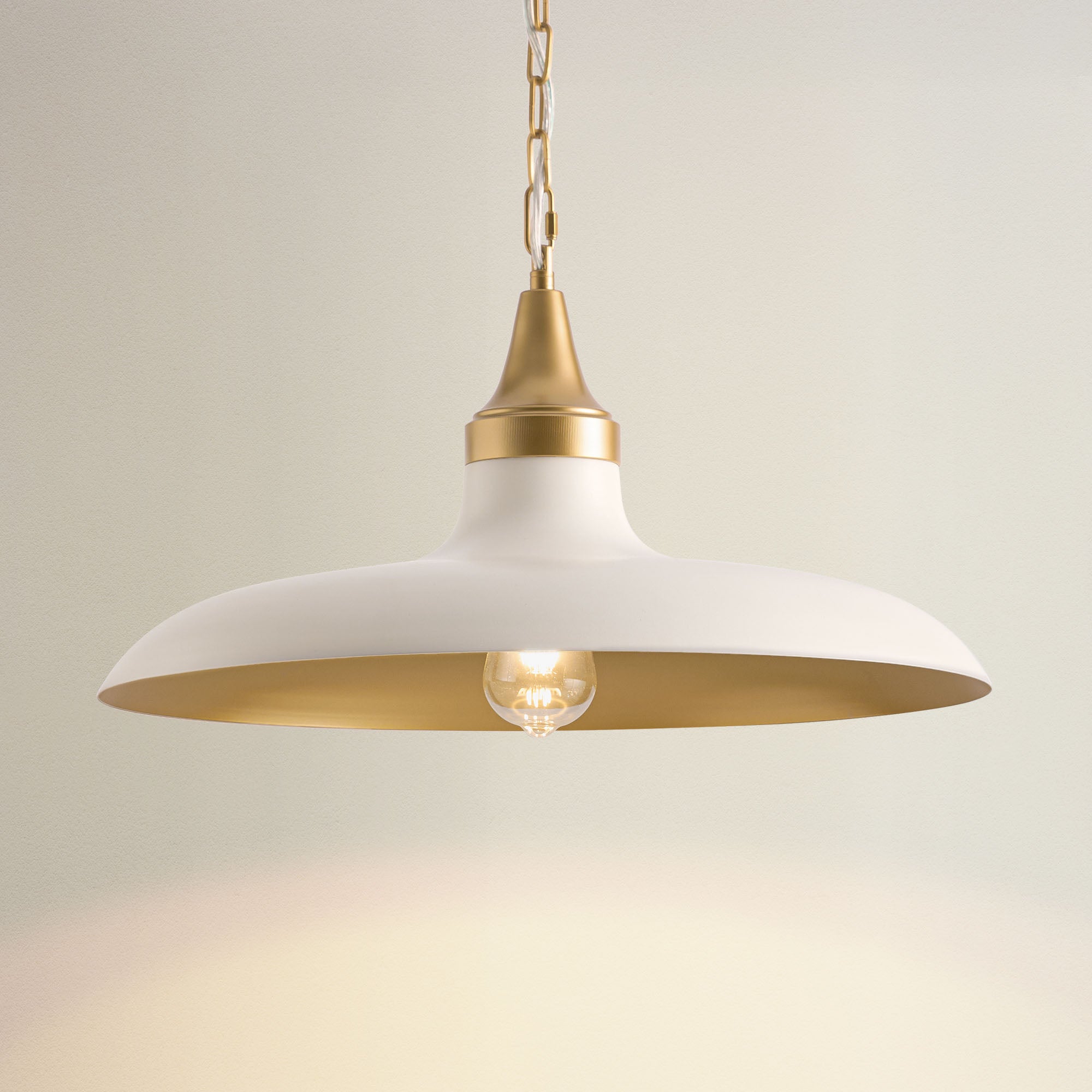
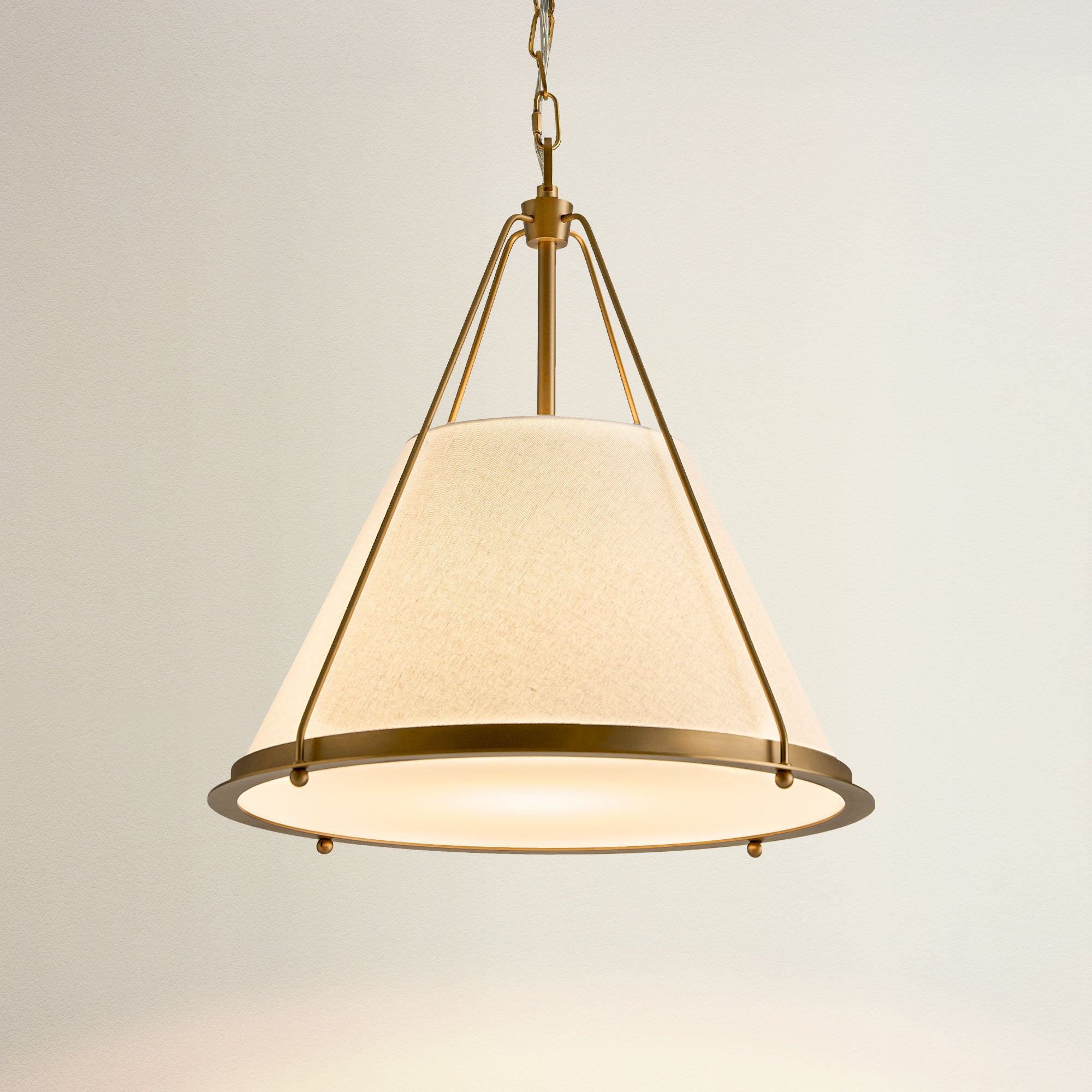
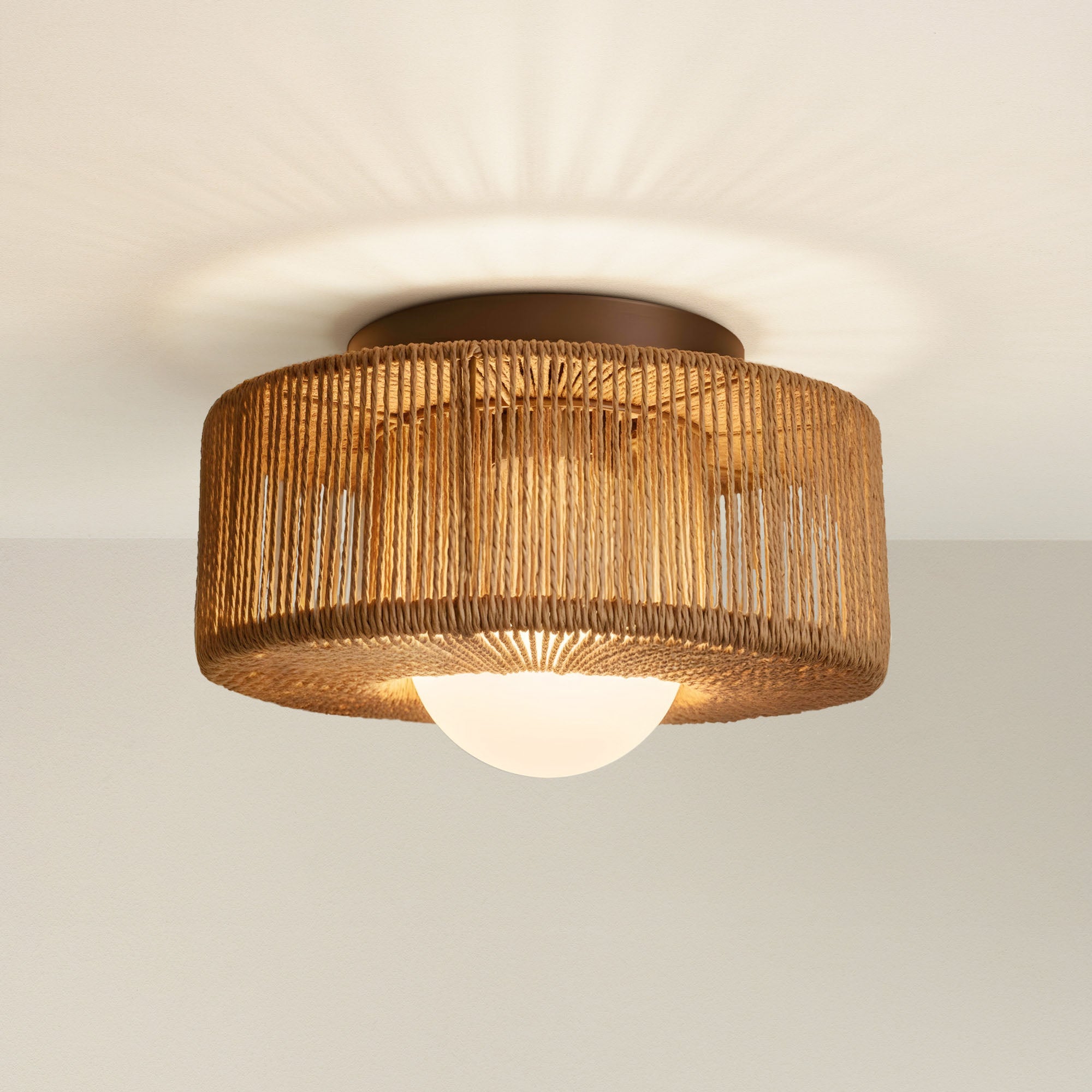
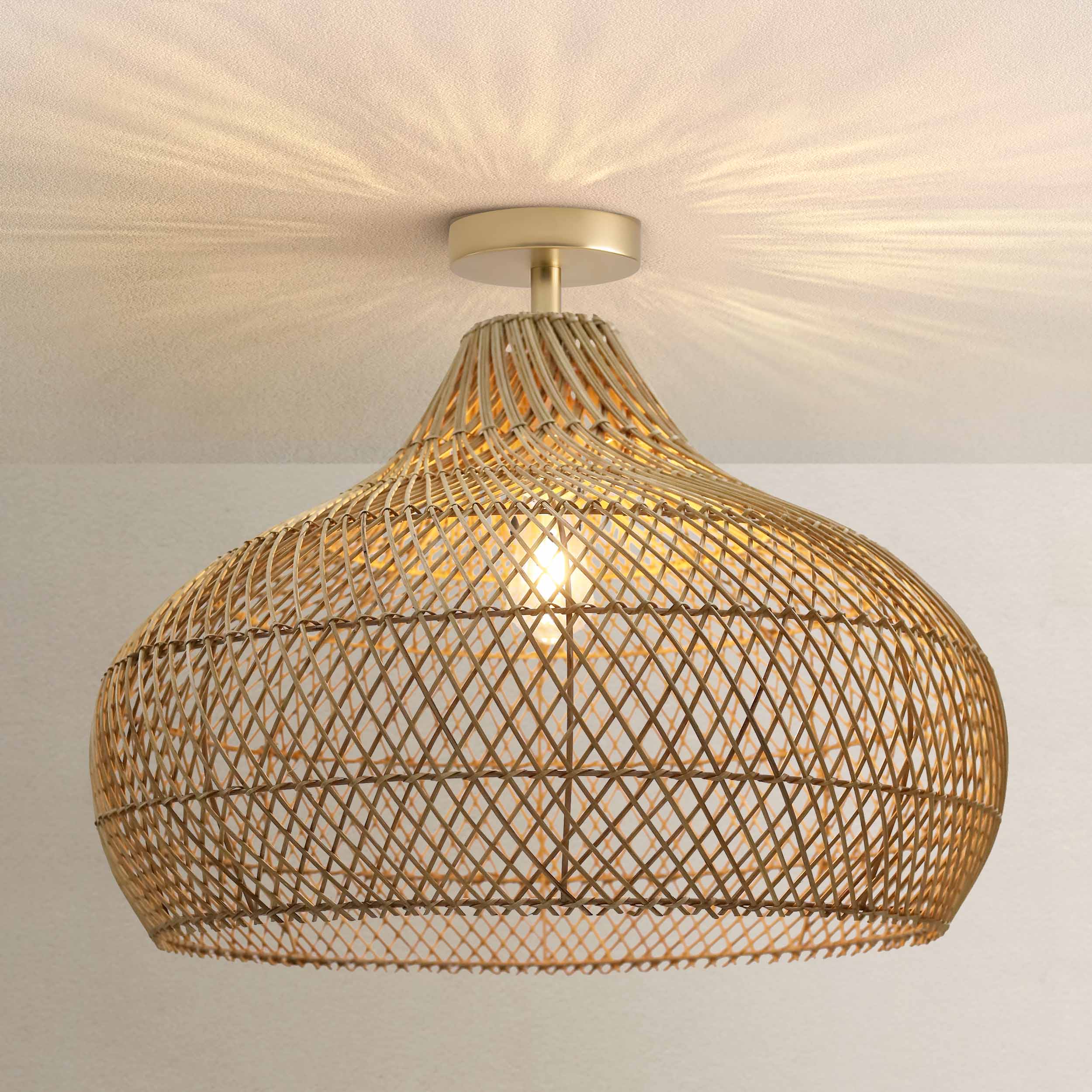
For a 65-inch dining table, a pendant in the 20- to 24-inch range is often the most balanced starting point. That size gives the fixture enough visual presence over the table without making it feel oversized. The final choice within that range depends on the table's width, the ceiling height, and whether you want the pendant to feel lighter and more airy or more like a statement piece.
The goal is not just to choose a pendant you like, it's to choose one that feels proportionate to the table once it is installed.
Why a 65-inch table usually needs a medium-to-large pendant
A 65-inch table is longer than a standard four-person table (typically around 48 inches) but shorter than a large six- to eight-person table (72 inches and above). It sits in the mid-range: long enough that a small pendant will look undersized, but not so long that you need a very large shade or multiple fixtures to cover it.
A common sizing principle for dining pendants is that the shade diameter should be roughly one-third to one-half of the table's width. For a 65-inch table with a typical 36-inch width, the ideal pendant diameter is between 18 and 24 inches, with the 20–24-inch range hitting the sweet spot for most single-pendant setups.
A pendant smaller than 18 inches tends to read as too small over a table this length. It floats above the center without anchoring the space, and the light coverage on the table surface feels incomplete. A pendant larger than 28 inches starts to visually crowd the space, particularly in rooms with standard 8-foot ceilings.

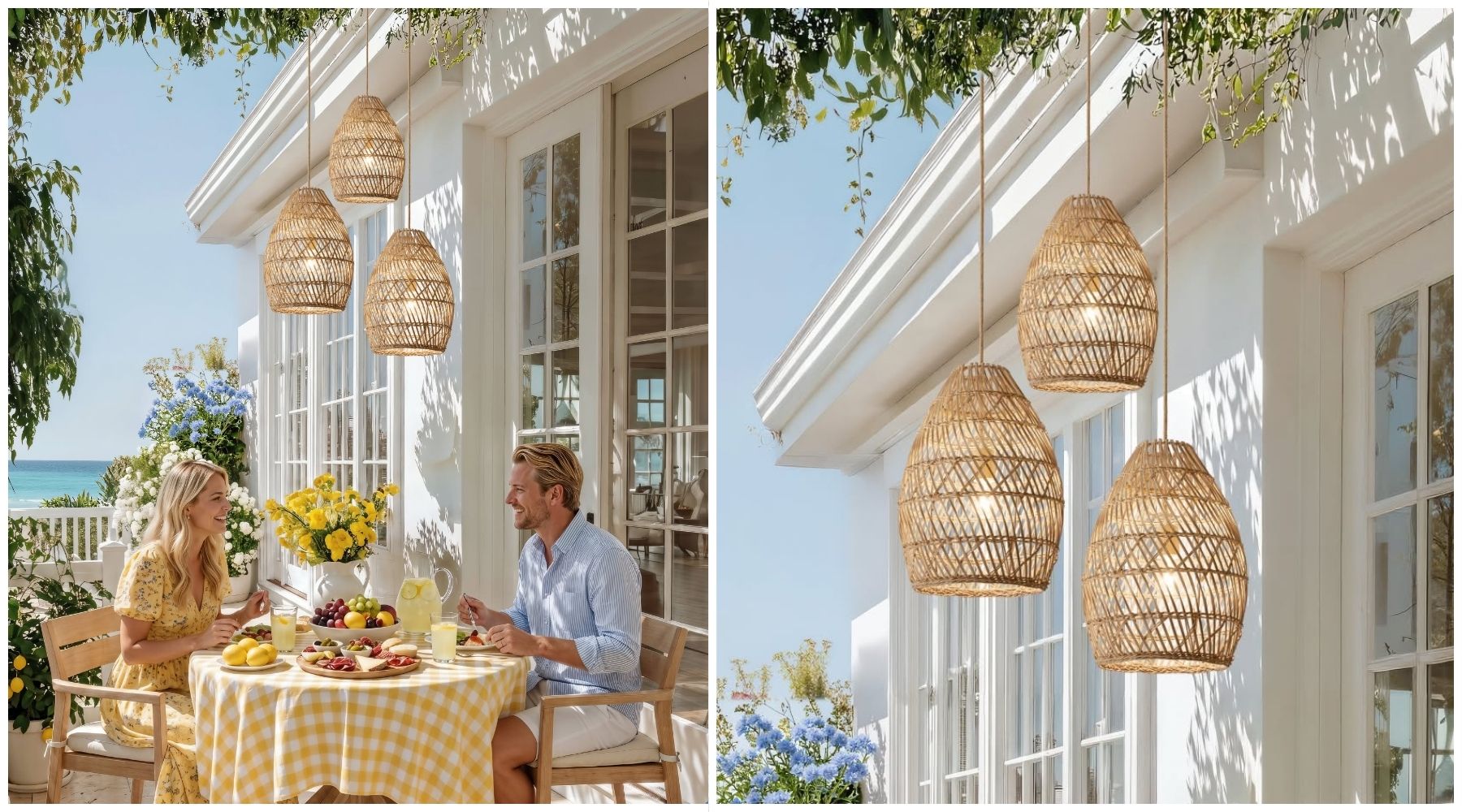
Image by Rowabi’s customer.
When to choose the smaller end of the range - around 20 Inches
A 20-inch pendant is the right call when you want the fixture to feel present without being dominant.
Go smaller if:
- Your table is on the narrower side (32 inches or less in width), and a larger shade would feel out of proportion to the table's actual footprint
- The room is smaller or has lower ceilings, and you want the pendant to complement the space rather than fill it
- You prefer a lighter, more open look, particularly if the shade is an airy or open-weave style that already has visual presence without adding mass
- You're pairing the pendant with other light sources in the room, so the pendant doesn't need to do all the visual work on its own
At 20 inches, a pendant over a 65-inch table reads as intentional and well-scaled. It sits comfortably within the table's length and leaves enough visual margin at either end that the fixture doesn't crowd the space.
When to choose the larger end of the range - around 24 inches
A 24-inch pendant makes a bolder statement and provides stronger visual anchoring over the table.
Go larger if:
- Your table is wider than average (38 to 40 inches), and you want the pendant proportionate to the full table footprint rather than just its length
- Your ceiling is higher than 8 feet, in rooms with 9- or 10-foot ceilings, a 20-inch pendant can look slightly undersized, while a 24-inch shade holds its visual weight more naturally
- You want the pendant to be the clear focal point of the room, not just a functional overhead light
- The shade style is dense or solid, a tightly woven rattan dome or a solid metal cone reads heavier than an open-weave or translucent shade, so you can go slightly larger without the room feeling crowded
At 24 inches, a pendant over a 65-inch table creates a stronger sense of occasion. It's particularly effective in frequently used dining rooms, where the table is the visual and social center of the space.

Image by Rowabi’s customer.
What else matters besides table length
Table length is the starting point, but a few other factors shape the final decision:
Table width. A 65-inch table that is 30 inches wide calls for a smaller pendant than a 40-inch-wide one. Width affects how large the fixture needs to be to feel proportionate when viewed from the side, not just from above.
Ceiling height. The higher the ceiling, the larger the pendant can be before it starts to feel overwhelming. Standard 8-foot ceilings favor the 20–22 inch range. Nine-foot ceilings can support 24 inches or even slightly larger.
Shade style and visual weight. An open-weave rattan shade appears lighter than a solid dome of the same diameter. A shaggy palm fiber shade reads as larger and more textured than a clean, smooth woven shade. Two pendants of the same nominal diameter can feel very different in a room depending on how dense or open the material is.
If you are drawn to a visually heavier shade, lean toward the smaller end of the range. If the shade is open and airy, you have more latitude to go larger.
Single pendant or two. Most 65-inch tables look balanced with a single pendant centered above them. If you prefer two smaller pendants in a line, a look that works well for elongated rectangular tables, two 14- to 16-inch fixtures spaced evenly are generally more proportionate than a single small pendant that struggles to cover the full table length.
Final recommendation for most dining rooms
For a 65-inch dining table with a single pendant and standard ceiling height, a shade in the 20- to 24-inch range is a reliable starting point. Within that range:
- Start at 20–22 inches if you want a lighter feel, have a narrower table, or are working with lower ceilings
- Move toward 24 inches if you want more visual presence, have a wider table, or have ceiling height to work with
Hang the bottom of the shade 28 to 34 inches above the tabletop. The lower end of that range creates a more intimate, focused feel; the higher end keeps sightlines more open across the table.
If you're not sure which size to go with, the 22-inch range is often the most forgiving, large enough to feel intentional, small enough not to overpower a mid-size dining room.
→ Browse Rowabi Pendant Lights