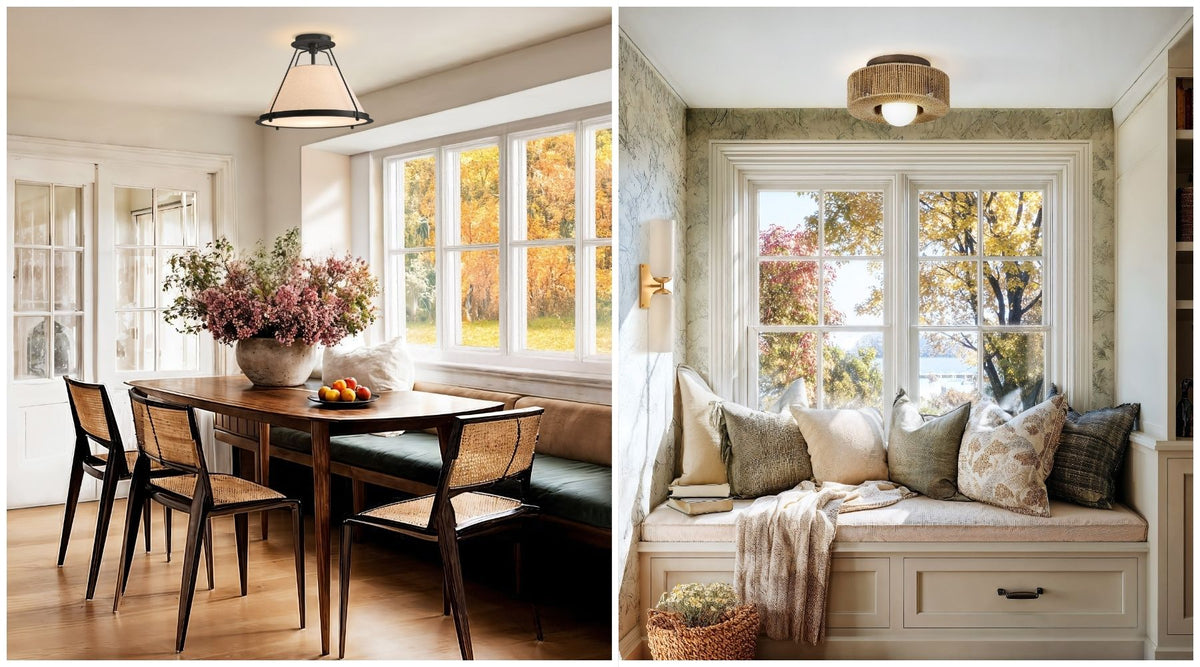
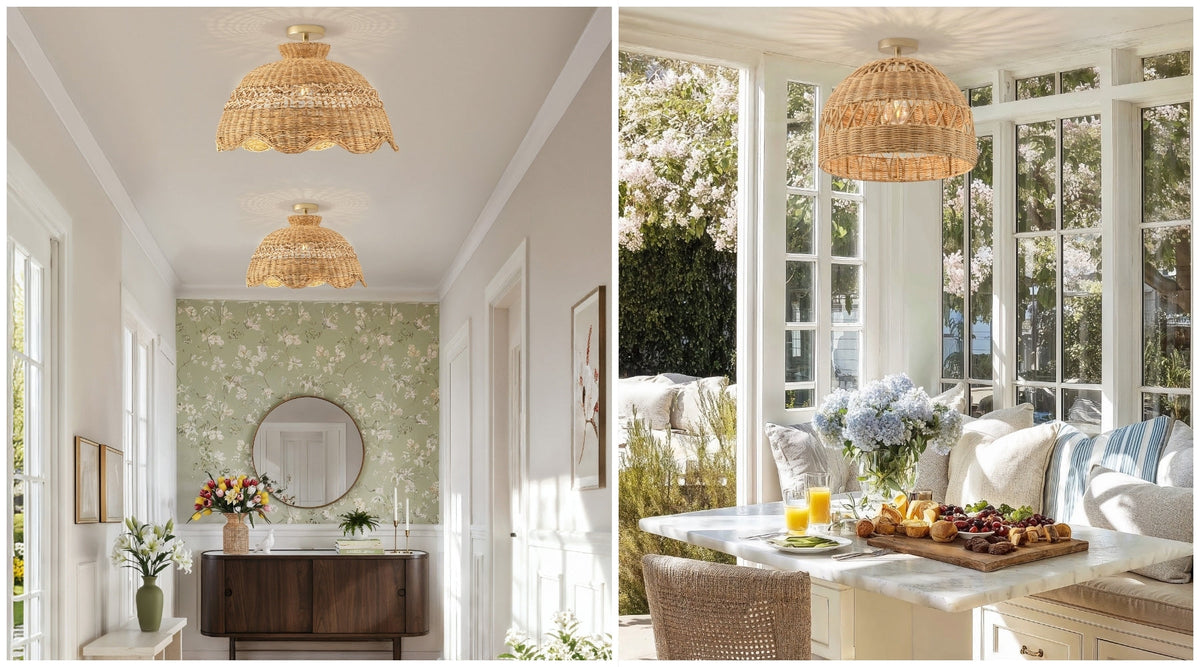
What is Pendant Lighting? Where and When to Use
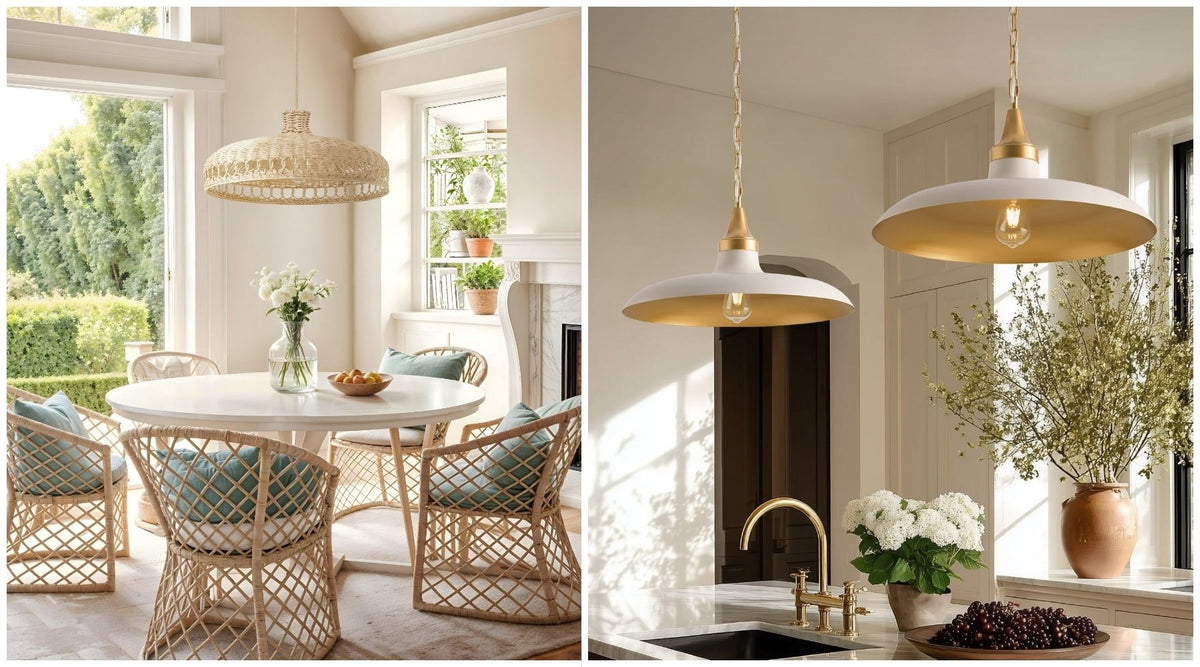
Pendant lighting is a single fixture suspended from the ceiling by a cord, chain, or rod. A simpler, single-shade alternative to a multi-bulb chandelier. It works as both ambient and focused task lighting, which is why it is a go-to choice over kitchen islands, dining tables, and reading nooks.
Key takeaways
- Definition: A single ceiling fixture on a cord, chain, or rod, simpler than a multi-bulb chandelier.
- Best for: Task light over islands and desks, ambient light in living and dining rooms.
- Sizing rule: Choose a pendant about 1/3 the width of the table or island below it.
- Hanging height: 28–34 inches above an island surface, or 60–70 inches above the floor in a room with 8-foot ceilings.
- Materials to expect: Glass, metal, fabric, wood, bamboo, or handwoven rattan.
Quick buyer's checklist
Before browsing, run through these five decisions:
- Size: Pick a diameter roughly 1/3 the width of the table or island below.
- Height: 28–34 inches above an island; 60–70 inches above the floor for general rooms; add 3–6 inches for each additional foot of ceiling height beyond 8 feet.
- Bulb type: LED (light-emitting diode, an energy-efficient bulb with a long lifespan and low heat output) for efficiency and low heat; a 2700–3000K warm-white LED for most living spaces.
- Safety: Keep at least 30 inches above a table or counter; choose damp-rated fixtures for bathrooms.
- Power: Confirm hardwired vs. plug-in before buying if you are not planning an electrician visit.
45-Day Return
45-Day Return

45-Day Return
45-Day Return

45-Day Return
45-Day Return
45-Day Return
45-Day Return
45-Day Return


45-Day Return
45-Day Return
45-Day Return
Pendant vs. Flush-mount vs. Chandelier
| Pendant | Flush-mount | Chandelier | |
| Best for | Islands, dining tables, accent light | Hallways, low ceilings, general light | Foyers, dining rooms, statement spaces |
| Look | Hangs down on a cord or chain, dramatic | Mounts flush to ceiling, subtle | Multi-arm, ornate, hangs down |
| Bulb count | Usually 1 (multi-light versions exist) | 1–2 typically | Multiple (3+) |
| Ceiling height needed | Works with 8-ft+ ceilings | Ideal for low ceilings under 8 ft | Best with higher or vaulted ceilings |
Top 5 use cases
Pendant lights earn their keep most in these five spots:
- Kitchen island: small, focused pendants for task light; one pendant per 2 feet of island length.
- Dining table: a single statement pendant or linear fixture centered over the table.
- Foyer or entryway: a larger, dramatic pendant as a first impression.
- Bedside: mini pendants in place of table lamps to free up nightstand space.
- Bathroom: damp-rated pendants flanking a mirror or above a soaking tub.
What are pendant lights?
Pendant lights are ceiling fixtures that bring light down into a space by suspending a single shade and bulb from a cord, chain, or rod.
Unlike chandeliers. which typically feature multiple branches, several bulbs, and intricate designs suited to hallways and formal rooms, pendant lights are simpler in construction and more practical in application, while still adding a genuine decorative focal point to a room. They are commonly described as "jewelry for the ceiling" because a well-chosen pendant anchors a space visually.

Source: Rowabi
Pendant lighting can serve as ambient light when the shade diffuses broadly, or as focused task lighting when a down pendant (a pendant that directs its beam downward in a concentrated pool, reducing glare to the sides) is positioned over a work surface. This range of function is what makes pendant fixtures suitable for so many room types.
5 benefits of pendant lighting
Better accent and task lighting
Pendant lights can be positioned exactly where light is needed, such as above a prep counter, a reading chair, or a bedside nightstand, without casting the wide, undifferentiated shadows that a single overhead ceiling fixture often produces. The ability to bring the light source down to a functional height is the quality that separates a pendant from a flush-mount in task-heavy rooms.
Adjustable height and direction
Most pendant lights ship with an adjustable cord, chain, or rod, which means the hanging height can be dialed in during installation rather than fixed at purchase.
Some styles also include a swing-arm or adjustable mechanism (a pivoting arm or shade that redirects light toward a task or away from glare), which is particularly useful above prep counters or reading areas where the ideal light angle changes with the activity.
Energy-efficient and cost-friendly
Modern pendant lights are designed around LED bulbs thanks to their energy-efficient, long-lasting, and cool-to-the-touch nature compared to incandescent equivalents. According to ENERGY STAR, LED bulbs use up to 90% less energy than traditional incandescent bulbs and last 15 times longer, which reduces both electricity bills and replacement frequency over the fixture's lifespan.

Source: Rowabi
Space-saving
A pendant light mounted from the ceiling frees up every surface below it. This makes pendant lights particularly useful in compact kitchens where counter space is limited, or in bedrooms where a bedside pendant replaces a table lamp and clears the nightstand entirely.
Simple installation
Most pendant lights connect to a standard ceiling junction box, which means replacing an existing ceiling fixture with a pendant is typically a straightforward task for an experienced DIYer.
Hardwired installation (wired directly into the home's electrical system for a seamless, cord-free look) gives the cleanest result; plug-in options (which connect to a nearby wall outlet without any ceiling wiring) offer a faster installation with no electrician required.
Best concept designs with pendant lights
Hanging fixtures come in a wide range of design directions. Here are the most common styles and what makes each one work.
Midcentury
Midcentury pendant lights capture the design aesthetic of the mid-20th century: sleek lines, organic shapes, and retro-inspired elements. They suit kitchens and dining rooms with warm wood tones, tapered legs, and restrained material palettes.
Explore more: Iconic designs that define mid-century elegance

Source: Rowabi
Modern and sleek
Modern pendant lights focus on clean, simple lines and a minimalist aesthetic. A slim, low-profile pendant in matte black, brushed nickel, or white metal adds a touch of precision to contemporary kitchens and dining spaces without competing with other architectural details in the room.

Source: Rowabi
Industrial
Industrial pendant lights are recognized by their metallic finishes, weathered textures, and cage-like construction, typically metal or glass housing with an exposed bulb. They suit kitchens with open shelving, concrete countertops, or brick backsplashes where the raw material palette already leans utilitarian.

Source: OHH CREATIVE from Onehourhappiness Creative, via Canva: https://www.canva.com/photos/MAG-xfnH_3s/
Schoolhouse
Schoolhouse lighting carries a vintage charm through rounded glass shades in white or clear, paired with brass or bronze fittings. The style works across a wide range of kitchens, from traditional to transitional, because the restrained form does not strongly commit to any single decade.

Source: Pexels, via Canva: https://www.canva.com/photos/MAG4_F_qcCA/
Cascade
Cascade pendant lights feature multiple tiers of glass or metal shades that step down from the ceiling, creating a dramatic layered effect. They suit spaces with higher ceilings where the vertical drop can be used as a design element rather than a constraint.

Source: Deybson Mallony from Pexels, via Canva: https://www.canva.com/photos/MAG07AAjbLw/
Candle
Candle pendant lights feature metal or brass stems with branches shaped to suggest individual candle flames. They are well suited to dining rooms and bedrooms where a warm, intimate ambiance is the goal.

Source: Rowabi
Foyer
Foyer pendant lights are typically larger and more dramatic than other pendant styles, often the first fixture a visitor sees upon entering. Scale is the defining consideration: the fixture should fill the visual space of the entry without overwhelming it.

Source: Rowabi
Traditional
Traditional pendant lights feature ornate designs, intricate detailing, and warm finishes such as bronze or antique gold. They suit rooms with formal furniture arrangements and layered textiles where a statement fixture reinforces the room's established character.

Source: Truecreatives via Canva: https://www.canva.com/photos/MAGwyLIVlQk/
Coastal
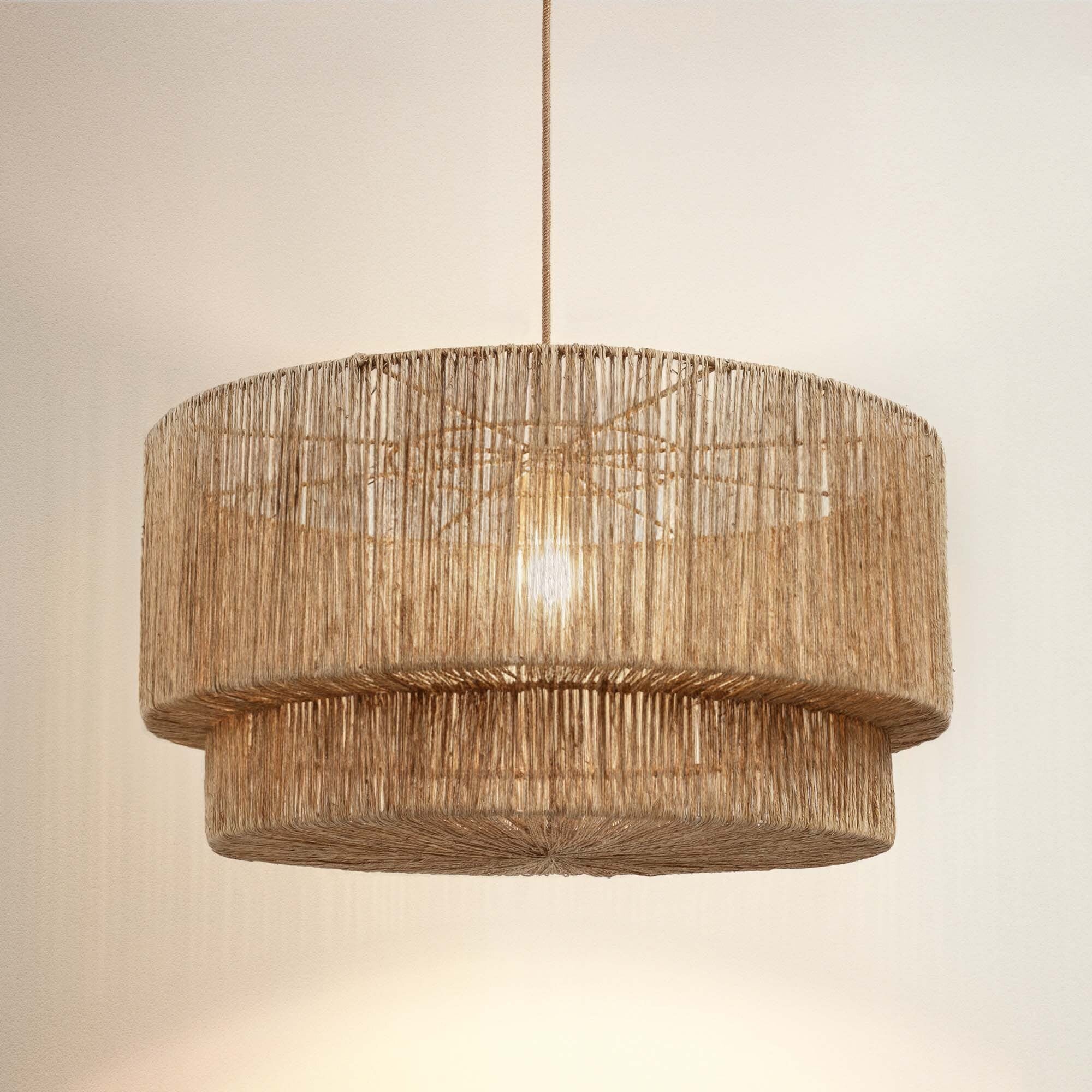
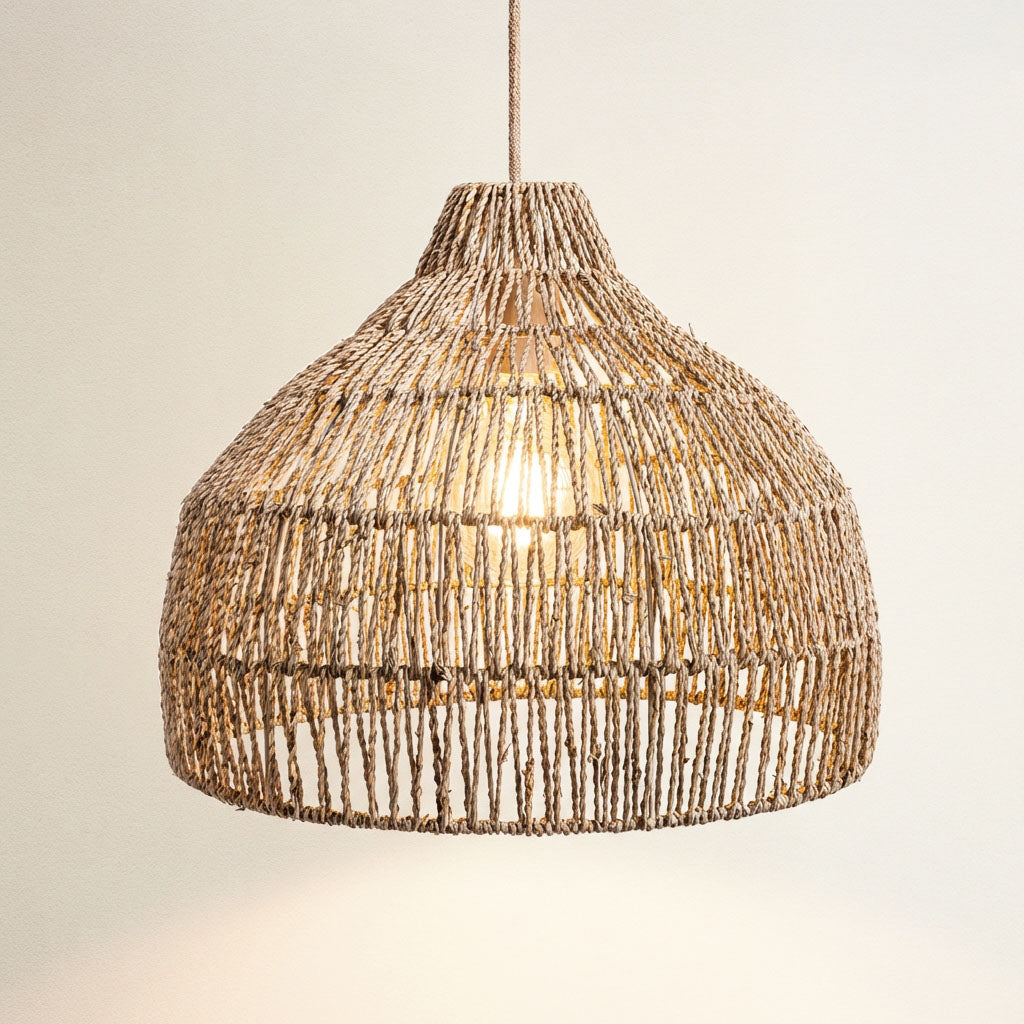
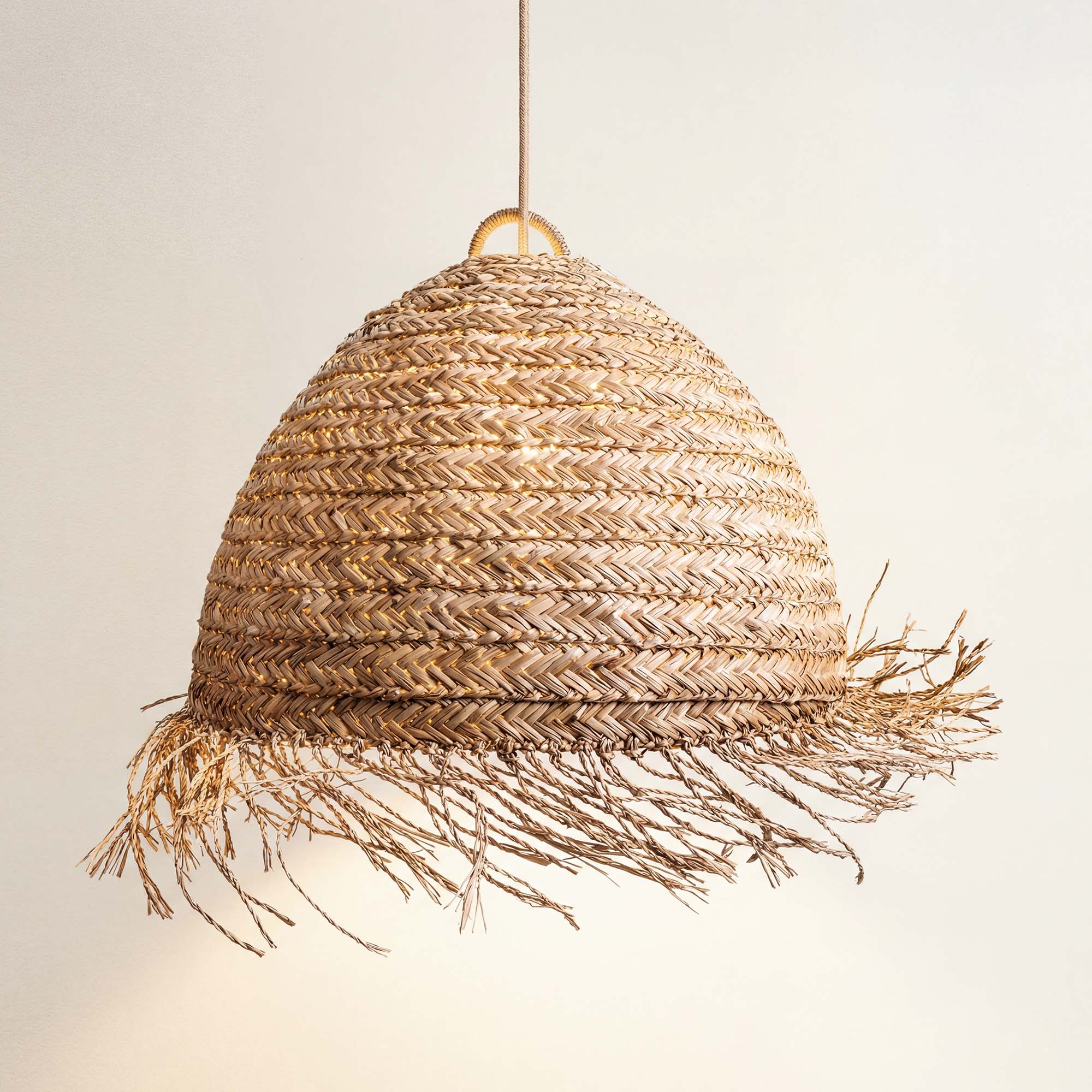
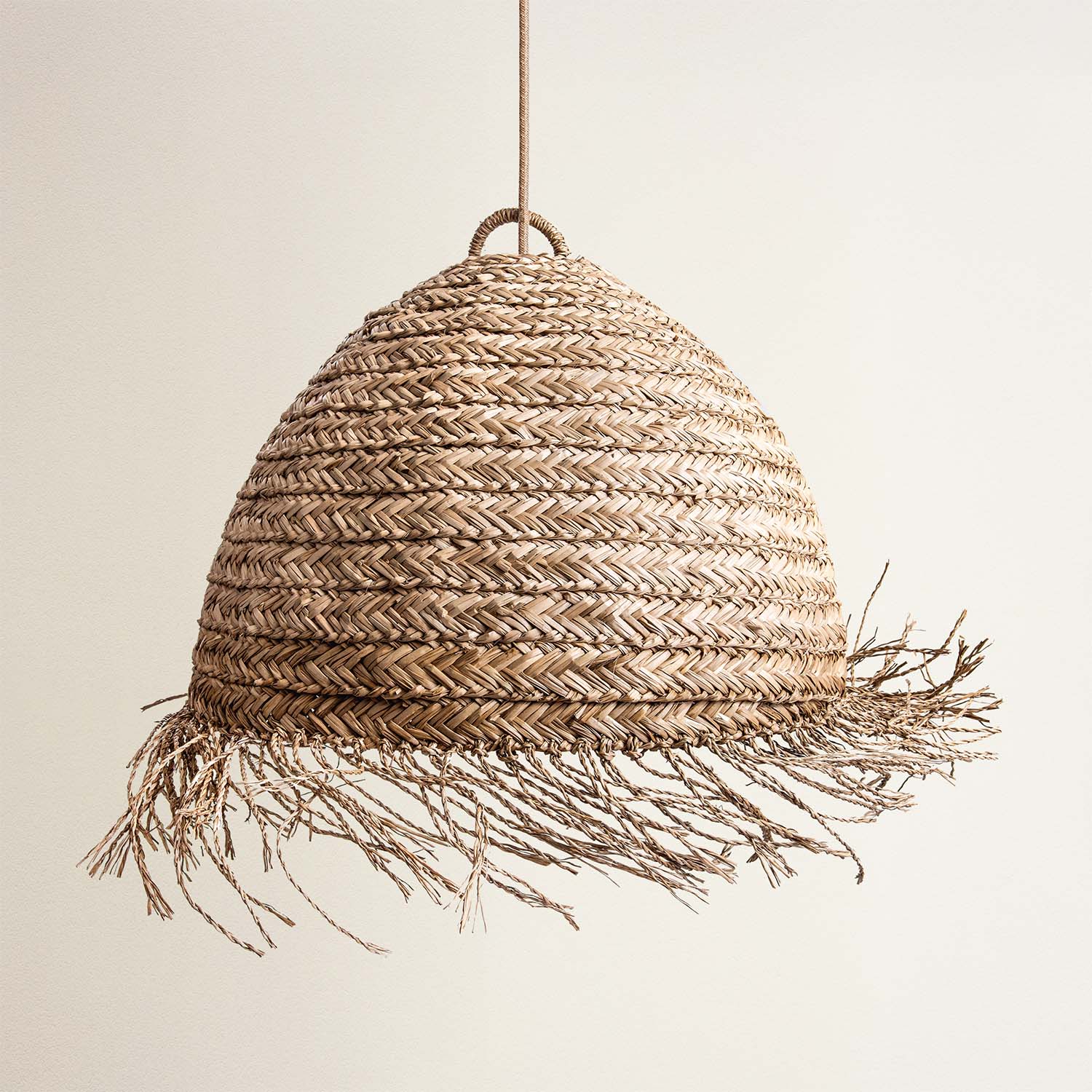
Coastal pendants are often crafted from natural materials like wood, rope, seagrass, or rattan, with white or neutral finishes that suggest an open, airy environment. They are a natural fit for kitchens, covered patios, reading nooks, and balconies where a relaxed, laid-back atmosphere is the intention.

Source: Rowabi
Cottage
Cottage pendant lights combine vintage proportions with natural materials, wood, metal, bronze, or copper finishes, to create a cozy, welcoming atmosphere. They suit homes with painted cabinetry, apron sinks, and open shelving that reference a traditional country aesthetic.

Source: Rowabi
Rustic
Rustic pendant lights use natural materials: wood, rattan, bamboo, to create texture and a sense of warmth. The style suits country houses and homes with exposed wood beams, stone surfaces, or handcrafted textiles where the lighting is meant to reinforce an organic, unpolished feeling.
Explore: Bamboo pendant lights

Source: Rowabi
Art deco
Art Deco pendants are characterized by geometric patterns, opal or patterned glass shades, and metallic accents. They suit kitchens, bathrooms, offices, and living areas where a touch of structured elegance is the design objective.

Source: Rowabi
French country
French Country pendant lights blend romance and rustic charm through intricate detailing and a warmly finished, one-of-a-kind quality. They often become the first fixture guests notice in a dining room or kitchen, part focal point, part conversation piece.

Source: Rowabi
Tiffany
Tiffany pendant lights feature stained-glass shades that reference the designs of Louis Comfort Tiffany. The colored glass and lead-line construction add an artistic quality to traditional or eclectic interiors where other fixtures would look too plain.

Source: Rowabi
Globe
Globe-shaped pendants appear across a wide range of materials: glass, metal, rattan, bamboo, and design styles. The spherical form is visually balanced and versatile, making it one of the most adaptable pendant shapes for open-concept dining and living spaces.

Source: Simply Mersah from blushcreativeclub, via Canva: https://www.canva.com/photos/MAGXxskhQzo/
Glam
Glam pendant lights feature crystals, sparkling materials, and metallic finishes in gold or silver. They are typically used in entryways or living rooms where the fixture is intended to make a strong aesthetic statement.

Source: Rowabi
Geo
Geometric pendant lights use angular, faceted shapes and clean lines to create a minimalist aesthetic that still reflects personality. They suit contemporary and transitional interiors where simplicity and precision are the design values.

Source: Rowabi
Types of pendant lights
Rattan pendant lights
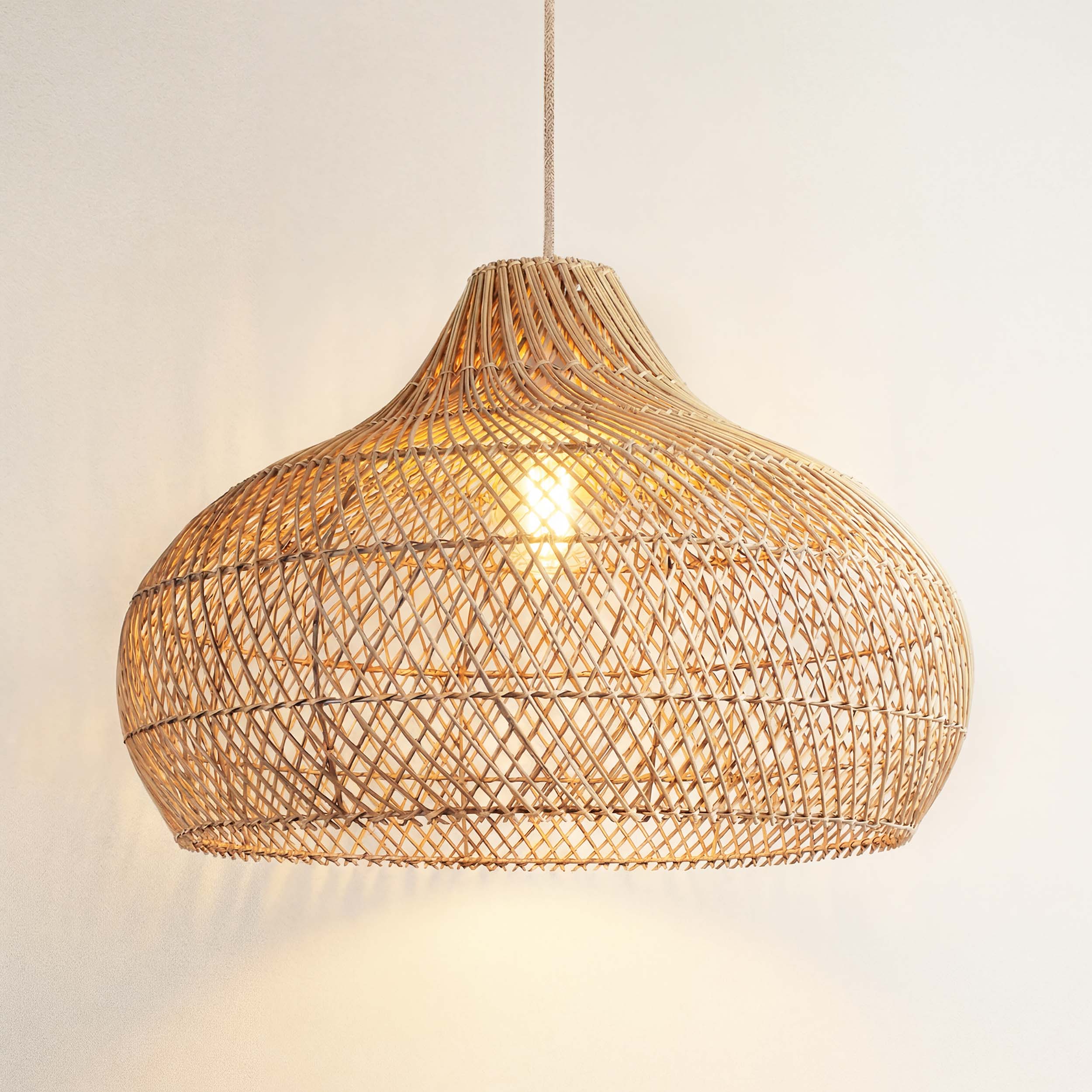
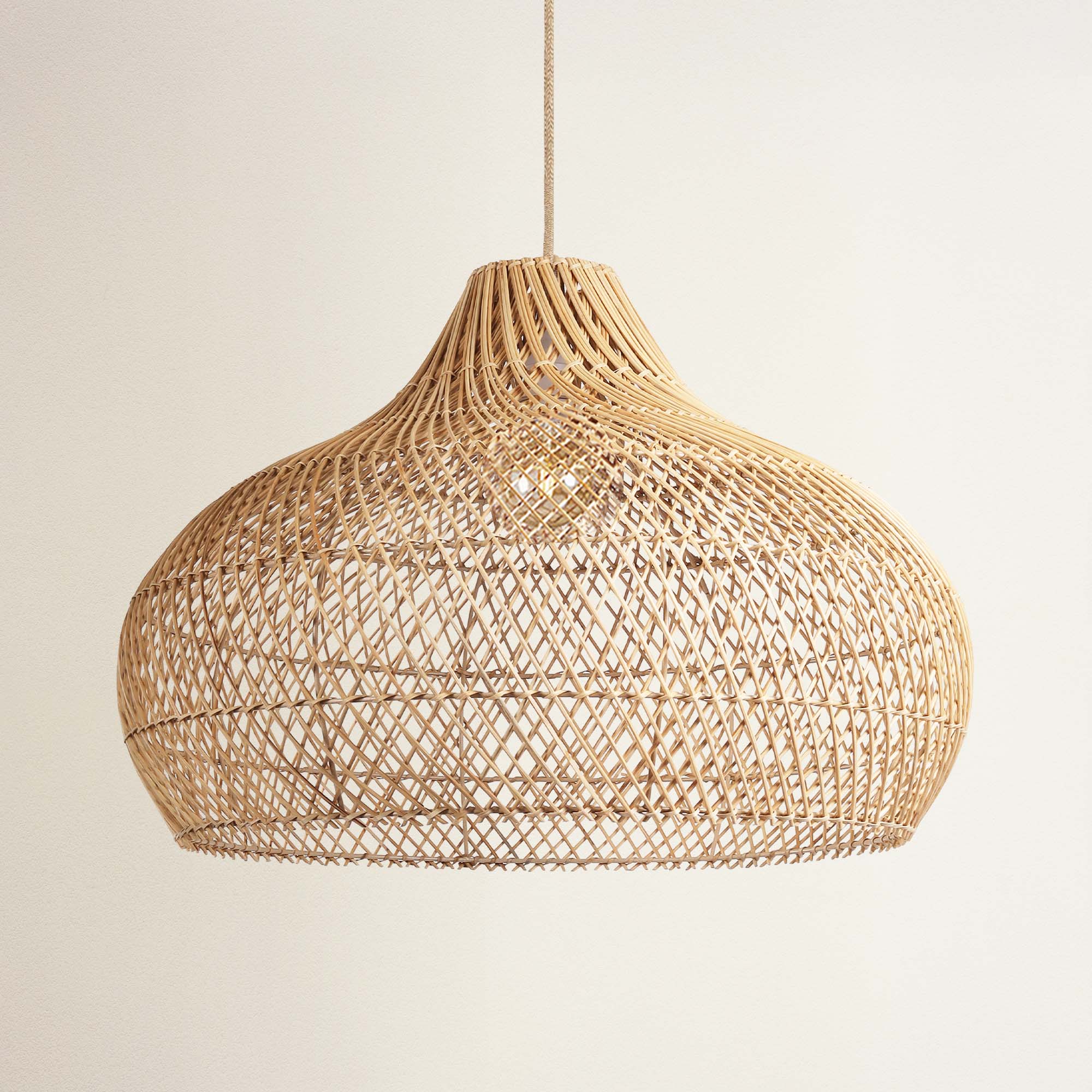
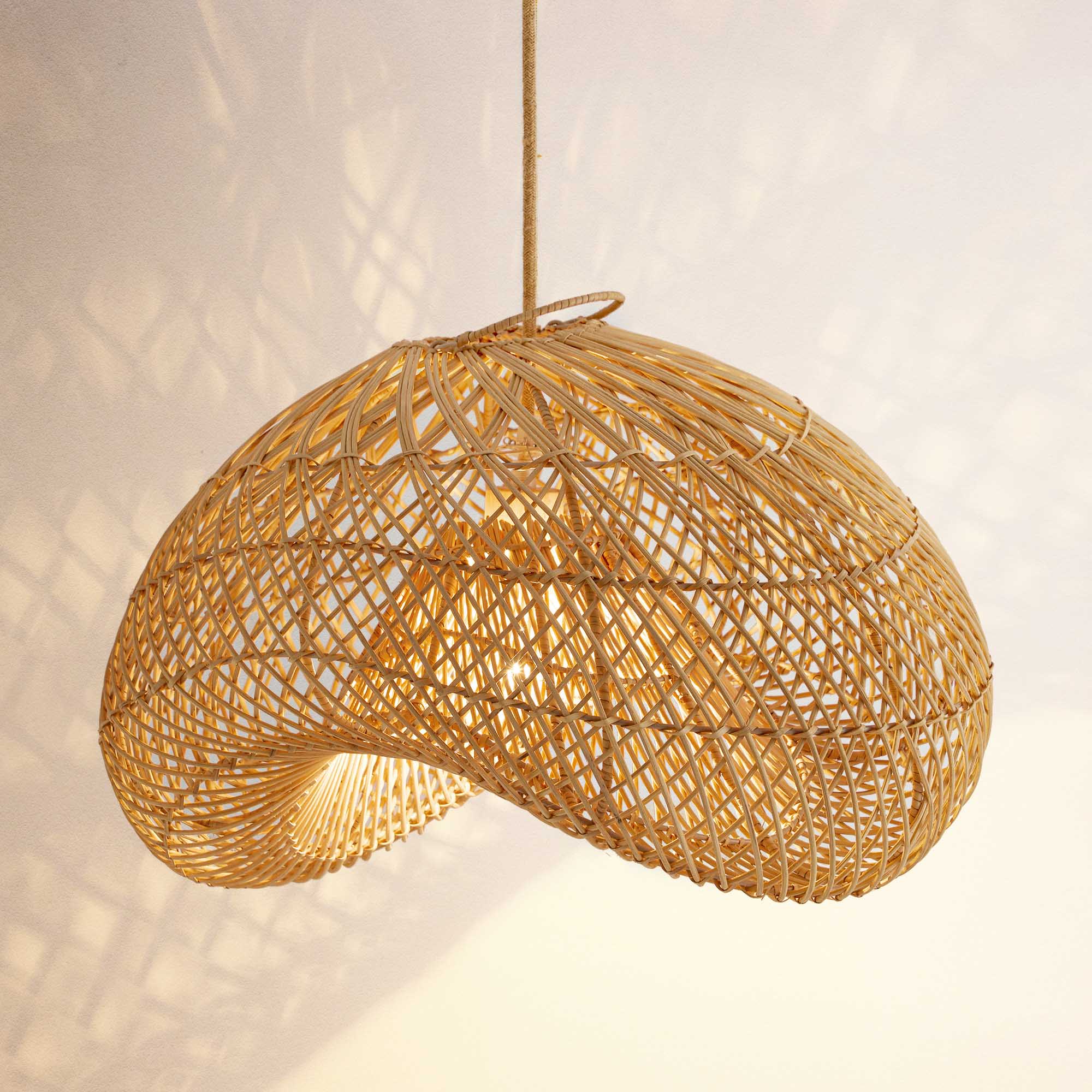
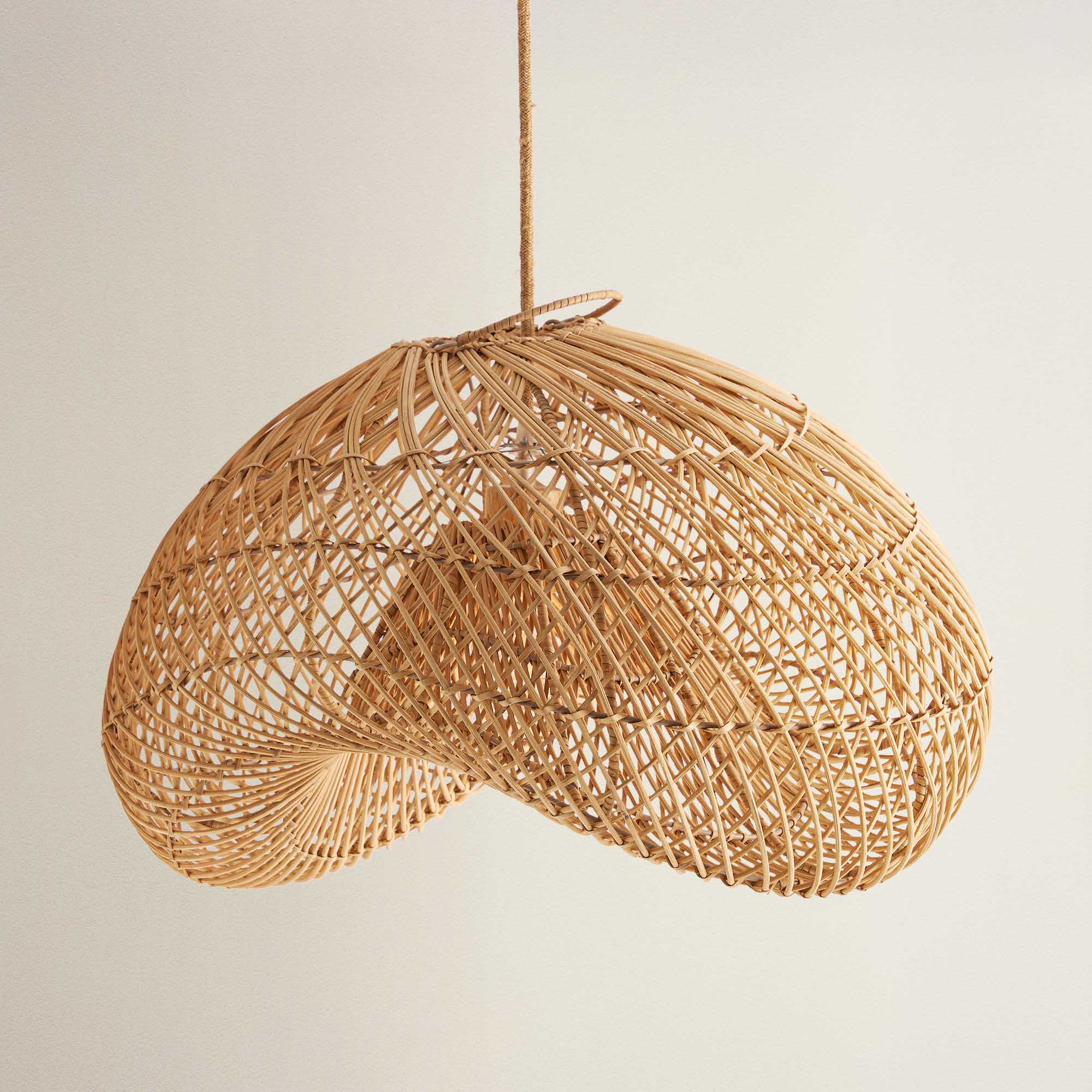
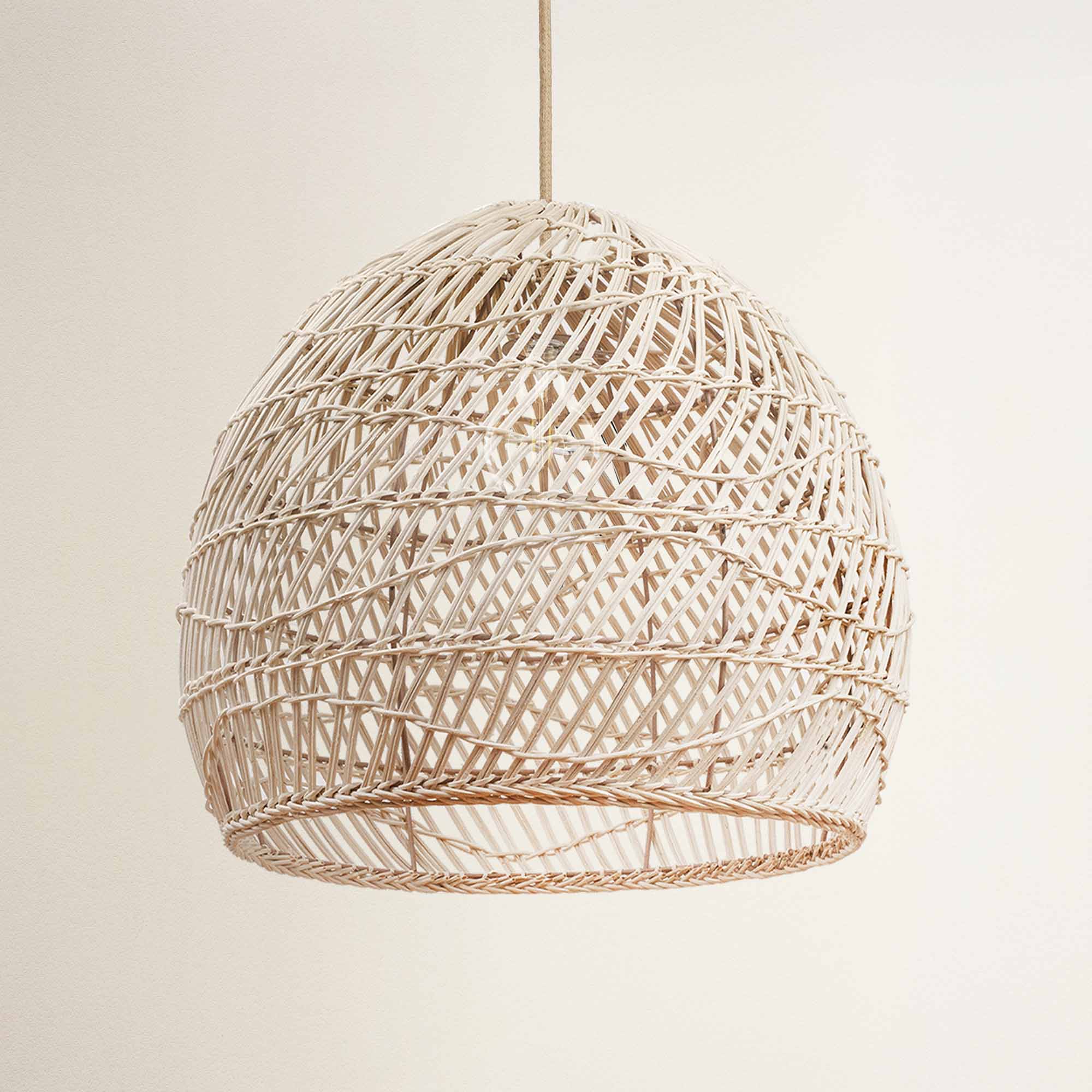
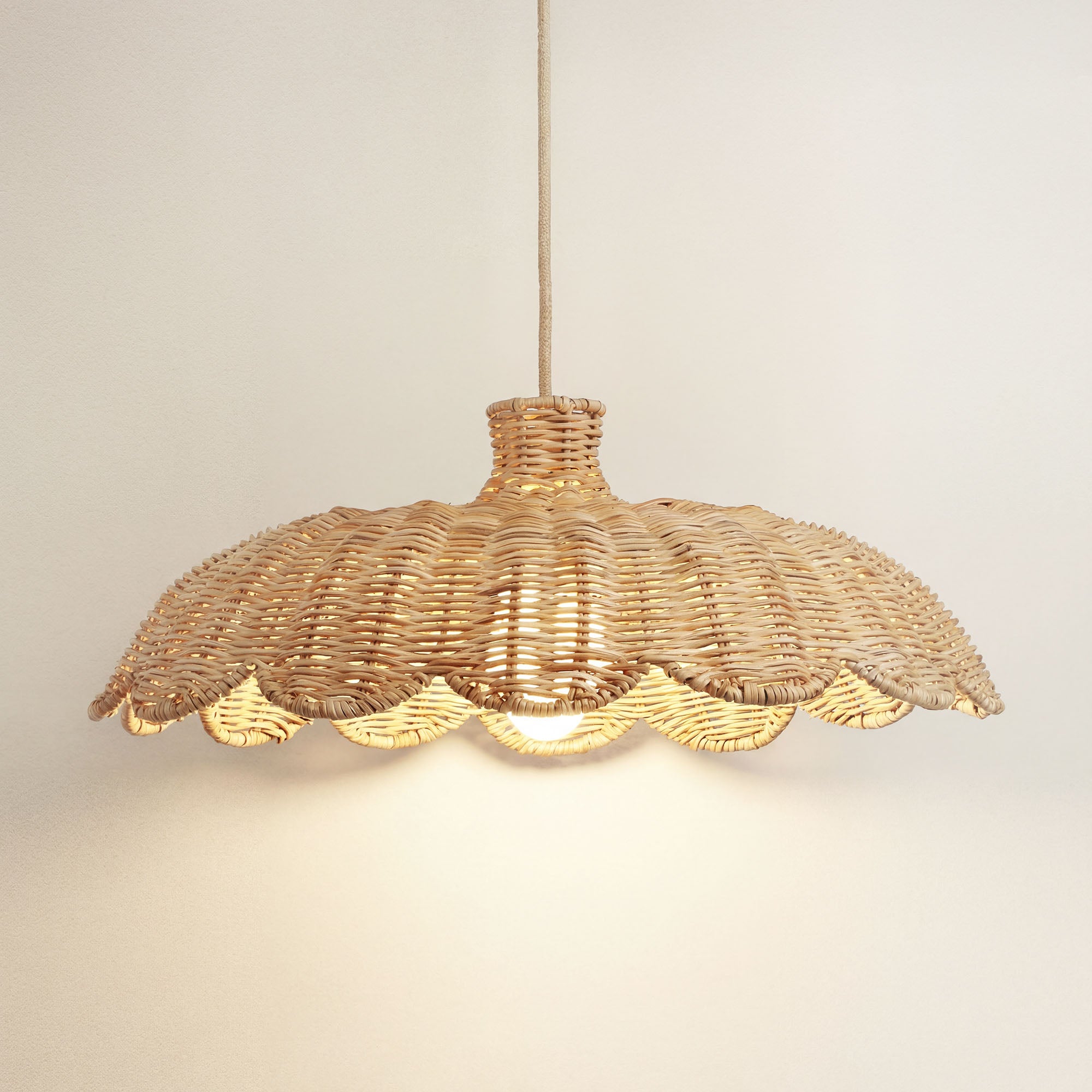
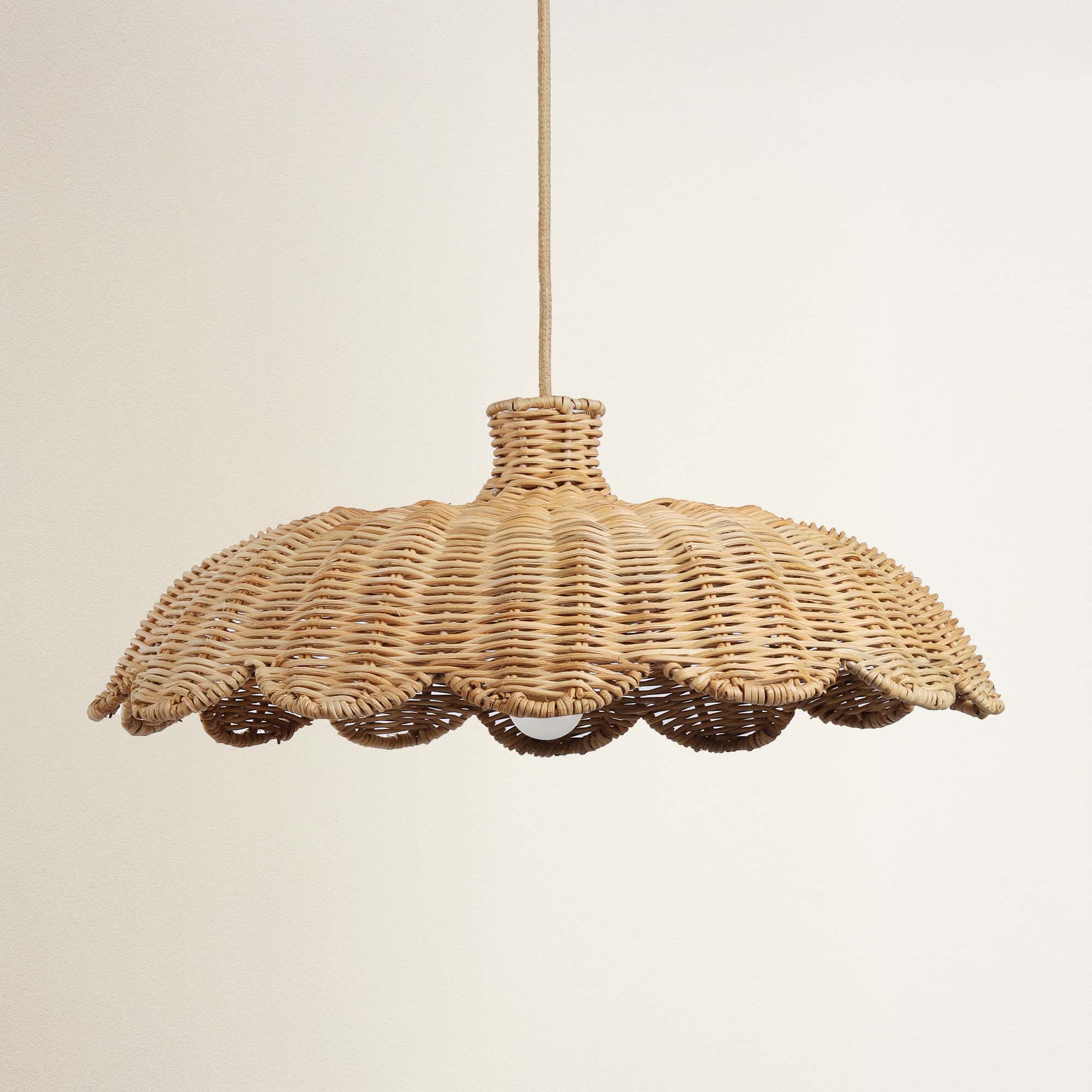
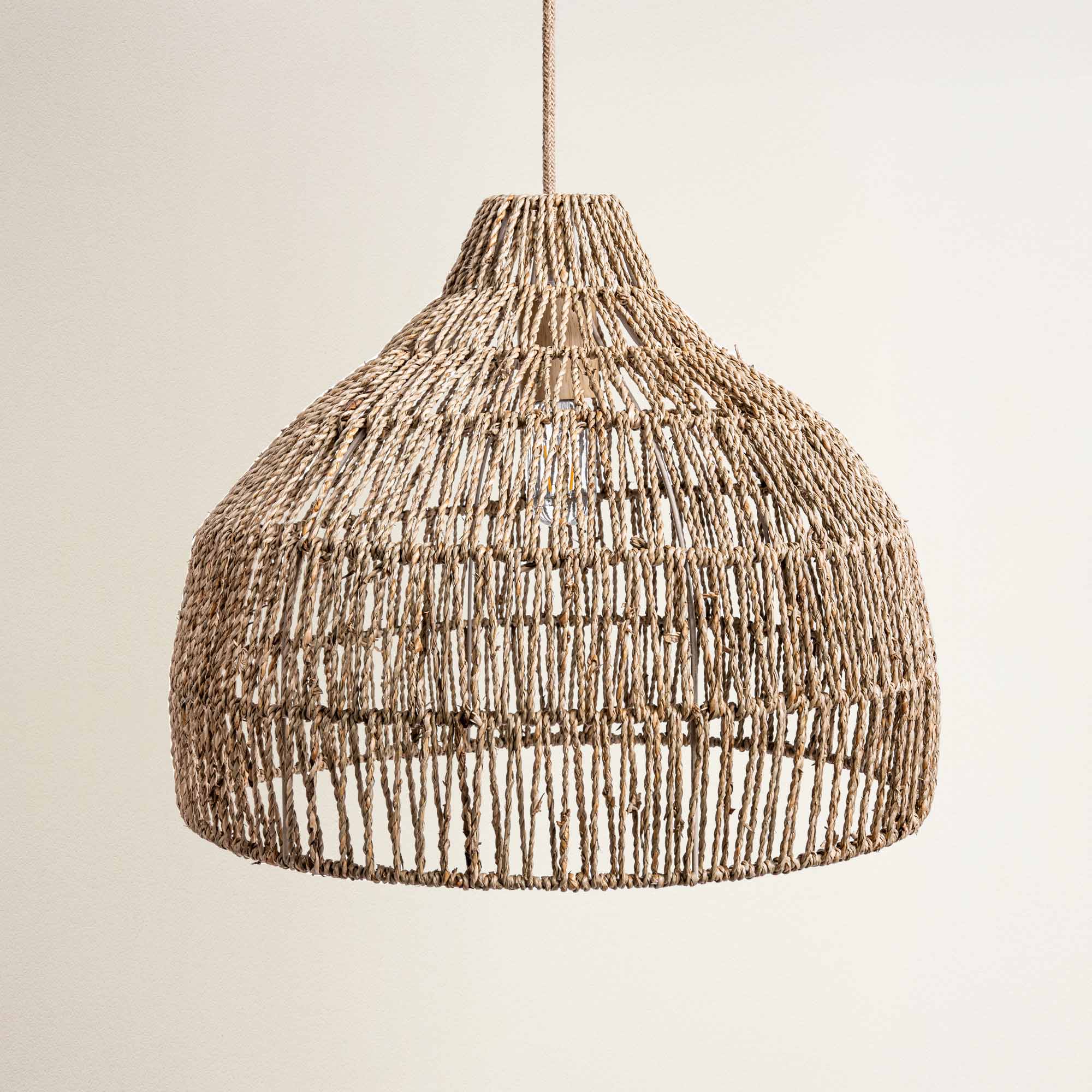
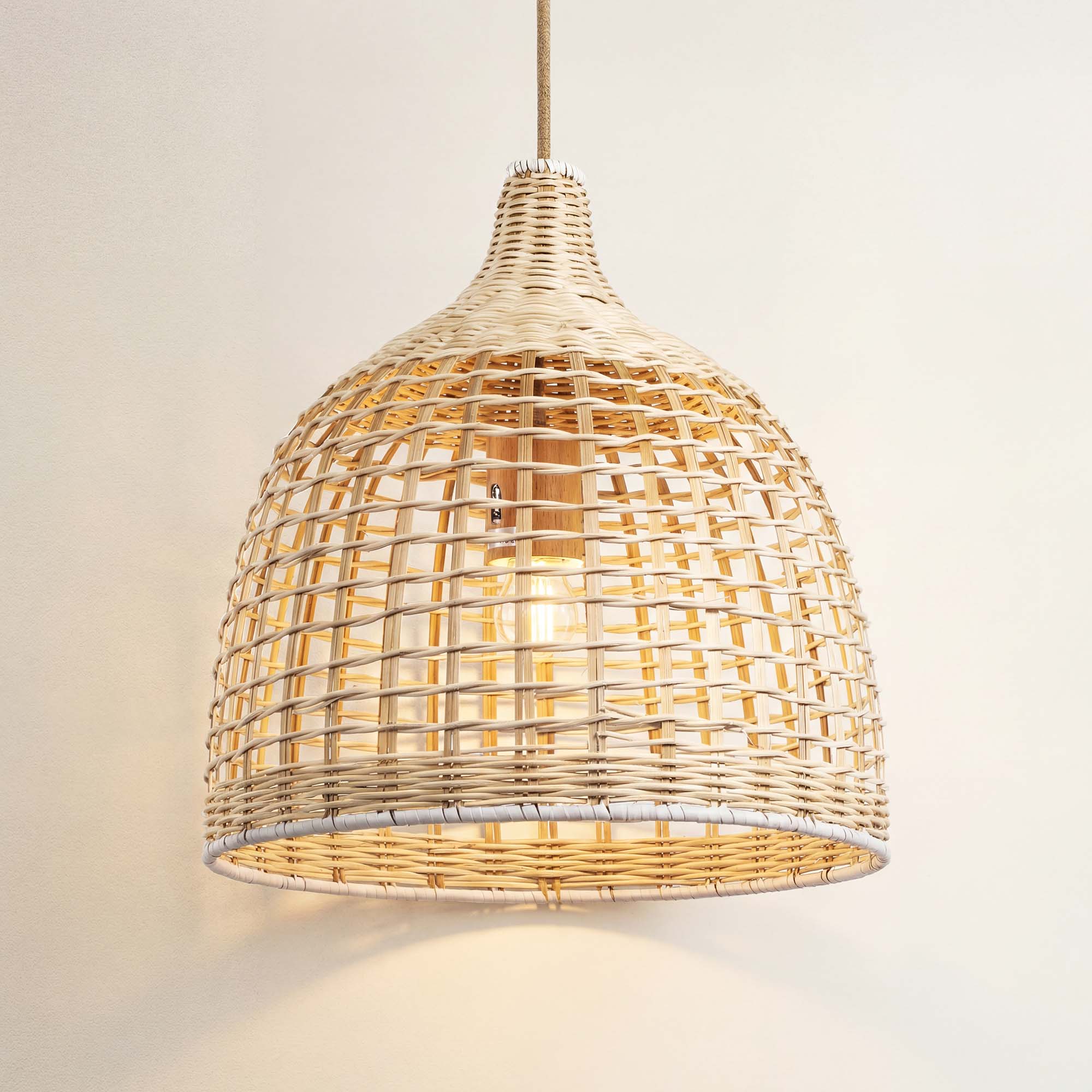
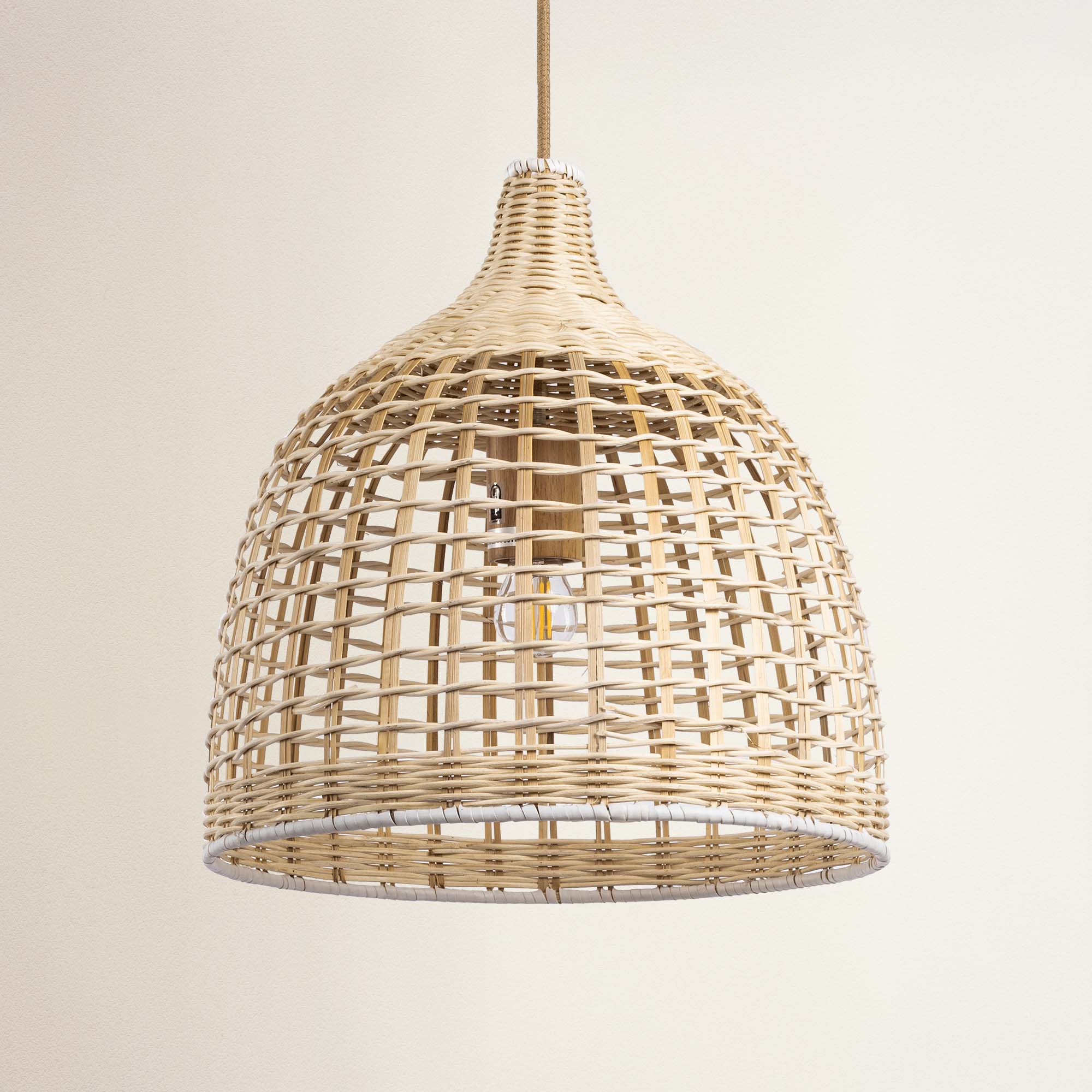
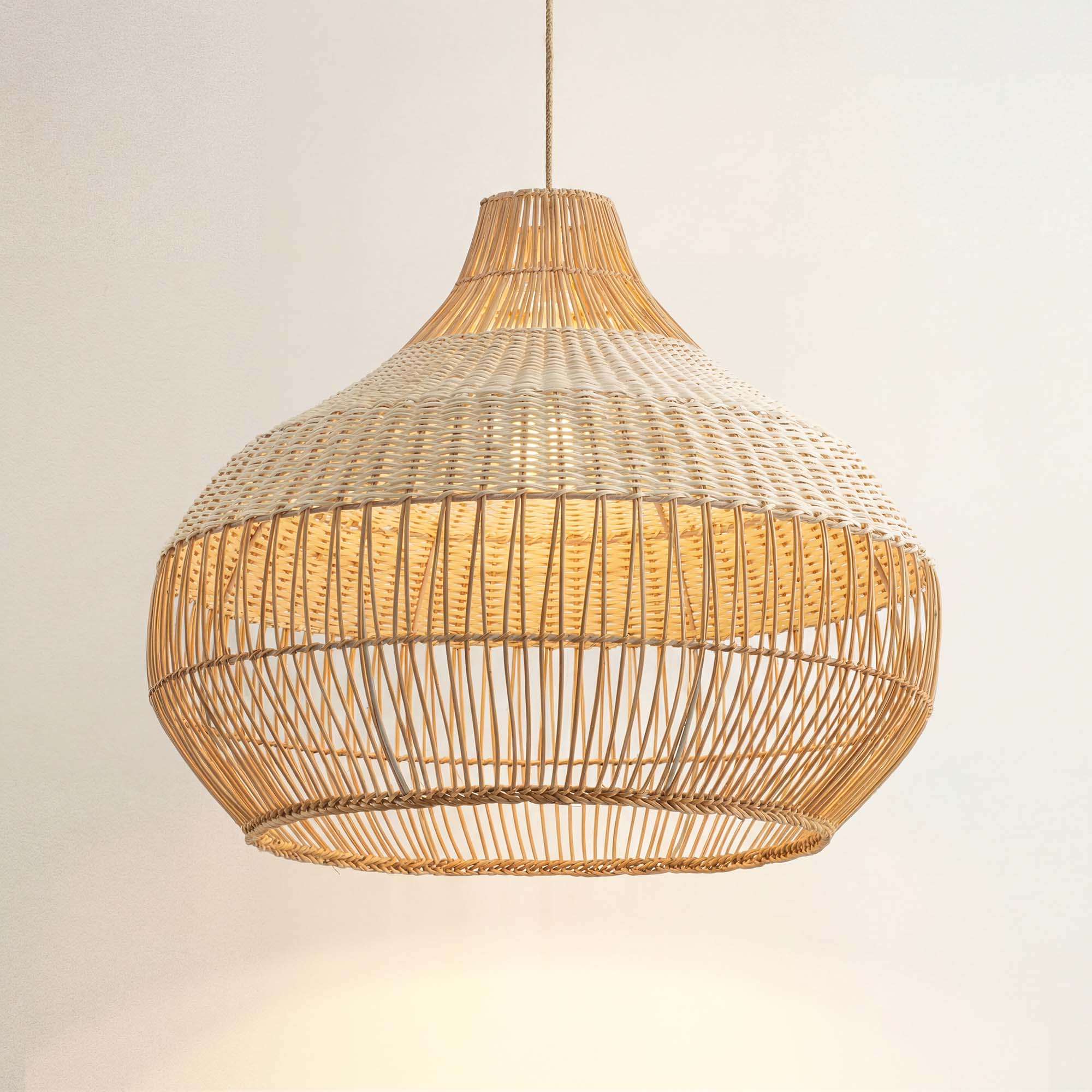
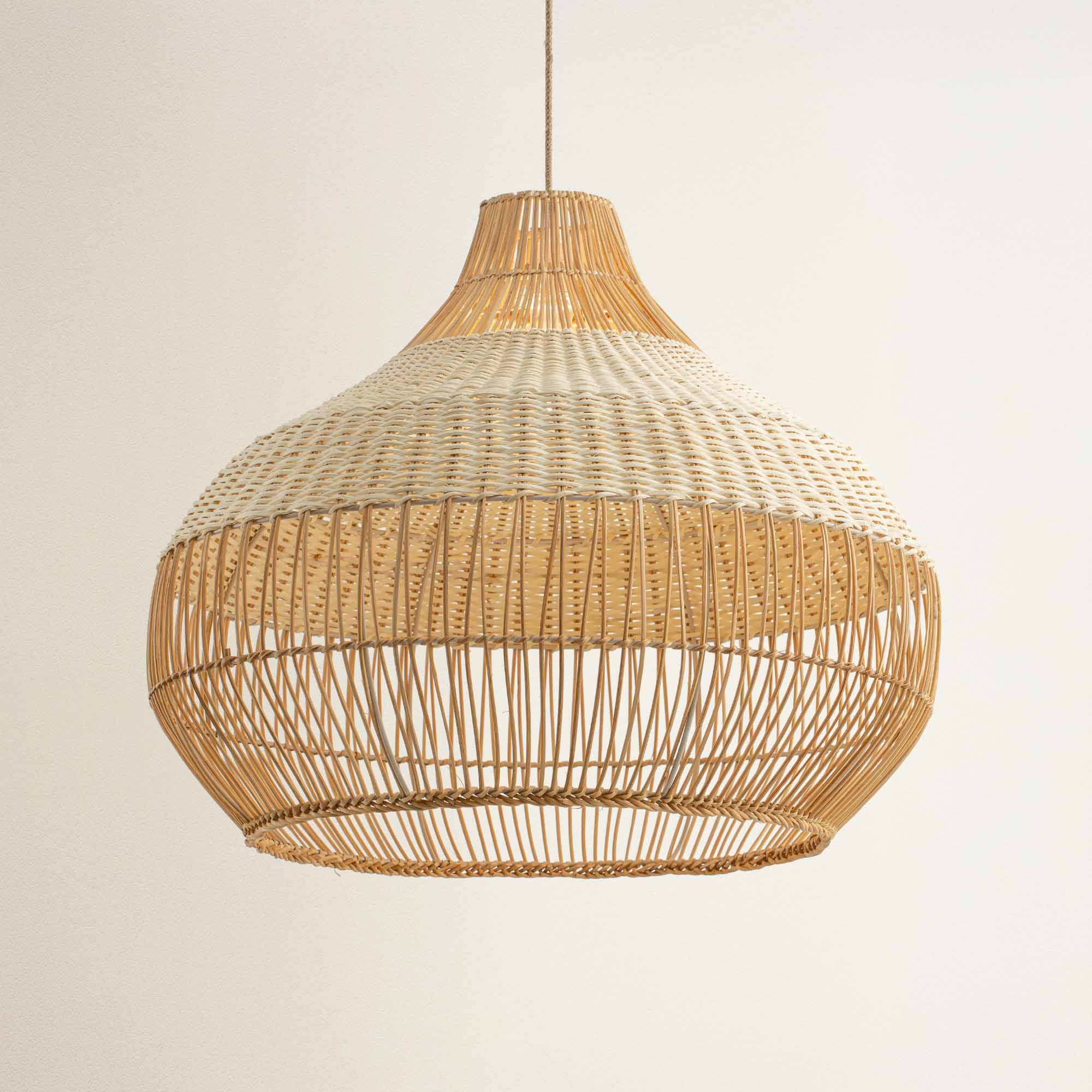
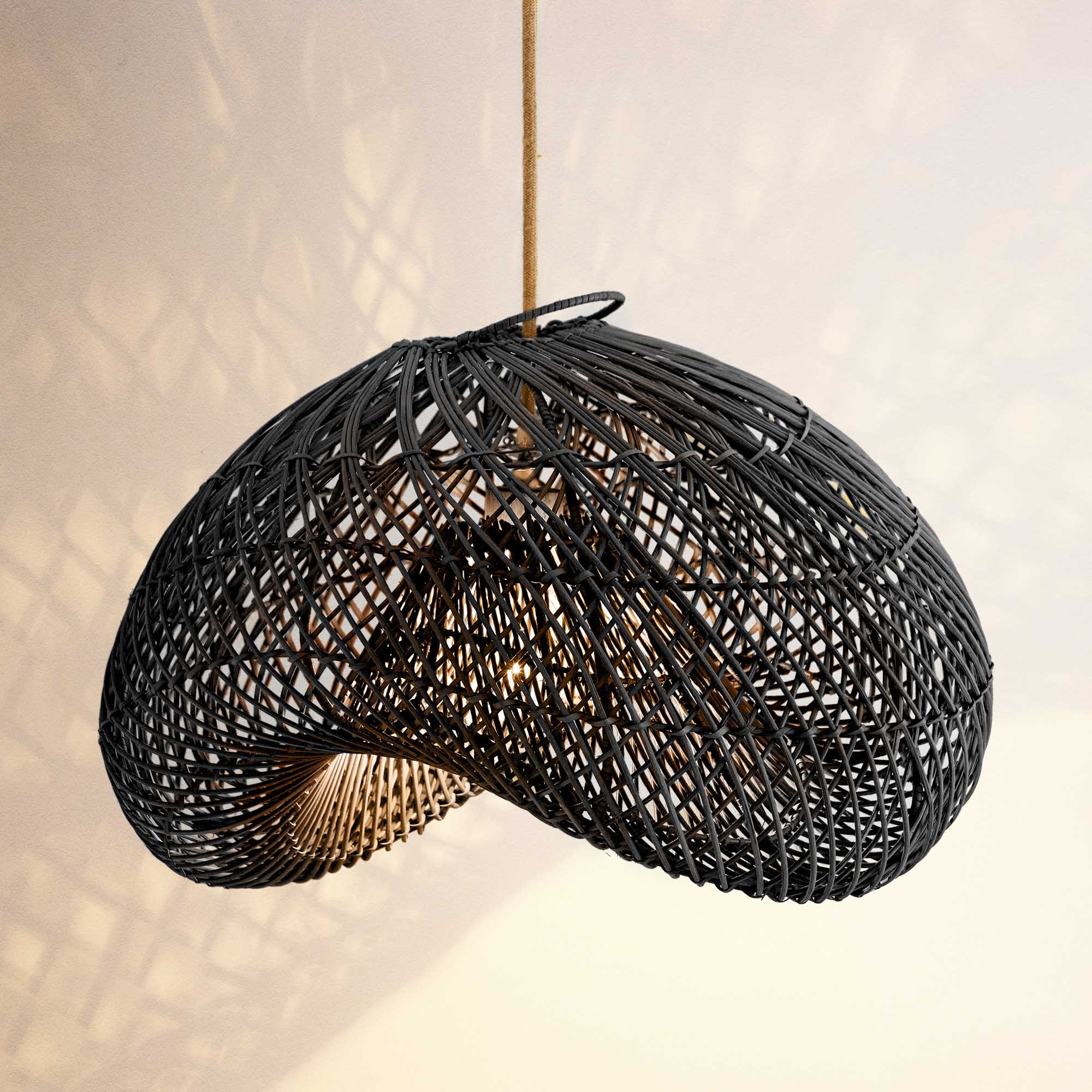
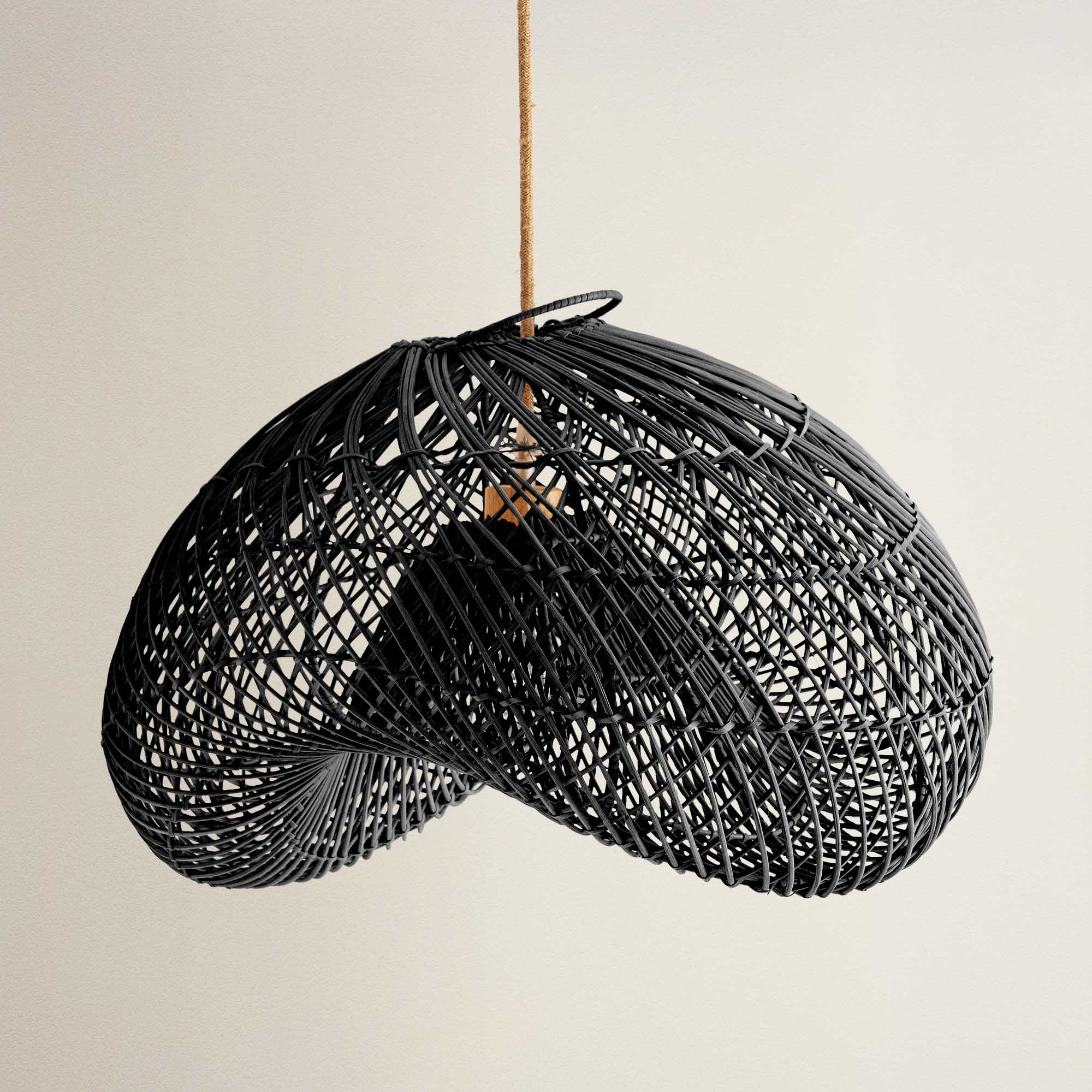
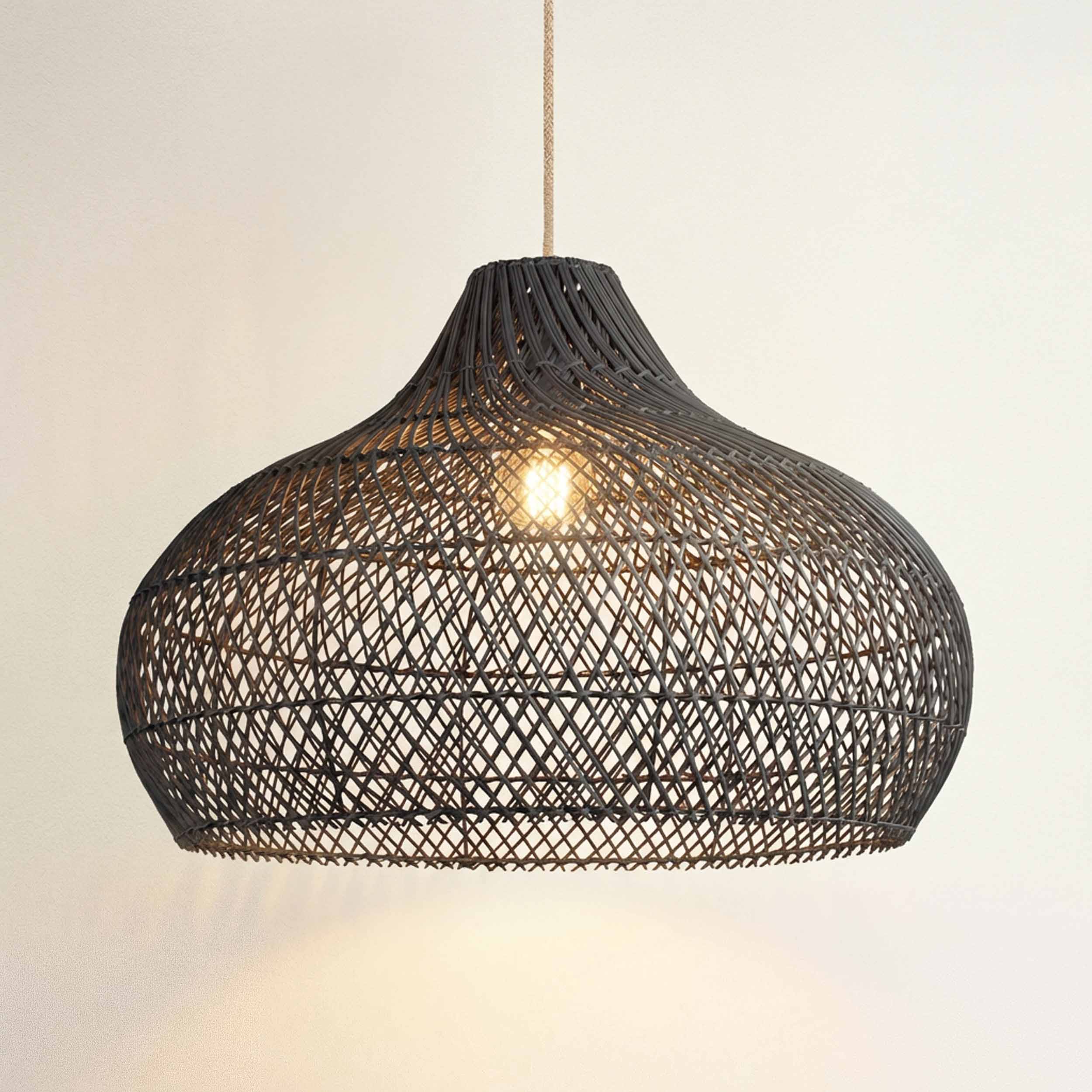
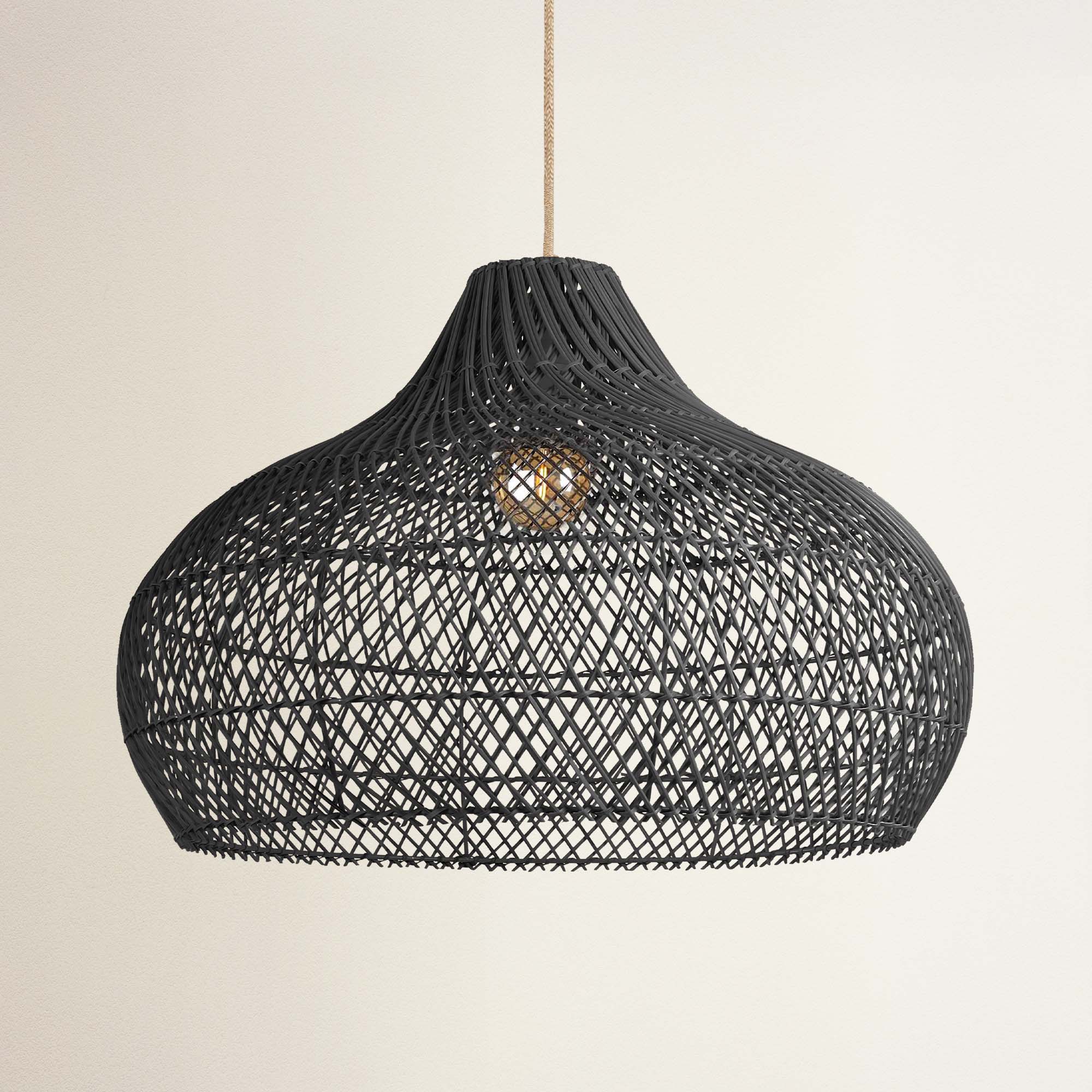
Rattan pendant lights are made from rattan vine - a fast-growing climbing palm found across tropical regions- and are typically handcrafted by skilled artisans. The natural, soothing tones and handwoven texture make them well-suited to Coastal, Boho, Organic Modern, and Japandi interiors.
If you are looking to establish a peaceful, relaxed atmosphere, rattan pendant lights are a strong choice. At Rowabi, each fixture is crafted in collaboration with traditional artisans in Vietnam, with complex designs taking up to 136 hours per piece.
Mini pendant lights
Mini pendants are typically 12 inches wide or less, making them ideal for kitchen islands, smaller dining tables, and bathrooms. They are effective when installed individually over a specific task zone or grouped in a row for even coverage across a longer surface.
Down pendants
Down pendants, also called downlight pendants, are shade pendants (a pendant with a shade or coating that encloses the bulb, made from materials such as rattan, porcelain, copper, or glass) oriented to direct their beam downward in a focused pool.
This reduces glare and eye strain compared to fixtures that emit light in all directions, and makes them well suited to task zones like kitchen islands and desk surfaces.
Shade pendants
Shade pendants use a shade or coating to modify how light leaves the fixture, diffusing it broadly for ambient illumination, or directing it for task use depending on the shade's shape and material. Common shade materials include rattan, porcelain, copper, glass, and fabric, each producing a different quality of light and a different visual character in the room.

Source: Rowabi
Center bowl / inverted pendants
Center bowl pendants, also called inverted pendants, feature a bowl-shaped shade that opens upward, directing light toward the ceiling and upper walls rather than straight down. This produces soft, ambient illumination that adds depth to a room without creating glare at eye level.
Linear pendant lighting
Linear pendant lights feature a long horizontal profile, typically a tube or bar, that provides wide, even coverage over a kitchen island or dining table. They are a particularly good solution for long surfaces where multiple individual pendants would require precise junction box placement.
Read more: A Guide to Linear Pendant Light
Lantern pendant lights
Lantern pendants combine an iconic form with material variety - metal, glass, or wood - to produce a fixture with timeless appeal across style periods. Their enclosed construction suits both indoor and outdoor covered spaces.
Discover: Seraphine Lantern Pendant Light
Cage pendant lights
Cage pendants house an exposed bulb inside a handcrafted wire or metal cage, adding industrial elegance to any space. The light filtering through the frame creates depth and visual texture in the room.
Glass pendant lights
Glass pendant lights offer a wide range of options: clear, frosted, tinted, and hand-blown, providing a clean, modern look while transmitting strong light. They can be hung individually or grouped at varied heights for visual depth.

Chandelier pendant lights
Chandelier pendant lights typically feature multiple arms and bulbs, producing bright, layered light suited to dining rooms, foyers, and large open spaces. Modern versions use LED (light-emitting diode) or fluorescent sources; older styles may use incandescent bulbs.
Keep reading:
Multi-light pendants
Multi-light pendants cluster multiple bulbs, typically three to nine, on a single canopy, creating distributed light suitable for high ceilings and large spaces. Each bulb sits in its own shade or enclosure, allowing the fixture to act as much a statement piece as a light source.
Shade materials
Glass
Glass shades offer the widest range of transparency, color, and texture. Clear glass transmits maximum light and works well for task lighting or showcasing decorative bulbs. Frosted or etched glass diffuses the beam more softly, reducing glare in dining and living rooms.
Metal
Metal shades in steel, aluminum, copper, or brass produce a sleek, modern, or industrial look. Their durability makes them a practical choice for high-traffic areas like kitchens and dining rooms. The finish significantly affects the fixture's aesthetic: matte black reads as contemporary; polished brass reads as warm and elevated.
Plastic
Plastic shades have improved considerably in quality and offer durability, moisture resistance, and versatility at a lower price point. They suit spaces where low maintenance and budget efficiency are priorities.
Fabric
Fabric shades in linen, cotton, or silk diffuse light gently and add a soft, warm quality to the room. They are best suited to living rooms, dining rooms, and bedrooms where the goal is ambient warmth rather than task brightness.

Wood and bamboo
Wood and bamboo shades introduce a natural, organic character to a room. They can be carved, turned, or laser-cut into intricate patterns, and the material's warmth complements most residential palettes. Bamboo in particular is a sustainable material.
Rattan
Rattan shades have become one of the most popular choices in residential pendant lighting due to their natural, handcrafted appearance and coastal-bohemian character. Rattan is typically harvested from tropical climbing palms and woven by hand into shades that filter light warmly and cast gentle shadow patterns through the weave.
At Rowabi, rattan pendant lights are crafted in collaboration with traditional artisans in Vietnam.
Base and Component Materials
Metal
Metal bases in steel, aluminum, brass, or copper are the most common structural choice for pendant lights. Each alloy offers a distinct look; brass reads as warm and elevated; matte black steel reads as modern and restrained, and all are well suited to the weight and heat demands of a hardwired ceiling fixture.
Plastic
Plastic components are lightweight, corrosion-resistant, and cost-effective. They suit humid environments where metal components might oxidize over time.
Ceramic
Ceramic pendant bases and components are often handcrafted, producing unique pieces with distinctive surface texture. Their visual weight and tactile quality make them stand-alone focal points that work best paired with a simple shade.
Crystal
Crystal components refract and reflect light into sparkling patterns, creating a luxury effect that suits formal dining rooms, foyers, and spaces where opulence is the design intention. Crystal is typically paired with polished chrome or brass to reinforce the high-end character.
Glass
Glass is used both as a shade and as a structural component in many pendant designs. Its translucency and versatility in shape and color make it the most widely used transparent material in pendant lighting.
Can you paint pendant lights?
For anyone looking to refresh a fixture without replacing it, painting is a practical and affordable option. Metal pendants with ornate detailing and glass pendants (using glass- and ceramic-formulated paints) respond best to this approach. When painting a pendant, mask off wiring and bulb sockets carefully, apply paint in light layers to avoid dripping, and consider a sealant for durability. Smooth metallic spray paints in copper or champagne gold reflect light elegantly; ombré effects in muted greens or deep reds create a more personal, artistic result.
How to choose the right pendant light for your space
- Kitchen island: Choose small, focused models, cylindrical or globe shapes in glass or metal, that provide bright, directed task light. For a warmer, more natural aesthetic, a rattan pendant light adds texture without competing with the kitchen's other surfaces.
- Living room: Choose adjustable-height pendants for high ceilings that provide soft ambient lighting. Cone or lantern shapes in metal or glass suit the varied layouts of living rooms well.
- Bedroom: Warm, dome- or bell-shaped pendants in wood or fabric encourage relaxation and suit the lower light levels that bedrooms typically call for.
- Outdoor areas: Choose durable fixtures rated for outdoor exposure, cage or lantern styles in brass, stainless steel, or weather-resistant resin. Confirm the damp or wet location rating before installing in a covered or exposed outdoor position.
Dive deeper: How to Choose the Right Pendant Light
What more should you know about pendant lights?
The cost
Pendant light prices range from approximately $50 to $500 or more for a single fixture. Crystal and hand-blown glass tend to sit at the higher end; rattan and bamboo offer a handcrafted quality at a mid-range cost. See our lighting installation cost guide for a fuller breakdown.
The size
A general sizing rule: choose a pendant with a diameter roughly 1/3 the width of the table or island it will hang over. For room-level guidance, add the room's length and width in feet — that number in inches suggests a starting diameter. For a more detailed framework, see our fixture size guide.

Source: Rowabi
The safety
Pendant lights should be installed at least 30 inches above a table or countertop to avoid injury or fire hazards. All Rowabi pendant lights are UL Listed (independently tested to U.S. electrical safety standards by UL).
Products also carry RoHS compliance (Restriction of Hazardous Substances, an EU standard limiting hazardous materials in electronics). If you have young children or pets, consider shades made from less breakable materials or a protective cage around the bulb.
Light bulb type
LED bulbs are the standard choice for pendant lights; they use at least 75% less energy than incandescent equivalents, run cool to the touch, and last far longer. According to ENERGY STAR, LED bulbs can last up to 25 times longer than traditional incandescent bulbs.
Incandescent bulbs produce a warmer, more orange-toned glow at the cost of higher energy use and more frequent replacement. The bulb base depends on the fixture: E26 (the standard medium base, common in most North American pendants) and E12 (a smaller candelabra base, common in mini pendants and multi-arm styles) are the most frequently encountered.
Per the Illuminating Engineering Society (IES), recommended lumen output varies by use:
| Use case | Lumens | Color temperature |
| Task (island, desk, reading) | 700–1,300 lm | 2700–3000K warm white |
| Ambient / accent | 300–700 lm | 2700–3000K warm white |
Color and finish
Match the finish to the room's existing metal tones: cabinet hardware, faucet, and appliance accents. Metallic finishes like chrome or brass add warmth and sophistication; matte black or white conveys a modern, clean aesthetic. For natural or minimalist palettes, earthy tones in rattan or bamboo complement most residential settings.
Kitchen pendant lighting
Pendant lights are the most popular choice for kitchen island lighting. Choose fixtures that provide adequate task lighting for food preparation; 700–1,300 lumens per pendant is the appropriate range. Position one pendant for approximately every 2 feet of island length.
Pendant lights vs. flush-mount lights
Pendant lights hang down from the ceiling on a cord or chain, creating a dramatic focal point and bringing light closer to the surface being illuminated. Flush-mount lights mount directly against the ceiling and provide general ambient light across the room. In rooms with ceilings under 8 feet, a flush-mount is usually the more practical choice; pendants suit 8-foot ceilings and higher, particularly above fixed surfaces like islands and dining tables.

Source: Rowabi
Additional features to consider
Look for adjustable height options to accommodate varying ceiling heights. Choose dimmable fixtures (compatible with a dimmer switch when paired with a dimmable-rated bulb; always check the bulb packaging) for customizable lighting levels across different activities. Smart-enabled sconces add voice control or app-based scheduling for households that already use a connected lighting system.
Where to buy pendant lights online
Specialty lighting stores
Specialty retailers focus on lighting fixtures and offer curated selections across styles, materials, and price points. Rowabi specializes in handcrafted rattan pendant lights made by skilled artisans in Vietnam, at mid-range price points with UL Listed safety certification. Other options include Lumens and Lampsplus, which offer broader product ranges across multiple brands.
Online marketplaces
Amazon and Etsy offer a wide range of options from multiple sellers, often at competitive prices. When shopping on marketplaces, review seller ratings and read product specifications carefully to confirm material, safety certification, and bulb compatibility before purchasing.
FAQs
Are pendant light lengths adjustable?
- Yes, most pendant lights ship with adjustable cords or chains that let you set the hanging height during installation. Some styles include rigid rods in multiple lengths, which can be combined or removed to reach the desired drop.
Are pendant lights dimmable?
- Many pendant lights are compatible with dimmer switches when paired with a compatible dimmable LED (light-emitting diode) bulb. Confirm this in the product specifications before purchasing; not all fixtures or bulbs support dimming.
Should pendant lights be centered over a kitchen island?
- Centering pendant lights over the island ensures even light distribution across the full work surface and creates a balanced, intentional visual composition. For a long island, a row of evenly spaced pendants centered along the island's centerline is the standard approach.
How high should pendant lights hang above the floor?
- Hang pendant lights 60–70 inches above the floor in a room with 8-foot ceilings. For higher ceilings, add 3–6 inches for each additional foot of ceiling height. This places the fixture at or slightly above standing eye level, which provides good ambient coverage without creating glare.
Can pendant lights be used in a bathroom?
- Yes, provided the fixture is rated for the installation environment. Look for pendants described as damp-rated (suitable for high-humidity areas without direct water contact, such as ventilated bathrooms) or, for zones near a shower or tub, wet-rated fixtures.
Can you hang pendant lights from a track?
- Pendant lights can be connected to a compatible track lighting system using a pendant adapter, which allows the fixture's position to be adjusted along the track over time.
How many pendant lights should you hang over a kitchen island?
Use one pendant light for every 2 feet of island length. A 6-foot island typically suits three pendants; a 4-foot island suits two. The final count should be adjusted based on shade diameter; wider shades require more space between fixtures and may reduce the total count on a given island.How high should pendant lights be above a kitchen island?
- Pendant lights should hang 28–34 inches above the surface of a kitchen island. This height delivers focused task light to the countertop while keeping the bottom of the shade out of the direct line of sight when standing at the island.
Conclusion
Pendant lights bring light down into a space, anchor a room visually, and work across nearly every design style, from streamlined modern to handwoven coastal. The right fixture depends on the room's scale, the task it needs to serve, the ceiling height, and the material palette already in place.
For handcrafted rattan pendant lights designed for coastal, organic modern, and warm-neutral interiors, browse the Rowabi pendant lighting collection, or read our full pendant lighting guide for room-by-room selection advice.