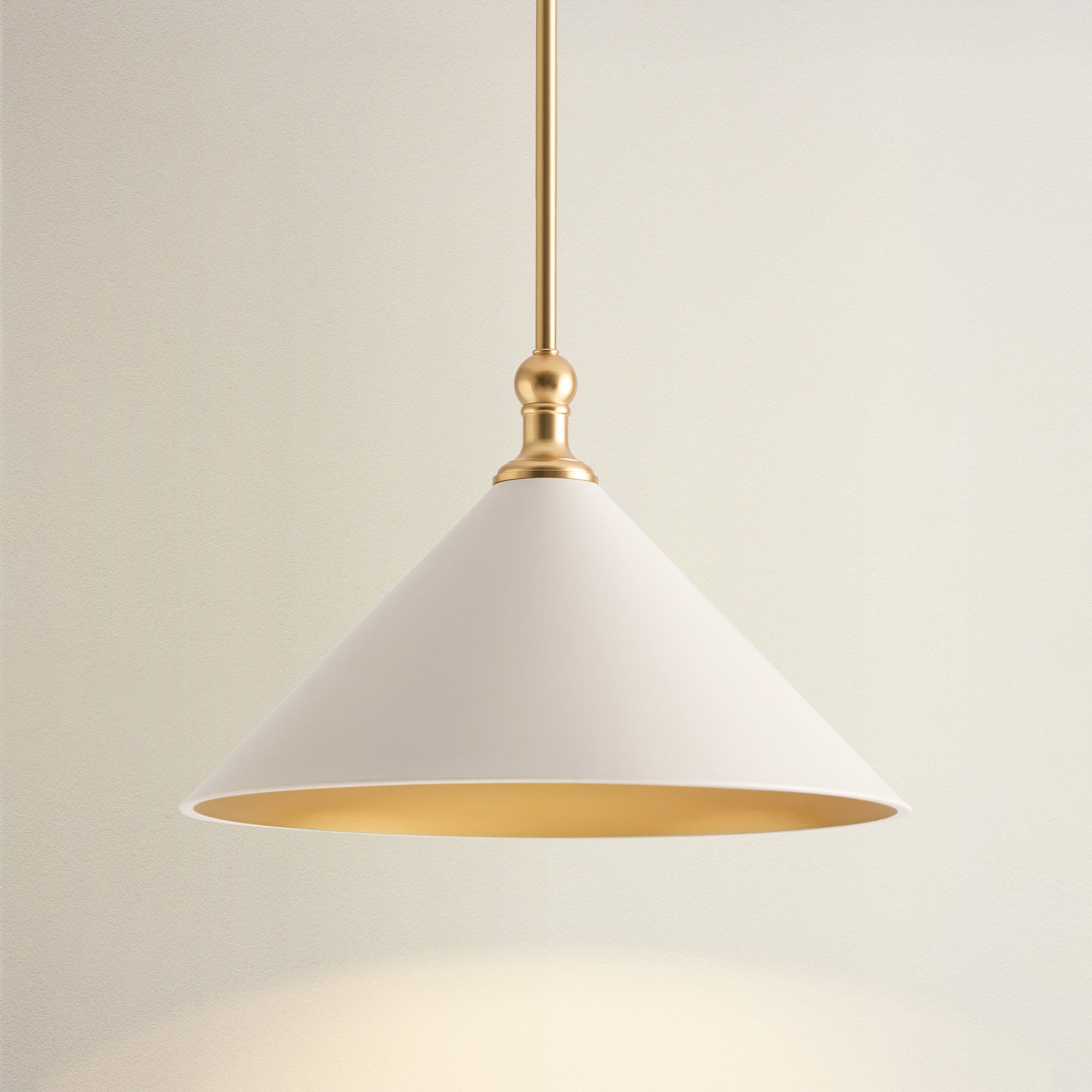
According to the current product page, the Giza Cone Pendant Light is specified for110V. The page does not currently mention a 220V-rated version. If you need this fixture for a 220V electrical setup, the most important step before ordering is to confirm voltage availability directly with Rowabi, rather than assuming compatibility based on style or general fixture type.
The real question here is not whether the light looks right for your space. The question is whether the listed electrical specifications match your home's voltage.
What the product page currently lists
The Giza Cone Pendant Light's electrical and installation specifications, as currently published on the product page, are:
- Input voltage: 110V
- Maximum wattage: 60W
- Installation type: Hardwire
- Bulb base: E26
- Rod length: 60" adjustable
- Certification: UL Listed
These are the confirmed public specifications. There is no mention of dual-voltage capability (such as 110-240V), a separate 220V-rated version, or international variants on the current product page.
Does the product page mention a 220V option?
No, a 220V-rated version of the Giza Cone Pendant Light is not currently stated on the public product page.

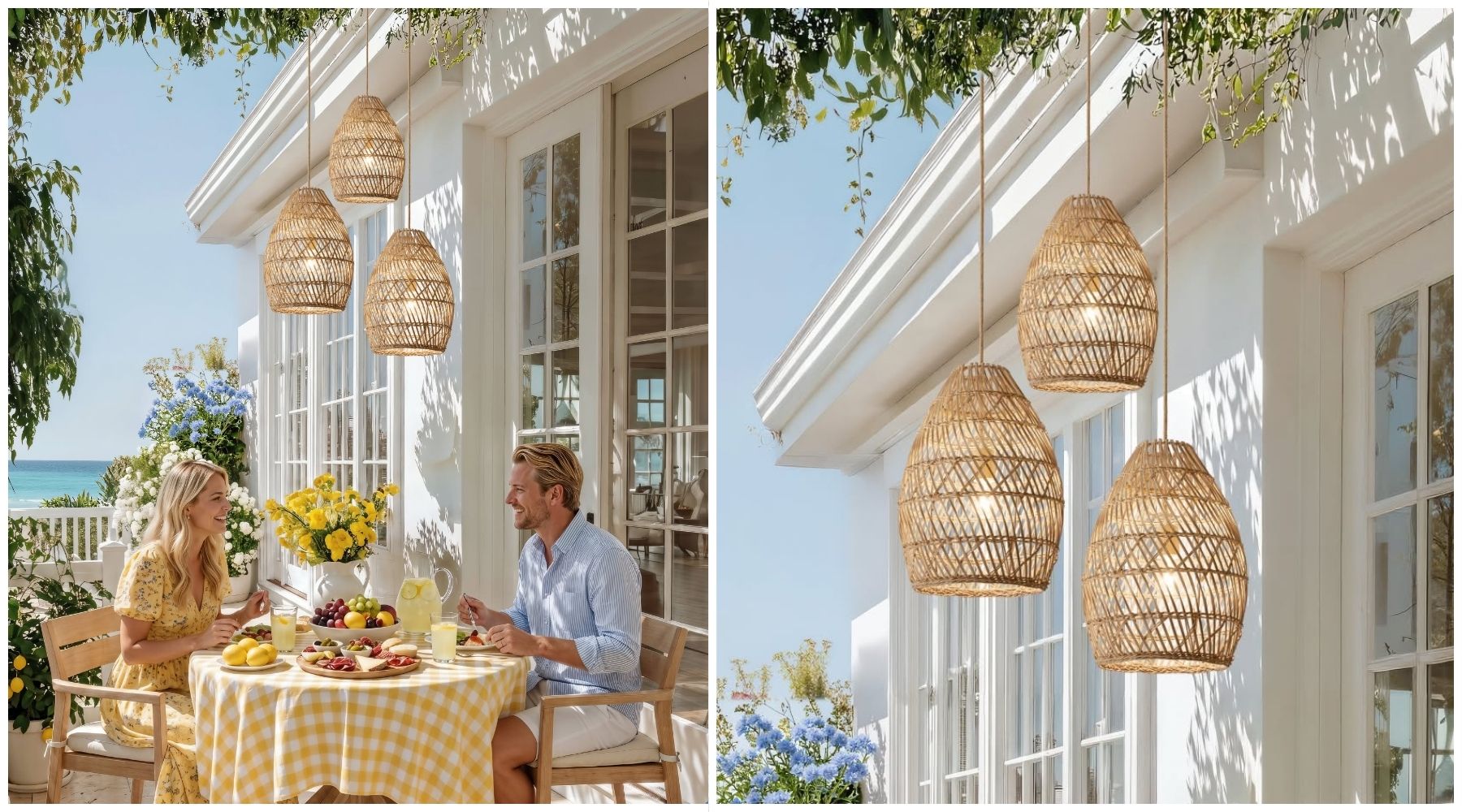
Image by Rowabi’s customer.
This does not necessarily mean a 220V option doesn't exist. It means it has not been publicly confirmed in the available product specifications. For a hardwired fixture, this distinction matters. Installing a 110V-rated fixture on a 220V circuit is not just a compatibility issue; it is a safety risk that can damage the fixture, trip circuit breakers, or create a fire hazard.
Until the Rowabi team confirms voltage compatibility, it is not possible to say with certainty whether a 220V version is available, planned, or supported via an adapter or transformer setup.

Why voltage matters before ordering a hardwired pendant
For plug-in lamps and accessories, voltage mismatches are often manageable with a simple step-down transformer. For hardwired pendant lights, the situation is more involved.
A hardwired fixture is permanently connected to a home's electrical circuit. If the fixture is rated for 110V and the circuit delivers 220V, the result is overvoltage, which typically causes immediate bulb failure and can damage the fixture's internal wiring over time. In some cases, it creates a safety hazard, particularly with unshielded or natural-fiber fixtures like the Giza's metal cone shade.
This is why voltage is the first specification international buyers should verify before considering size, cord length, or finish. A fixture that looks right in every other way is the wrong choice if it is not rated for the local electrical standard.

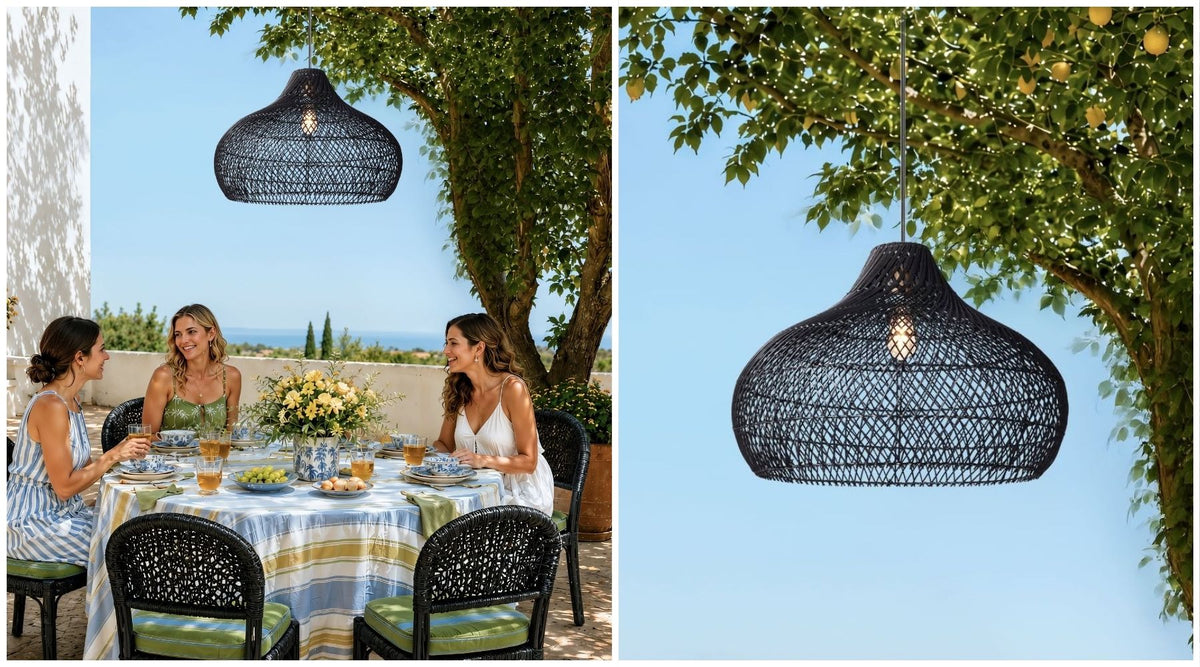
Image by Rowabi’s customer.
Countries that commonly use 220-240V systems include much of Europe, the Middle East, Asia, Africa, and Australia. While the United States and Canada use 110-120V systems. If you are purchasing the Giza Cone Pendant Light for use outside North America, confirming voltage compatibility is not optional.
What to confirm before ordering
Before placing an order, if you need a 220V-compatible fixture, here are the specific questions worth confirming with the Rowabi team:
- Is a 220V-rated version of the Giza Cone Pendant Light available? The product page currently lists 110V only. Ask whether a 220V variant is offered or can be sourced.
- Is the fixture dual-voltage (110–240V)? Some fixtures are internally compatible with both voltage ranges. If the Giza has dual-voltage components, this would need to be explicitly confirmed, not assumed from the 110V listing.
- Can a step-down transformer be used as an alternative? If a native 220V version is not available, a step-down transformer (which converts 220V to 110V at the outlet level) may be a workaround, but it adds complexity to a hardwired installation and should be discussed with a licensed electrician in your country.
- Does the E26 bulb base apply in your region? E26 is the standard North American medium screw base. Many 220V markets use E27, which is physically similar but technically a different standard. Confirm whether the socket will accept the bulbs available in your area.
Final answer
The Giza Cone Pendant Light is currently listed as an 110V fixture. A 220V version is not confirmed on the public product page at this time. If you need this fixture for a 220V setup, contact the Rowabi team directly before ordering to confirm whether a compatible version is available.
→ View the Giza Cone Pendant Light
Free delivery between Oct 16 - 17 on orders $200+
45-Day Return
→ Contact Rowabi for voltage compatibility questions