

How Far Should Recessed Lights Be From Wall?
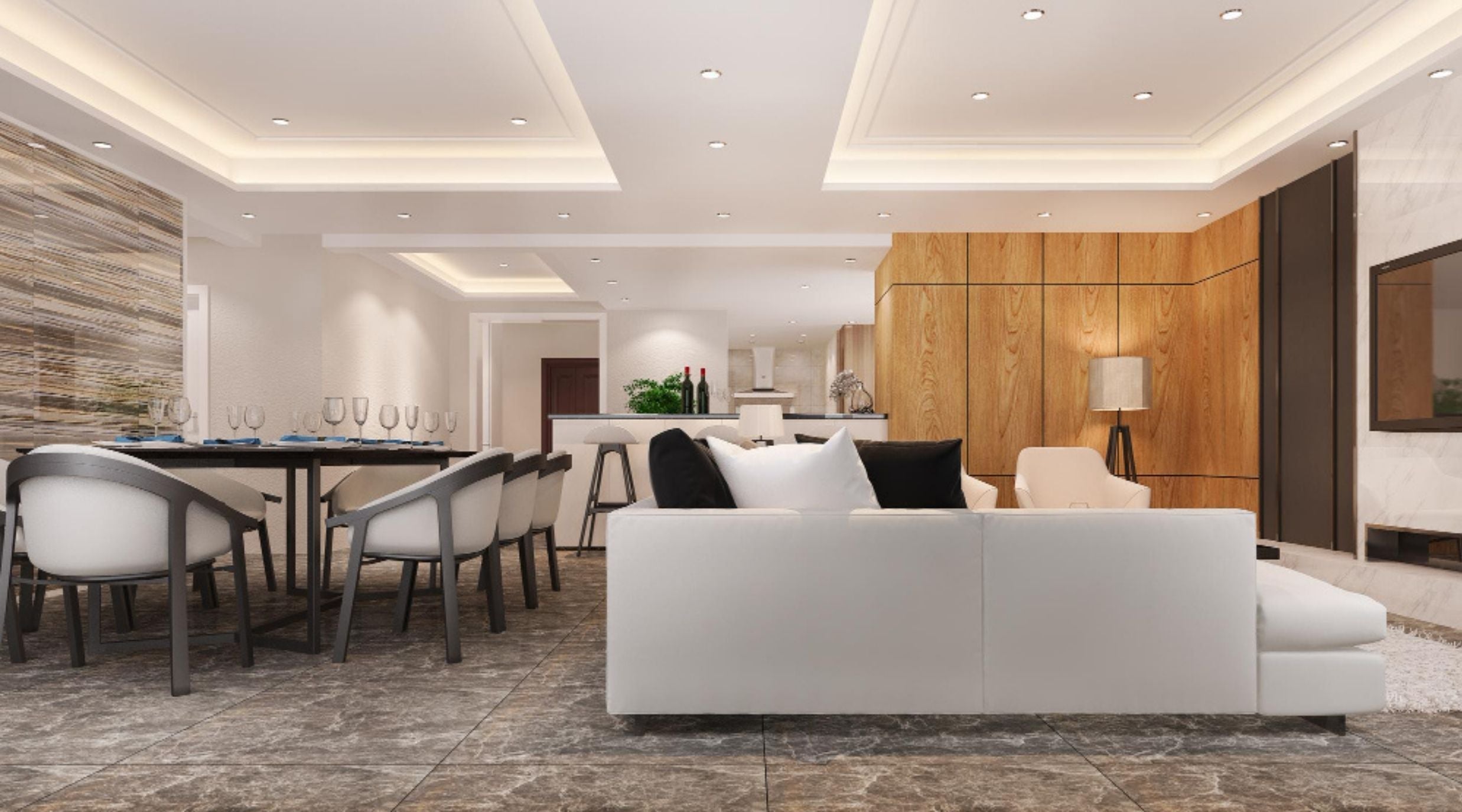
Determining the distance between a recessed light and the wall is crucial for achieving the perfect balance between even ambient lighting and targeted task illumination. Noah Miller, the lighting expert at Rowabi, explains that the general rule is simple: the placement should be proportional to your ceiling height.
Key takeaways
- Ambient Light Rule: For general, even illumination, place recessed lights from the wall at a distance equal to half the ceiling height (e.g., 4 feet from the wall for an 8-foot ceiling).
- Task Lighting (Closer Placement): When lighting countertops (like in a kitchen), fixtures should be positioned closer to the wall (typically 18 to 36 inches) to project light onto the work surface and avoid casting shadows behind you.
- Accent Lighting (Wall Washing): To highlight a wall, artwork, or textured surface, lights should be positioned closer (1.5 to 3 feet) from the wall to create a soft "wash" effect.
- Calculating Spacing: A proper layout uses the formula: (Distance between lights in a row) divided by 2 equals the distance from the end wall.
- Plan and Visualize: Always sketch your lighting layout on paper or use temporary markers on the ceiling or floor to visualize the light spread before beginning the final installation.
Browse all Rattan Pendant Lights and find your match.
The importance of proper light placement
Lighting placement doesn’t just brighten a room; it transforms it. Whether you’re looking to spotlight your favorite features or banish gloomy corners, proper placement ensures every detail of your space is as functional as it is fabulous.
RELATED:
Enhancing aesthetic appeal
Strategically positioned recessed lighting adds a touch of sophistication to any room. By highlighting architectural features or artwork and evenly distributing light, you can elevate the space's overall ambiance.
Ensuring functional illumination
Proper light placement ensures your room is both beautiful and practical. It eliminates dark corners, reduces glare, and provides the appropriate brightness for various tasks, whether it’s cooking, reading, or relaxing.

Source: PC Photography via Canva: https://www.canva.com/design/DAG36oP-OEw/j7Pg7vBArwLcGpyxs0e_rA/edit#
How to calculate the best recessed lighting layout
Getting your recessed lighting layout just right can make all the difference in transforming your space from merely functional to truly fabulous. Let’s break it down into steps that ensure your lighting is both stylish and practical.
Clarify your lighting objective
Before diving into the layout, decide what you want your recessed lights to achieve:
- Ambient lighting: Provides general illumination throughout the room.
- Accent lighting: Highlights specific features, such as paintings, shelves, or architectural elements.
- Task lighting: Focuses on specific areas for activities such as reading, cooking, or working.

Careful calculation of the layout of recessed lights will help create harmony in the space while optimizing lighting efficiency. Source: Flixx Studio via Canva: https://www.canva.com/design/DAG36oP-OEw/j7Pg7vBArwLcGpyxs0e_rA/edit#
Begin with a preliminary sketch
Draw a basic outline of your room and identify key areas that require illumination. Include dimensions and any furniture or features that might influence placement. Check out our guide for choosing the recessed lighting fixtures.
Prevent shadowy corners
Position recessed lights close enough to walls (about 2-3 feet) to avoid dark, shadowy areas, especially in rooms with lower ceilings.
Tailor the layout for each room
After addressing shadowy corners, it’s time to focus on how different spaces demand unique recessed lighting layouts. Let’s explore how to customize the placement for every room in your home.
Understanding the "spacing formula"
For even light distribution, the general rule is to space lights approximately half the ceiling height apart. For instance, with an 8-foot ceiling, place lights about 4 feet apart.
With this spacing formular, you will create a balanced illumination without excessive brightness or dark patches. This formula also adapts to different ceiling heights, ensuring flexibility and practicality in various room sizes and layouts.

A sketch of the recessed lights layout for the living room. Source: Svproduction via Canva: https://www.canva.com/design/DAG4epaQWJc/a8hms0X05B8ys16kW5hD7g/edit#
Steps to calculate the layout for your space
- General living areas: Space lights evenly to ensure balanced illumination. For example, in an 8-foot ceiling room, lights spaced about 4 feet apart work well. In larger areas, consider adding additional fixtures to ensure no section feels under-lit.
- Emphasizing a focal point: Direct lights toward features like fireplaces or artwork to draw attention. For example, position lights about 2-3 feet from the focal element and angle them at 30 degrees to achieve optimal highlighting without glare.
- Wall-washing techniques: Position lights 2-3 feet from walls and use wall-wash trims for a smooth, even glow across surfaces. For higher ceilings above 10 feet, consider spacing lights 3-4 feet from the wall to maintain an even spread of light without harsh shadows.
- Kitchens: Focus on task lighting above counters, sinks, and islands, while maintaining ambient light. As a common guideline, space recessed lights 24-36 inches apart, ensuring direct lighting for prep areas and evenly distributed illumination across the room.
It's all in the details. Discover them now.

- Living rooms: Combine general lighting with accent lighting to create a cozy atmosphere. For example, space recessed lights 4-6 feet apart in an 8-10 foot ceiling room to ensure even lighting without creating overly bright spots.
- Dining areas: Highlight the table with task lighting and ensure even ambient light around the space. Typically, recessed lights should be spaced 3-4 feet apart, with task lighting directly above the table for a warm and focused glow.
- Basement: Use a combination of ambient and task lighting to combat the lack of natural light. Space recessed lights approximately 4-5 feet apart in lower ceilings and consider slightly wider spacing for ceilings over 8 feet to ensure uniform brightness without overcrowding.
Space criterion considerations
Consider the size, purpose, and ceiling height of the room when finalizing the layout. For example, in general living spaces, spacing lights about 4 feet apart may work well, while larger rooms with higher ceilings may benefit from lights spaced 5-6 feet apart.
Ensure adequate spacing between lights to avoid overlapping or over-lighting.
Finalizing your lighting plan
Test your layout with temporary light sources before installation to ensure optimal placement and brightness.
Light up your life now
How far apart should recessed lights be?
Finding the perfect spacing for recessed lights is all about balance. Let’s explore the key factors that influence this decision to ensure your lighting plan is both functional and visually appealing.
- Influence of wattage: Higher-wattage bulbs may require wider spacing to avoid excessive brightness. For example, a 75-watt bulb might need 5-6 feet of spacing, while a 50-watt bulb could work with 4-5 feet, ensuring the room is evenly lit without being overpowering.
- Room length: Larger rooms may need additional fixtures spaced strategically to cover the area.
- Proximity to walls: Maintain a 2-3 foot distance from walls to avoid shadows and uneven lighting.
- Room width: Ensure even spacing across the room’s width for a balanced look. For instance, in a 10-foot-wide room with an 8-foot ceiling, placing lights 4-5 feet apart across the width ensures consistent illumination without overcrowding or leaving dim spots.
Additional lighting tips
- Embrace the use of dimmers: Dimmers add versatility, allowing you to adjust light levels based on the time of day or activity.
- Avoid shadows in the corners: Ensure lights are positioned correctly to minimize dark areas.
- Align trim style with room decor: Choose trims that complement your room’s design, whether modern, traditional, or eclectic.
Conclusion
Properly spacing recessed lights from walls is key to achieving a well-lit, aesthetically pleasing room. Whether you’re illuminating a cozy living space or a functional kitchen, following these guidelines will ensure balanced lighting and enhance your home’s ambiance.
Ready to get started? Explore Rowabi’s range of recessed lighting solutions for high-quality fixtures that fit any space. Brighten your home and bring your vision to light!




Leave a comment
This site is protected by hCaptcha and the hCaptcha Privacy Policy and Terms of Service apply.