


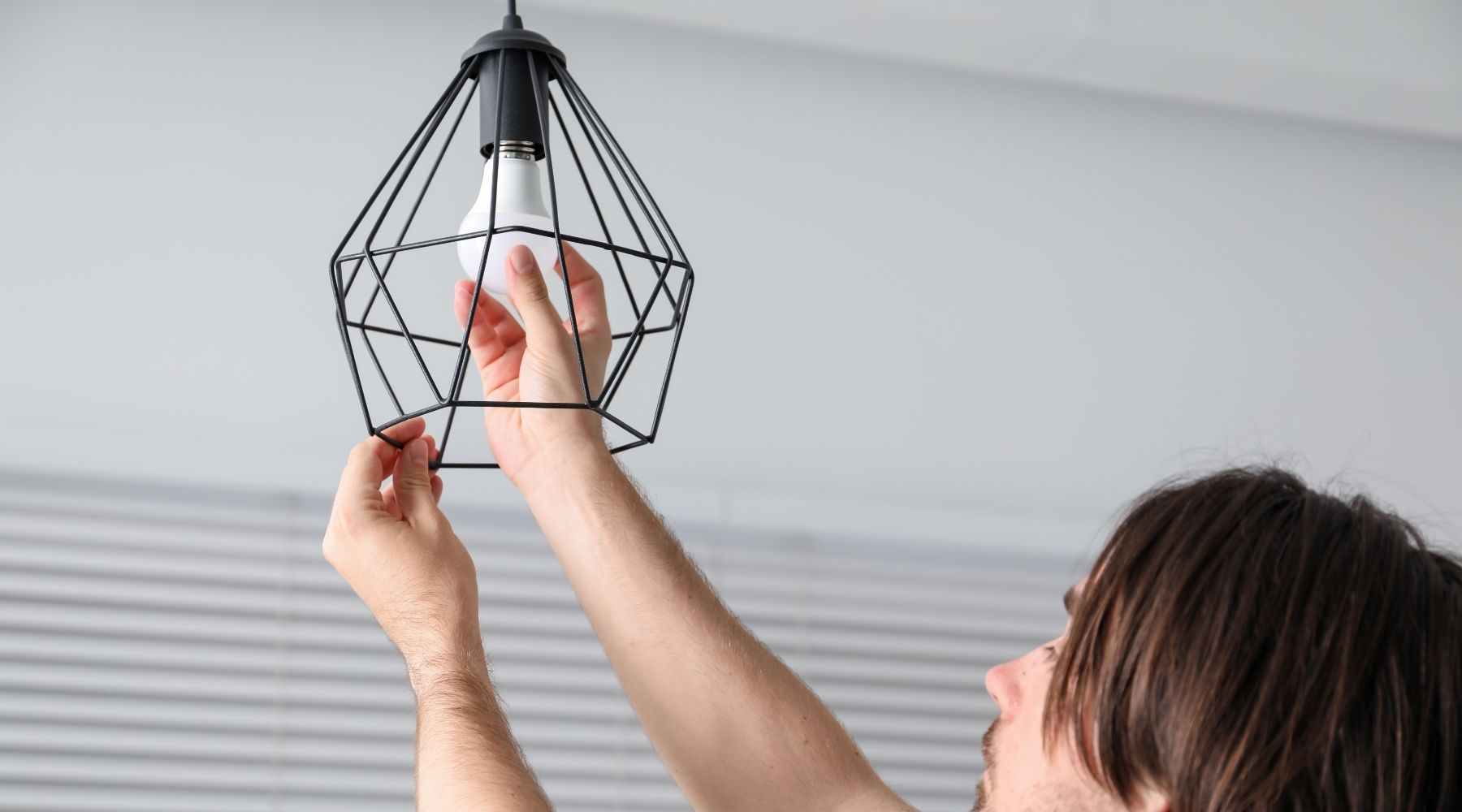
For specialized fixtures like recessed cans or outdoor lights, the process involves minor extra steps to ensure proper installation and longevity.
Key takeaways
Standard Bulb Swap:
- Safety: Always turn the light switch OFF and the power OFF at the circuit breaker. Allow the old bulb to cool.
- Compatibility: Select an LED with the same base type (e.g., E26/E27).
- Brightness Match: Match the old incandescent wattage to the new LED's lumens (e.g., $\sim 800$ lumens for a 60W equivalent).
- Function: Use dimmable LEDs in dimmable fixtures.
Recessed Light Conversion:
- Kits: Use an LED retrofit kit for existing recessed can lights.
- Installation: Power off, remove the old trim/bulb, screw the LED adapter into the socket, and secure the new LED unit with spring clips.
Outdoor/Landscape Tips:
- Corrosion Protection: Apply a thin layer of dielectric grease to the pins/prongs of specialty bulbs (like MR16) to prevent corrosion.
- Sealing: Ensure moisture-sealing O-rings are in place, lubricated, and in good condition for weather resistance.
Ready to elevate your home? Explore our curated designs here.
Which kind of LED light bulb should you choose for your home?
Choosing the right LED light bulb for your home involves considering a series of essential factors like color temperature, energy efficiency, and bulb shape. By understanding these key aspects, you can select and obtain the ideal LED bulb to suit your own tastes and preferences.
Tone is measured in Kelvins
Color temperature, which influences the tone of lighting, is measured in Kelvins (K).
- Lower kelvin values (around 2700K - 3000K) produce a warm, yellowish light, which is ideal for a cozy atmosphere. The tone is similar to candlelight or traditional bulbs.
- Higher kelvin values (4000K - 5000K) emit a cooler, bluish light, which is better suited for task-oriented areas. Above 4100K is reaching pure sunlight.
- Neutral kelvin values (3000K - 4000K) meanwhile present a neutral white lighting, offered by energy-saving bulbs.

Color temperature is measured in Kelvins (K). Source: @tang90246 via Freepik: https://www.freepik.com/author/tang90246
The angle of the light beam
The angle of the light beam, also known as the beam angle, is a crucial factor in determining how the light from a bulb is distributed in a space.
Measured in degrees, this angle helps you understand whether the light will cover a small, focused area or spread out over a larger space.
- Narrow beam angles (15° to 30°): These angles are perfect for task lighting or accent lighting where you need concentrated light on a specific area, such as highlighting artwork, architectural details, or reading spaces. The narrow beam focuses light, making it appear brighter and more intense within a limited area.
- Wide beam angles (Above 60°): Wide beams are ideal for general lighting purposes, like illuminating a room evenly. This angle spreads the light over a larger area, providing a softer, more diffused glow that reduces shadows and creates a comfortable ambiance.
The power equivalence of light bulbs and LEDs
The power equivalence between traditional bulbs and LEDs indicates how much light (measured in lumens) an LED bulb produces compared to an incandescent bulb of a certain wattage. For example, a 60-watt bulb can be replaced by a 12-watt LED bulb to achieve similar brightness.
| BULB TYPES/ LUMENS |
STANDARD |
HALOGEN | CFL | LED |
| 450 | 40W | 29W | 9W | 8W |
| 800 | 60W | 43W | 14W | 13W |
| 1100 | 75W | 53W | 19W | 17W |
| 1600 | 100W | 73W | 23W | 20W |
| RATED LIFE | 1 year | 1-3 years | 6-10 years | 15-25 years |
| SAVING | No | up to 30% | up to 75% | up to 80% |
This allows for the same light output while using significantly less energy, leading to cost savings and reduced environmental impact. When choosing LED bulbs, focus on lumens rather than watts to ensure you're getting the desired brightness with improved energy efficiency.
How to replace incandescent light bulbs with LEDs?
Replacing incandescent light bulbs with LED bulbs is a simple process that offers significant energy savings and longer bulb life.
To begin, identify the incandescent bulbs you wish to replace and choose LED equivalents by considering several key factors. Ensure that the LED bulb's base type matches the socket in your existing fixture. Compare lumens, not watts, to determine the brightness level you desire.
Don't let your favorite piece sell out. Secure yours now.


Select a color temperature that matches your preferred lighting tone, measured in Kelvins. If your fixture is dimmable, make sure to choose dimmable LED bulbs and verify compatibility with your current dimmer switch.
How to replace energy-efficient light bulbs with LED light bulbs?
Compared to LED bulbs, energy-efficient bulbs consume more electricity and have a shorter rated life. As we replace traditional bulbs with LEDs, we can apply the same process to the replacement of energy-efficient light bulbs.
You do not have to change your house lighting system, but select the bulbs based on certain elements: fixture socket, brightness, color temperature, and dimming.
How to replace halogen light bulbs with LED light bulbs?
You can directly swap out halogen light bulbs for LEDs bulbs, but should take notice of some certain types of installation which may require additional changes.
Replacing double - ended halogen with LEDs
Double-ended halogen bulbs can be directly replaced with GU10 LED bulbs because they share similar socket connectors and operate at the same voltage (220-240V). This makes the swap easy without the need for a transformer.
 Source: Rowabi's customer.
Replace bi-pin halogens with LEDs
Bi-pin halogens have GU5.3, an MR16 connector, which is mostly used in bathrooms, living rooms, and hallways. To replace these halogens with LEDs, you need a transformer to convert the house’s voltage (normally 220 - 240V) to 12V.
Of the two options recommended, the first one may be more beneficial, as removing the 12V transformer from the circuit might need you to modify the fittings to work with GU10 double - ended light bulbs.
The other option allows the use of the transformer and a more energy saving consumption, by replacing the halogens with 12V LED light bulbs.
How much can you save by switching from halogen light bulbs to LED light bulbs?
Due to the power equivalence among bulbs mentioned above, to produce 800 lumens, LED light bulbs need around 12W, only about one-fourth of the expenditure required in halogen light bulbs (43W). By replacing halogen bulbs with LEDs, you can save above 20% of your lighting expense.
Ready to checkout? Add this timeless piece to your cart.
Replacing a fluorescent tube with an LED tube
Unlike other lighting bulbs, switching a fluorescent tube to an LED one requires you to prepare for some unwanted scenarios, such as a melting tube, or the need of changing the starter, or ballast check.
Before using LED light bulbs, you need to ensure that the LED tubes are disconnected from the circuit as they operate without a primer or ballast.
Instructions for replacing a fluorescent tube with an LED tube:
- Step 1: Ensure the power to the fixture is turned off at the circuit breaker to avoid any electric risk.
- Step 2: Gently twist and remove the fluorescent tube out of the fixture, sometimes from the clips or brackets.
- Step 3: Determine whether you need a direct replacement LED tube or a ballast - bypass or direct-wire LED tube.
- Step 4: For LED tubes compatible with ballasts, simply insert the tube into the fixture. Meanwhile, you need to disconnect and remove the old ballast from the fixture first if you install the ballast-bypass LED tubes. After rewiring the fixture which connects the power directly to the LED tube sockets, insert the LED tube into the fixture properly.
Faqs: Replace incandescent light bulbs with LEDs
What is the color temperature?
- Color temperature refers to the light appearance provided by a light source, which is measured in degrees of Kelvins (K) on a scale of 1000 to 10000. Based on different values, the light is described as warm cool or neutral, which might help you find suitable lighting for the ambiance and functionality of your room.
What is the difference between lumens and wattage?
- If lumens measure the brightness of the light source, wattage measures the amount of energy a bulb uses. Higher lumens indicate a brighter light and higher wattage means more energy consumption.
How to find the appropriate lumens for your light?
- To find the right amount of lumens for your lighting, first determine the light's purpose: general, task, or accent. Measure your room's size in square feet and calculate the total lumens needed. Check the lumens listed on the bulb packaging and adjust them based on your fixture's light distribution.
What if I cannot get the incandescent bulb out of the fixture?
- If an incandescent bulb is stuck, first ensure the power is off to prevent electrical shock. Look for any clips or covers blocking the bulb. Use needle-nose pliers or gloves to grip the bulb, then gently twist it in both directions. If it remains stuck, inspect the socket for any issues and consider professional help if needed.
What if the light bulb breaks during extraction?
- If the bulb breaks during removal, turn off the power and use a pair of pliers or a raw potato to extract the remaining base. Cut the potato in half, press it firmly against the socket, and twist to remove the base safely.
Are LED bulbs dimmable?
- Yes, many LED bulbs are dimmable, but they require a dimmable LED bulb and a compatible dimmer switch. Standard dimmers might not work with LEDs, so check the product specifications to ensure compatibility between the bulb and the dimmer.
Are there special considerations for 12V bulbs?
- When replacing 12V bulbs with LEDs, ensure the transformer is compatible with LED bulbs or upgrade to an LED-compatible transformer. Use LEDs designed for 12V systems and check that they work with existing dimmers. Always follow installation instructions and ensure the transformer's wattage capacity can handle the new bulbs.
Conclusion
Replacing incandescent bulbs with LEDs is a simple and promising choice for you in changing the ambiance of your room and improving energy efficiency. Rowabi hopes to help you understand and be able to choose an ideal LED light bulb for your better experience with lighting at home.


Leave a comment
This site is protected by hCaptcha and the hCaptcha Privacy Policy and Terms of Service apply.