





1-12 of 12
Kitchen wall sconces free up counter space and add task, accent, or ambient lighting exactly where you need it: above a sink, beside a range hood, or framing an island. Because they mount on the wall instead of the ceiling or counter, sconces work in kitchens where overhead fixtures alone leave prep areas dim.
Before you browse, here is what most buyers want to know upfront:
- Best for task light: Dimmable LED sconces mounted above the sink or prep counter, where focused brightness matters most.
- Mount height: 60–66 inches from the floor for general kitchen lighting; aim for the lower end of that range above a sink or countertop so the light reaches the workspace.
- For renters: Plug-in sconces (mount on the wall and plug into a nearby outlet, no wiring needed) or battery-operated sconces (run on batteries with no cord or outlet required) need no hardwiring or electrician. You just mount and go.
- Brightness guide: 700–1300 lumens for task areas; 300–700 lumens for accent or ambient lighting elsewhere in the kitchen.
- Bulb tip: A 2700–3000K warm-white LED keeps a kitchen feeling warm rather than clinical while still providing enough light for food prep.
Popular kitchen sconce styles
Kitchen sconces span a wide design range, from stripped-back metal profiles to woven raffia shades, and the right style depends on how your kitchen is already finished. The three most common directions in this collection are outlined below, each with the materials and finishes that define them.
Modern & minimalist
Clean lines, geometric shapes, and restrained finishes make modern sconces a natural fit for contemporary and Scandinavian kitchens. Matte black, brushed nickel, chrome, and white metal profiles sit quietly in the background, delivering light without competing for attention with stone countertops or flat-panel cabinetry.

Most fixtures in this category are hardwired (wired directly into the home's electrical system for a seamless, cord-free finish) or available as plug-in, depending on your installation setup. When the rest of the kitchen is already doing a lot, a minimalist sconce adds light without visual noise.
- Best for: Contemporary, Scandinavian, and Japandi kitchens
- Finishes: Matte black, brushed nickel, chrome, white metal
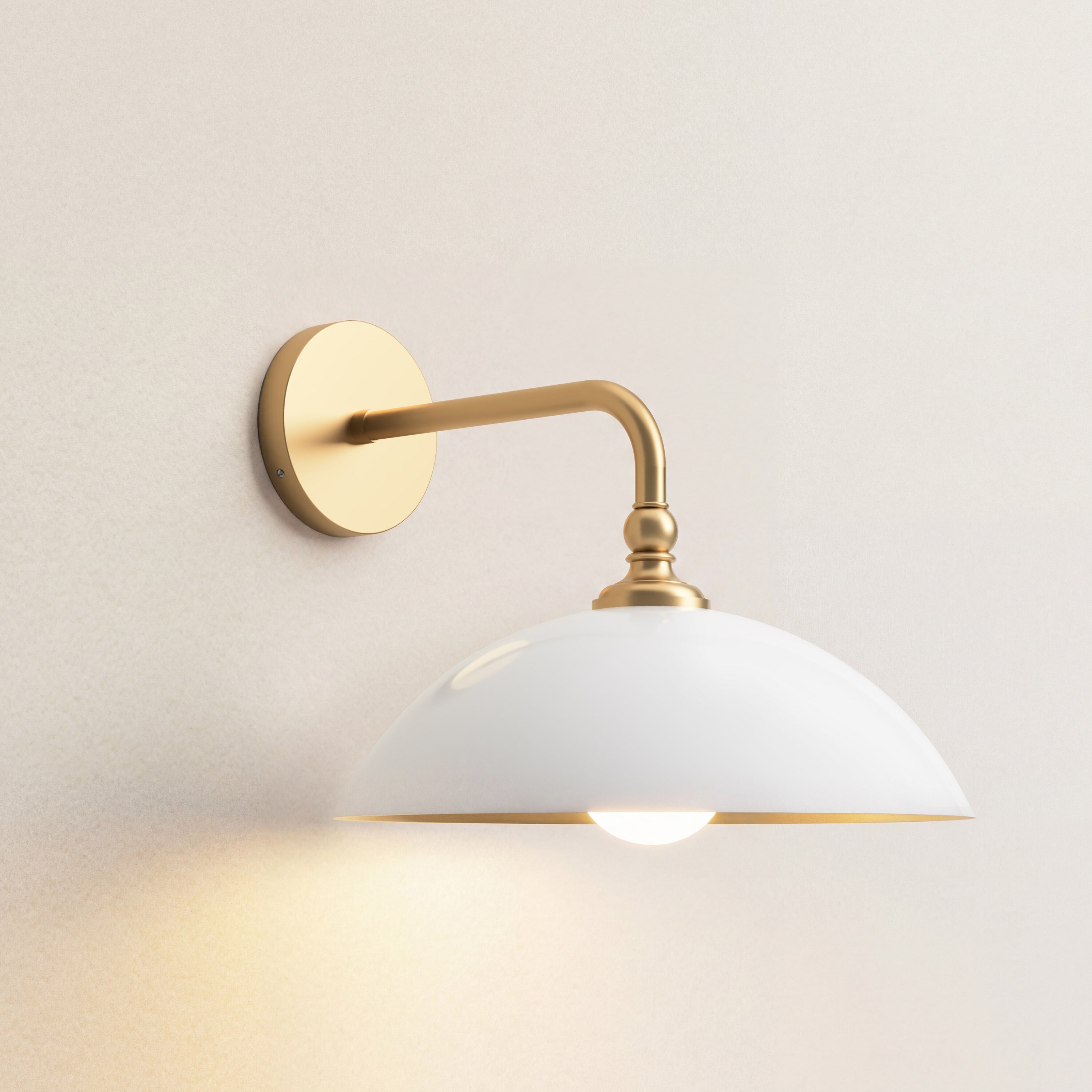
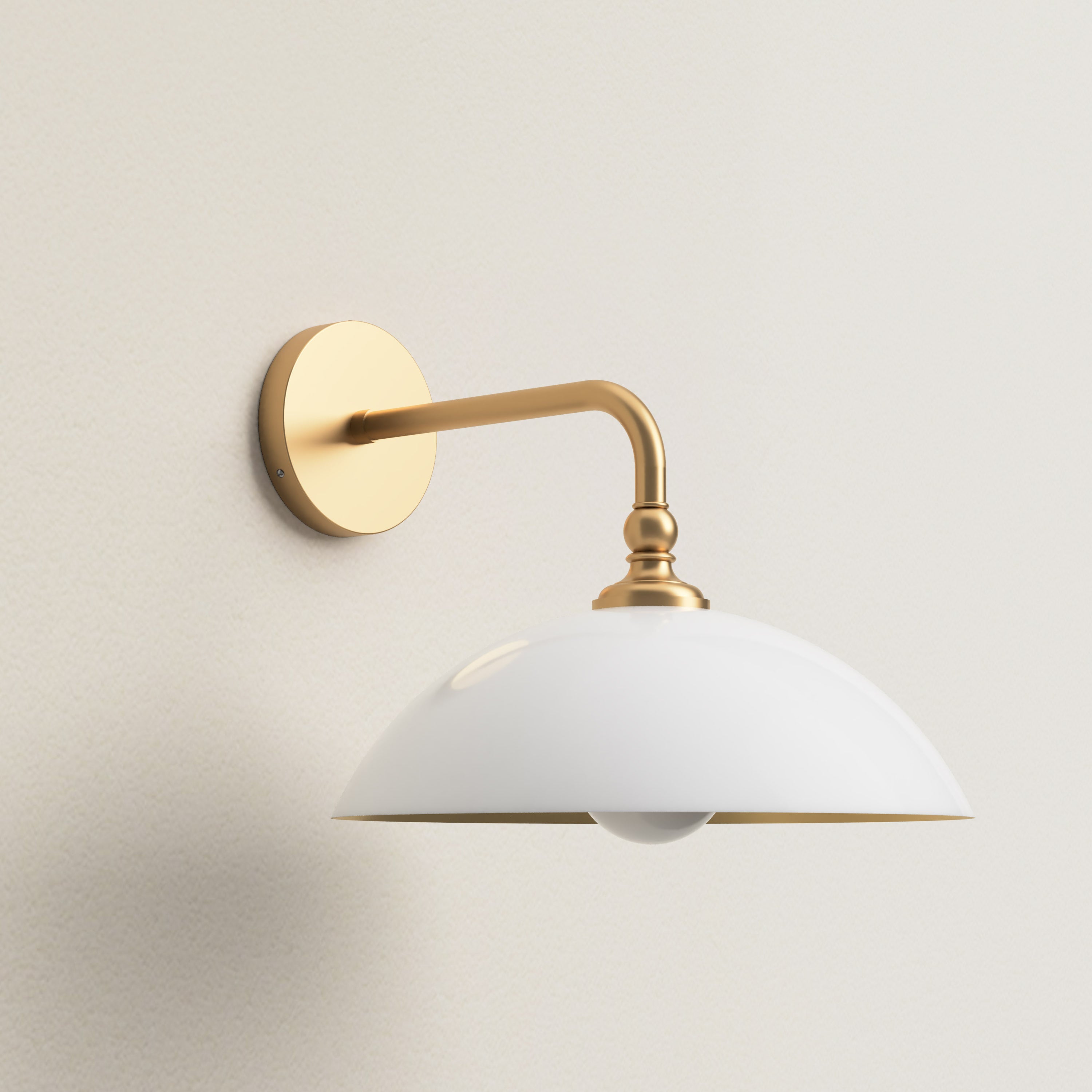
- Pairs well with: Arcoris White Metal Sconce, Cuenco Dome Sconce, Lanesra Round Wall Sconce
Farmhouse & rustic
Warm wood tones, woven raffia shades, and metal accents in distressed or vintage-brass finishes define this category. These sconces complement natural cabinetry textures, such as painted shaker doors, open shelving, butcher block, and bring a handcrafted warmth to kitchens that are already leaning organic.

Many farmhouse styles include a swing-arm or adjustable option (a pivoting arm or shade that lets you redirect light toward a task or away from glare), which is especially useful above a prep counter where the light angle changes with the task. The material contrast between a raffia shade and a sleek tile backsplash is part of the appeal.
- Best for: Farmhouse, Wabi-sabi, and Organic Modern kitchens
- Finishes: Brass with raffia or linen shades
- Pairs well with: Lyra Clamp Cone, Mysa Wall Light, Elara Curve Clamp Arm Sconce
Vintage & industrial
Exposed-bulb silhouettes, aged metal, and blackened finishes suit eclectic or heritage-inspired kitchens where the fixture itself is meant to be noticed. These sconces work particularly well in kitchens with brick, concrete, or open-shelf designs where an industrial accent reads as intentional rather than mismatched.

LED bulbs in a warm 2700K tone suit these fixtures especially well. They run cool to the touch near cooking heat and cast the amber glow that complements aged-metal finishes.
- Best for: Eclectic, industrial, and heritage-inspired kitchens
- Finishes: Aged brass, blackened metal
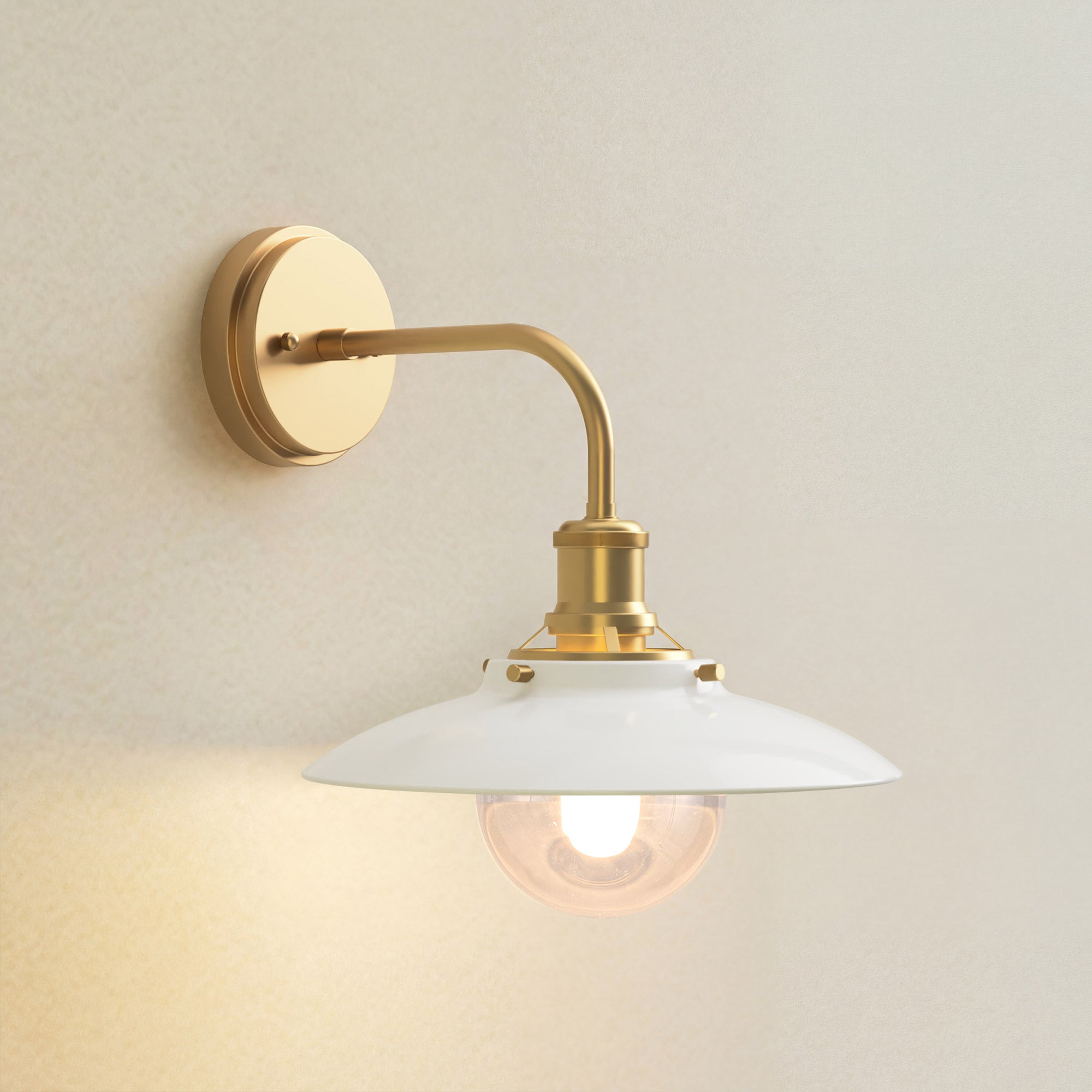
- Pairs well with: Waverly Arm Sconce, Vera Swing-Arm Sconce, Pearl Globe Sconce
Where to place kitchen wall sconces
Sconce placement matters as much as style. Four spots do the most functional work in a kitchen, and the Lighting Research Center consistently identifies layered placement as the most effective approach for task-heavy rooms like kitchens, combining overhead sources with wall-mounted and under-cabinet fixtures:
- Above the sink. Task lighting for food prep and cleanup. This is where a focused, bright sconce (700–1300 lumens) makes the clearest daily difference. Dimmable (compatible with a dimmer switch when paired with a dimmable-rated bulb) fixtures are particularly useful here, letting you shift from full brightness during prep to a softer level at other times. Aim for the lower end of the 60–66 inch mounting height so the light reaches the basin directly.
- Beside a range hood or open shelving. Frames a focal point without adding ceiling clutter. A sconce flanking open shelving does double duty. It highlights the shelves and adds ambient light to that zone of the kitchen without requiring an overhead fixture.
- Near an island or breakfast nook. Adds ambiance where people gather. This position suits a softer sconce (300–700 lumens) that contributes warmth rather than task brightness. A swing-arm or adjustable sconce works especially well here, as the angle can shift from illuminating the countertop during meal prep to angling away during conversation.
- Above a coffee station or pantry. Highlights a favorite zone. Battery-operated sconces are particularly useful here because they need no outlet and can be placed on any wall surface, including inside a pantry where no wiring exists.

Sconces also work effectively off the standard layout, flanking a kitchen window, or spaced evenly along a long wall, to add visual balance where a ceiling fixture alone cannot reach.
Mounting types & power options
Wall sconces come in three power configurations, each suited to a different kitchen situation. The right one depends on whether you are renting or owning, remodeling or upgrading, and how close the nearest outlet is.
| Plug-in | Hardwired | Battery-operated | |
| Best for | Renters, quick upgrades | Remodels, new builds | No nearby outlet, pantries, under-cabinet |
| Installation | Mount and plug into a nearby outlet, no electrician | Requires a licensed electrician for new installs | Mount only, no cord or wiring |
| Look | Visible cord (some styles hide it in a cord channel) | Cleanest, seamless appearance | No cord, but monitor battery life |
| Permanence | Easy to relocate | Permanent, tied to the junction box | Easy to relocate |
Beyond the power source, a few features change how a sconce performs day to day:
- Swing-arm or adjustable sconces are useful above prep counters where the light angle matters.
- Dimmable fixtures shift from bright task lighting to soft dinner ambiance on the same circuit.
- LED sconces run cool to the touch, a practical plus near cooking heat (LED stands for Light-emitting diode, an energy-efficient bulb that stays cool to the touch, a practical advantage near cooking heat. The S. Department of Energy notes that residential LEDs use at least 75% less energy than incandescent bulbs and last up to 25 times longer.)
- Smart-enabled sconces add voice control or app-based scheduling for households that already use a connected lighting system.
How to choose the best kitchen sconce
With style and placement settled, these four decisions cover most of what remains before buying:
- Match the finish to existing hardware. Choose a sconce finish that echoes your cabinet hardware, faucet, or appliance accents. A brushed nickel sconce beside polished chrome fixtures will look mismatched regardless of how well the shade suits the room. Consistency in metal tones is one of the fastest ways to make a sconce feel intentional rather than added as an afterthought.
- Balance brightness against other sources. Combine sconces with your overhead ceiling light and any under-cabinet LEDs rather than expecting one fixture to carry the room. A sconce above the sink handles task light; the ceiling fixture handles general ambient light; under-cabinet strips handle close-range prep light. None of these needs to work alone.
- Decide the job first, then match the lumens. A sconce above a prep counter needs 700–1300 lumens to be genuinely useful for cutting and cooking. A sconce beside open shelving or near a coffee station needs only 300–700 lumens to do its job. Picking the style before deciding the brightness is a common reason kitchens end up with fixtures that look right but perform poorly.
- In high-traffic areas, choose LED. LED sconces run efficiently, stay cool near cooking heat, and last far longer than incandescent alternatives. For a fixture that will be switched on and off daily, the material and bulb durability pay off over time in a way that less-used fixtures do not.

Installation notes
Plug-in and battery-operated sconces install in minutes. Mount the bracket to the wall, run the cord to the nearest outlet or insert the batteries, and the fixture is ready.
For hardwired sconces (wired directly into the home's electrical system): always turn off power at the circuit breaker before touching any wiring or electrical box. Do not rely on the wall switch alone to de-energize the circuit.
The NFPA recommends that homeowners hire a licensed electrician for new hardwired installations and any project that involves working inside the electrical panel or running new wire. If you are unsure about the condition of the existing wiring or the location of the junction box, a short consultation with an electrician before purchasing the fixture will save time and cost.
Mount at 60–66 inches from the finished floor for general kitchen lighting. When installing multiple sconces along the same wall, space them evenly and confirm the centerline of each fixture is at the same height; uneven sconces are immediately noticeable. Use diffused or frosted bulbs in open or semi-open shades to avoid direct glare at seated eye level.
Conclusion
Kitchen sconces add task lighting and visual balance to one of the most-used rooms in the home. Whether your kitchen leans modern, farmhouse, or vintage, a wall-mounted fixture can highlight a workspace or a design detail without taking up counter space or adding another item to the counter surface.
Compare plug-in, hardwired, and battery-operated options in the product grid above, or read our Kitchen Lighting Guide for room-by-room placement ideas and lighting setups that combine sconces with overhead and under-cabinet sources.
Ideas and Advice
Check out our latest how-to's and design tips to find the perfect lighting for your space
Frequently Ask Questions
Mount sconces 60–66 inches from the finished floor for general kitchen lighting. Above a sink or prep counter, aim for the lower end of that range so the light reaches the workspace directly rather than washing the wall above it.
No. Plug-in sconces connect to a standard wall outlet, no electrician, no wiring. Battery-operated sconces need no outlet at all. Hardwired sconces give the cleanest finished look and work with in-wall dimmer switches, but they require a licensed electrician for new installations.
For task lighting above a sink or prep counter, look for 700–1300 lumens. For accent or ambient lighting, beside open shelving, near a coffee station, or framing an island, 300–700 lumens is usually sufficient.
A 2700–3000K warm-white LED keeps a kitchen feeling warm rather than clinical while still providing enough light for food preparation. If the kitchen already has cooler overhead lighting (3500K or above), choosing a warmer sconce can create a visual contrast that feels uneven. Keeping sconce and ceiling fixtures within the same color temperature range produces a more consistent result.
Yes, battery-operated sconces need no outlet or wiring, making them a flexible option for pantries, under-cabinet zones, or walls without existing electrical access. Plug-in sconces require a nearby outlet but no other electrical work.
LED bulbs run cool to the touch compared to incandescent bulbs, which makes them a practical choice near cooking heat. Keep any fixture a safe distance from open flame or direct heat per the manufacturer's installation instructions. Never install a sconce directly above an open burner or in a position where grease or steam from the cooktop can accumulate on the shade.