


By using these dimensions as starting points, you can select a fixture that is proportional and visually impactful.
Key takeaways
1. Sizing by Table Dimensions (Diameter/Width)
- Rule of Thumb: The ideal chandelier diameter should be between $1/2$ and >$3/4$ the width of your dining table.
Example: For a table that is 48 inches wide, look for a fixture between 24 and 36 inches in diameter. - Clearance Height: The bottom of the fixture must hang 30–36 inches above the tabletop. This is a non-negotiable rule to ensure visual comfort and ample space for seated guests.
2. Sizing by Room Dimensions (Overall Scale)
- Formula: A starting point for the overall fixture diameter is to add the room's length and width (in feet), then convert the total to inches.
Example: For a room that is $10' \times 12'$, the calculation is $10 + 12 = 22$, suggesting a fixture diameter of approximately 22 inches. - Balance: Use this room-based formula to gauge the overall scale, but always prioritize the table-width rule for primary sizing.
3. Hanging Height Considerations
- Standard Height: Maintain the 30–36 inches clearance from the tabletop to the fixture's bottom.
- Ceiling Height:
- Higher Ceilings: These can generally handle larger and deeper fixtures.
- Lower Ceilings: You must choose smaller, less voluminous fixtures to avoid overwhelming the space.
4. For Multiple Pendants/Chandeliers
Rule of Thirds: If using multiple lights, divide the table length by three. This gives you the ideal space for the center of each pendant and the space between them for an even distribution.
5. Key Considerations
- Style: Modern, open styles can often accommodate slightly larger dimensions; traditional or heavy styles may require more modest sizing.
- Function: Ensure the fixture size allows the light to spread evenly across the table without causing glare into the eyes of seated guests.
How to choose the right size lighting for the dining room?
Selecting the right lighting for your dining room is crucial for creating a space that is both functional and stylish. With so many options available, it's essential to understand the factors that influence the ideal size and placement of your light fixtures.
Similar shapes
When selecting lighting shapes for your dining room, it's important to choose fixtures that not only match the shape of your table but also complement the overall design of the space.
Invest in enduring quality. Shop our handcrafted lighting.
For rectangular tables, linear fixtures are often the best choice, as they run parallel to the table’s edges and provide even lighting across the surface. This combination works beautifully in both modern and traditional settings, offering a cohesive, balanced look.
To elevate the design further, you can mix and match similar shapes that complement each other. For example, if you have a round table with a round pendant light, consider adding rounded or curved accent pieces, such as vases or mirrors, to reinforce the theme.
Understand the functions of each type of light
Each type of light serves a specific purpose in your dining room. Knowing how to combine them effectively will help you create a well-lit, inviting space:
- Ambient lighting: Provides overall illumination for the room, setting the tone and mood. Chandeliers, pendant lights, or recessed ceiling lights are great for this purpose.
- Functional lighting: Focuses on specific areas where tasks are performed, like above the dining table. This type of lighting ensures that the area is well-lit for eating, reading, or working.
- Atmospheric lighting: Adds character and enhances the ambiance. Dimmable lights, wall sconces, and candles are perfect for creating a cozy or romantic atmosphere.

Make the most of each type of lighting to bring vibrant energy to the room. Source: Rowabi's customer.
The rule of thumb for sizing
When it comes to selecting the ideal size for your dining room light fixture, there are a couple of key approaches to consider. You can determine the fixture's size based on either the dimensions of the room or the size of your dining table.
Light fixture diameter by room size: The first simple yet effective method is to add the room's length and width, both measured in feet, to estimate the fixture's diameter in inches.
For instance, if your dining room is 14 feet by 10 feet, the sum would be 24 feet. Converting this to inches suggests that a light fixture with a diameter of approximately 24 inches would be well-suited to the space.
Light fixture diameter by dining table size: If you’ve already chosen your dining table, it’s often most effective to base the size of your light fixture on the table itself. A common guideline is to choose a chandelier or pendant with a diameter that is about one-half to two-thirds the width of the table.
Hanging height: Typically, there should be around 30 to 36 inches between the bottom of the light and the surface of the table. This spacing ensures that the fixture is visually prominent without obstructing views across the table.

Always keep in mind that the size of the light fixture should suit the entire room, the ceiling, and the surface it illuminates. Source: Rowabi.
Find the perfect lighting mix
To achieve the perfect lighting mix in your dining room, consider combining different styles of lighting fixtures to create a layered and cohesive look. Start with a central fixture, like a chandelier or pendant light, to provide ambient lighting and serve as a focal point.
Next, introduce complementary fixtures such as wall sconces, floor lamps, or table lamps to add functional and accent lighting. For example, if you have a statement chandelier, you could balance it with modern wall sconces or elegant, matching table lamps on a sideboard.
Upgrade your lighting instantly. Click here to shop.
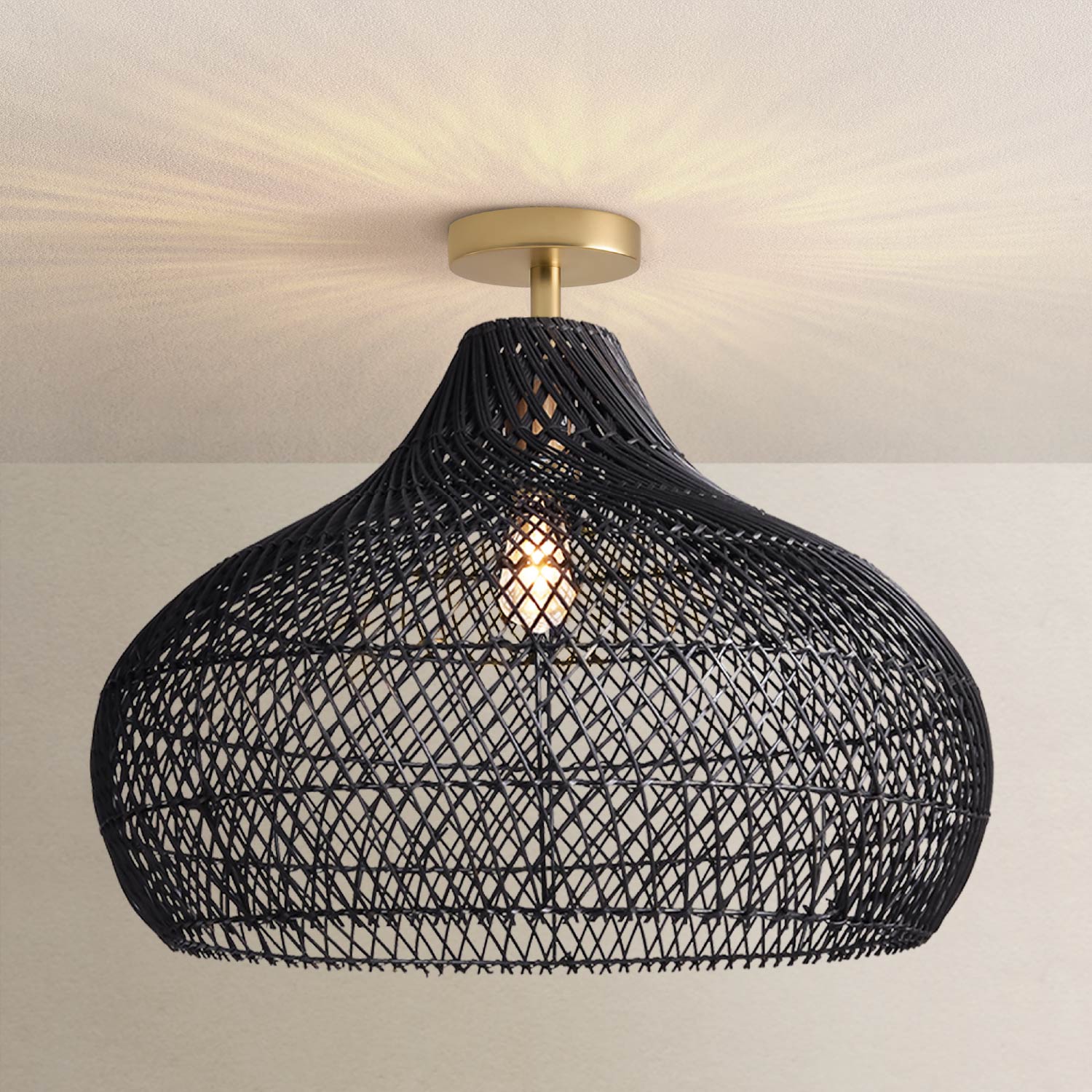
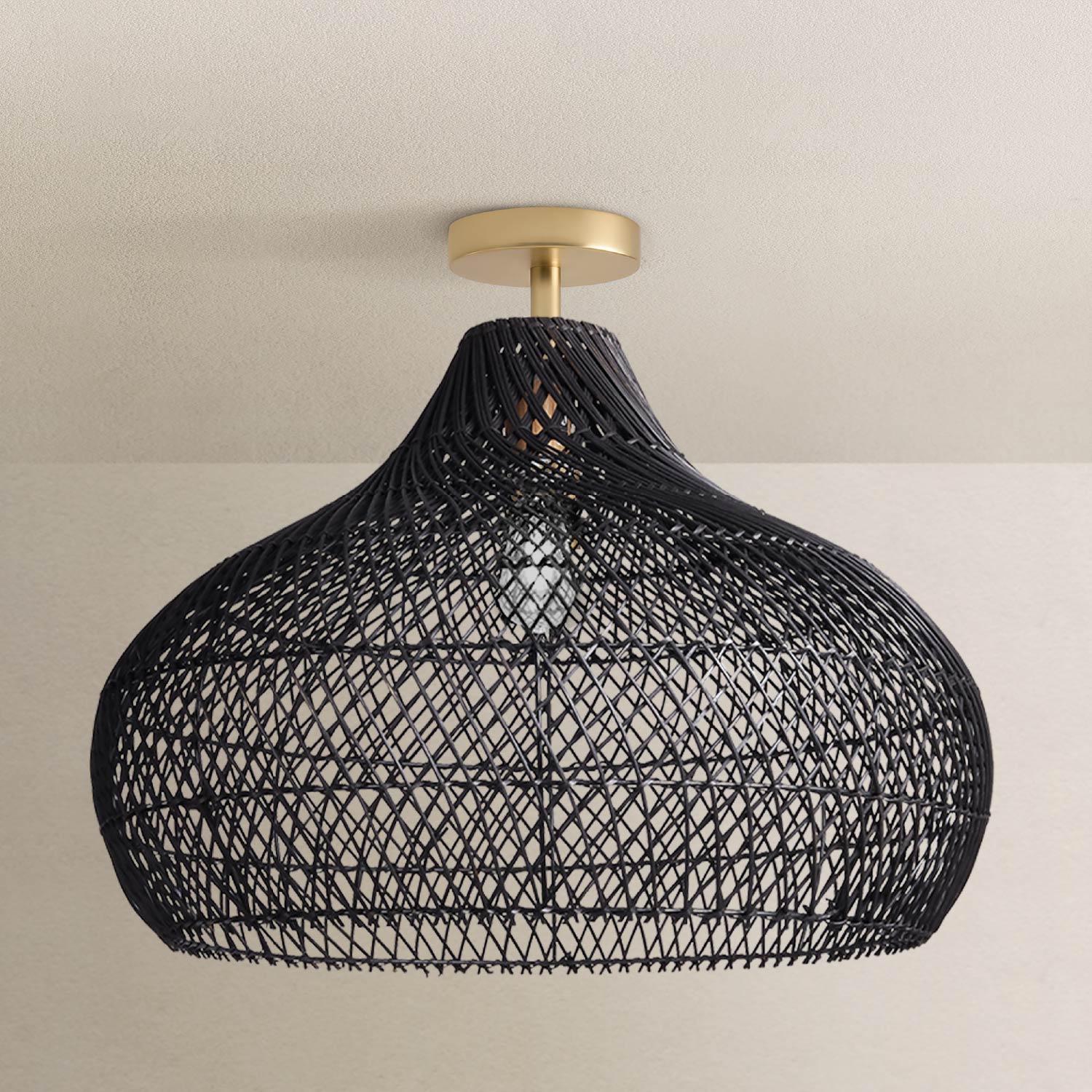
When mixing lighting fixtures, aim for a consistent theme or material that ties the different pieces together, such as brass finishes, natural materials like rattan, or similar color tones. Remember, the key is to maintain visual harmony, so avoid clashing styles or overcrowding the room with too many different fixtures.
Spacing for multiple light fixtures
When using multiple light fixtures in your dining room, proper spacing is essential for a balanced and cohesive look. For pendants or chandeliers, space them about 24-30 inches apart to ensure even lighting and avoid a cluttered appearance.
For example, if you have a 72-inch dining table, you might place three pendant lights evenly spaced, with each fixture around 24 inches apart, to cover the table adequately.
If using two pendants for a 60-inch table, position them approximately 30 inches from the table’s center for a symmetrical arrangement.

Tips for choosing the best light for your style
In every style, the right lighting can transform a space. For 2024, here are some recommendations for three popular styles: modern, mid-century, and traditional lighting.
Modern lighting
For a modern dining room, focus on lighting fixtures that embody simplicity and elegance. Opt for designs with clean lines, geometric shapes, and a minimalist aesthetic.
Materials like brushed metal, glass, and polished finishes are ideal. For instance, a sleek, linear pendant light with a polished chrome finish can complement a modern dining table beautifully.
Shop now: Modern & Contemporary Pendant Light Designs You'll Love
Mid-century modern lighting
Moving on to mid-century modern lighting, this style is celebrated for its unique, organic shapes and retro flair. Fixtures should feature natural materials such as wood, brass, or glass, and bold, contrasting colors.
Keep reading: Exploring 10 Exceptional Pendant Lighting for Mid-Century Marvels
Traditional lighting
Transitioning to traditional lighting, this style is characterized by timeless elegance and charm. Opt for fixtures with intricate details and classic designs, such as crystal chandeliers or lantern-style pendants.
Conclusion
In conclusion, selecting the right size chandelier or pendant for your dining room is key to achieving both style and functionality. By focusing on fitting dimensions, complementary shapes, and effective lighting combinations, you ensure your dining space is both inviting and well-lit.
You can also refer to Rowabi’s guidelines for choosing light sizes for other areas, such as outdoor spaces or foyers, as each area has different standards.


%0A%0ARule%20of%20Thumb:%20The%20...)
Leave a comment
This site is protected by hCaptcha and the hCaptcha Privacy Policy and Terms of Service apply.