


For most children's reading corners, a wall sconce or a sturdy reading lamp is preferable as it directs light toward the book without occupying excessive space. Opt for warm LED bulbs, around 2700K–3000K, to foster a cozy storytime atmosphere, or slightly clearer light, 3000K–4000K, for extended reading or homework.
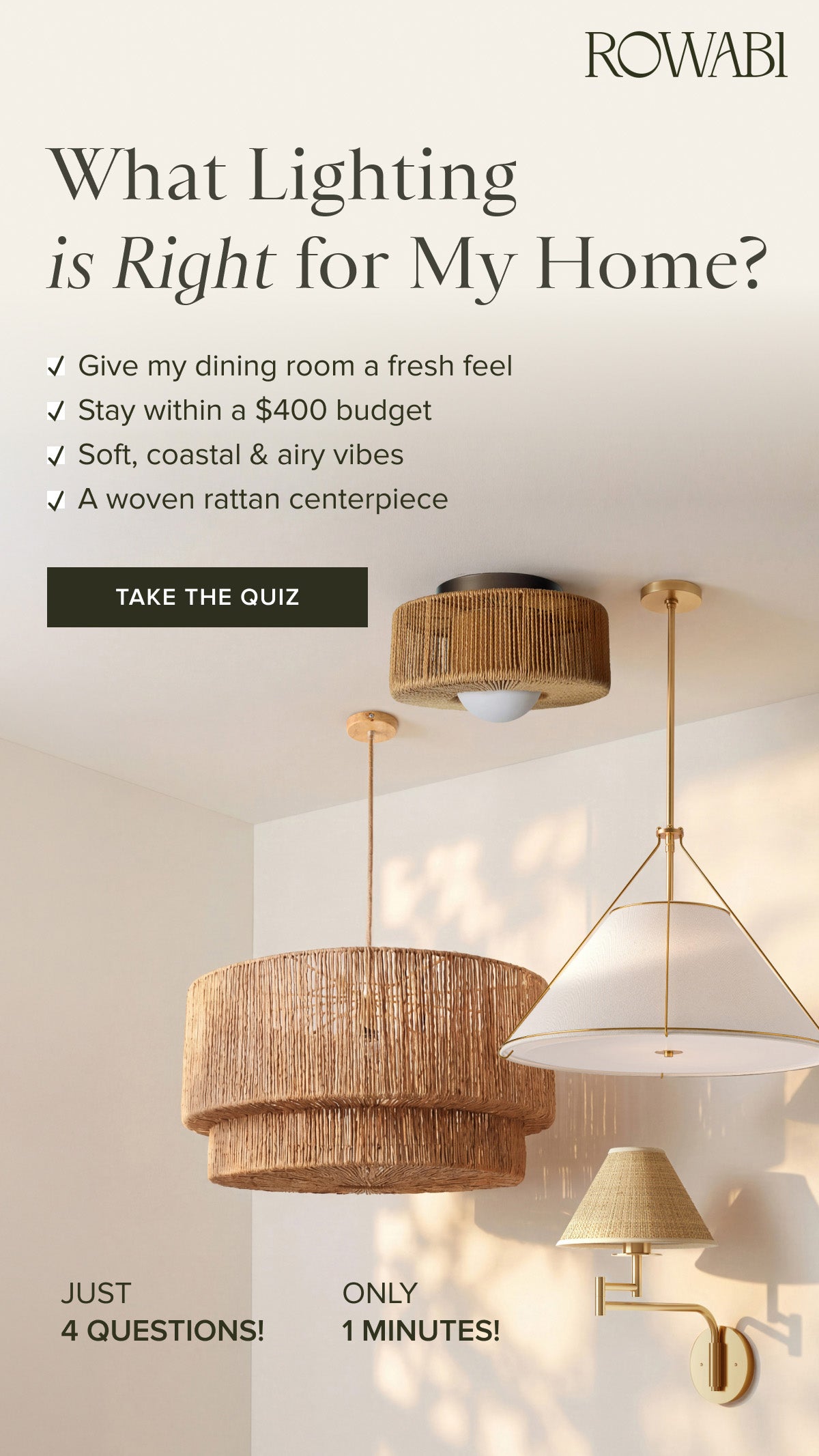
As Rowabi’s expert advice, a rattan sconce can introduce soft, natural textures, and a rattan flush mount can provide warm ambient lighting for the entire room.
- Quick answer: What is the best lighting for a kids reading nook?
- The 3 layers of a perfect kids reading nook
- Ceiling lights: the ambient foundation
- Wall sconces: the ultimate space-saving task light
- Table and floor lamps: flexible but require caution
- 10 inspiring reading nook setups by room type and design
- The cozy nursery story-time corner
- The boho-chic playroom nook
- The low-profile Montessori floor setup
- The shared kids bedroom "zone"
- The built-in window seat retreat
- The "magic trick" renter's corner
- The layered coastal bedroom oasis
- The transition-ready tween desk and nook
- The canopy tent hideaway
- The bookcase-flanked reading nook
- Important metrics: placement, brightness, and temperature
- How bright should a kids reading nook be?
- What is the best color temperature for reading?
- Ideal placement to avoid glare and shadows
- Non-negotiable safety tips for kids reading nook lighting
- Plug-in vs. hardwired reading lights
- Strict cord management
- Avoid unstable lamps in active play areas
- Use LED bulbs to reduce heat
- Choose low-glare shades and diffusers
- Quick buying checklist
- FAQs
- Conclusion
Quick answer: What is the best lighting for a kids reading nook?
The optimal lighting for a child's reading nook combines three layers: ambient, task, and accent, rather than relying solely on an overhead source. A ceiling light offers general room brightness. A wall sconce or stable lamp provides focused task lighting directed at the book. A gentle accent light, such as a night light, a dimmed sconce, or a warm LED strip along a bookshelf, adds the inviting, settled feeling that truly makes a reading corner appealing to a child.
In summary: use a ceiling light for general brightness, a wall sconce or lamp for focused reading light, warm LED bulbs (2700K–3000K) for a cozy story-time feel, and ensure all cords are hidden, and fixtures are safely placed. A ceiling light alone is almost never adequate for a kids reading nook, and the subsequent sections will detail precisely why.
The 3 layers of a perfect kids reading nook
Let’s find out what these are and how they work:
Ceiling lights: the ambient foundation
A ceiling light is not a reading light, but it is crucial for a reading nook to protect your child's eyes. This distinction is more significant than many parents realize.
When a child reads with only a single bright lamp in an otherwise dark room, their eyes constantly adjust to the high contrast between the brightly illuminated page and the surrounding darkness. According to the U.S. Department of Energy, this level of contrast is a primary cause of visual fatigue and glare-related eye strain.
The pupil must continually contract and dilate as the eye shifts between the bright page and the dark background - a strenuous process that leads children to rub their eyes, lose focus, and abandon reading much sooner than they otherwise would.
A ceiling light addresses this by increasing the ambient light level in the entire room, reducing the contrast between the page and its surroundings, and allowing the task light to function effectively without creating a harsh spotlight effect.

To prevent eye strain, a ceiling light should always be used in conjunction with a reading lamp, never as a substitute.
However, not all ceiling lights are equally suitable for a reading environment. Harsh, bright overhead lights with exposed bulbs or cool-white temperatures can cause glare and visual discomfort. A better option is a shaded, diffused ceiling fixture that spreads warm light evenly throughout the room.
A rattan flush mount, for instance, achieves this by filtering light through its handwoven natural surface, producing a soft, uniform ambient glow that warms the entire space rather than spotlighting a specific area. For parents creating a Montessori-inspired, boho, coastal, or neutral nursery where the ceiling light needs to be as thoughtfully chosen as other elements, this type of fixture makes a significant difference.
Wall sconces: the ultimate space-saving task light
For most children's reading nooks, a wall sconce is the best available task-lighting solution, and the reasons extend beyond aesthetics. It delivers focused, directional light precisely where reading occurs, keeps floors and surfaces clear of lamps and cords, and remains safely out of a child's reach in a way that no freestanding lamp can match.
Consider the typical setup of a child's reading corner: a bean bag on the floor, floor cushions piled against a wall, a low window seat, or a bedroom corner lined with pillows. None of these arrangements typically features a conveniently placed side table for a lamp. A wall sconce completely eliminates this necessity because it mounts directly to the wall, directs light downward onto the book, and uses no floor or surface space.

A wall sconce, particularly a hardwired one with no visible cord, entirely removes this risk.
The safety advantage is equally significant. As reported by the CPSC, accessible cords in children's environments pose real dangers. The wall sconce fixture is permanently attached to the wall, well above a toddler's or young child's reach, with no cord to pull, trip over, or tangle. Compared to floor lamps, wall sconces are a safer choice as they cannot be knocked over, tipped, or dragged.
For directional task lighting that casts illumination over the shoulder and onto the page without creating shadows, the precise angle that minimizes both glare and shadow is best achieved with a swing-arm sconce or a fixed sconce mounted at the appropriate height for a child's reading corner.
Table and floor lamps: flexible but require caution
Table lamps and floor lamps offer flexibility and ease of setup but require careful placement and close supervision, especially around young children. For older children and tweens with a dedicated desk or study area, a stable table lamp is a practical and often excellent choice. However, for toddlers and young children, reading on floor cushions, a tall floor lamp positioned nearby presents a genuine safety risk.
The primary advantage of a plug-in lamp lies in its flexibility: no installation is necessary, it's easy to reposition, and it's ready for immediate use. For a ten-year-old's reading desk, a gooseneck lamp with an adjustable arm is ideal. It can redirect light between reading and homework without moving the fixture itself. For older children, this type of lamp gives them control over their own light source, which is highly valuable.

Never place a tall floor lamp directly next to a floor cushion or bean bag used by children under six.
For younger children, the risk profile changes considerably. A tall floor lamp placed beside a bean bag or floor cushion can be knocked over during normal play, not due to carelessness, but because children move freely and unpredictably in spaces they enjoy.
When selecting a reading lamp for a younger child, prioritize a heavy, stable base to prevent tipping. Route any visible cord behind furniture or use a cord cover, and consider a wall-mounted alternative before defaulting to a freestanding lamp.
10 inspiring reading nook setups by room type and design
The cozy nursery story-time corner
A glider or rocking chair in a nursery corner, a soft rug underfoot, and a small collection of board books nearby, this space is heavily utilized in any home with a new baby and warrants lighting that matches its purpose.
Install a wall sconce with a fabric or natural-material diffuser shade at shoulder height for a seated adult, typically around 48–52 inches from the floor. Complement this with a 2700K warm LED bulb and a dimmer switch. At full brightness, clear reading is possible. When dimmed to 20–30%, the room transitions into a soft, amber glow that prevents a drowsy baby from fully waking during nighttime feedings and story time.

The dimmer switch is not optional in a nursery; it is one of the most practical investments for the room as a whole.
The boho-chic playroom nook
A patterned woven rug, stacked natural-fiber baskets, oversized floor cushions in earthy tones, and a low bookshelf displaying colorful spines. This type of playroom reading corner thrives on its atmosphere, which is constructed by light.
Avoid metal or glass fixtures that introduce cool, harsh light into an organic setting. Instead, mount a Rowabi rattan sconce above and slightly behind the reading area. The handwoven natural fibers serve as an organic diffuser, softening the light as it passes through the weave, eliminating glare, and casting a warm, textured pattern on the surrounding wall, enhancing the nook's earthy, collected feel.

The rattan integrates seamlessly with the basket storage, woven textiles, and wood tones of a boho playroom, something a metal or fabric fixture cannot replicate.
The low-profile Montessori floor setup
In a Montessori reading corner, everything is at the child's level: a low open shelf with books facing outward, floor cushions directly on a soft rug, and materials within easy reach. The lighting should follow the same principle.
Because the child is seated close to the floor, mount a plug-in sconce with a cord cover at approximately 40–45 inches from the floor, lower than a standard adult reading sconce but positioned to cast light where it's needed.

Alternatively, a clip-on reading light securely attached to the edge of the bookshelf can work well, provided the cord is safely routed behind the unit. The objective is a light source that illuminates the reading zone without requiring a child to sit in shadow because the fixture was installed for an adult scale.
The shared kids bedroom "zone"
When one child wishes to read, and the other wants to sleep, the solution lies not in brighter light but in more directed light. A swing-arm wall sconce mounted directly beside the reading child's bed or chair, featuring a narrow shade that concentrates light downward, keeps the reading zone illuminated without spilling onto the sleeping child's side of the room.
This exemplifies directional task lighting at its most practical. The narrow beam illuminates the book without spreading across the room, and the arm allows for precise adjustment to position the light exactly where the child needs it.

Each child in a shared room deserves their own independent reading light, and a wall-mounted sconce achieves this without floor lamps, cords, or the negotiation required to share a single lamp.
The built-in window seat retreat
A window seat reading nook benefits greatly from natural light during the day, making the transition to evening all the more important to manage correctly.
Install two symmetrical sconces on either side of the window frame, positioned at approximately 60–65 inches from the floor. As daylight fades, the paired placement creates cross-illumination across the seat light from both sides simultaneously, eliminating shadows, regardless of the child's leaning position or the corner they occupy.

A single sconce on one side will inevitably cast a shadow on the other; two sconces resolve this entirely.
The "magic trick" renter's corner
For families in apartments or rentals where drilling into walls is prohibited, battery-operated sconces offer one of the most practical solutions available.
Mount a sconce shell directly to the wall using removable adhesive strips, then insert a battery-operated LED puck light into the shade. The result is a cord-free, hardwire-free reading light that appears intentional, poses no safety hazard, and leaves no permanent marks on the wall.

This method has become widely shared in U.S. home decor communities precisely because it elegantly solves a real problem, and it is particularly suitable for young children's rooms where a visible cord would otherwise be a concern.
The layered coastal bedroom oasis
In a coastal bedroom characterized by white walls, pale blue textiles, natural linen, and light wood furniture, the reading nook lighting should complement the room's calm, unhurried palette without competing with it.
Utilize a matte white sconce for focused task lighting over the reading area and pair it with a Rowabi rattan flush mount on the ceiling for warm ambient coverage. The rattan ceiling fixture introduces natural texture that harmonizes with the room's organic coastal materials, such as woven baskets, linen throws, and driftwood accents, while the matte sconce provides the directed task light the nook requires for actual reading.

The two fixtures function in layers: one establishes the room's foundation, while the other brings the reading corner into focus.
The transition-ready tween desk and nook
For children between 10 and 12 years old, a reading nook that also serves as a homework zone needs to be mature without sacrificing comfort.
Select a gooseneck table lamp with a heavy, stable base and a bulb that can adjust between 3000K and 4000K, allowing for slightly warmer light for leisure reading and slightly brighter light for focused homework.

Mid-century modern or minimalist industrial lamp designs age well through the tween and early-teen years, appearing neither overly childish nor overly adult. Position the lamp on the non-dominant side, such as to the left of the desk for right-handed children, to minimize hand shadows on the page.
The canopy tent hideaway
A teepee or canopy tent creates one of the most beloved reading environments for young children: enclosed, private, and imbued with a sense of specialness. Lighting it safely requires care.
Never use string lights inside or around a tent canopy used by young children. The CPSC has documented strangulation risks from looped or accessible cords in children's spaces, and draped string lights present exactly this hazard.

Instead, attach a small clip-on LED reading light to the tent frame, directing it downward onto the reading surface, with any cord firmly routed out of the active zone. A battery-powered option is ideal. The light should point down, not drape, and no cord should be accessible at a child's level.
The bookcase-flanked reading nook
Install a downward-facing sconce or a picture light directly above the chair, attached to the inner edge of one bookcase shelf. Light directed downward along the back of the chair and onto the reader's lap creates a clean, focused reading zone without the wall drilling associated with standard sconce installation.

A chair nestled between two tall bookshelves forms one of the most visually appealing reading environments possible, and one of the easiest to light effectively.
The resulting effect: a warm pool of light in a defined book-lined space, is precisely the kind of cozy, library-corner atmosphere that encourages children to linger and read for longer periods.
Important metrics: placement, brightness, and temperature
How bright should a kids reading nook be?
The ideal brightness for a child's reading nook ranges from 400 to 800 lumens, sufficient for comfortable reading without being so bright that the white page causes glare.
Many parents confuse watts with lumens when purchasing bulbs. Watts measure energy consumption; lumens measure actual light output. For a reading nook, lumens are the critical factor. Approximately 400 lumens are suitable for toddlers and young children reading picture books in a calm, cozy storytime setting.

Around 800 lumens are better suited for older children reading chapter books with smaller print, where more light helps reduce the eye strain associated with tracking dense text. Exceeding 800 lumens increases the risk of page glare, bright light reflecting off white or glossy pages back into a child's eyes, which can lead to headaches and shorter reading sessions.
To prevent eye strain without causing page glare, a child's reading nook should have a brightness level of 400 to 800 lumens, delivered from a shaded or diffused source rather than a bare bulb.
What is the best color temperature for reading?
For a child's reading nook, a 2700K–3000K warm white color temperature is appropriate for bedtime stories and cozy reading; 3500K–4000K is only suitable if the nook also serves as a homework or craft area.
The U.S. Department of Energy categorizes light sources by color temperature in Kelvin. Lower temperatures (2700K–3000K) produce warm, amber-toned light similar to sunset; higher temperatures (3600K–5500K) produce cooler, bluer light akin to daylight.
The difference is significant for children's bedrooms: warm light at 2700K–3000K does not emit the blue-spectrum wavelengths that suppress melatonin production. This means a child reading by warm light before bed will find it considerably easier to fall asleep compared to one reading under cool or daylight-temperature light.

According to lighting standards, the optimal color temperature for a child's reading nook is between 2700K and 3000K because it reduces blue light exposure before bedtime and fosters a calmer, more settled atmosphere for winding down.
If the reading nook is also used for homework, crafts, or activities requiring alertness and focus, a slightly brighter and cooler bulb in the 3500K–4000K range can be effective for task lighting, but it should be used as a secondary, switchable option rather than the default, to preserve the nook's primary function as a cozy, sleep-supportive reading space.
Ideal placement to avoid glare and shadows
This placement addresses the two main adversaries of comfortable reading light. Shadows occur when the light source is positioned behind the reader, but is too low for the reader's head and shoulders to obstruct the light before it reaches the book.
Glare happens when the light source is positioned in front of or directly above the reader, light strikes the page and reflects directly back toward the eyes, causing the squinting and discomfort that children describe as "I can't see the words." The over-the-shoulder angle from above mitigates both: the reader's body does not interrupt the light path, and the angle of incidence causes light to hit the page and scatter away from, rather than toward, the eyes.
For a Montessori floor setup or any nook where a child reads at floor level, adjust the mounting height downward accordingly, around 40–45 inches from the floor, so the light falls at the correct angle relative to the child's actual sitting position, not where an adult would be.
Non-negotiable safety tips for kids reading nook lighting
A reading nook is often a space where a child spends time alone, relaxed, and engrossed, so making the safety of every fixture and cord even more critical, not less. The following points are non-negotiable, not mere suggestions.
Plug-in vs. hardwired reading lights
Hardwired sconces are the gold standard for kids reading nook safety because they eliminate all accessible cords. All electrical connections are concealed behind the wall; the fixture is secured to a rated ceiling or wall box; and there is no plug, trailing cord, or anything for a child to pull, chew, or trip over. If you are setting up a permanent reading nook in a home you own, hardwiring is a worthwhile investment.
For renters or families unable to hardwire, plug-in sconces are the next best option, but they require strict cord management. A third option that has gained popularity in the U.S. is battery-operated sconces: a sconce shell mounted with removable hardware, fitted with a battery-powered LED puck light. This approach is entirely cord-free, requires no installation, and is among the safest configurations for a young child's reading area.
Strict cord management
The CPSC's "Go Cordless" campaign highlights the strangulation hazard that any accessible looped or trailing cord presents in a child's environment. This applies to window blind cords, curtain ties, and, critically, the cords of any plug-in lighting fixture in a child's room. A cord trailing across a floor, hanging from a wall, or looped near a reading cushion is unacceptable in a space used by children under six.

Ensuring that all cords are hidden is a must in the kids' area.
If you are using a plug-in sconce or table lamp, route every inch of the cord through a plastic cord cover or concealer affixed flush to the wall, and secure any excess behind heavy furniture that cannot be moved. Keep cords out of reach at every point along the path between the outlet and the fixture, not just at the fixture itself.
Avoid unstable lamps in active play areas
A tall floor lamp placed next to a bean bag or floor cushion in a child's reading nook presents a tipping hazard, not due to negligence, but because children move unpredictably in spaces they enjoy. A child jumping onto a floor cushion, reaching for a book on a low shelf, or rolling over to show a parent a picture can knock over a floor lamp without intent or warning.
If a table lamp is the only practical option for a reading nook, choose one with the heaviest possible base, place it on a stable, non-bumpable surface, and route the cord immediately and completely out of the play zone. For any child under seven or eight, a wall sconce remains the superior choice, and this is precisely why.
Use LED bulbs to reduce heat
According to the U.S. Department of Energy, LED bulbs consume at least 75% less energy than incandescent bulbs and emit very little heat, making them the only appropriate choice for a fixture in a space where a child might reach, lean, or press against a shade.
Traditional incandescent and halogen bulbs generate significant heat at the glass surface; a child touching the lamp shade with an incandescent bulb can burn their fingers within seconds.

In any fixture within a child's reach or near a child's reading area, LED is not a preference; it is the standard.
Choose low-glare shades and diffusers
Never use an exposed-bulb fixture or a clear glass shade in a child's reading nook. When a bare bulb is visible from the reading position, it introduces direct glare, the light that enters the eye without diffusion, causing squinting, discomfort, and over time, the kind of eye strain that leads a child to associate reading with headaches rather than pleasure.
Every fixture in a reading nook should feature a shade or diffuser that fully encloses the light source. Frosted glass, fabric shades, and woven natural materials all work well. For parents constructing a reading corner where both visual comfort and design warmth are important, a Rowabi rattan sconce addresses both simultaneously.

Naia Rattan Sconce from Rowabi.
Quick buying checklist
Before purchasing any light fixture for a child's reading nook, review these six essential checks:
- The Brightness Check (Lumens): Is it between 400 and 800 lumens? Below 400 lumens, a child will strain to see small text. Above 800 lumens, white pages produce glare that leads to headaches. Verify the lumen count on the packaging, not the wattage, and confirm it falls within this range.
- The Bedtime Check (Kelvin): Is the color temperature 2700K–3000K? Look for "Warm White" or a specific Kelvin rating printed on the packaging. Avoid purchasing a bulb labeled "Daylight" (5000K+) for a bedroom reading nook. Blue-spectrum light will interfere with a child's ability to fall asleep after story time.
- The Safety Check (Bulb Type): Is it an LED that is cool to the touch? Reject any halogen or incandescent fixture near children. LED is the only bulb type that remains cool enough to be safe if a child touches the shade or fixture surface.
- The Glare Check (Shade Material): Does it have a diffuser? Steer clear of any fixture with an exposed clear-glass bulb or an open shade that directly reveals the bulb. The shade material, whether fabric, frosted glass, or woven natural fiber, should completely enclose the light source and soften the output before it reaches the reading surface.
- The Cord Management Check: Do I have cord covers? If you are purchasing a plug-in sconce or table lamp, add cord covers or concealers to your order at the same time. A plug-in lamp without a cord management plan is not safe for a young child's room. Plan for it before the fixture arrives.
- The "Grow-With-Me" Check: Will this still be suitable in five years? Avoid novelty designs tied to specific characters or themes. A rattan sconce, a white fabric shade, or a simple linen drum will serve equally well in a nursery, a toddler's room, a school-age bedroom, and a tween study corner without needing to be replaced as the child's tastes evolve.
FAQs
What type of light is best for a kids reading nook?
- A wall sconce is the most effective task light for most children's reading nooks, used in conjunction with a soft ceiling light for ambient coverage.
How many lumens does a kids reading nook need?
- A practical range for most children's reading nooks is between 400 and 800 lumens.
Is a wall sconce better than a table lamp for a kids reading nook?
- For younger children, yes, a wall sconce is safer, more space-efficient, and eliminates cord hazards. It cannot be knocked over, keeps the floor and all surfaces clear, and directs light at the optimal over-the-shoulder angle.
Where should I place a reading light for kids?
- Mount it 60–68 inches from the floor and position it slightly behind and above the child's shoulder when seated, so the light falls over the shoulder and onto the page rather than into their eyes. For floor-level setups (floor cushions, Montessori-style reading areas), lower the mounting height to 40–45 inches accordingly.
What color temperature is best for kids reading?
- 2700K–3000K warm white is ideal for cozy reading and bedtime stories. For a nook that also serves as a homework or craft zone, 3500K–4000K can be used for task lighting—but keep it as a secondary option, not the default.
Can I use a rattan sconce in a kids reading nook?
- Yes, a rattan sconce is one of the most practical and design-appropriate choices for a child's reading corner. Its woven texture functions as a natural diffuser, softening light and preventing glare.
Conclusion
Effectively lighting a child's reading nook is not complex, but it requires more than a single bright bulb. Begin with a soft, diffused ceiling light as the ambient foundation, then add a wall sconce or a stable lamp at the correct height for focused task lighting. Use warm LED bulbs at 2700K–3000K, ensure all cords are managed or eliminated, and select a fixture that will age as gracefully as your child.
Explore Rowabi's wall sconces and rattan flush mounts to find the ideal fit for your child's reading corner, or contact the Rowabi team if you require assistance selecting the right fixture for your specific space and ceiling height.


Leave a comment
This site is protected by hCaptcha and the hCaptcha Privacy Policy and Terms of Service apply.