


By strategically using fixture types like path lights and spotlights with techniques such as up-lighting and washing, you can create a safe, ambient, and beautifully accented exterior, all while prioritizing energy-efficient LED or solar options.
Tips for Beginners
- Layering: Combine Ambient (general light like string lights), Task (functional light like path lights), and Accent (highlighting light like spotlights) for a rich, dynamic look.
- Energy Efficiency: Always choose LEDs for their brightness and low energy consumption, or use solar lights for easy, zero-wiring path illumination.
-
Brightness (Lumens): Choose the right intensity:
- - Paths: 100–200 lumens
- - Decks/Patios: 300–600 lumens
- - Security/Floodlights: 700–1300+ lumens
- Aesthetics: Choose fixture materials (aluminum, brass) and styles that match your home's existing exterior hardware for a cohesive design.

45-Day Return
45-Day Return


45-Day Return
45-Day Return
45-Day Return
45-Day Return
45-Day Return
How do outdoor lights work?
Outdoor lighting systems can operate on various power sources, including electricity, solar power, or batteries, and can be controlled through different mechanisms to suit your specific needs.
Here's a comprehensive breakdown of how outdoor lights work and the technology that powers them.
Light switch control
Switches are often installed indoors for convenience, allowing you to turn the lights on and off without stepping outside. Outdoor-rated switches are also available if you prefer to control the lights externally. This simple setup is ideal for areas where you want direct control over the lights, such as porch lights or patio lights.

There are many control options available to suit your specific needs and circumstances. Source: @EyeEm via Freepik
Timers for automated lighting
You can set specific times for your lights to be illuminated, such as in the evening or early morning. This feature is particularly useful for areas that need temporary lighting, such as driveways, or to simulate occupancy when you’re away from home.
Motion sensors
Motion sensor lights automatically turn on when movement is detected and switch off after a set period. These are ideal for security lighting, walkways, or areas that only need to be lit when someone is nearby.
Click to explore new arrivals.
The most effective motion sensor lights use PIR (Passive Infrared) sensors, which detect body heat rather than just movement, reducing false triggers from wind-blown branches.
Wi-Fi-connected smart lights
Smart outdoor lights allow for remote control via smartphone apps, tablets, or voice commands through smart speakers like Alexa or Google Assistant. These lights can be scheduled to turn on and off automatically or controlled manually while you’re away from home.
Smart lights offer additional features such as dimming, color-changing, or grouping different lights for a more customized lighting experience.
Solar-powered outdoor lights
Solar-powered lights use a technology called a photocell or photoresistor, which detects changes in ambient light levels.

This is one of the types of lights that are fuel-efficient and environmentally friendly. Source: @lifeforstock via Freepik
During daylight, the solar panel absorbs sunlight and converts it into energy stored in a rechargeable battery. Once it gets dark, the photoresistor activates, turning on the light. The lights then remain on until the battery runs out or the sun rises and the panel begins charging again.
Types of outdoor lighting
Below is a comprehensive guide to the various types of outdoor lighting, each serving a unique purpose with different designs, energy sources, and control mechanisms.
Wall lights
Wall lights are perfect for illuminating patios, pathways, and seating areas. They are available in contemporary and traditional styles.
Wall lights come in mains-powered, solar-powered, and battery-powered options, allowing you to choose based on your installation preferences and energy-saving goals. Additionally, some wall lights include passive infrared (PIR) sensors, which activate the light only when motion is detected.
Floodlights
Floodlights provide a wide, intense beam, ideal for lighting large spaces such as driveways or yards.
Most floodlights now use energy-efficient LED bulbs, which reduce power consumption and lower energy bills. For security, place floodlights at high points, such as rooftops or eaves, to maximize coverage.
Security lights
Security lights are designed to deter intruders by lighting up dark areas around your property. These lights typically feature motion or PIR sensors that activate the lights when they detect movement, providing instant illumination only when needed.
Wall sconces
They are mounted on walls and provide softer illumination, perfect for creating an inviting atmosphere in exterior spaces. These lights are best for accent lighting on porches, entryways, or exterior walls. Solar-powered or motion-sensor wall sconces reduce energy consumption and provide light only when needed.

Wall sconces come in a variety of shapes. Source: Rowabi.
Decking lights
Decking lights are small, recessed fixtures installed into decking boards, offering subtle illumination that enhances safety and ambiance in outdoor living spaces. These lights help highlight edges and steps, reducing the risk of tripping.
Pendant lights & Chandeliers
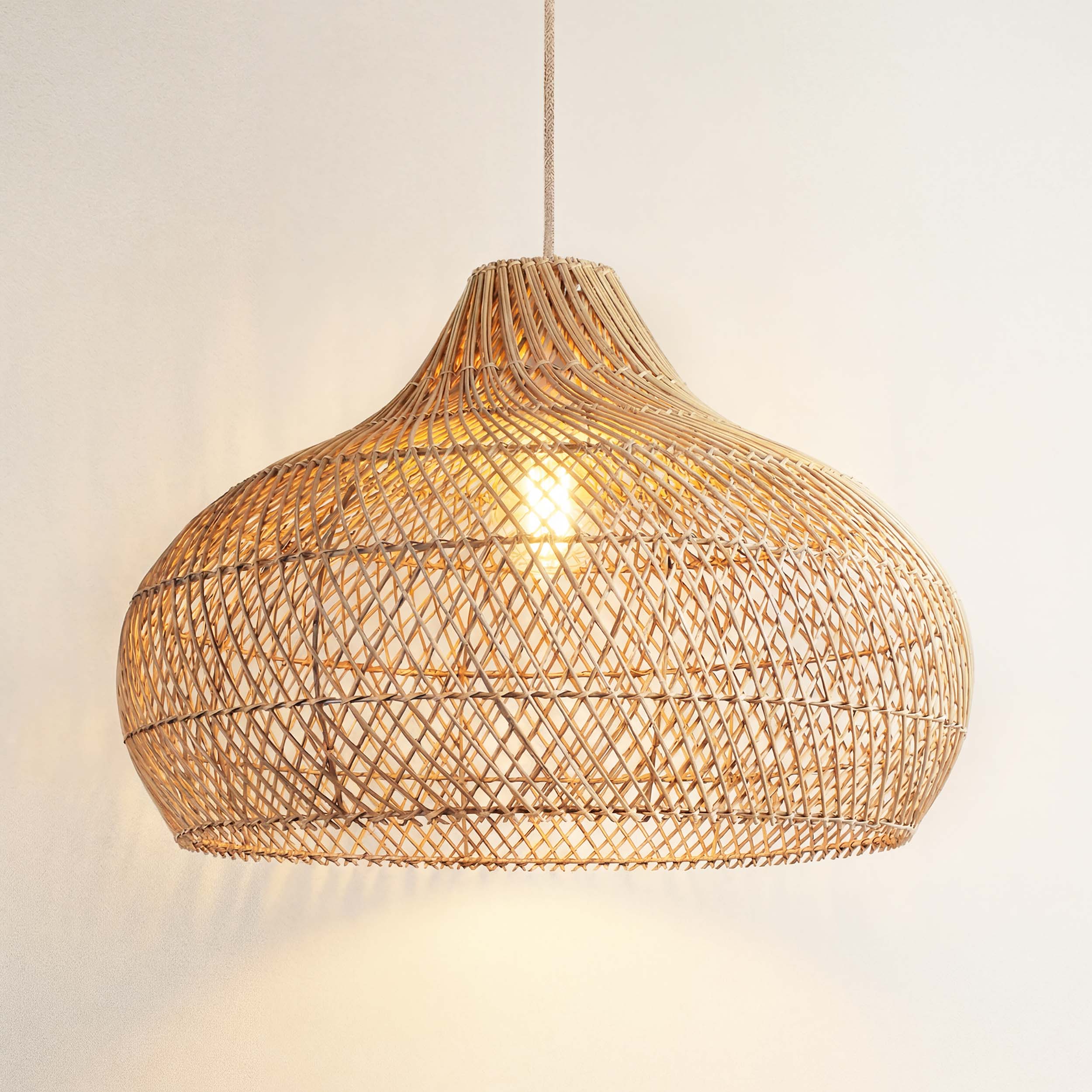
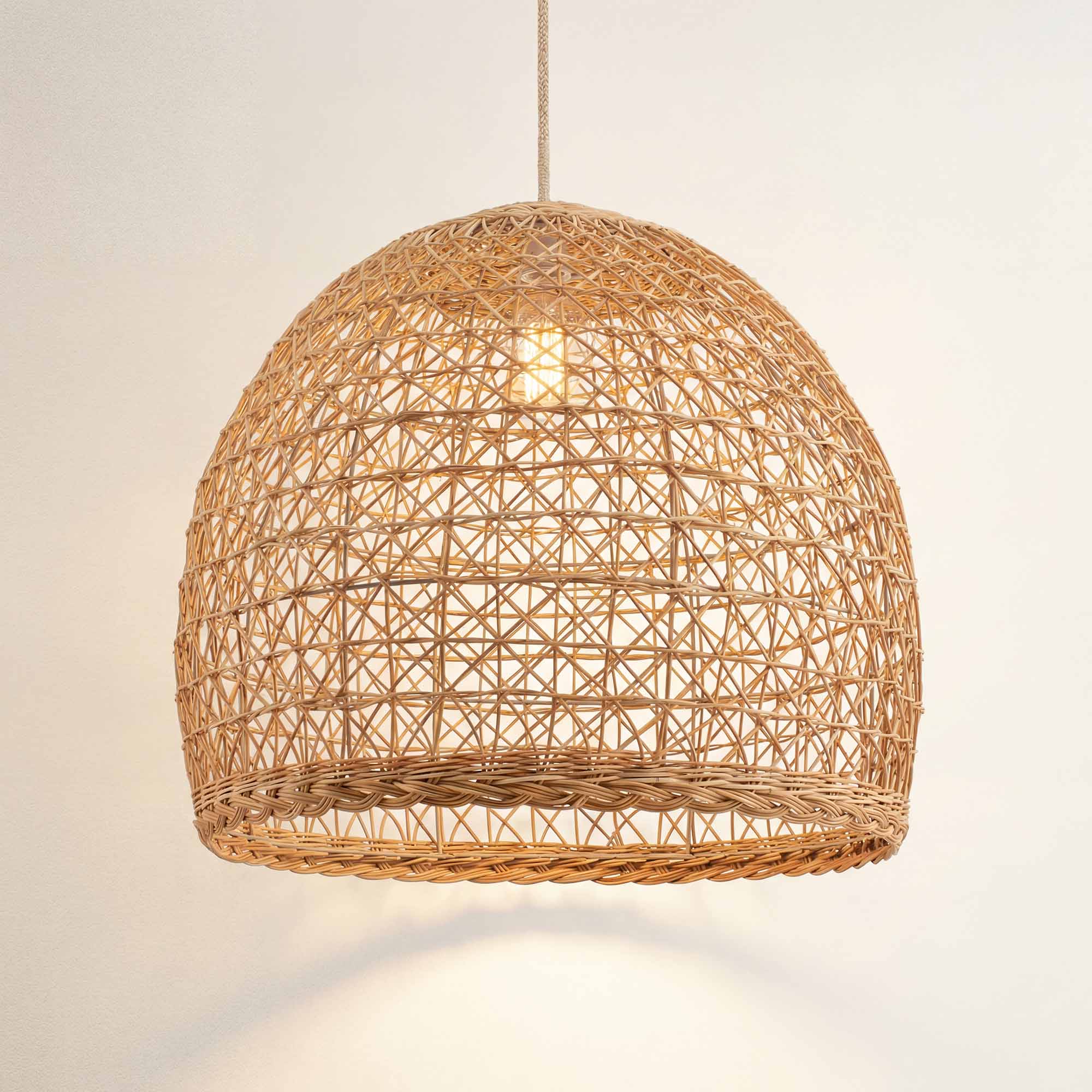
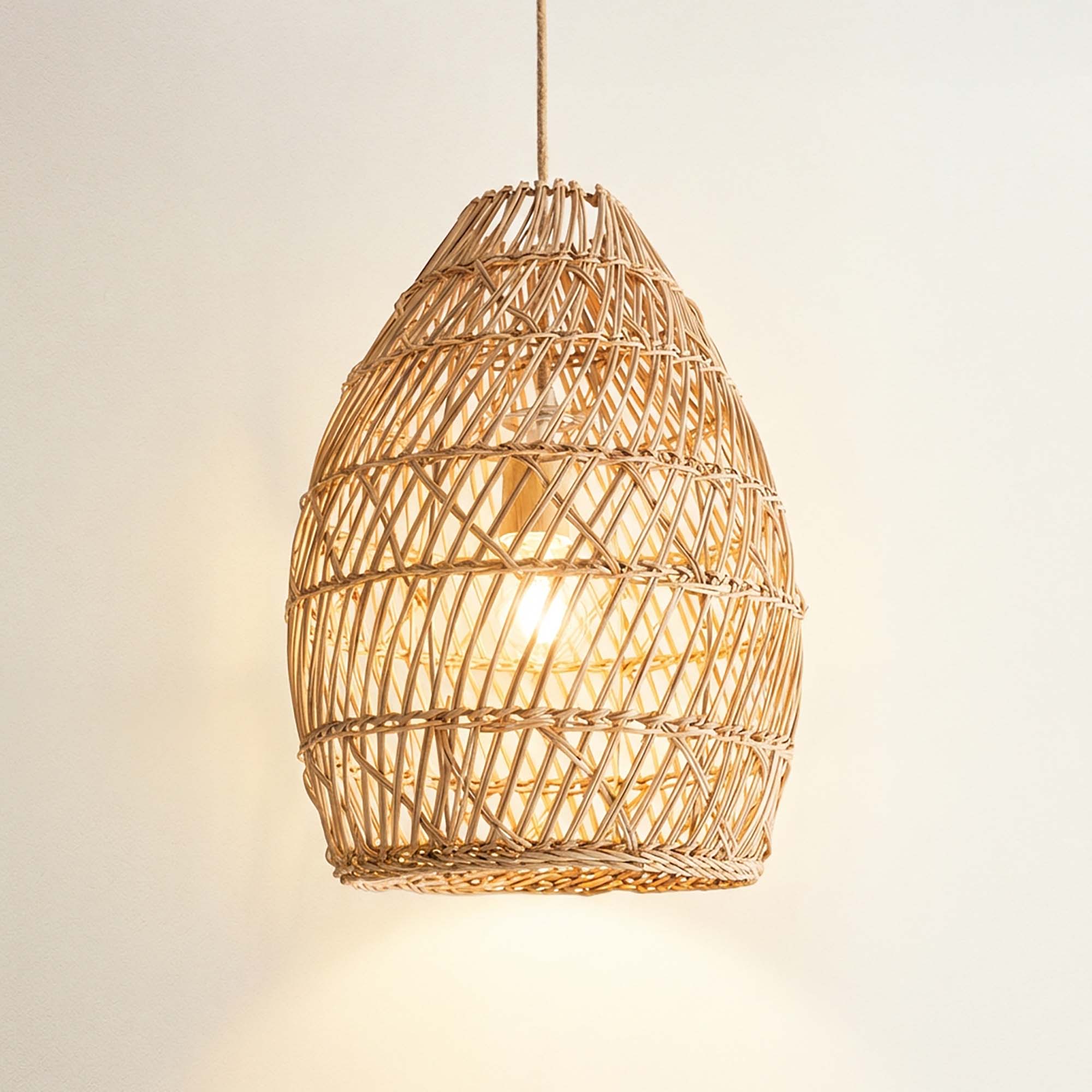
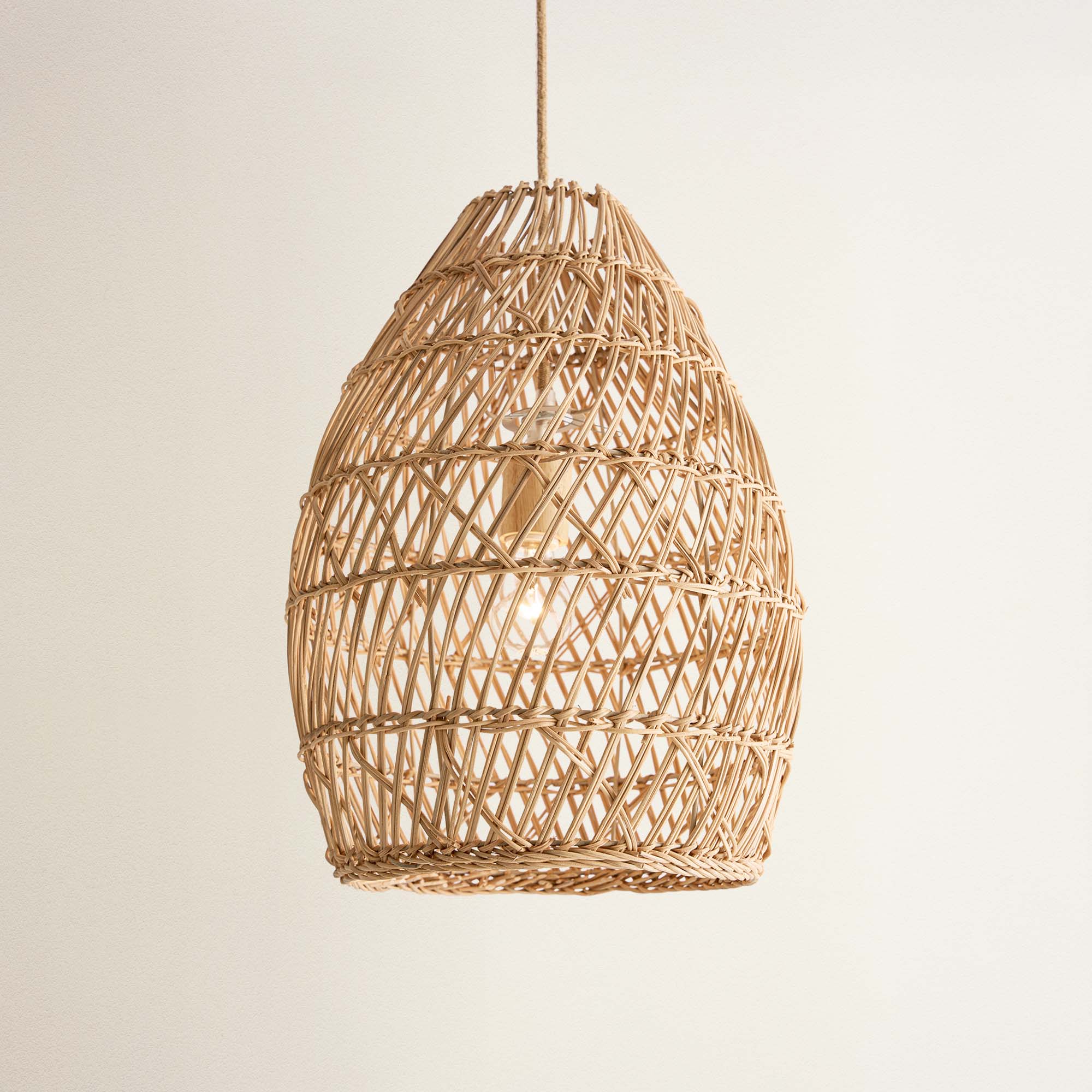
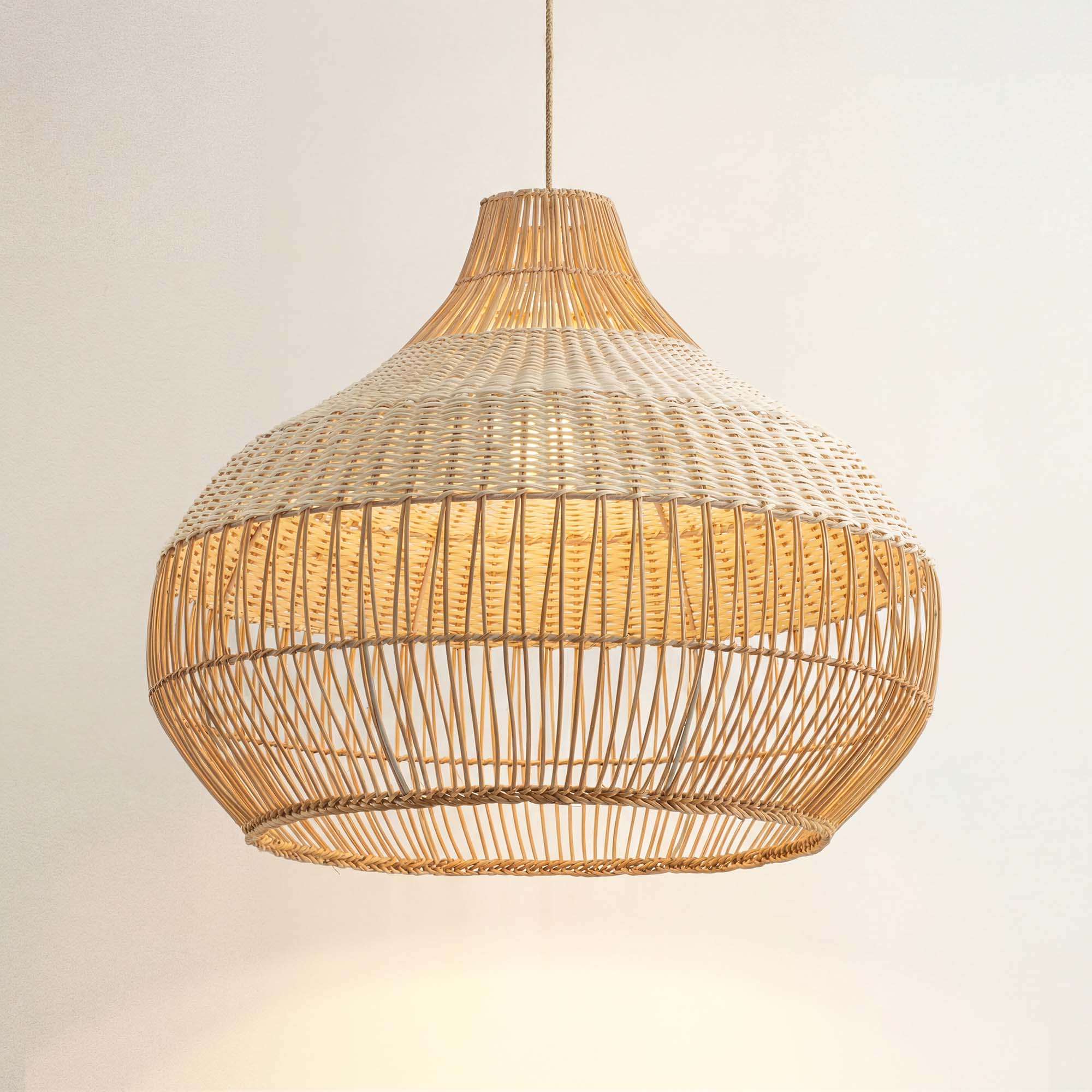
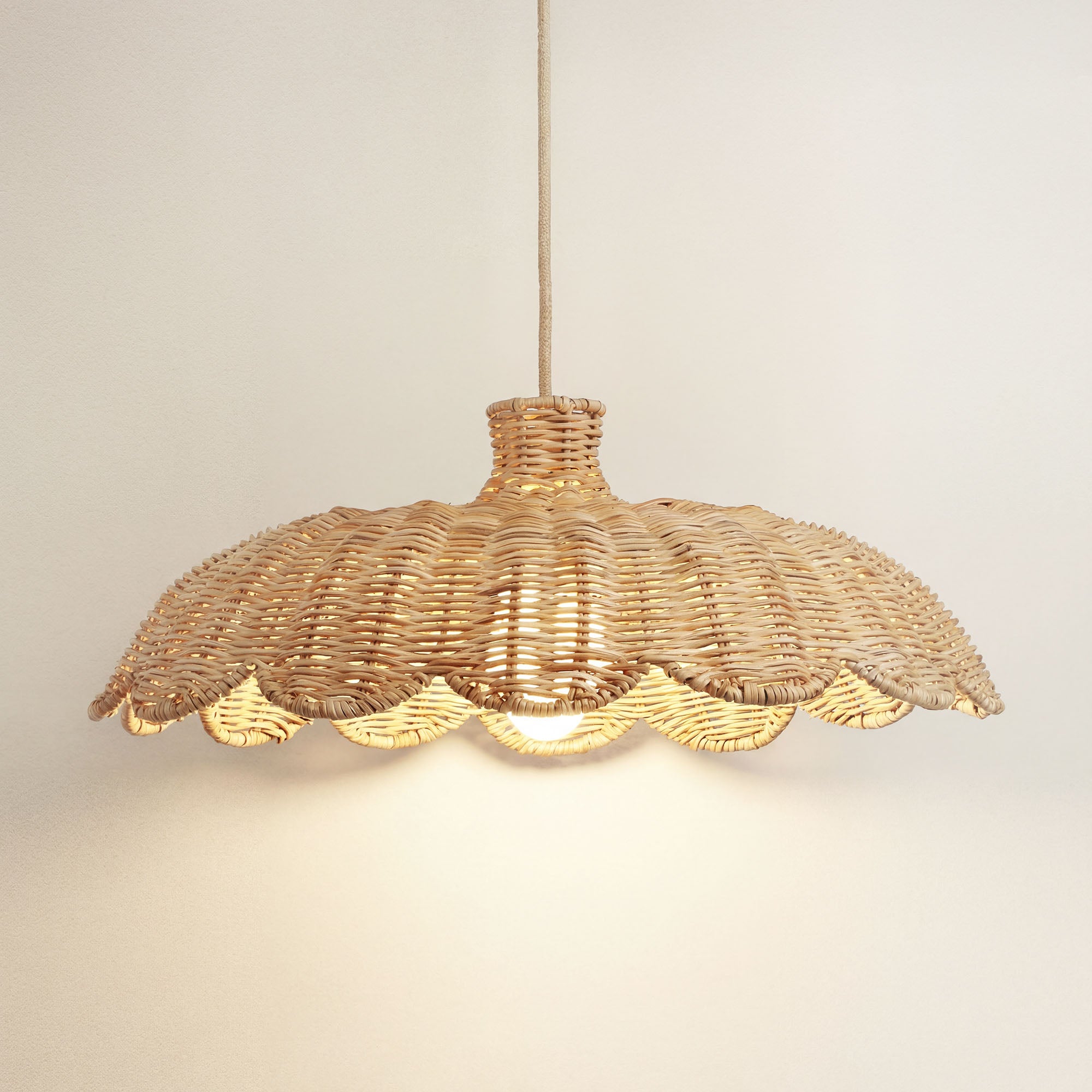
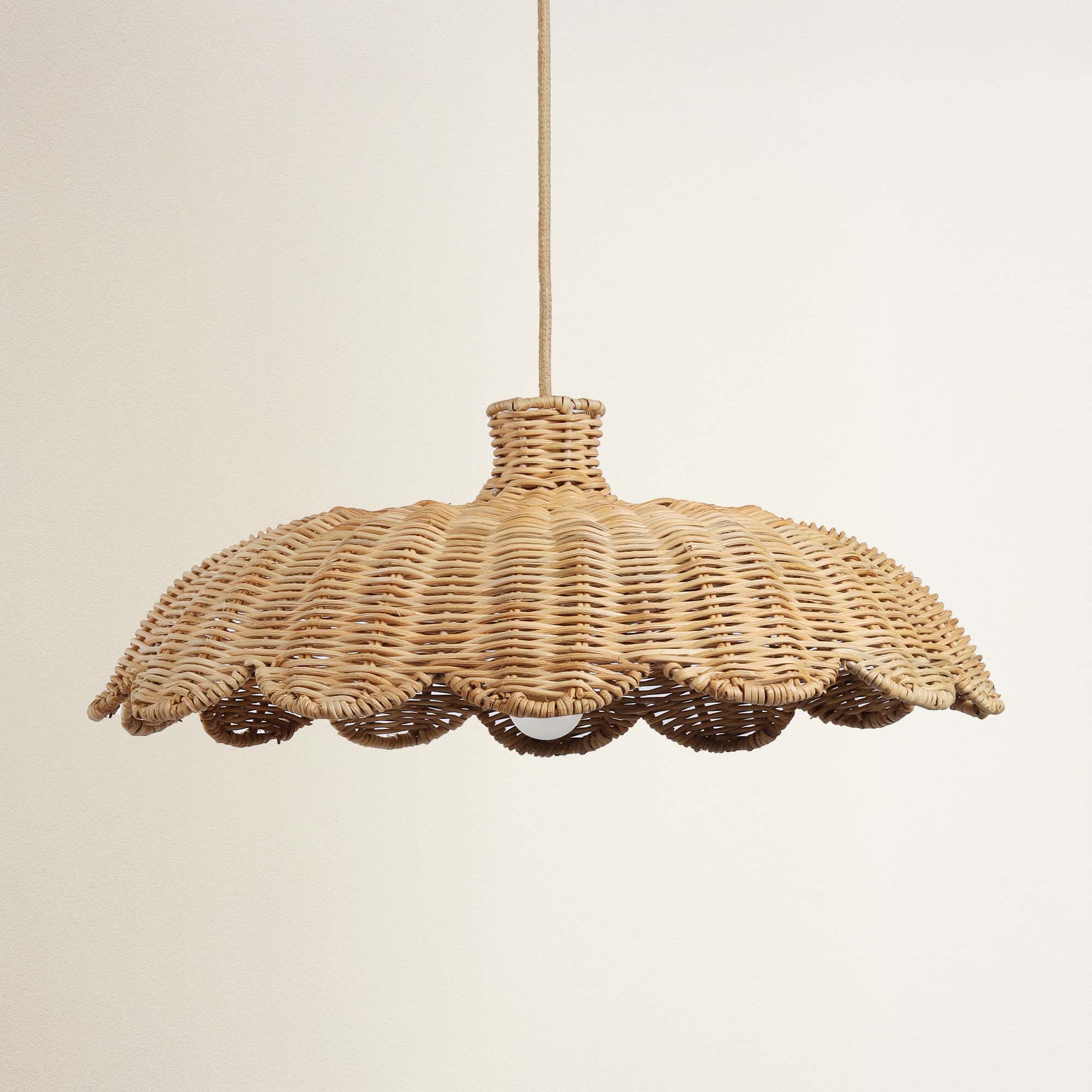
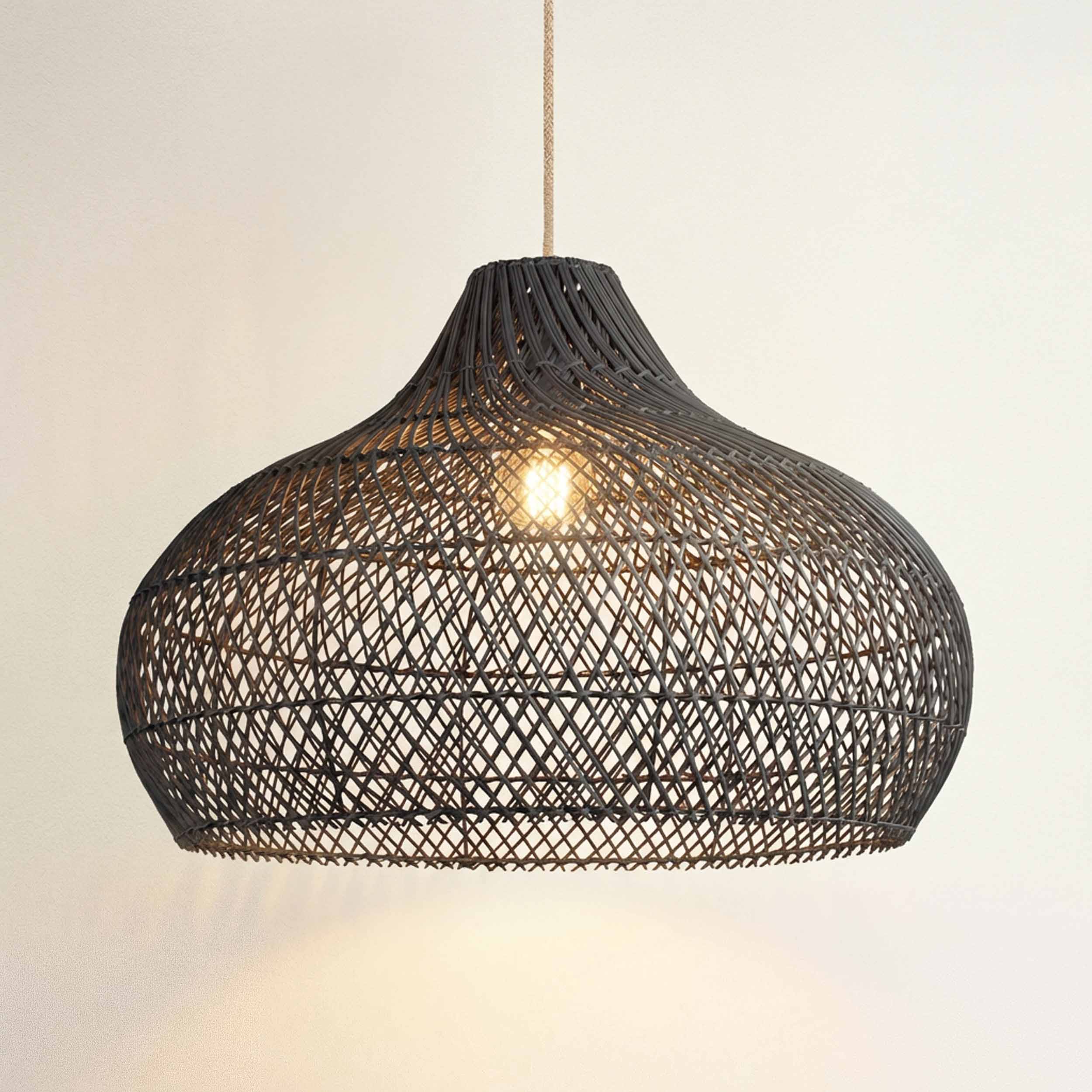
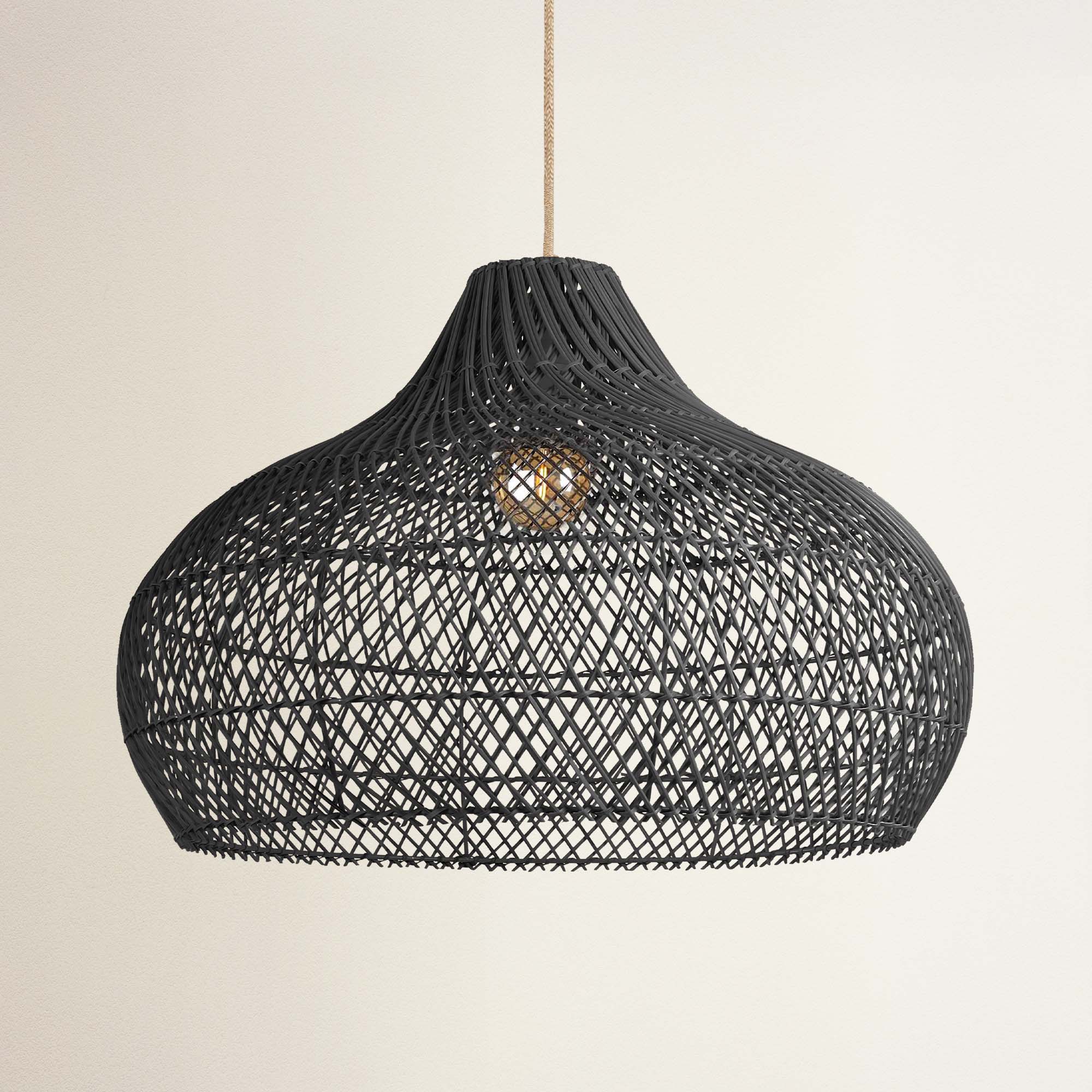
Outdoor pendants and chandeliers are commonly used in covered areas such as porches, gazebos, and pergolas. They are often chosen to highlight outdoor dining or seating spaces. When selecting, be sure to consider whether the light fixtures are weatherproof and energy-efficient.
Consider using sustainable materials like rattan to enhance harmony with the natural surroundings. Rattan not only offers an eco-friendly option but also adds a warm, organic aesthetic that blends seamlessly with outdoor environments.

Outdoor chandeliers look stunning when placed in areas like porches or dining spots. Source: Rowabi.
Garden spike lights
Garden spike lights are installed directly into the ground and are perfect for highlighting specific outdoor features like trees, flowerbeds, or pathways. These lights are often adjustable and use energy-efficient LEDs.
Brick lights
Brick lights are recessed, rectangular lights often installed in walls along pathways or driveways. They provide low-level illumination and blend smoothly with outdoor architecture. They are mostly mains-powered.
Pathway lighting
Path lights are shorter fixtures that line walkways for better visibility and curb appeal. Installed about 14 inches high, they improve safety and can be placed along garden paths or driveways. Choose durable materials that resist corrosion.
In-ground lighting
In-ground lights are installed flush with the ground and are commonly used for driveways, walkways, or uplighting trees and garden features. They provide a subtle yet effective lighting solution for creating an atmosphere and enhancing outdoor spaces.
Garden lamp posts
They are also known as bollards or post lights. Garden lamp posts provide decorative and practical lighting solutions for driveways, patios, and garden paths. Taller than most outdoor lights, they offer broad illumination without being overly bright, contributing to a balanced ambiance.

Garden lamp posts are used to provide general lighting rather than focusing on a specific object. Source: @alexvog via Freepik
Outdoor post lights
Outdoor post lights provide mid-level illumination for pathways, driveways, and garden beds. Space post lights evenly along paths or driveways to guide guests and create a welcoming ambiance.
Hardscape lights
Hardscape lights are mounted on outdoor structures like walls and are designed to cast light across surfaces for a soft, ambient effect. They're often installed in stone, wood, or concrete features, making them ideal for modern landscaping.
Underwater lights
Used to light up water features, underwater lights are designed to be submerged in ponds, fountains, or pools. These lights create striking visual effects and are often installed as part of a larger landscape lighting scheme.
Where to place outdoor lights?
Here’s a comprehensive guide to placing outdoor lights in key areas, along with height recommendations and tips for optimal results.
Entertainment areas
To enhance outdoor spaces after dark, it’s essential to choose lighting that creates ambiance and provides adequate illumination. Each type of light is typically installed at the following heights:
- Outdoor ceiling lights: Install these at a height of 7 to 9 feet above the ground. Ideal for covered areas like patios and pergolas.
- Outdoor pendants: Hang 6 to 8 feet above the ground to provide a statement over dining tables or seating areas.
- Outdoor wall lights: Position these 5 to 6 feet above the ground to illuminate walls and provide general lighting. Includes bunker wall lights and uplights.
- Deck lights: Install flush with the deck surface or slightly raised, focusing on steps and edges for safety and ambiance.
- String lights: Hang 8 to 10 feet above the ground to create a festive atmosphere over dining or lounging areas.
- Spotlights: Place small spotlights at around 3 to 5 feet above ground to highlight specific features like sculptures or potted plants.

Transform your outdoor space into a romantic haven with shimmering lights. Source: Rowabi.
Pathways and walkways
Proper lighting along pathways and walkways is crucial for safe navigation and enhancing curb appeal. Bollard lights, wall lights, pole lights, and bullet lights are four types of lights commonly used in these areas:
- Bollard Lights: Position these 2 to 3 feet tall along pathways to provide low-level lighting and guide guests.
- Wall Lights: Install at a height of 5 to 6 feet on walls adjacent to walkways for additional illumination.
- Pole Lights: Place at around 2 to 3 feet above the ground, spaced 2 to 2.5 meters apart for even coverage.
- Bullet Lights: Mount at around 1 to 2 feet above the ground to spotlight specific areas or features.

These lights help create a cozy vibe while showcasing the beauty of your landscaping. Source: @nnaba4207 via Freepik
Driveways
In driveways, lighting focuses primarily on providing sufficient illumination to ensure security and visibility. Here, security lighting and decorative pole lights play key roles in creating ideal driveway lighting.
- Security lighting: Install floodlights or motion-sensor lights at 8 to 10 feet to cover large areas and deter intruders.
- Decorative pole lights: Place at 3 to 4 feet above the ground for a softer, more decorative touch.
Garage exteriors
Garage exteriors require lighting that not only provides illumination for the space but also ensures adequate visibility when accessing vehicles and other items. For this purpose, floodlights and wall lights are ideal.
- Floodlights: Position at 8 to 10 feet high to cover the garage entrance and surrounding areas. Use motion sensors for added security.
- Wall Lights: Install 5 to 6 feet above the ground to provide general illumination.

Garage exterior lighting is essential for both safety and aesthetics. Source: @stephansuehling via Freepik
Garden features
Garden features also need to be highlighted to enhance the garden's beauty and illuminate the overall home environment. If your garden has several standout elements, consider installing the following lights:
- Spotlights: Place 3 to 5 feet away from features like trees or sculptures. Use adjustable beams to direct light where needed.
- Spike Lights: Position at ground level, angled upwards to illuminate plants or water features.
- Tree Lighting: For tall trees, use 3 to 5 floodlights with 50-watt bulbs positioned around the base. For shorter trees, use up lights or spotlights with 20-watt bulbs.
How to choose the right outdoor lighting?
Here’s a comprehensive guide on the key factors to consider:
Color of outdoor lighting
The color of outdoor lighting fixtures can significantly impact the overall look of your property. With a wide range of colors and materials available today, selecting the right one is quite straightforward as long as you ensure it complements other elements of your exterior and aligns with the desired aesthetic.
Popular color options to consider include black, white, steel, gray, silver, and blue.
Sensor types
Outdoor lighting sensors enhance functionality by automating lighting based on specific triggers. To make an informed choice, it's important to understand the characteristics of different sensors and determine which one best suits your needs and installation location:
- PIR (Passive Infrared) Sensors: These sensors detect heat energy emitted by people or animals. They are highly reliable for security purposes as they only activate when detecting warm bodies, reducing false triggers from moving objects like leaves. Ideal for driveways and entryways.
- Photocell Sensors: Also known as light sensors, photocells detect ambient light levels and automatically turn lights on at dusk and off at dawn. They adjust to seasonal changes and are perfect for maintaining consistent lighting without manual intervention. Suitable for garden lights and pathways.
- Microwave Sensors: These sensors emit high-frequency radio waves to detect movement. They cover larger areas but are highly sensitive, making them less suitable for residential use where they might be triggered by minor disturbances. Best for commercial or large outdoor areas.

Source: Rowabi. | Nimbus Metal Pendant Light.
Power sources
Outdoor lighting can be powered in three main ways, each with its advantages and limitations:
- Mains electricity: This is the most reliable power source, providing consistent and bright illumination. It is ideal for areas where uninterrupted light is crucial, such as security lighting. However, mains-powered lights require wiring and installation by a qualified electrician, which can be complex and costly.
- Solar-powered lights: These lights harness energy from the sun and are easy to install with no wiring required. They are cost-effective and environmentally friendly but may not provide as bright or long-lasting illumination as mains-powered lights. Therefore, solar lights are best for ambient lighting or areas with ample sunlight.
- Battery-powered lights: These lights offer flexibility without needing wiring and are easy to install. They provide constant light until the battery depletes, after which the battery needs to be replaced. Battery-powered lights are suitable for occasional use and areas where wiring is impractical.
Color temperatures
The color temperature of outdoor lighting affects the mood and visibility of your space. It is measured in Kelvins (K) and determines the warmth or coolness of the light:
- Warm White (2700K to 3000K): This range provides a soft, yellowish light that creates a cozy and inviting atmosphere. It is ideal for residential settings where a warm, welcoming environment is desired.
- Cool White (4000K to 5000K): Cooler temperatures offer a crisp, white light that enhances visibility and is suitable for task lighting or security applications. It is often used in areas requiring brighter illumination, like driveways or workspaces.
- Daylight (5000K and above): Daylight bulbs produce a bright, blueish-white light similar to natural daylight. They are useful for detailed tasks or in areas where maximum brightness is needed, but can sometimes be too harsh for residential settings.
Outdoor lighting and IP Ratings
When selecting outdoor lighting, it's crucial to understand IP (Ingress Protection) ratings. IP ratings are standardized codes that indicate the level of protection an electrical device has against environmental factors such as dust and water. Each number represents different types of protection:
- First number: Indicates protection against solid objects, including dust and dirt. It ranges from 0 (no protection) to 6 (dust-tight).
- Second number: Indicates protection against liquids, such as water. It ranges from 0 (no protection) to 8 (protection against prolonged immersion).

Understand the IP Rating to determine if the lighting is suitable for your needs. Source: Rowabi.
Here are the common IP ratings and their applications for evaluating lighting:
- IP68: Provides the highest level of protection against dust and water, including immersion and high-pressure jets. Ideal for outdoor lights exposed to harsh conditions, such as submerged lights or areas with heavy water exposure.
- IP67: Offers protection against dust and short-term immersion in water. Suitable for outdoor lights exposed to rain but not fully submerged, like garden path lights or wall sconces in moderately exposed areas.
- IP66: Provides strong protection against dust and powerful water jets. Ideal for areas with heavy rainfall or where high-pressure water might be used, but not for immersion.
- IP65: Protects against dust and low-pressure water jets from any direction. Suitable for covered outdoor areas where water exposure is minimal, such as ceiling lights or wall-mounted fixtures under eaves.
- IP44: Offers protection against solid objects larger than 1 mm and water splashes from all directions. Suitable for partially exposed areas with light rain or splashes but not direct water contact.
- IP43: Protects solid objects larger than 1 mm and water sprayed at angles up to 60 degrees. Best for protected outdoor areas like covered patios shielded from direct exposure to the elements.
Proper bulb choice for each area
Different areas require different types of bulbs based on their specific needs, such as brightness, energy efficiency, and durability. Here's a comprehensive table guide to help you choose the most appropriate bulbs for various outdoor settings.
| Area | Recommended Bulbs | Key Features |
| Pathways/Walkways | LED, Solar-powered | LED: Bright, energy-efficient; Solar: Easy installation |
| Entertainment Areas | LED, Incandescent | LED: Low heat, energy-efficient; Incandescent: Warm glow |
| Driveways | LED Floodlights, Security Lights | LED: Bright, energy-efficient; Security lights: Motion sensors |
| Garage Exteriors | LED Floodlights, Wall-mounted LEDs | LED: Bright and durable, ideal for large areas |
| Garden Features | LED Spotlights, Low-voltage Lighting | LED: Focused light for features; Low-voltage: Energy-efficient |
Calculating lumens
Lumens measure the brightness of light bulbs, indicating how much light they emit. For outdoor decks, aim for 5,000 to 8,000 lumens to ensure adequate illumination in darker environments. For a 5x4 meter deck, start with 5,000 lumens and adjust as needed to avoid overly bright conditions.
Pathways should have fixtures providing 100 to 200 lumens each. This brightness ensures safety without being overwhelming. Distribute several low-lumen fixtures along the path to avoid harsh spots.
Security lighting requires higher brightness, around 700 to 1,000 lumens per fixture, depending on the area’s size. Ensure these lights cover the entire space effectively for optimal safety.
Consider the distance and surrounding environment when selecting lumens. Darker areas may need more light, while softer lighting works for ambiance. Adjust based on the lighting’s purpose: task lighting needs more brightness, while ambient lighting can be gentler.
How to install outdoor lighting
Installing outdoor lighting can improve your home's appearance and safety. Here’s how to do it:
- Battery or solar-powered lights: These are easy to install. Simply place garden spike lights directly into the ground. For wall-mounted lights, use the template provided to mark screw holes, drill them, and attach the fixture. This usually takes 30-60 minutes.
- Wireless bollard lights: Similar to wall lights, these are fixed to the ground. Follow the same installation steps for securing them.
- Mains-powered lights: This installation is more complex. It involves running electrical wires underground or through walls, which requires careful adherence to safety guidelines. It’s best to hire a qualified electrician for this type of work to ensure safety and compliance with local codes.

Source: Rowabi.
Considerations when buying outdoor lighting
When choosing outdoor lighting, keep these factors in mind:
- Purpose: Decide what you need the lights for. Use soft lights for ambiance and bright, motion-activated lights for security.
- Placement: Position lights strategically. Use stake lights to highlight garden features and floodlights for larger areas. Make sure pathway lights cover the entire walkway.
- Power source: Choose between mains-powered, solar, or battery lights. Mains-powered lights offer consistent brightness, while solar and battery lights are easier to install and move but may be less bright.
- Light bulbs: Look for LED bulbs, which are energy-efficient and long-lasting (up to 25 years). Halogen bulbs are available but consume more energy and have shorter lifespans. Check brightness in lumens; lower lumens are better for ambiance, while higher lumens are ideal for security.
- Durability: Ensure fixtures are rated for outdoor use to withstand weather conditions. Choose materials that resist rust and fading.
- Installation and maintenance: Consider how easy the lights are to install and maintain. Some may require professional help, while others are DIY-friendly. Look for designs that allow for easy bulb replacement and cleaning.
Faqs: Outdoor lighting guide
What type of lighting is best for outdoors?
- LED lights are generally the best choice for outdoor lighting due to their energy efficiency, longevity, and brightness. They can handle various weather conditions and come in different styles.
How many lumens do I need for outdoor lighting?
- The lumens needed to depend on the application. For pathways, aim for 100-200 lumens; for general outdoor areas, 300-700 lumens is appropriate; and for security or floodlights, consider 700-1300 lumens.
What should I look for in outdoor lights?
- Look for durability (weather-resistant materials), energy efficiency (LED), brightness (measured in lumens), and style (to match your home). Also, consider ease of installation and maintenance.
Is LED better for outdoor lighting?
- Yes, LED lights are better because they use less energy, last longer, and emit less heat compared to traditional bulbs, making them safer and more cost-effective.
What is a good wattage for outdoor lights?
- Wattage isn't as critical for LEDs, but generally, 10-15 watts for decorative lights and 20-40 watts for security lights is effective. Check lumens for actual brightness.
Is 600 lumens good for outdoor lighting?
- Yes, 600 lumens is suitable for illuminating pathways or areas where moderate brightness is needed.
Is 500 lumens a bright outdoor light?
- 500 lumens provides a good amount of light for smaller areas, such as a porch or garden accent lighting, but may not be sufficient for security purposes.
How far will 1000 lumens shine?
- 1000 lumens can illuminate an area of approximately 30-40 feet, depending on the fixture and beam angle.
What is the best rating for outdoor lighting?
- Look for outdoor lights with a minimum IP rating of IP65, which indicates they are dust-tight and protected against water jets.
What is the best LED color for outdoor lighting?
- A color temperature of 2700K to 3000K (warm white) is often preferred for outdoor settings, creating a welcoming atmosphere. For security lighting, 4000K (cool white) is effective.
How do I choose outdoor light bulbs?
- Select bulbs based on their intended use, desired brightness (lumens), energy efficiency (look for LED), and appropriate color temperature. Ensure they are rated for outdoor use.
What size outdoor light do I need?
- The size depends on the installation location and purpose. For pathway lights, choose smaller fixtures; for larger areas, opt for bigger lights or fixtures that can disperse light over a wider area.
What type of lighting should be used in outdoor areas?
- Use a combination of ambient, task, and accent lighting. Ambient lighting illuminates the overall area, task lighting focuses on specific tasks (like cooking), and accent lighting highlights features (like trees or architectural details).
What is a 3-point lighting setup outdoors?
- A 3-point lighting setup involves three light sources: key light (primary source), fill light (to soften shadows), and backlight (to add depth). This technique creates a balanced and visually appealing outdoor space.
How to reset outdoor motion sensor lights?
- To reset, turn the light switch off and back on in quick succession (usually within 5 seconds). This may vary by model, so refer to the manufacturer's instructions.
What cable to use for outdoor lighting?
- Use outdoor-rated cables, such as UF (underground feeder) cable or landscape lighting cable. Ensure they are rated for the appropriate voltage and comply with local codes.
What is the best IP rating for outdoor lighting?
- Aim for at least an IP65 rating for outdoor lighting to ensure protection against dust and water exposure.
How many lumens to uplight a tree?
- To uplight a tree effectively, use lights that provide between 300-800 lumens, depending on the tree's height and desired effect. Higher lumens are needed for taller trees.
Conclusion
With these insights and tips, you’re well-equipped to illuminate your outdoor areas beautifully and safely. Enjoy the process of enhancing your home’s exterior and bask in the glow of your thoughtfully designed outdoor lighting!


Leave a comment
This site is protected by hCaptcha and the hCaptcha Privacy Policy and Terms of Service apply.