

Gifting has never been easier
Perfect if you're short on time or are unable to deliver your gift yourself. Enter your message and select when to send it.
Article: Proper Wall Sconce Placement in Every Room
How do you achieve proper wall sconce placement? According to Rowabi's design expert, Noah Miller, achieving the correct placement involves balancing functional lighting with aesthetic symmetry. Sconces are generally mounted with their center at 60–66 inches from the floor to position the light at eye level, minimizing glare.
However, this must be adjusted based on the room: flank mirrors or mantels with 6–12 inches of clearance, place bedroom sconces above shoulder height for reading, and ensure hallway sconces are spaced 6–10 feet apart for even light. Correct sizing and placement are key to creating a layered, harmonious lighting scheme.
1. General Guidelines (Living Areas/Hallways):
2. Room-Specific Placement:
3. Key Design Considerations:
Explore further:
In each room, wall sconces are placed in different positions to effectively fulfill their intended purpose. Here are five key areas where these light fixtures are commonly installed, which you should consider:
In the bedroom, wall sconces should be positioned on either side of the bed to provide balanced lighting and enhance reading comfort. Aim to install them about 24 to 30 inches above the mattress or at eye level when seated to reduce glare and ensure sufficient illumination.

Place the light at a distance that is suitable for tasks such as reading, watching movies, or browsing the web before bed. Source: Rowabi.
For a standard setup, place the sconces approximately 60 inches from the floor to the center of the fixture, making adjustments based on your bed's height. Measure a few inches above your shoulder while sitting up in bed to find the most comfortable height.
If your bed is higher, like a 25-inch tall frame, adjust the height accordingly. Choose sconces with adjustable arms or dimming features for added flexibility and convenience, allowing you to adapt the lighting to various needs and scenarios.
For general lighting, place sconces about 60 inches from the floor. When using sconces for ambient lighting, such as near a range hood or on the wall, position them around 24 inches above the countertop to ensure even illumination.
Find the piece that truly transforms your space.
Free delivery between Dec 22 - 23 on orders $200+
45-Day Return
Free delivery between Dec 22 - 23 on orders $200+
45-Day Return
Free delivery between Dec 22 - 23 on orders $200+
45-Day Return
Free delivery between Dec 22 - 23 on orders $200+
45-Day Return
Free delivery between Dec 22 - 23 on orders $200+
45-Day Return
Free delivery between Dec 22 - 23 on orders $200+
45-Day Return
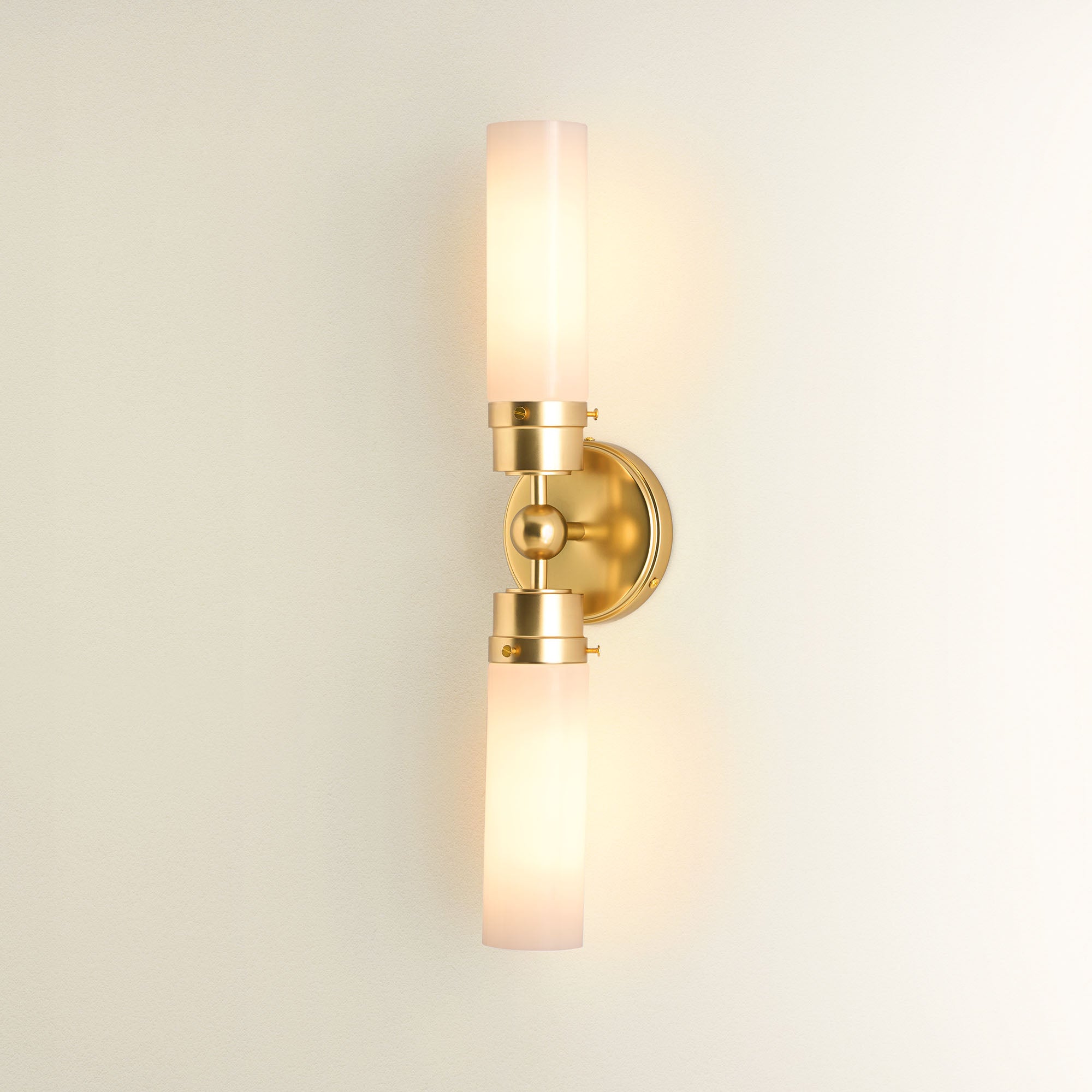
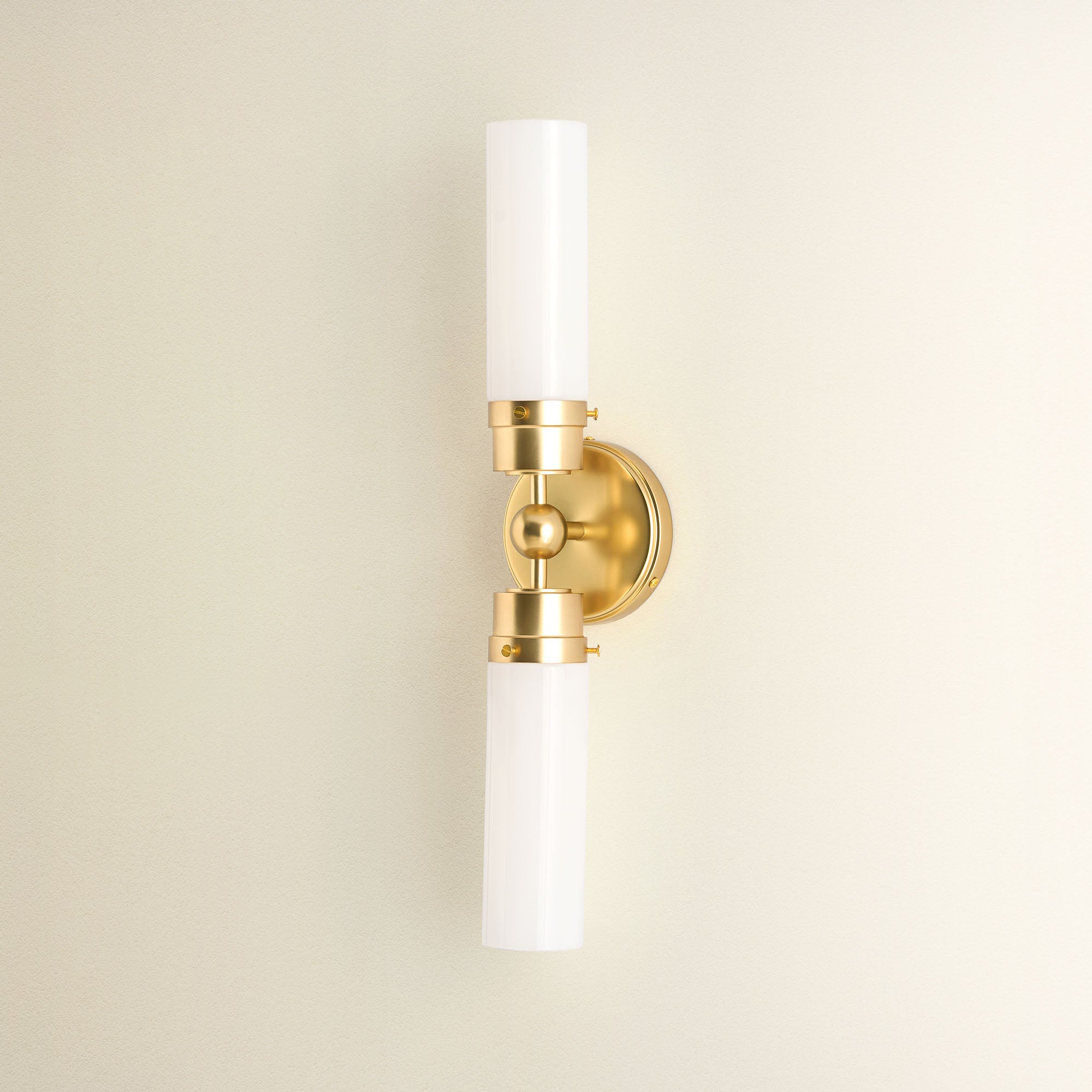
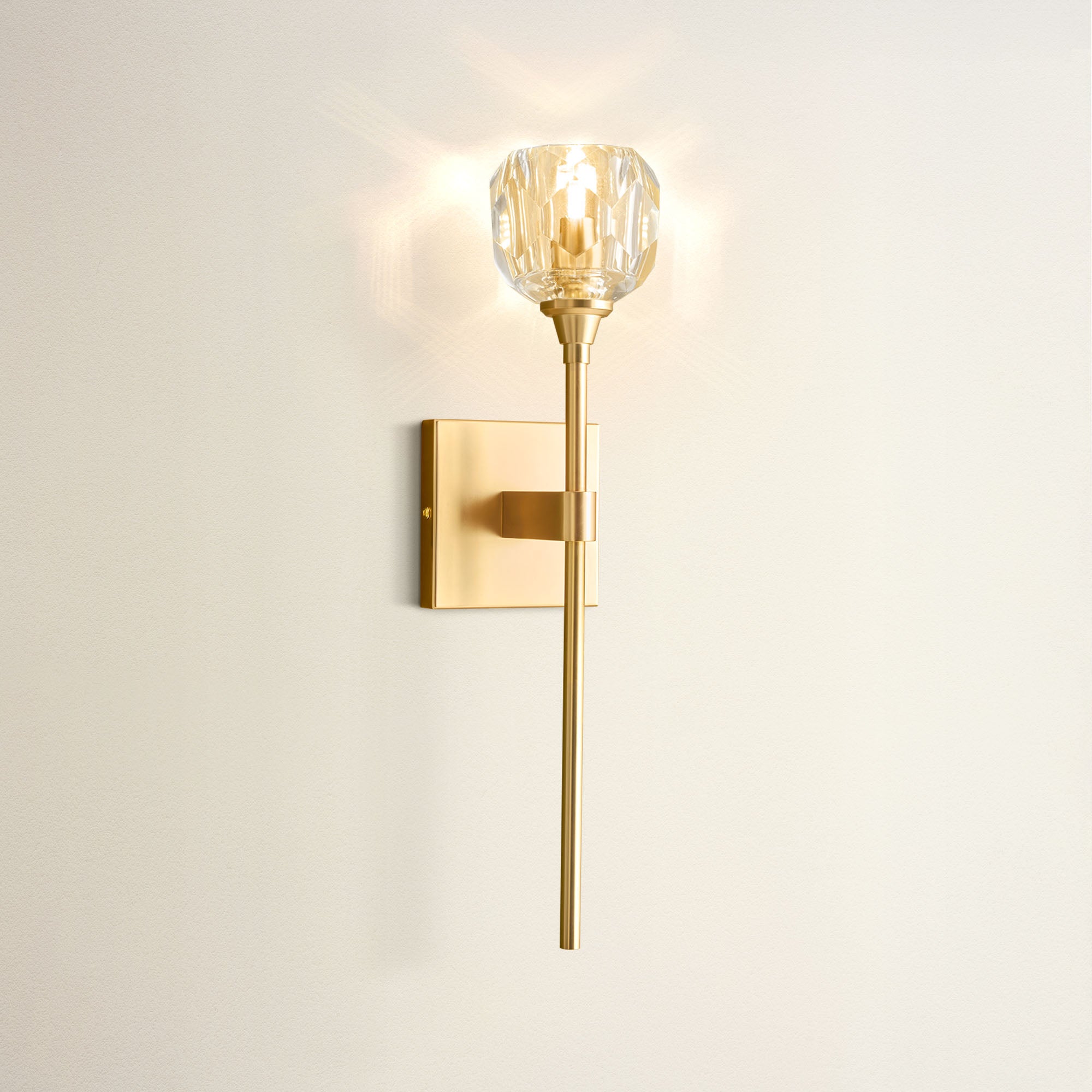
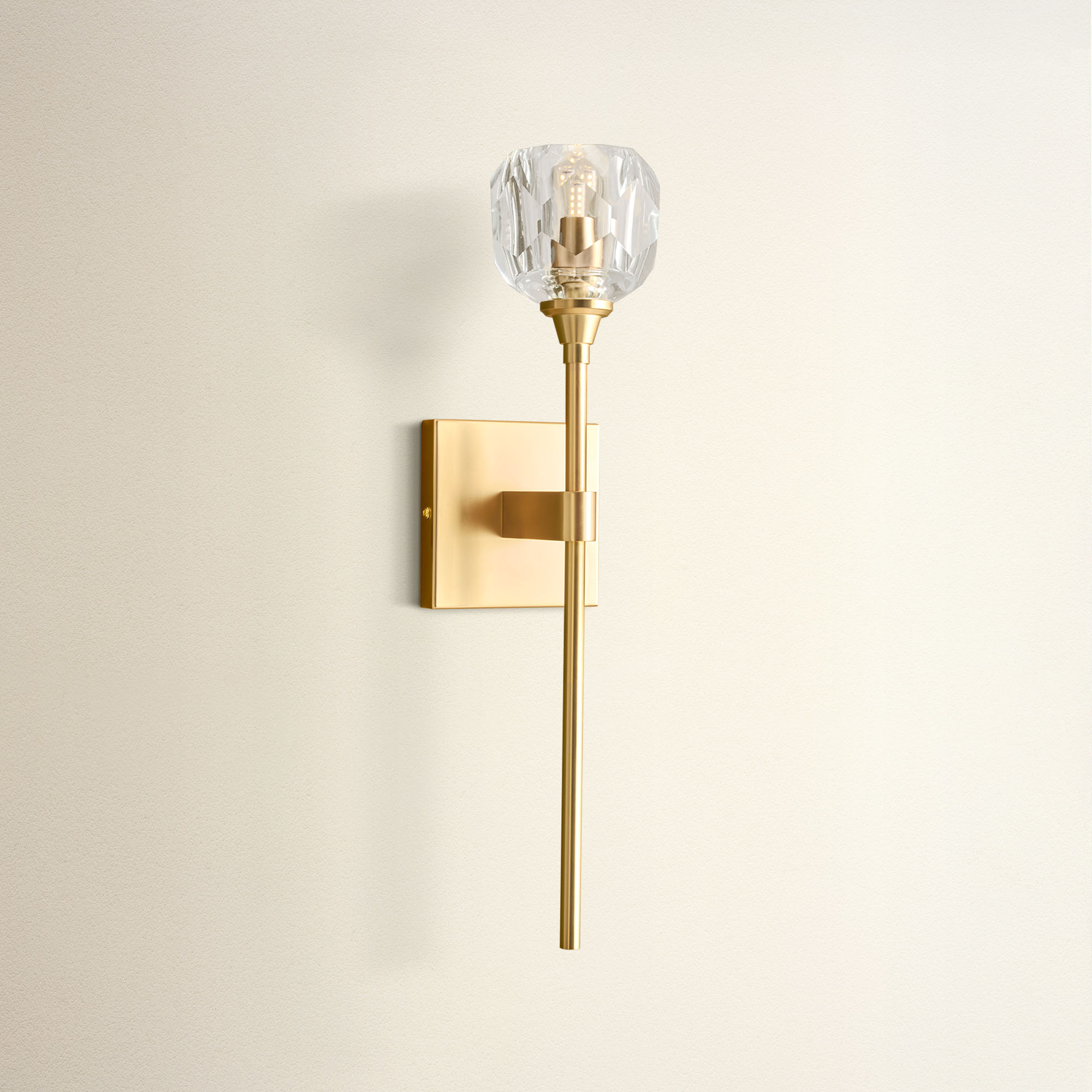
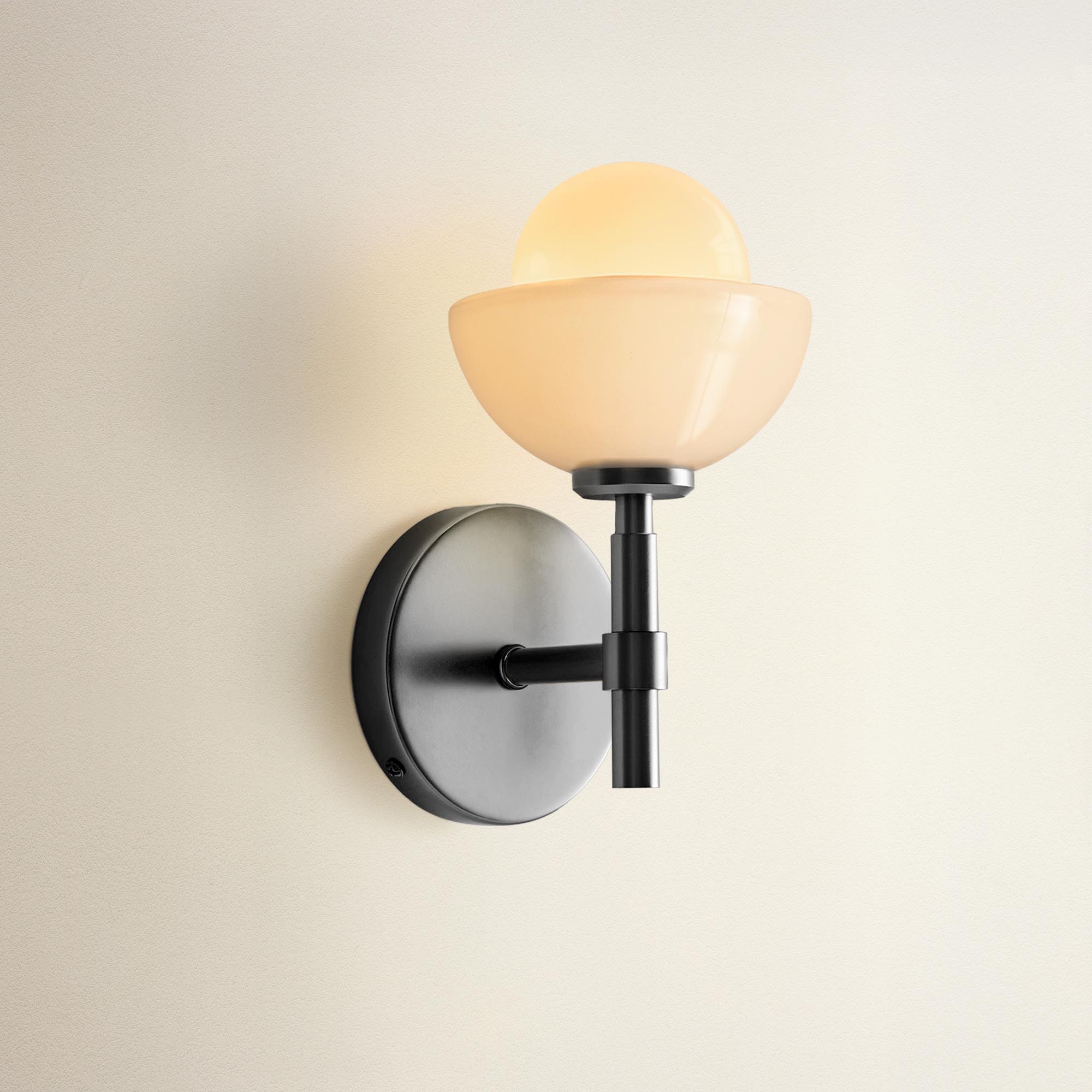
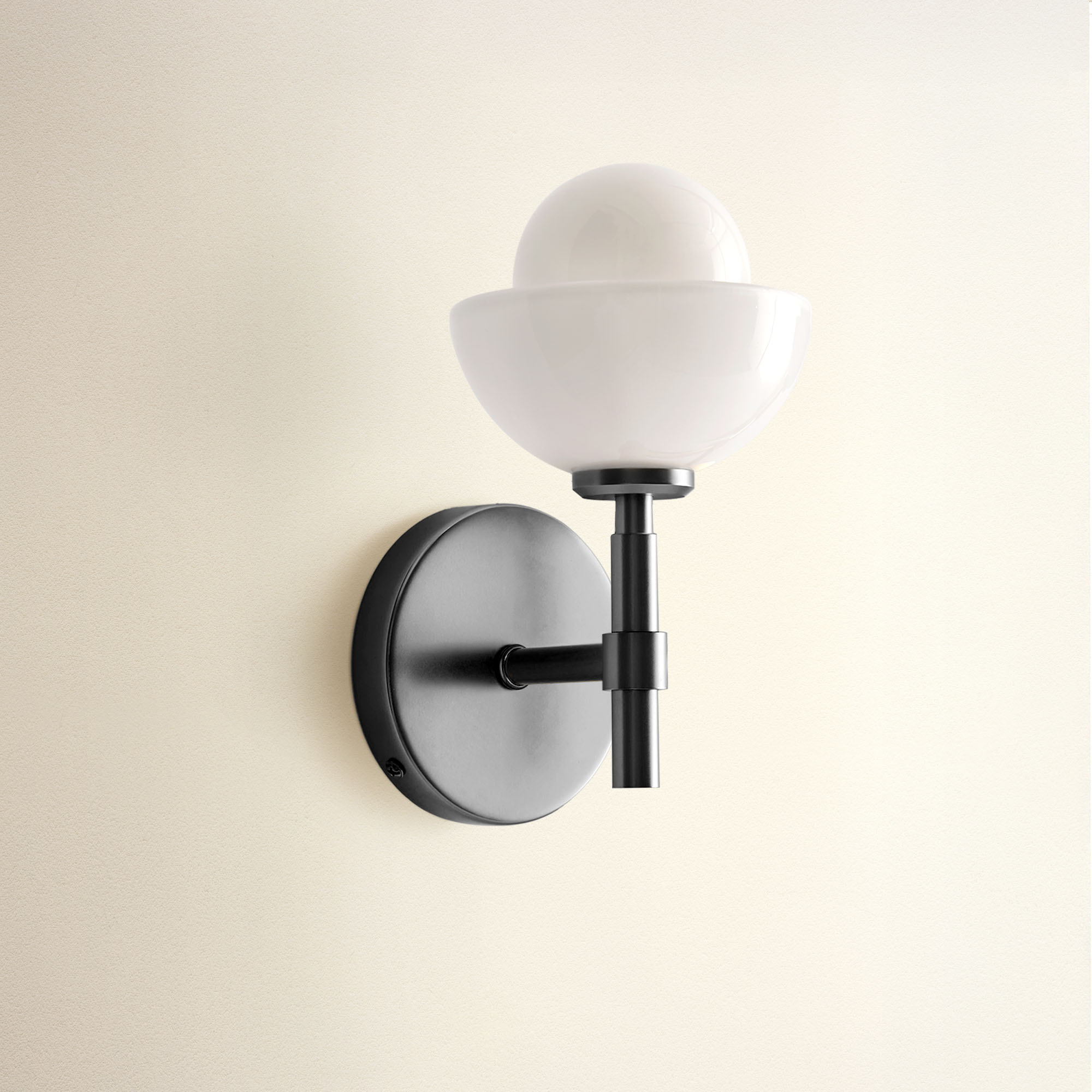
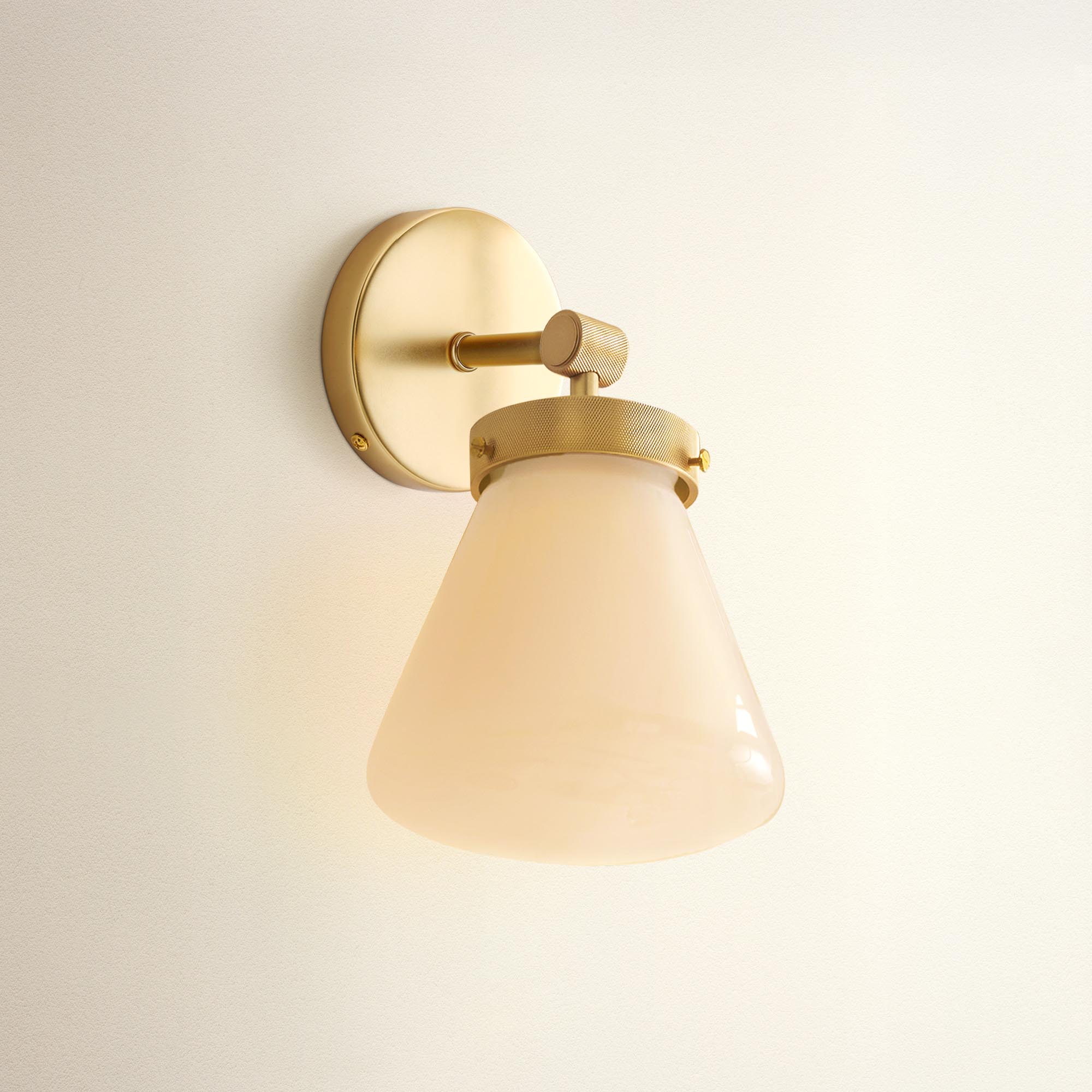
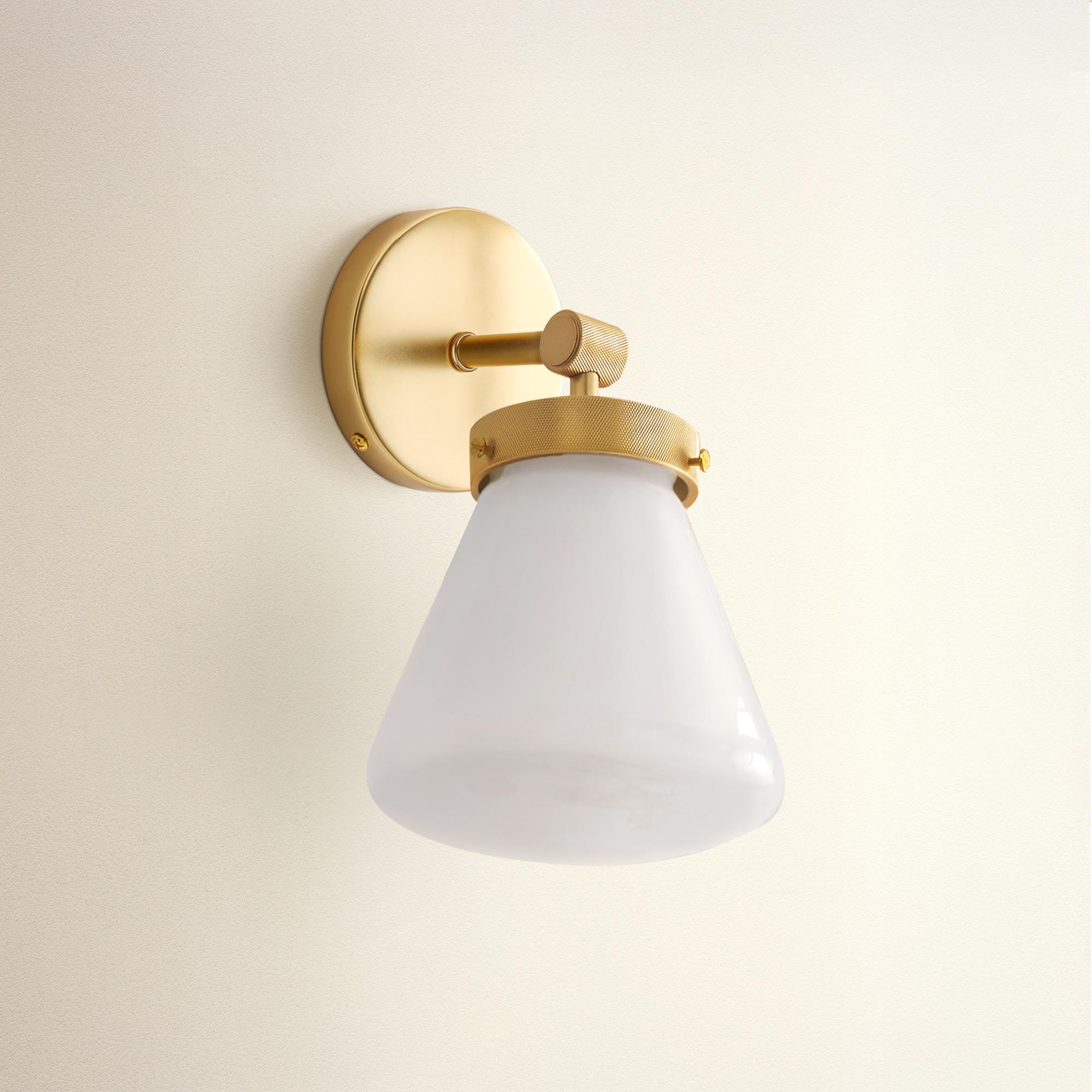
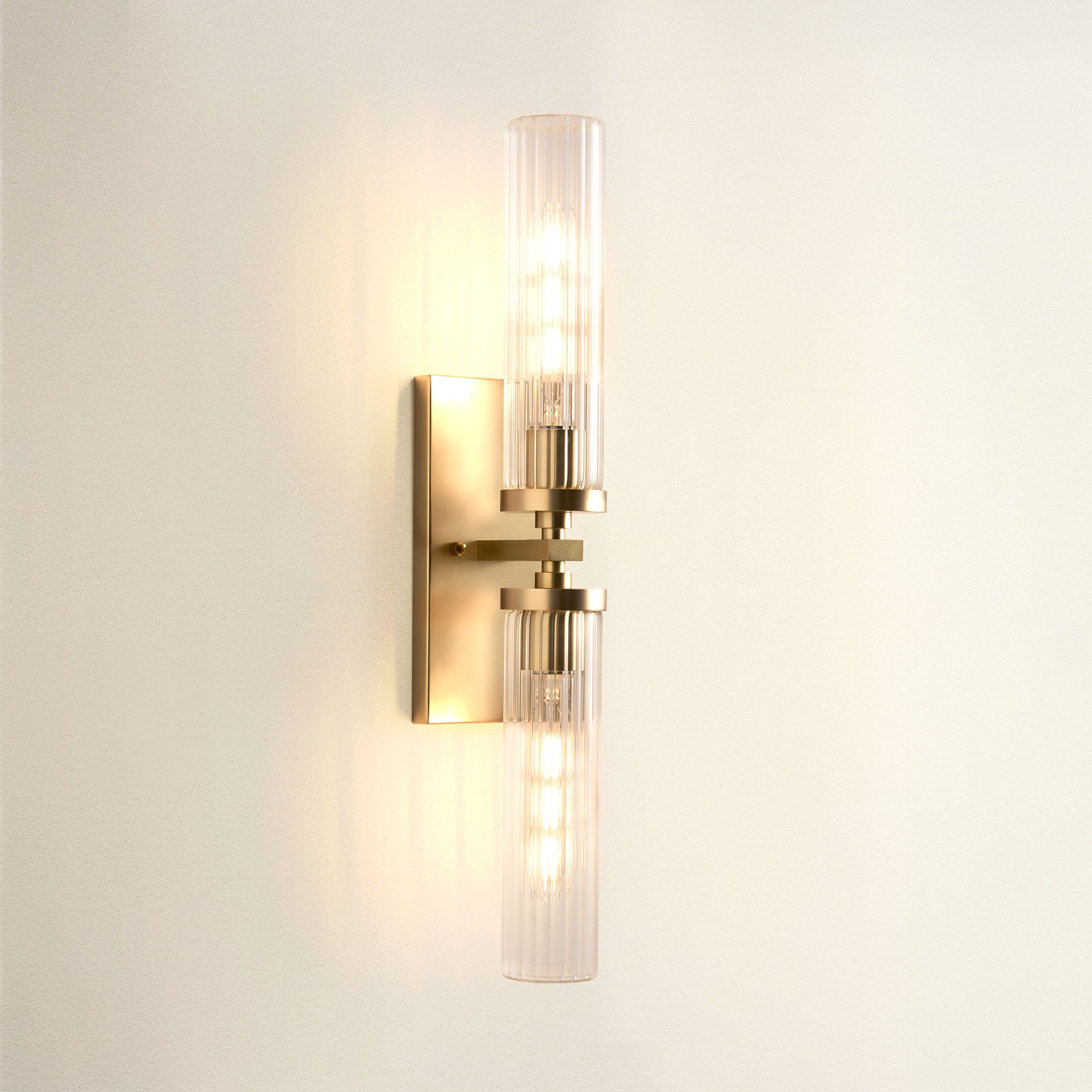
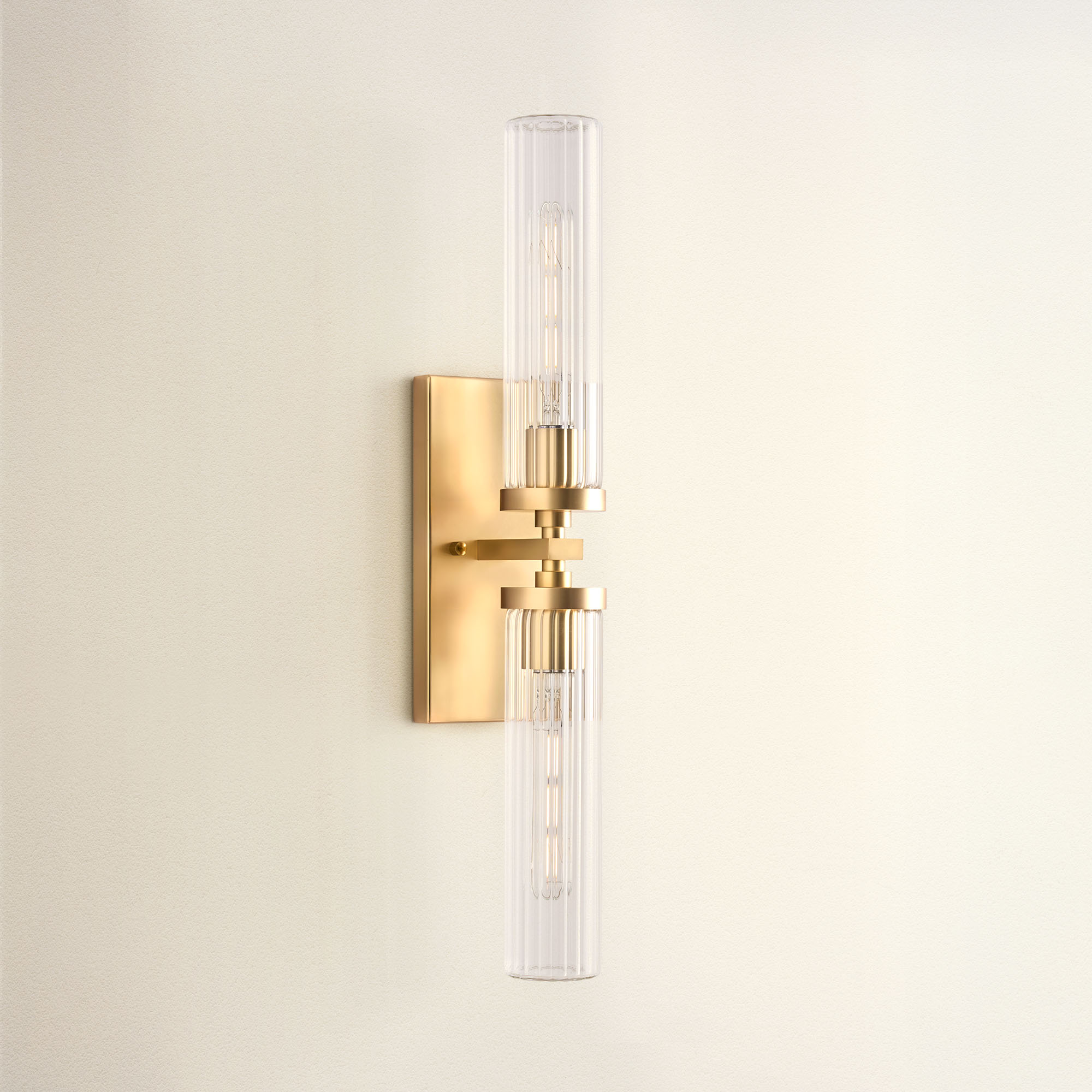
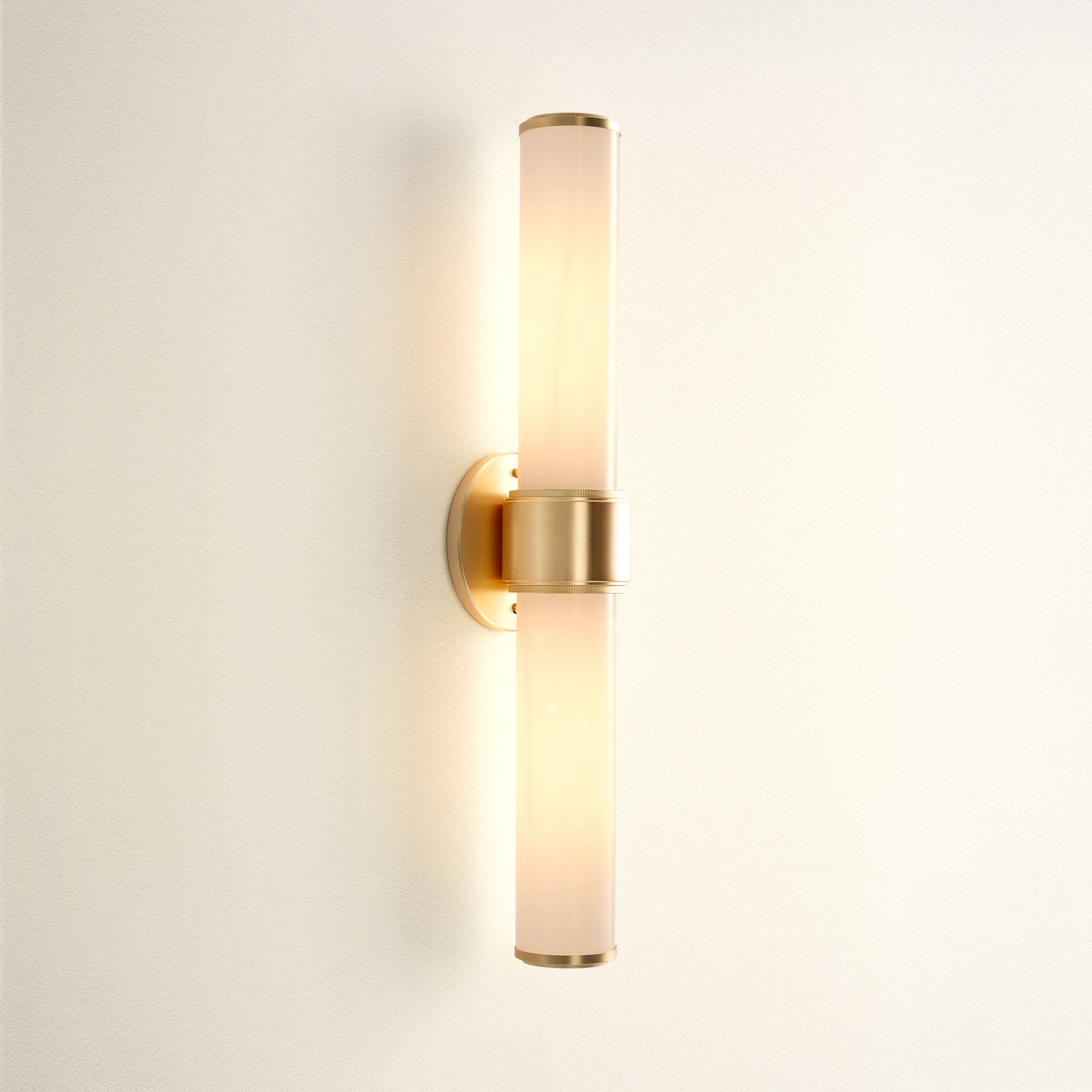
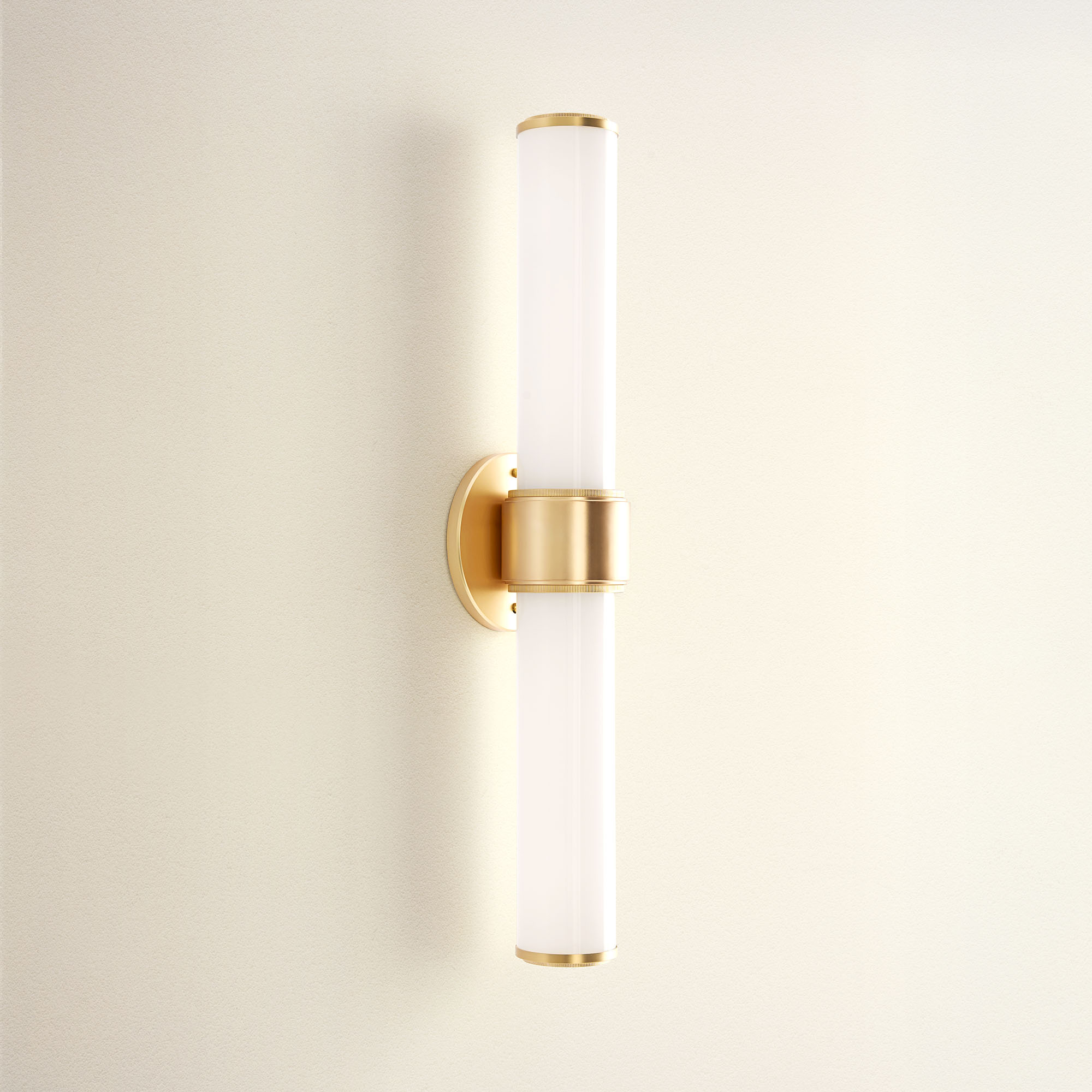
For task lighting, such as above the sink or countertops, install sconces approximately 6 inches above the window frame to integrate them without crowding the space. If you have a high backsplash or unique counter setup, adjust the height to match the working area.
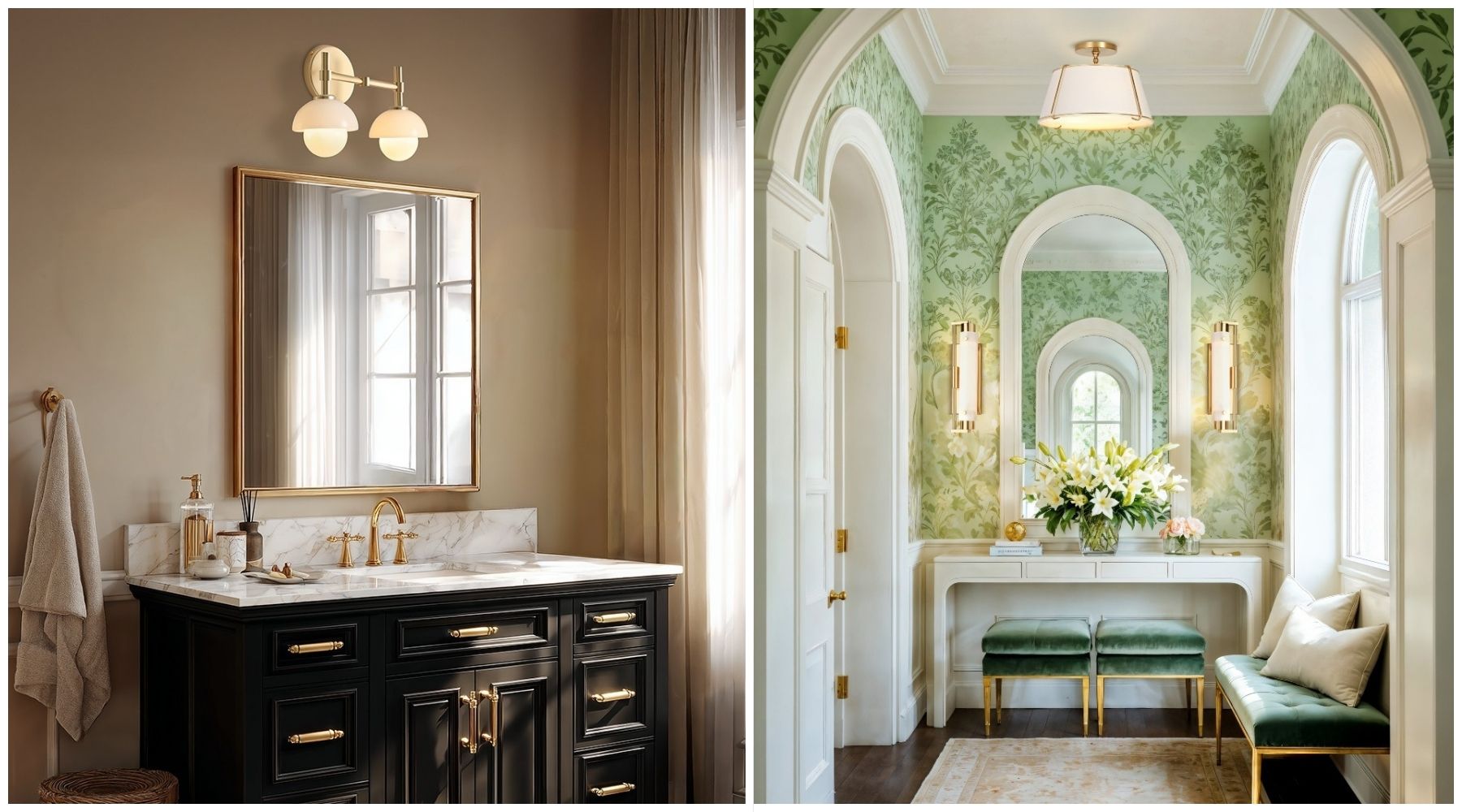
To ensure optimal illumination, position wall sconces near the mirror. For sconces flanking the vanity, aim for a height of 60 to 65 inches from the floor. This placement will provide balanced lighting around eye level, minimizing shadows and harsh glares.

In this position, the light will support tasks such as applying makeup and getting ready before going out. Source: Rowabi.
If you're installing sconces above the mirror, place them 75 to 80 inches above the floor. Adjust this based on the mirror's size to avoid creating a crowded look. The goal is to achieve even light coverage that enhances your grooming routine.
Ideally, place sconces at a height of 60 to 72 inches from the floor to the center of the light source. This range ensures the sconces are positioned above eye level, providing a pleasing glow without being intrusive or casting unwanted shadows.
If your living room features high or vaulted ceilings, lean towards the upper end of this height range. This adjustment prevents the top of the fixture from becoming overly visible and maintains a balanced look within the space.

Consider the placement of the wall sconces to the ceiling and other fixtures. Source: Rowabi.
It's also essential to consider the style of the sconce before installation. Some sconces are designed to sit flush against the wall, while others hang down, affecting their overall placement.
Therefore, choose your fixture style early in the planning phase to accommodate these variations.
Similar to the living room, positioning sconces about 60 to 72 inches from the floor to the center of the fixture is recommended for hallways and entryways. This height ensures that the sconces are visible without being too low, providing adequate illumination for guests as they enter.

Similarly, the entryway and hallway should be positioned accurately and appropriately relative to the floor and ceiling. Source: Rowabi.
If your entryway or hallway has high ceilings, you might need to install the sconces towards the higher end of this range to maintain proper proportion and prevent the fixtures from appearing too low.
Additionally, if the area is narrow or has limited wall space, choose sconces with a compact design to avoid overwhelming the space.
When determining the optimal height for wall lights, aim to position them around 70 inches (approximately 5.5 feet) from the floor.
This general guideline places the fixtures at eye level for most people, helping to minimize glare and ensure a comfortable lighting experience.
Consider the type of light fixture you are using and its intended purpose. For task lighting, such as reading lights, mount the fixture slightly lower to focus the light where it’s needed. Conversely, for ambient or accent lighting, a higher placement can help distribute light more evenly and enhance the room's overall ambiance.
Additionally, before finalizing the installation, evaluate how the light spreads. Determine if you prefer a balance between wall illumination and ceiling light, or if one aspect should be more pronounced.
Here’s a guide to the most common types of wall lights and their uses:
Wall sconces are versatile fixtures that mount directly onto walls. They can direct light in various directions—upwards, downwards, or both. They are often used in formal settings like dining rooms and living rooms, as well as in areas needing abundant and warm illumination, such as hallways.

Wall sconces can be made from a variety of materials and come in many shapes. Source: Rowabi.
They are also known as adjustable or swing-arm wall lights and feature movable arms that allow for precise control of light direction. Their ability to provide focused illumination makes them ideal for home offices, study areas, and bedside use. When selecting articulated lights, ensure that the arm length and range of motion fit your specific needs.

Similar to a desk lamp, articulated lights mounted on the wall offer great flexibility. Source: Rowabi.
Bedside reading lights are specifically designed to provide focused lighting for reading in bed. Typically mounted on either side of the bed, these lights are either attached to the headboard or installed directly on the wall.
Remember to install the lights at a height and angle that prevents glare and provides sufficient light.
Picture lights are designed to illuminate artwork or photographs displayed on walls. These fixtures are mounted above or beside the artwork to highlight details and colors effectively.
As people increasingly use artwork as focal points in their homes, picture lights provide a sophisticated way to showcase and enhance the visual impact of your prized pieces.

Picture lighting highlights artwork, especially in hallways, entryways, or living rooms. Source: Rowabi.
In summary, careful wall sconce placement is essential for both functionality and style in every room. By following proper installation guidelines from Rowabi, you can enhance your space with well-placed lighting that complements your decor and meets your needs.
Expert Guide: Wet-Rated vs. Damp-Rated Light Fixtures
What is the difference between wet-rated and damp-rated light fixtures? According to Rowabi's expert, Noah Miller, the distinction lies in their level of waterproofing and appropriate placement. We...
Read more
Leave a comment
This site is protected by hCaptcha and the hCaptcha Privacy Policy and Terms of Service apply.